 Heralds of the Gospel Magazine, Vol. 20, nº 226, August 2026
 Heralds of the Gospel Magazine, Vol. 20, nº 225, July 2026
 Heralds of the Gospel Magazine, Vol. 20, nº 224, June 2026
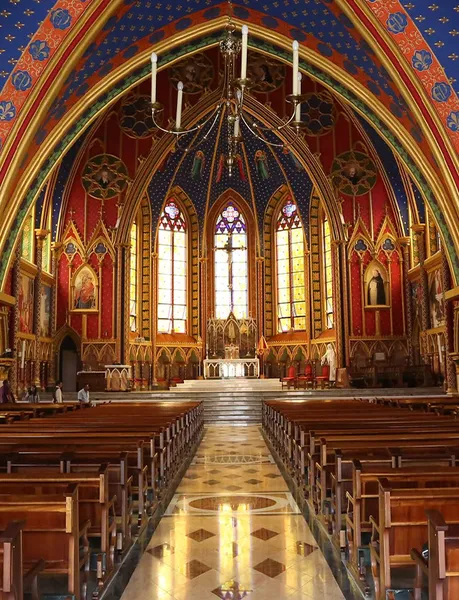 Who are the Heralds of the Gospel?
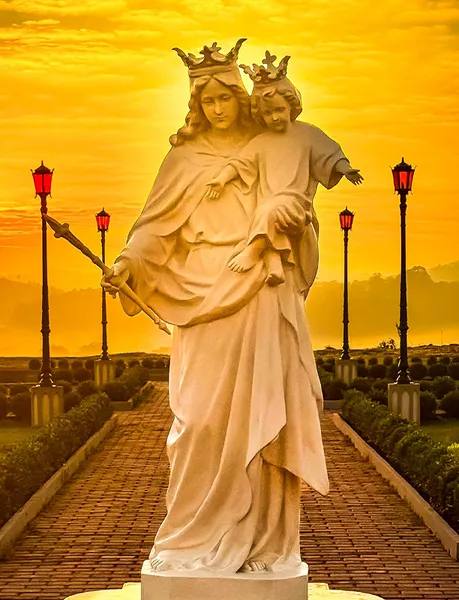 Help of Christians
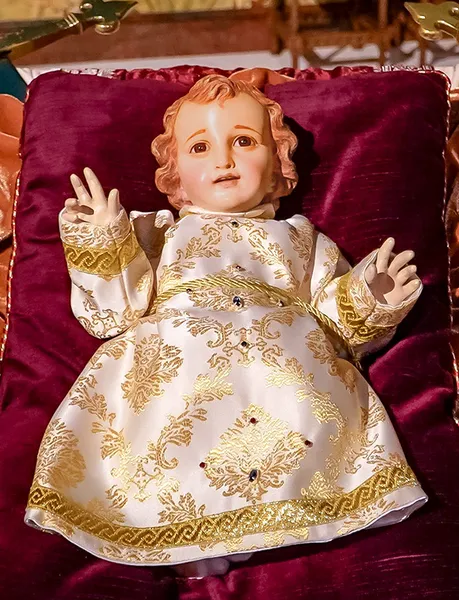 Christmas Carols






For centuries, the Levites sacrificed countless victims in the Temple. On the Altar of the Cross, however, the Redeemer united in Himself the Priest and the Victim in a single and eternal offering (cf. Heb 7:27).
By promising His earthly presence until the consummation of time (cf. Mt 28:20), Christ perpetuated the Sacrifice of Calvary in the Eucharistic rite and extended His salvific action on earth through the ministerial priesthood.
Since the Old Covenant, priests remained in the presence of the Most High (cf. Dt 18:5); in the regime of grace, moreover, it is the Lord Himself who makes Himself present in them.
As “stewards of the mysteries of God” (1 Cor 4:1), they are essentially mediators between the Trinity and mankind; They live on the threshold between time and eternity, between earth and Heaven.
Divine Wisdom did not entrust the priesthood to Angels, but to men like Jesus, the Incarnate Word. The priest was ordained to be Christ, alter Christus. Therefore, his sanctification is not an option, it is a duty.
The primary temptation of the ordained minister consists in placing himself in the Lord’s place: “I am a god” (Ez 28:2). This is a Luciferian pride, a true sacrilege, which profanes the character of Christ imprinted on the soul.
Thus, only holiness is compatible with this exalted vocation.[1] Woe to him who corrupts it!
For St. Joseph Cafasso, the clergyman needs to be irreproachable (cf. 1 Tim 3:2): “To be an example is the same as being ecclesiastic, and whoever is not an example, it can be said that, in a certain way, he does not even continue as a priest”.[2]
While common professions allow for a dissociation between office and conduct, the presbyteral ministry demands full identity between being a priest and being an example.[3]
This does not imply the loss of the sacramental office through sin – character is indelible – but it shows that, especially for priests, “to live is Christ” (Phil 1:21).
Even their customs need to be priestly, beginning with the offering of their own “bodies as a living sacrifice, holy and acceptable to God” (Rom 12:1).
Far from the heresy of works and Pelagianism, their lives, rooted in prayer and sustained by grace, will expand the spiritual fatherhood of the Father in time, as a true priest – rightly referred to as a father.
In particular, in the Holy Mass, a living memorial of the Sacrifice of the Cross, the celebrant is configured with the Priest-Victim, as alter Christus crucifixus – another crucified Christ.
Mystically, every priest is a stigmatist, and not only during the Eucharist.
As the Redeemer, his life is total oblation: whether in silence, like of the lamp of the Blessed Sacrament that consumes itself in praise; or in preaching, radiating the Divine Word in the world as the Christi – “mouth of Christ”.[4]
Upon crossing the threshold of eternity, the observant priest will hear: “Well done, good and faithful servant; you have been faithful over a little, I will set you over much; enter into the joy of your master” (Mt 25:21).
Fully united to the Trinity in Heaven, the blessed priest will continue to participate in the unending self-giving of Christ the Priest to the Father through the Holy Spirit, for the benefit of humanity.
The priestly vocation, therefore, does not cease in this vale of tears: it reaches its apex in the definitive configuration with the High Priest in the Homeland, that is, in the “place of the Father” – and of the father – the priest.