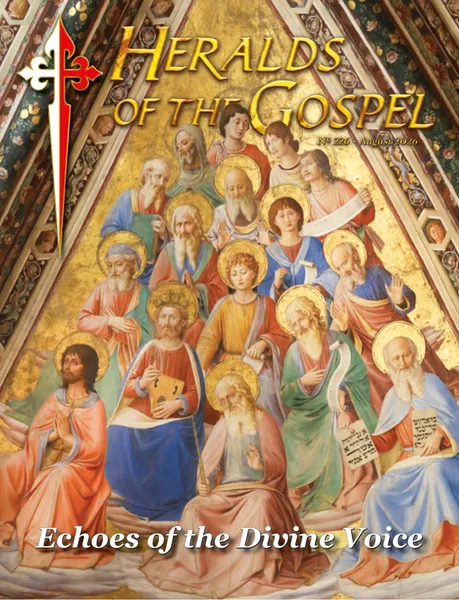
 Heralds of the Gospel Magazine, Vol. 20, nº 226, August 2026
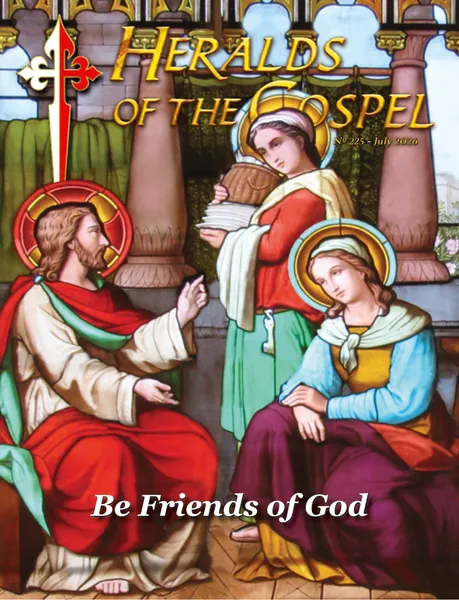 Heralds of the Gospel Magazine, Vol. 20, nº 225, July 2026
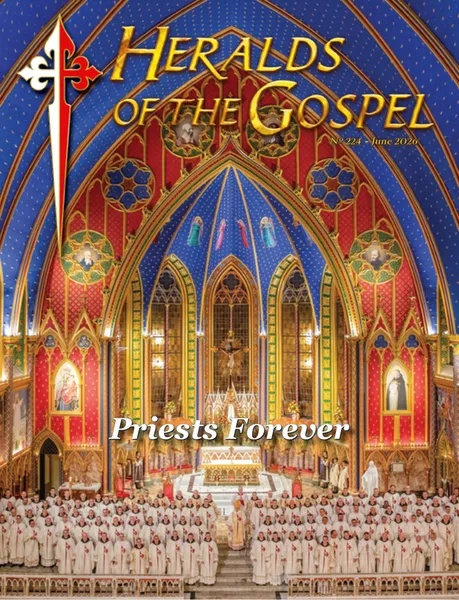 Heralds of the Gospel Magazine, Vol. 20, nº 224, June 2026
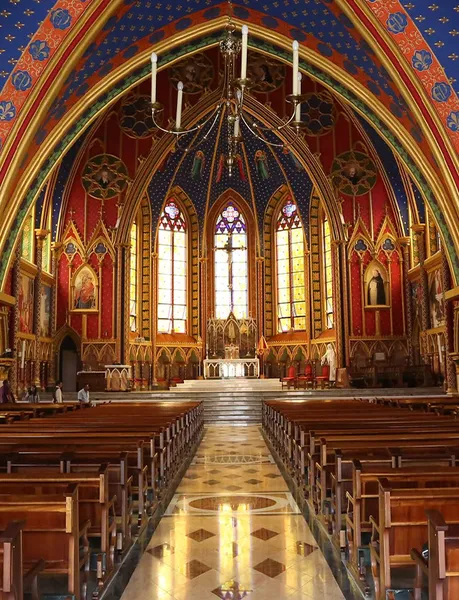 Who are the Heralds of the Gospel?
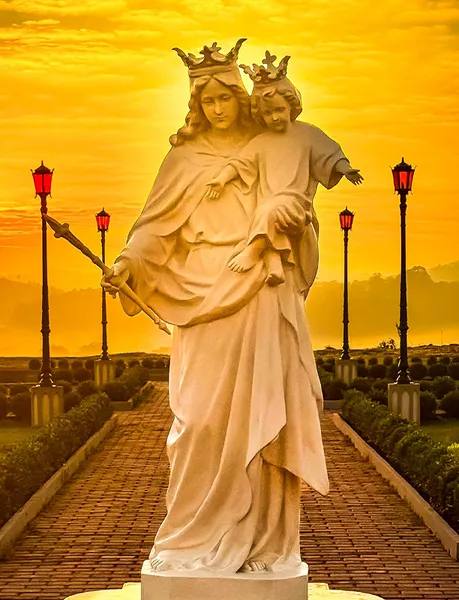 Help of Christians
 Christmas Carols






June 7 – The Solemnity of the Most Holy Body and Blood of Christ
The Solemnity of the Most Holy Body and Blood of Christ invites us to contemplate the excellence of divine wisdom: God, in the immensity of His love, makes Himself food to remain with us in the innermost depths of our being.
As Scholasticism teaches, every agent acts in proportion and likeness to its excellence. Now, how could the Saviour, in His infinite holiness, remain among men so sinful, ungrateful, and so often unfaithful?
Observing the world after the fall, the Most High sought what was most beautiful, pure, and immaculate. His predilection alighted upon His masterpiece, Mary; it was She who, through her fullness of grace, made humanity “worthy” to be visited by the Creator.
Eve, through disobedience, closed off access to the tree of life to her descendants (cf. Gn 3:22-24). The New Eve, the Blessed Virgin Mary, not only restored this right to us but gave us access to the very Author of Life.
The blessed fruit of her womb became the Bread of Angels and food for those who live in this land of exile.
Thus, St. Augustine clarifies: “He received His Flesh from the flesh of Mary. […] He walked through this world in that same Flesh, and gave it to us as food for our salvation.”1
Pope John Paul II further expounds on this doctrine:
That divine Body and Blood, which after the Consecration are present on the altar, […] retain their original matrix in Mary. […] At the origin of the Eucharist, therefore, is the virginal and maternal life of Mary.2
In this sense, we can affirm that, in a certain way, the Eucharist is the “Sacrament of the Virgin.”
She did not take for herself, exclusively, the grace of carrying the Word in her womb, but obtained it for all, so that the promise might be fulfilled: “Whoever eats my Flesh and drinks my Blood remains in Me and I in him” (Jn 6:56).
After the hypostatic union, there is no union of men with Divinity more intimate than that provided by the Eucharist.3 In the face of this great mystery, how should our interior comportment be?
The surest way to receive Communion worthily is not the fruit of mere human effort, but comes from imitating Mary. She is the “Woman of the Eucharist,”4 the living tabernacle that the Father prepared for His Son.
As St. Louis Grignion de Montfort teaches,5 it is necessary to prepare for Communion through Our Lady.
We must implore her help, so that She may grant us the proper interior dispositions to receive Him whom She carried for nine months in her virginal womb.
Let us beseech Mary to obtain for us the gratitude that only She possesses for this invaluable gift. May She introduce us to the secret of the intimate bond between Mother and Son.
And may we, on this Solemnity, finally, give to the Body and Blood of Christ the sweetest and most sublime glory: to adore Him through her from whose flesh the Saviour was formed.