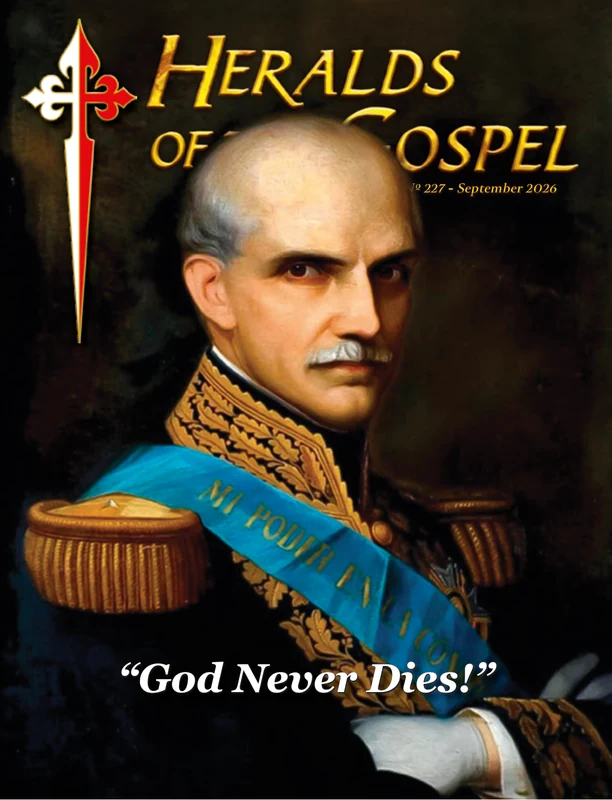
 Heralds of the Gospel Magazine, Vol. 20, nº 227, September 2026
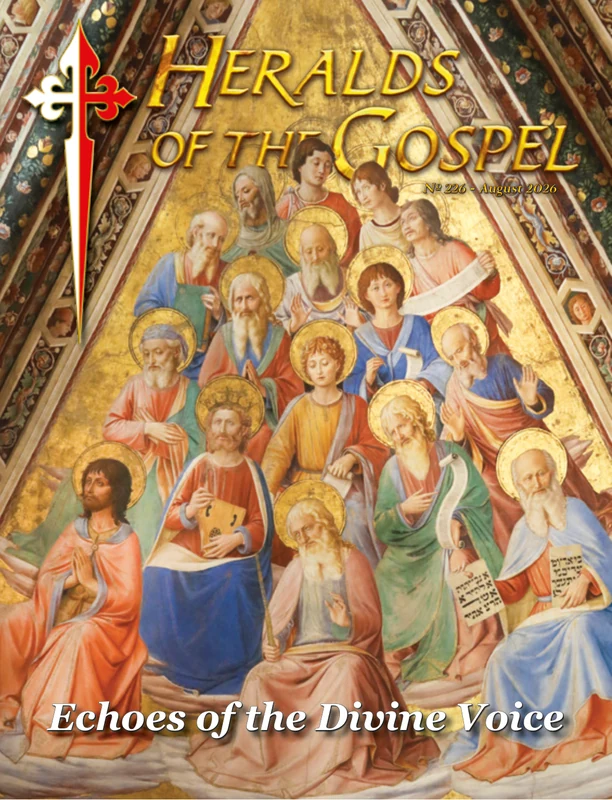 Heralds of the Gospel Magazine, Vol. 20, nº 226, August 2026
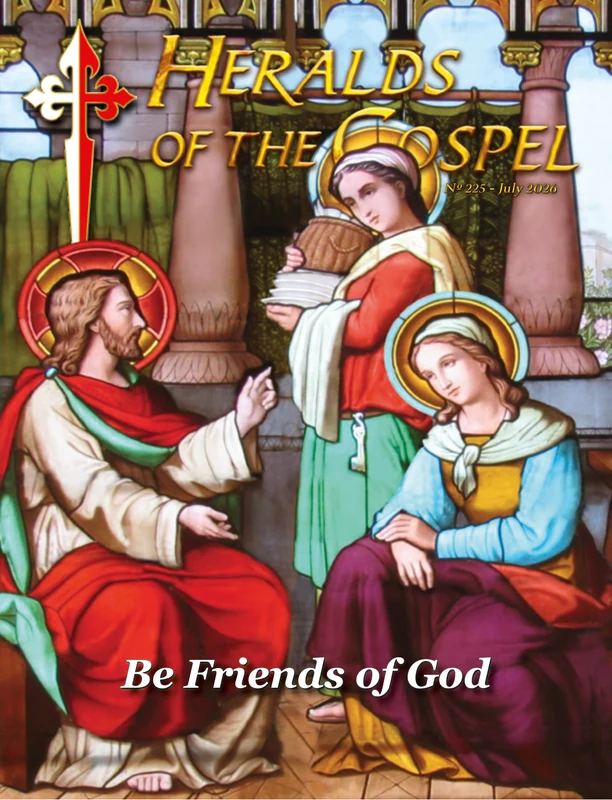 Heralds of the Gospel Magazine, Vol. 20, nº 225, July 2026
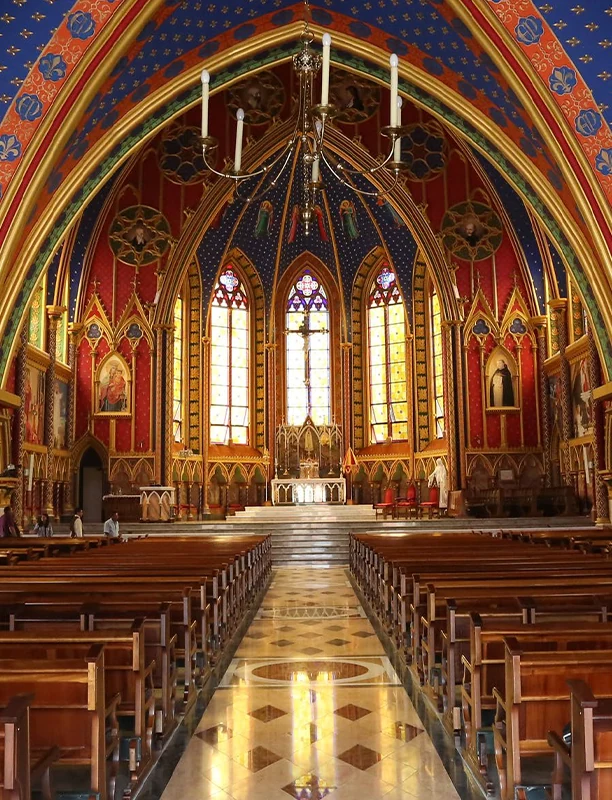 Who are the Heralds of the Gospel?
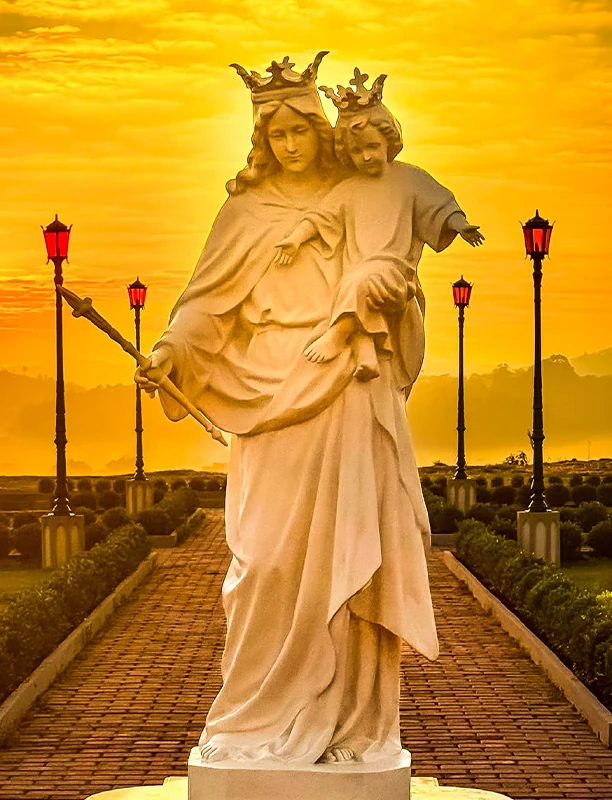 Help of Christians
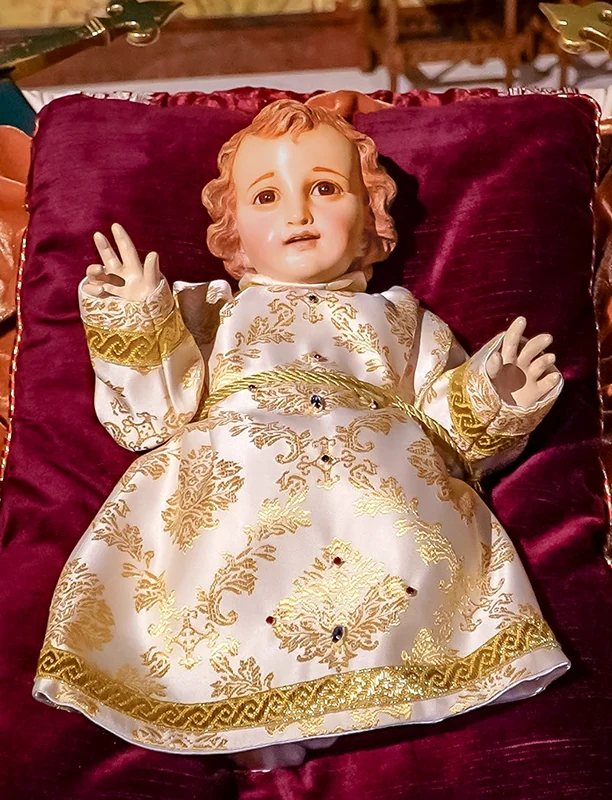 Christmas Carols







Who is Monsignor João Scognamiglio Clá Dias?
On August 15, 1939, the Solemnity of the Assumption of the Blessed Virgin Mary into Heaven, João Scognamiglio Clá Dias was born in São Paulo, the son of Antonio Clá Díaz, a Spaniard, and Annitta Scognamiglio Clá Díaz, an Italian. He was baptized on June 15 of the following year at the Church of St. Joseph of Ipiranga, near his home.
From early childhood, he was blessed by Providence with the gift of contemplation, as well as a great ability to perceive God's action through all creatures. Thus, on certain nights, overcome by insomnia, he would sit on the windowsill of his room and gaze at the stars for a long time. That wonderful, slow procession of twinkling lights, seen by his child's imagination as the movement of the stars themselves, made a deep impression on him.
Encounter with the Blessed Sacrament
When he was five years old, upon entering the then Chapel of Our Lady of Sorrows, belonging to the Augustinian Fathers, in the Ipiranga neighborhood, he encountered the Blessed Sacrament exposed for the first time, just as the priest was preparing to give the blessing. Inexplicably attracted by that white Host—about whose mystery he had not yet been instructed—as well as by that atmosphere of sacredness and recollection, he immediately concluded that he was in the presence of God!
The feeling of extraordinary greatness and majesty, but at the same time the effect of Jesus' infinite goodness, constituted for him an invitation to be good and the starting point of a Eucharistic devotion that, over the years, would only grow and become more sublime.
During his studies, first at the José Bonifácio School Group, then at the Centro Independência Gymnasium, and the Presidente Roosevelt State College, Monsignor João always distinguished himself as the top student in his class, demonstrating a special aptitude for mathematics and the arts.
However, it was the catechism classes and the narratives of Sacred History that enchanted him and filled him with faith. His Confirmation, held on January 26, 1948, as well as his First Communion, on October 31 of the same year, further expanded the true passion he had always had for everything related to the supernatural life and religion.
In his early teens, coming into conflict with the moral decay and vulgarity that already reigned in the society of that time, he lamented that there was no one to combat them with the necessary vigor. In his boyish heart, he ardently desired to somehow restore the beautiful celestial harmony he had contemplated in childhood to the social life of his companions, but with an added religious note.
It was the breath of the Holy Spirit that inspired him to serve others within the sacred walls of the Holy Church.
Under the influence of these graces, as he entered his youth, this commitment to supporting his peers soon became more explicit: hence his propensity for medicine, psychology, and the arts, as well as his dream of founding an association of young people to prevent them from going astray, connect them with God, and support them on the path to perfection. He was distressed to see how many people allowed themselves to be enslaved by selfishness and acted only in their own interests.
However, a certainty, born of faith, told him inside, “There must be a man in the world who is entirely good and selfless! He is on my path, and someday I will find him.” So, at night, he would kneel at the foot of his bed and, weeping, pray thirty Hail Marys, asking to meet this man as soon as possible. By a singular favor of Heaven, he could already glimpse this man’s silhouette, though not with complete clarity.
The encounter with Dr. Plinio
It was then that, on July 7, 1956, the first day of the novena to Our Lady of Mount Carmel, Monsignor João met Plinio Corrêa de Oliveira, the man who illuminated his path, calling him to the full integrity of a son of the Holy Church, to fight for the good order of society with Her, in Her, and through Her. He had found what he was looking for, and for that he was happy! He was then almost 17 years old.
For his part, Dr. Plinio Corrêa de Oliveira—a Catholic leader who marked the 20th century from beginning to end with the brilliance of his faith and fearless militancy in favor of the ideals of the Holy Church—had conceived since childhood the establishment of a Religious Order of Chivalry destined to act on public opinion in order to reform it. In 1928, having joined the Catholic Movement as a Marian congregant, he gathered a group of friends around him, but he lacked a right-hand man who, sharing his thoughts, would fully carry out his plans.
Years later, in a letter to Monsignor João, he wrote, recalling the hardships of that period of isolation, “Remember that supplication that was sung in the Marian Congregation, ‘ Da pacem, Domine, in diebus nostris, quia non est allius qui pugnat pro nobis nisi Tu, Deus noster — Give us peace, Lord, in our days, because there is no one who fights for us except You, our God.’ How many times I prayed in this intention! For Our Lady to give me peace in my days, because there was no one to fight for me except Deus noster, and, therefore, Our Lady. Later, She gave me João, a great fighter for me!”
Following God's path
Dr. Plinio became the formator of Monsignor João's mentality and also strengthened him in perseverance in the decisions supported by his positive influence. It was through the logic of Dr. Plinio’s wonderful expositions, the clarity of his thinking, as well as the pleasant fragrance of his innocence that Monsignor João decided to abandon everything and everyone to better serve God, under Dr. Plinio’s guidance and counsel. Forty years were spent with that man in communion with the supernatural; in nobility of soul and elevation of spirit; in zeal for the Church and society; in a deep veneration for all hierarchy; and in particular, in a deep love – almost an adoration – for the Papacy.
Between 1957 and 1960, as a first fruit of the apostolic works he would later develop, Monsignor João joined the Marian Congregations, was admitted to the Third Order of Carmel, and consecrated himself as a slave of love to the Blessed Virgin, according to the method of St. Louis Marie Grignion de Montfort.
Military service
In 1958, he was called up for military service in the newly created 7th Guard Company of the 25th Infantry Battalion in São Paulo. There he stood out for his discipline, commanding voice, and military ability, which earned him the Marechal Hermes da Fonseca Medal, “Most Distinguished Soldier,” among the 208 conscripts incorporated that year. In addition, he was awarded an “Honorable Mention” diploma “for having demonstrated good behavior during his time in the Army, working on behalf of the Unit and achieving, through his efforts, the high reputation enjoyed by this 7th Guard Company.”
Monsignor João and Dona Lucilia
Dr. Plinio's beloved mother, Dona Lucilia Ribeiro dos Santos Corrêa de Oliveira, was, in Monsignor João's own words, “the guardian angel” who helped him to understand more deeply the infinite mercy of the Sacred Heart of Jesus. He, for his part, played an authentic role as her son during the last years of her life, before her death in 1968.
From 1975 onwards, Monsignor João's influence grew alongside Dr. Plinio's: he became a mentor to thousands of young people from various nations, helping them and strengthening them in their faith, in an attitude of true “concern for all the churches” (2 Cor 11:28) . He rescued some from the clutches of the devil and encouraged others in their search for perfection. He inaugurated new methods of apostolate through programs in schools and even through outreach in streets and public places. He opened numerous houses of formation in various countries, in which the life of prayer, study, and religious ceremony are combined with the missionary apostolate, always with a very prominent note of discipline and combativeness, inherited from his period of military service.
Having imbibed the gift of wisdom so characteristic of Dr. Plinio's spirituality, Monsignor João became a perfect disciple, capable of carrying on the work begun by his master, model, regent, and guide. His natural and supernatural qualities, his excellent performance, boldness, and fidelity led Dr. Plinio to consider him an “arch-son,” even going so far as to describe him in various circumstances as “the staff of my old age,” “golden assistant,” “blessed instrument,” and even “alter ego” — another self. On one occasion, Dr. Plinio wrote: “Justice demands that I say: no one has given me as much and as great a joy as you.”
The death of Dr. Plinio
With the death of Dr. Plinio on October 3, 1995, Monsignor João faced the physical absence of that fundamental figure in his life. In 1999, he decided to found the International Private Association of Faithful Heralds of the Gospel, which received the approval of Pope John Paul II on February 22, 2001, thus becoming the first pontifical association of the third millennium. Under the blessings of the Chair of Peter, the association quickly expanded to 78 nations and came to encompass a broad and brilliant reality, consisting mostly of young people. Marian missions in parishes, the Apostolate of the Oratory of Mary Queen of Hearts, visits to families, prisons, and hospitals, direct mail services to millions of people, the Future and Life Project in schools, Heralds Television, the Gaudium Press news agency, and the Mercy Relief Fund are some of the activities carried out by the Heralds in various areas of society.
The women's branch
Thanks to the apostolate carried out by Monsignor João, a large group of young women also flourished, eager to give themselves to God according to the charism of the Heralds of the Gospel. They received their definitive structure on December 25, 2005, with the founding of the Regina Virginum Apostolic Life Society, approved a few years later, on April 26, 2009, by Pope Benedict XVI.
Both the young men and women, living in separate communities, embrace a life of intense spirituality, including daily participation in the Eucharist, adoration of the Blessed Sacrament, and recitation of the Rosary and the Liturgy of the Hours. In addition to practicing the evangelical counsels of obedience, chastity, and poverty, they observe an “ordo of customs,” carefully crafted by Monsignor João himself, which can be summarized in the words of Our Lord Jesus Christ: “Be perfect as your heavenly Father is perfect” (Mt 5:48).
The clothing they wear symbolizes the vocation to which they have been called: a brown scapular, inspired by the Carmelites, with a large white, red, and gold cross, signifying unblemished purity, a willingness to make all the sacrifices required in the service of the Church, and the nobility of the ideal. The chain around their waist attests to their slavery of love to the Blessed Virgin, and the rosary, hanging on the right side, is the effective weapon in the fight against the world, the devil, and the flesh.
The Cooperators of the Heralds of the Gospel
Under the guidance and encouragement of Monsignor João, the cooperators of the Heralds of the Gospel emerged, selfless volunteers who dedicate their available time, amid their family or professional obligations, to evangelization, to spreading devotion to Mary, to bringing comfort to the sick and prisoners, to catechesis in parishes, to liturgical animation, and other works of the apostolate. They wear a distinctive white cape with a red cross.
The large family of Heralds of the Gospel currently has approximately 10 million members on five continents.
The intellectual formation of Monsignor João Clá Dias
With a view to the intellectual, spiritual, and doctrinal formation of his followers, Monsignor João studied Thomistic theology with great professors at the University of Salamanca and the Angelicum in Rome. Among them are Fr. Victorino Rodríguez y Rodríguez, OP, Fr. Antonio Royo Marín, OP, Fr. Fernando Castaño, OP, Fr. Esteban Gómez, OP, Fr. Arturo Alonso Lobo, OP, Fr. Raimondo Spiazzi, OP, and Fr. Armando Bandera, OP. In addition to studying law at the traditional Faculty of Largo de São Francisco in São Paulo, he also graduated in humanities from the Pontifical Catholic University Madre y Maestra in Santo Domingo, Dominican Republic; obtained a master's degree in psychology from the Catholic University of Bogotá, Colombia; and a doctorate in Canon Law from the Pontifical University of St. Thomas Aquinas (Angelicum) in Rome, as well as in Theology from the Pontifical Bolivarian University in Medellín, Colombia.
Monsignor João was also a member of the International Society of St. Thomas Aquinas (SITA), the Marian Academy of Aparecida, and was a member of the Pontifical Academy of the Immaculate. He has been honored in several countries for his cultural and scientific activities, receiving the Medal of Sciences of Mexico and the Anchieta Medal, considered the highest honor of the city of São Paulo.
In addition to opening numerous secondary schools in various cities in Brazil and in Portugal, Canada, Colombia, Paraguay, Costa Rica, El Salvador, Guatemala, and Mozambique, Monsignor João also founded the Aristotelian-Thomistic Philosophical Institute (IFAT) and the St. Thomas Aquinas Theological Institute (ITTA), as well as the St. Scholastica Philosophical-Theological Institute (IFTE) for women.
However, Monsignor João did not lack setbacks and difficulties, both physical, such as the illnesses that afflicted him and brought him several times to the brink of death, and moral, such as the misunderstandings he had to face from some of those closest to him. But in all these situations, he was able to say with the Psalmist, “ The Lord has delivered me from all my fears” (Ps 33:5).
God's call to the priesthood
However, it was easy for him to discern the real paths to which God's call, which began at the dawn of his consciousness, was leading him. A mysterious restlessness invited him to more and more, captivating his interior. When he was with the Blessed Sacrament of the Altar—for which he held a special love since his early childhood—his being not only entered into calm, but he always felt an almost angelic willingness and desire to make any sacrifice. How could he draw even closer to Him, be one with Him, be another Him, knowing Him and loving Him with greater fervor, and thus serve the Holy Church and society with perfection? Seeking, with the help of grace, to always maintain the celibacy and chastity promised to God several decades ago, an irresistible and clear desire arose, like the sun, calling him to follow the priestly path, thus culminating his journey of total dedication to God and to the cause of the Holy Church. “I want to unite myself more closely to Jesus, I want to be His vehicle to absolve those I encounter in search of divine forgiveness, I want to be consumed like a host in His service for the benefit of my brothers and sisters” (Letter, April 25, 2005).
Therefore, on June 15, 2005, along with 14 other members of the Heralds of the Gospel, Monsignor João was ordained a priest in the Basilica of Our Lady of Carmel in São Paulo. To give substance to this priestly branch of his work, he founded the Virgo Flos Carmeli Clerical Society of Apostolic Life. Approved by His Holiness Benedict XVI on April 21, 2009, it now has 161 clergy and more than 300 seminarians.
With the priestly branch, Monsignor João's range of activities obviously expanded. Sharing in his tireless zeal, the priest-heralds have set out to conquer souls throughout the world: they care for the sick in homes and hospitals, hear confessions in parishes, preach and teach catechism, and reintegrate families into communion with the Church. The exquisite beauty of their gestures during the celebration, the orthodoxy of their doctrine, and, above all, their blameless practice of virtue are points in which Monsignor João's righteousness and discipline are most evident. Encouraged by his example, they can easily imitate him.
“By their fruits you shall know them.”
To assist much needed ecclesial works, Monsignor João created the Mercy Aid Fund within the Heralds of the Gospel association in Brazil, which collects donations through direct mail.
With the same apostolic intention, he founded the magazine Heralds of the Gospel , with a circulation of almost one million copies per month in four languages, and the academic journal Lumen Veritatis . Of the more than 200 books and articles he has published on five continents, the following stand out:
Mãe do Bom Conselho (Mother of Good Counsel) (1992 and 1995), São Paulo-New York, also published in Italian, English, and Albanian; Dona Lucilia (1995 and 2013), Rome-São Paulo, also published in Spanish and English; Pequeno Ofício da Imaculada Conceição Comentado (Little Office of the Immaculate Conception with Commentary) (1997 and 2010), São Paulo, in 2 volumes; Fátima, Aurora do Terceiro Milênio (1998 – Best Seller), of which more than two million copies were distributed, also published in Spanish, English, Italian, French, and Polish and distributed in more than 30 countries; the collection New Insights on the Gospel (2012-2014), Rome-São Paulo, in 7 volumes, also published in Italian, Spanish, and English. All these works reveal great theological richness and depth, to the point of earning praise from high dignitaries of the Roman Curia and the Episcopate in general.
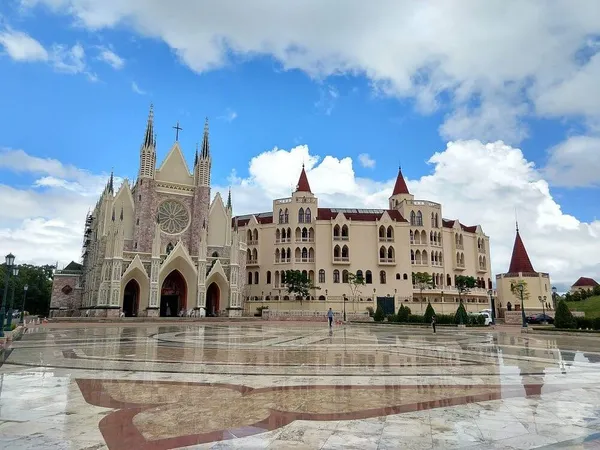
A lover of beauty as a reflection of God, Monsignor João built several churches in a polychrome Gothic style, choosing the combination of colors, shapes, and stained glass windows with great detail. Among them, the Church of Our Lady of the Rosary in Caieiras, São Paulo, stands out. It was solemnly dedicated on February 24, 2008, by His Eminence Cardinal Franc Rodé, and later erected as a Minor Basilica on April 21, 2012. The composition and musical performance of the Heralds' numerous choirs and orchestras, the design of chalices, monstrances, and other sacred objects, the creation of religious habits, the style of monasteries, and the beautiful layout of books and magazines are other fruits of his incomparable artistic sense, which became increasingly supernatural over the years.
Monsignor João and Benedict XVI
In 2008, just three years after his ordination, Monsignor João was appointed by Benedict XVI as Honorary Canon of the Papal Basilica of Saint Mary Major in Rome and Apostolic Protonotary. On August 15, 2009, on the occasion of his 70th birthday, the Holy Father, in recognition of his work on behalf of the Holy Church, conferred upon Monsignor João, through the hands of His Eminence Cardinal Franc Rodé, Prefect of the Congregation for Institutes of Consecrated Life and Societies of Apostolic Life, the Pro Ecclesia et Pontifice Medal, one of the highest honors granted by the Pope to those who distinguish themselves for their work in favor of the Holy Church and the Roman Pontiff.
During the ceremony, His Eminence Cardinal Rodé stated, “As I present you with the award with which the Holy Father wished to reward your merits, the words of St. Bernard come to mind, at the beginning of his treatise De laude novae militiae : ‘For some time now, news has been spreading that a new kind of chivalry has appeared in the world.’ These words can be applied to the present moment. Indeed, a new knighthood has been born, thanks to Your Excellency, not secular, but religious, with a new ideal of holiness and a heroic commitment to the Church. “In this undertaking, born of your noble heart, we cannot fail to see a particular grace given to the Church, an act of Divine Providence in view of the needs of today's world.”