 Heralds of the Gospel Magazine, Vol. 20, nº 226, August 2026
 Heralds of the Gospel Magazine, Vol. 20, nº 225, July 2026
 Heralds of the Gospel Magazine, Vol. 20, nº 224, June 2026
 Who are the Heralds of the Gospel?
 Help of Christians
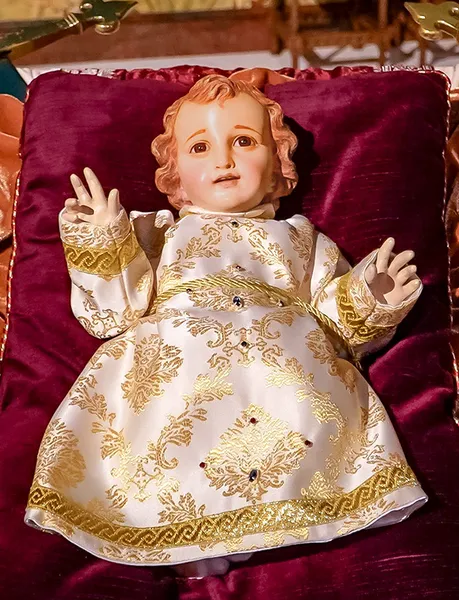 Christmas Carols









June 21 – 12th Sunday in Ordinary Time
Friend: what a hackneyed word! We use it to label relatives or neighbours, work colleagues, study partners, or mere acquaintances…
On social media, “friends” multiply, sometimes reaching the thousands. However, as the saying goes: “a friend to all is a friend to none”…
It is a fact that friendships are established naturally and it is impossible to live without them: they are for each person like “half of my soul.”1
Among earthly goods, there is nothing that surpasses them.2 But… are they all sincere? Today’s Liturgy offers some elements to answer this question.
In the first reading, the prophet Jeremiah declares that he finds himself in the midst of a fierce persecution: “I hear the whisperings of many:‘Terror on every side! Denounce! Let us denounce him!’”.
The continuation of the verse reveals, with terrible simplicity, the identity of these persecutors: “All those who were my friends are on the watch for any misstep of mine” (Jer 20:10). Yes, friends… and all of them!
Now, St. Thomas Aquinas3 explains that true friendship requires selfless benevolence, by which we desire good for the other, and not a good that exists in the other – which characterizes concupiscent love.
Thus, false friends seek to take advantage of us. They are “self-interested,” wanting to benefit from our possessions, goodwill, energy, connections… In short, they are enemies in disguise.
However, worse and more insidious are those who, as in Jeremiah’s time, covet our most precious treasure: our life (cf. Jer 20:13), not only that of our body, but also that of our soul.
“Be afraid of the one who can destroy both soul and body in Gehenna” (Mt 10:28), warns the Saviour.
False friends present themselves with the mask of kindness; in reality, however, they aim to dissuade the righteous from their holy convictions. When they fail to achieve this goal, they begin to persecute them.
It pains us to admit, but this fury can occur even among family members as well as among brothers and sisters in the same Faith, that is, “my mother’s children,” children of the Holy Church, as the Psalm laments (cf. Ps 68:9).
A true friend, on the other hand, stands by our side, as Jeremiah declared (cf. Jer 20:11), not only in good times, but at all times. We can always count on him.
In fact, if a friendship ends one day, it is because it never even began. In this sense, we must trust in the friendship of God, who never abandons us and whose salvation is our “constant help” (Ps 69:13).
Friendship further implies reciprocity. However, in the relationship between men and God, there is an infinite disparity: “Everyone who acknowledges Me before others I will acknowledge before my heavenly Father” (Mt 10:32).
Therefore, friendship with the Lord can only be established by His own gift, grace.
Having loved us to the point of dying for us, the Redeemer is our friend par excellence: “Greater love has no man than this, that a man lay down his life for his friends” (Jn 15:13). Let us follow His example. Where there is no true sacrifice, there is no true friendship.