 Heralds of the Gospel Magazine, Vol. 20, nº 226, August 2026
 Heralds of the Gospel Magazine, Vol. 20, nº 225, July 2026
 Heralds of the Gospel Magazine, Vol. 20, nº 224, June 2026
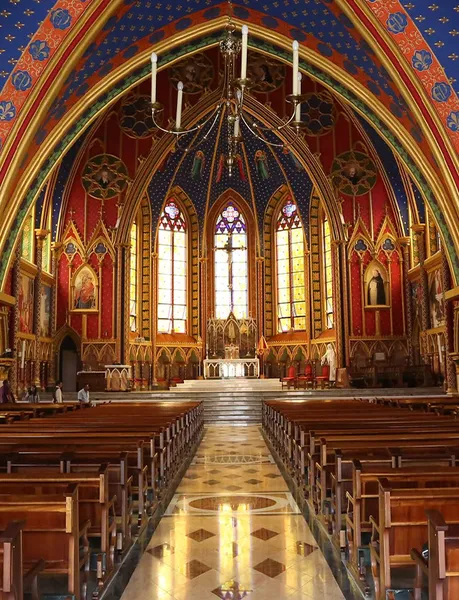 Who are the Heralds of the Gospel?
 Help of Christians
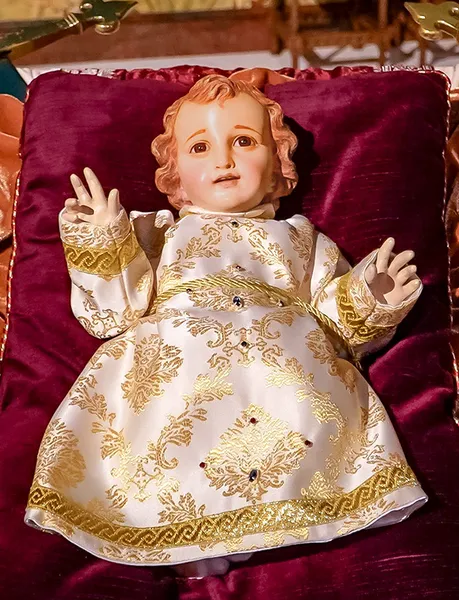 Christmas Carols







This paragraph from the Catechism urges us to prepare ourselves adequately for receiving the Holy Eucharist, highlighting three important aspects.
Firstly, as Pius XII recalls in the Apostolic Constitution Christus Dominus, it was customary since the fourth century to distribute Holy Communion to the faithful while fasting.
The Councils of Hippo, in 393, and the Third Council of Carthage, in 397, had already stipulated that it was necessary to abstain from all food for a certain period before the Eucharistic Celebration.
Due to changes in contemporary society, in 1953 the same Pope reduced the traditional fasting time for receiving the Eucharist, which began at midnight, to three hours in certain circumstances.
Later, in 1964, Paul VI1 prescribed the rule of one hour of fasting in preparation for receiving Holy Communion, with the exception of the consumption of water and medicine, as remains the case today.2
Priests who celebrate two or three Masses on the same day may eat between them; The elderly, the sick, and their caregivers are exempt from fasting.3
These mitigations aimed to facilitate the participation of the faithful in the Sacred Banquet, especially in evening Masses.
In this way, the didactic character of the praxis remained unchanged. Indeed, it is a disciplinary disposition that aims to prepare the body and mind for the reception of the Bread of Angels.
Secondly, the article points to a certain “bodily demeanour,” signifying that the faithful need to present themselves and behave during the Eucharistic rites in accordance with the magnificence of the act.
Decent and respectable attire, sacred silence, and genuflections are not vain gestures and useless practices arbitrarily imposed by the Church.
On the contrary, they are expressions of piety, reverence, and praise that predispose the faithful to an active participation in the Sacrament of the Altar.4
In fact, St. Thomas Aquinas5 observes that the worship of latria requires external acts. Through these expressions, we give thanks to Christ in the Blessed Sacrament and acknowledge that He, by offering Himself in the Sacred Species, manifests to us an infinite love.
The expression “Christ becomes our guest” highlights the bond of divine intimacy established with our Redeemer.
Now, in order for this “stay” in the temple of our souls to produce true spiritual joy, it is necessary that we be in friendship with God, that is, free from all mortal sin, as St. Paul vehemently exhorts (cf. 1 Cor 11:27-29).
Let us therefore pray to Mary Most Holy, whose womb formed the very Body and Blood of Christ, that She may always obtain for us the grace to receive her beloved Son in the Eucharist with the same dispositions of love, piety, and devotion as her Immaculate Heart.