 Heralds of the Gospel Magazine, Vol. 20, nº 226, August 2026
 Heralds of the Gospel Magazine, Vol. 20, nº 225, July 2026
 Heralds of the Gospel Magazine, Vol. 20, nº 224, June 2026
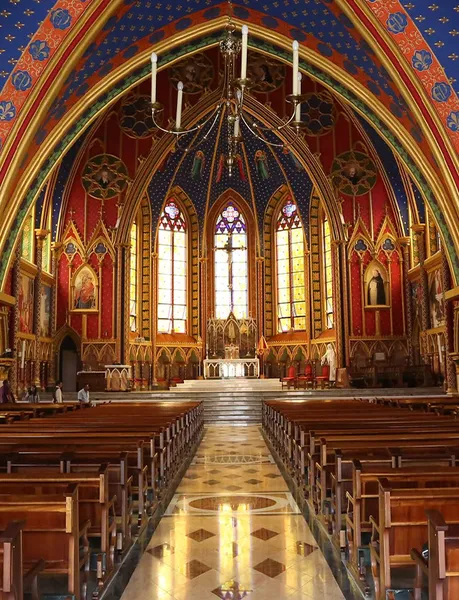 Who are the Heralds of the Gospel?
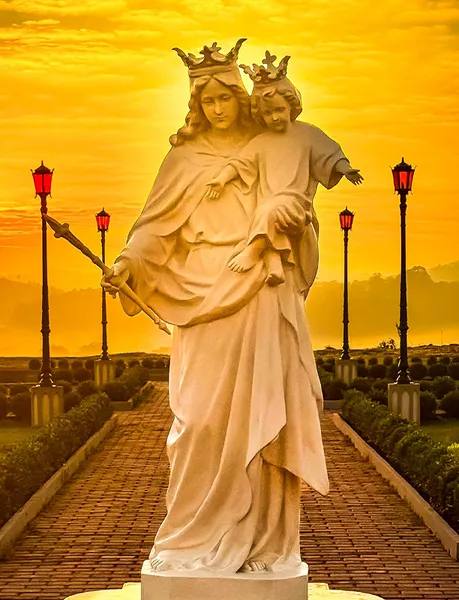 Help of Christians
 Christmas Carols







Tasting wounded us and tasting heals us
Surpassing all fullness of generosity, exceeding all measure of love, [Jesus Christ] offered Himself as food. O singular and marvellous generosity, where the giver comes as a gift, and what is given is wholly identical to the giver!
He therefore gave Himself as food to us, so that man, who lay in ruins on account of death might, through this food, be raised up once again to life. Tasting wounded him and tasting healed him.
Behold how, from where the wound arose, the remedy came forth, and from where death entered, life came forth. Of the former tasting, indeed, it was said: “for in the day that you eat of it you shall die” (Gn 2:17); of the latter, on the contrary, we read: “if any one eats of this Bread, he will live for ever” (Jn 6:51).
URBAN IV. Transiturus de hoc mundo, 11/08/1264: DH 847.
A need satisfied by the Eucharist
When we partake of Jesus, the living and true Bread, we live for Him. By offering Himself completely, the crucified and risen Lord delivers Himself into our hands, and we realize that we were made to partake of God.
Our hungry nature bears the mark of a need that is satisfied by the grace of the Eucharist.
As St. Augustine writes, Christ is truly “panis qui reficit, et non deficit; panis qui sumi potest, consumi non potest”:[1] He is bread that restores and does not run short; bread that can be eaten but not exhausted.
The Eucharist, in fact, is the true, real, and substantial presence of the Saviour, who transforms bread into Himself in order to transform us into Himself.
LEO XIV.Homily, 22/06/2025.
Christ present in His own substance
This is the salvific memorial, in which we recall the blessed memory of our Redemption, in which we are drawn away from evil, strengthened in goodness and grow in virtue and grace, in which we truly progress through the bodily presence of the Saviour Himself.
Indeed, the other things of which we make remembrance, we embrace them with the spirit and with the mind, but we do not thereby obtain their real presence. Instead, in this sacramental commemoration of Christ, Jesus Christ is present with us, albeit in another form, but in His own substance.
URBAN IV. Transiturus de hoc mundo, 11/08/1264: DH 846.
Real presence par excellence
This presence is called “real” not to exclude the idea that the others are “real” too, but rather to indicate presence par excellence, because it is substantial and through it Christ becomes present whole and entire, God and Man.
And so it would be wrong for anyone to try to explain this manner of presence by dreaming up a so-called “pneumatic” nature of the glorious Body of Christ that would be present everywhere; or for anyone to limit it to symbolism, as if this most sacred Sacrament were to consist in nothing more than an efficacious sign.
ST. PAUL VI.Mysterium fidei, 03/09/1965.
The gift par excellence
The Church has received the Eucharist from Christ her Lord not as one gift – however precious – among so many others, but as the gift par excellence, for it is the gift of Himself, of His person in His sacred humanity, as well as the gift of His saving work.
Nor does it remain confined to the past, since “all that Christ is – all that He did and suffered for all men – participates in the divine eternity, and so transcends all times.”[2]
ST. JOHN PAUL II.Ecclesia de Eucharistia, 17/04/2003.
A hidden treasure
The Church possesses within itself a secret, a hidden treasure, a mystery, as if it were an inner heart. It possesses Jesus Christ Himself, its Founder, its Master and its Redeemer. […]
But where is He, if He cannot be seen? Herein lies the secret, herein lies the mystery: Christ’s presence is true and real, yet sacramental; that is to say, it is hidden, yet at the same time identifiable.
It is a presence clothed in special signs, which do not allow us to see His divine human form, but merely assure us that He, Jesus of the Gospel and now Jesus living in the glory of Heaven, is here, in the Eucharist.
ST. PAUL VI.Homily, 28/05/1970.
Sacrament that does not tolerate ambiguity
The Eucharist is pre-eminently a mysterium fidei. Through the mystery of His complete hiddenness, Christ becomes a mystery of light, thanks to which believers are led into the depths of the divine life. […]
It is important that no dimension of this Sacrament should be neglected. We are constantly tempted to reduce the Eucharist to our own dimensions, while in reality it is we who must open ourselves up to the dimensions of the mystery.
“The Eucharist is too great a gift to tolerate ambiguity and depreciation”.[3]
ST. JOHN PAUL II.Mane nobiscum Domine, 07/10/2004.
Sign of contradiction
Precisely because this is a mysterious reality that surpasses our understanding, we must not be surprised if today too many find it hard to accept the Real Presence of Christ in the Eucharist.
It cannot be otherwise. This is how it has been since the day when, in the synagogue at Capernaum, Jesus openly declared that He had come to give us His flesh and His blood as food.
This seemed “a hard saying” and many of His disciples withdrew when they heard it. Then, as now, the Eucharist remains a “sign of contradiction” and can only be so because a God who makes Himself flesh and sacrifices Himself for the life of the world throws human wisdom into crisis.
BENEDICT XVI.Homily, 07/06/2007.
Do we have the same love for Him?
In this eager desire of Jesus we can recognize the desire of God Himself – His expectant love for mankind, for His creation. A love which awaits the moment of union, a love which wants to draw mankind to itself […]
Jesus desires us, He awaits us. But what about ourselves? Do we really desire Him? Are we anxious to meet Him? Do we desire to encounter Him, to become one with Him, to receive the gifts He offers us in the Holy Eucharist?
BENEDICT XVI.Homily, 21/04/2011.
Mary, Woman of the Eucharist
If the Eucharist is a mystery of faith which so greatly transcends our understanding as to call for sheer abandonment to the word of God, then there can be no one like Mary to act as our support and guide in acquiring this disposition. […]
With the same maternal concern which She showed at the wedding feast of Cana, Mary seems to say to us: “Do not waver; trust in the words of my Son. If He was able to change water into wine, He can also turn bread and wine into His Body and Blood” […]
As a result, there is a profound analogy between the Fiat which Mary said in reply to the Angel, and the Amen which every believer says when receiving the Body of the Lord.
Mary was asked to believe that the One whom She conceived “through the Holy Spirit” was “the Son of God”.
In continuity with the Virgin’s faith, in the Eucharistic mystery we are asked to believe that the same Jesus Christ, Son of God and Son of Mary, becomes present in His full humanity and divinity under the signs of bread and wine.