 Heralds of the Gospel Magazine, Vol. 20, nº 226, August 2026
 Heralds of the Gospel Magazine, Vol. 20, nº 225, July 2026
 Heralds of the Gospel Magazine, Vol. 20, nº 224, June 2026
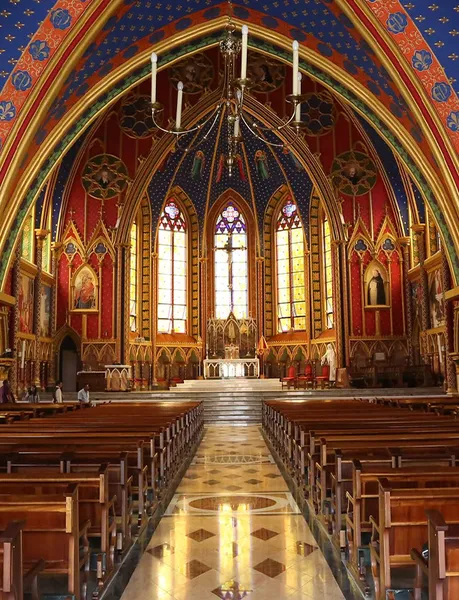 Who are the Heralds of the Gospel?
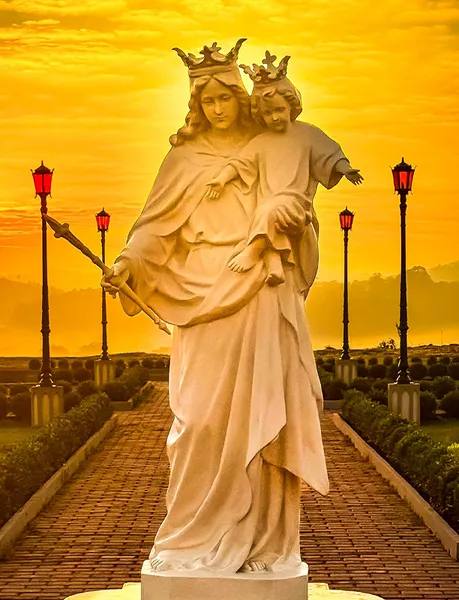 Help of Christians
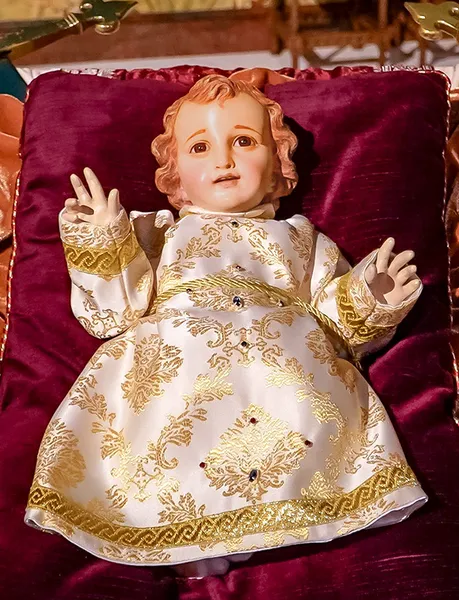 Christmas Carols





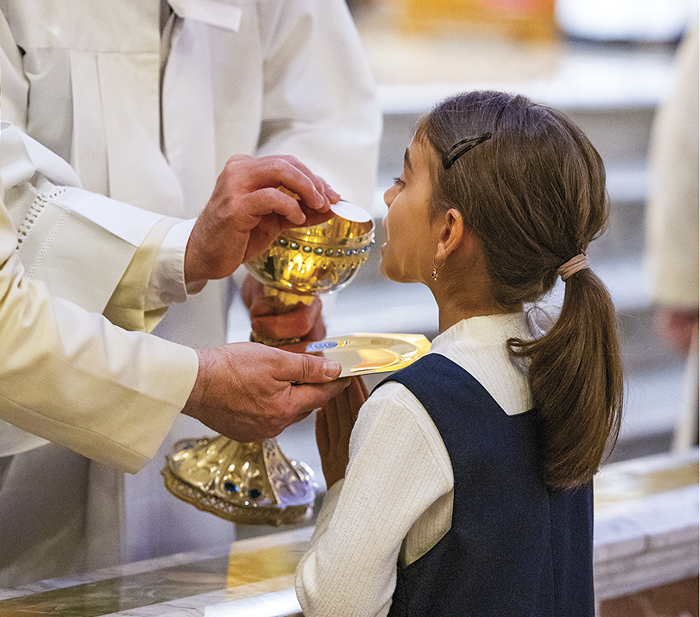
The Sacrament of the Altar has always been the central object of adoration, honour, and doctrinal explanation of the Holy Church.
And it could not be otherwise, for she “draws her life from the Eucharist,”1 in whose species of bread and wine is contained the Real Presence of Christ,2 enlivened by the Holy Spirit.
This august gift encompasses all the spiritual good of the Church, as the Magisterium teaches, and the other six Sacraments, as well as all ecclesial ministries and works of apostolate, are ordered to it and carried out by reason of it.3
Now, more than that, “the Eucharist makes the Church”:4 it is the condition of her existence and the element that makes her Catholic, that is, universally one, because it unites all the baptized in one Body.
This is a sublime and profound truth, but one that we rarely consider!
Early Christian times were very aware of it and, therefore, “used the same words, Corpus Christi, to designate Christ’s Body born of the Virgin Mary, His Eucharistic Body and His Ecclesial Body.”5
What, then, is the relationship between these three realities? What are the roots of this most beautiful mystery of our Faith? To duly meditate on this subject, let us go back to the very institution of the Holy Eucharist at the Last Supper.
The intimate desire of the Sacred Heart of Jesus
The Gospel of St. John, in one of its most beautiful, moving, and magnificent passages, records the prayer made by Our Lord Jesus Christ moments before going to the Garden of Olives to suffer the Passion.
The Saviour had just entrusted to the Apostles, newly received into the priesthood, the most invaluable legacy: His Body, Blood, Soul, and Divinity under the species of bread and wine.
Knowing, then, “that His hour had come” (Jn 13:1), in a mixture of sorrow and tenderness, He prayed to the Father in these words, which we briefly recall here:
Father, glorify Thou Me in Thy own presence with the glory which I had with Thee before the world was made. I have manifested Thy name to the men whom Thou gavest Me out of the world; […]
I am not praying for the world but for those whom Thou hast given Me, for they are Thine; […] I am glorified in them. And now I am no more in the world, but they are in the world, and I am coming to Thee. Holy Father, keep them in Thy name, which Thou hast given Me, that they may be one, even as we are one.
While I was with them, I kept them in Thy name, which Thou hast given Me; […] But now I am coming to Thee; and these things I speak in the world, that they may have my joy fulfilled in themselves. […]
I do not pray for these only, but also for those who believe in Me through their word, that they may all be one; even as Thou, Father, art in Me, and I in Thee, that they also may be in Us, so that the world may believe that thou hast sent Me.
The glory which Thou hast given Me I have given to them, that they may be one even as We are one, I in them and Thou in Me, that they may become perfectly one, so that the world may know that Thou hast sent Me and hast loved them even as Thou hast loved Me (Jn 17:5-23).
This fervent supplication characterized for all eternity what the Church, about to be born from the open side of the Crucified, would become.
Indeed, Our Lord insists four times, with different nuances, on this same request: “Father, that they may be one even as We are one.”
St. Thomas Aquinas explains6 that this desire of the Saviour consists in the unity of the Holy Church being the most perfect possible reflection of His union with the Father.
Just as Both are one God through the Love proceeding from Them, which is the Holy Spirit, Our Lord asks that we also be one through participation in the indestructible bond of charity.
Inspired by the Paraclete, St. Paul expressed this desire of the God-Man in doctrine, especially in his First Epistle to the Corinthians:
For just as the body is one and has many members, and all the members of the body, though many, are one body, so it is with Christ.
For by one Spirit we were all baptized into one body – Jews or Greeks, slaves or free – and all were made to drink of one Spirit. […] Now you are the body of Christ and individually members of it (1Cor 12:12- 13, 27).
Now, this unity becomes effective in the Church through a Sacrament: the Holy Eucharist, the spiritual banquet of the baptized.
It is through the Bread of concord, explains St. Augustine,7 that God makes those who have the same way of life dwell in the same house, for it signifies and accomplishes the communion of life with God and the unity of the faithful by which the Church is itself.
It signifies because it is truly the Body of Christ under the species of bread, made from the union of countless grains, and wine, made from the juice of many grapes, which symbolizes the innumerable baptized united to the Redeemer and to one another in charity, to form the one Church, the Mystical Body of Christ.8
And it accomplishes this in the sense that it is the indispensable cause and condition of the union of the faithful, which makes us “one in Christ Jesus” (Gal 3:28).
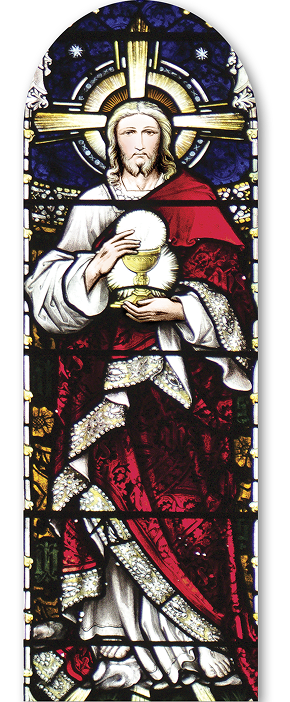
The Christian is another Christ
For the unity of the Mystical Body, our bond with its divine Head is the first and most important factor.
In receiving Communion, we receive as our principal fruit intimate union with the Saviour,9 as He Himself revealed to His disciples in Capernaum:
I am the living Bread which came down from Heaven […]. He who eats my Flesh and drinks my Blood abides in Me, and I in him. As the living Father sent Me, and I live because of the Father, so he who eats Me will live because of Me (Jn 6:51, 56-57).
This is the most perfect union possible with Christ on this earth!10
Moreover, comments St. Augustine,11 united to the Divine Body, we become what we receive; that is, we not only become Christians, but Christ Himself.
Great mystery, ineffable union, honour above all merit, that man and Christ should be one! It is such a great honour for us – affirms St. John of Avila –12 that our tongue and reason are silenced!
St. Peter Julian Eymard, a preeminent adorer of the Blessed Sacrament, also exclaims:
Communion! How significant is this single term! […] The Body of Jesus Christ is united with our body and His Soul with our soul, His divinity resting upon both.
Our body is, so to speak, inserted into that of Jesus Christ, which, as it gains in dignity and nobility, envelops and dominates us, and we are fused into Him in an ineffable union.
What a magnificent thing this union of a glorious and resurrected Body with our wretched nature is! […] It is a celestial spectacle.13
By virtue of this precious gift, the Redeemer prolongs His presence and work in the world, because He always participates in our struggles and sufferings, since He is persecuted in us, His members (cf. Acts 9:4).
In the same way, He multiplies His preaching, His miracles, His mercy, and His patience in labours throughout the world. Our glorious Head truly lives until the end of the world in His Mystical Body, pilgrim and militant on this earth.
And, for this very reason, all the good works of the righteous, as living members of the Church, even if they seem simple or commonplace, are most precious and worthy of eternal life.14
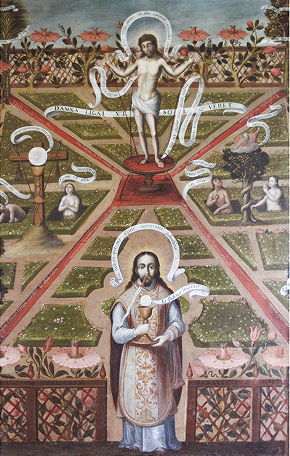
Let us not flee from union with other members
Considering such a profound union with the incarnate Word, it becomes easy to understand how we, Catholics, are bound to one another and what this bond implies.
The Apostle, once again, is extremely eloquent in addressing this subject (cf. Eph 4:3-16). He exhorts us, first of all, to always preserve the unity of the Spirit, expressed in one faith, one hope, one Baptism.
In fact, as St. Irenaeus explains, “our opinion is in accordance with the Eucharist, and the Eucharist in turn establishes our opinion”.15
Thus, by frequently, lawfully, and fruitfully nourishing ourselves on the Sacred Banquet, we maintain our full agreement with Catholic doctrine and live the faith in its integrity, further consolidating ourselves in unity.
Furthermore, St. Paul teaches that everyone, according to their different abilities and tasks, should contribute to the development of the Mystical Body, growing in every way in Him who is our Head, until reaching the state of a mature man in Christ.
For this, we need to clothe ourselves with charity, which unfolds into meekness, mercy, generosity, admiration, humility, magnanimity.
In short, into every kind of good disposition toward one another, for a divided body cannot survive, nor can an organism be constituted of self-sufficient members, linked by themselves to the head and – supreme aberration! – disjointed from one another…
In this sense, special rejection is due to everything that causes discord among the members of this Body of Christ, a very serious sin that directly attacks its integrity.
Even slight envy, quarrels, dissensions, slander, murmuring, and arrogance (cf. 2 Cor 12:20) are severely rebuked in the Gospel, which affirms that whoever calls his brother a fool is condemned to hell, and commands us to refrain from presenting offerings to God until we have made reparation for faults of this kind (cf. Mt 5:22-24).
Whoever wishes, therefore, to have a share with God,
Let him not shrink from the compact of members; let him not be a rotten member that deserves to be cut off; let him not be a deformed member whereof to be ashamed; let him be a fair, fit, and sound member; let him cleave to the body.16
May the Eucharist be the centre of our lives!
“O mystery of piety! O sign of unity! O bond of charity!”17 exclaimed St. Augustine with full reason, in a transport of love and gratitude for this infinite gift, manifested with such simplicity to all members of the Church.
Well then, let us also make this exclamation our own and draw as close as possible to the Sacrament of the Altar, because there is no greater homage that can be paid to the Creator, nor a better way to thank Him, than to receive Him and nourish ourselves from Him in this formidable mystery.18
Likewise, there is no greater good for the Holy Church and for the world than the perfect unity of all the faithful in the Truth, the gateway to all heavenly graces and blessings, and the beginning of the defeat of infernal powers.
May the Blessed Sacrament, received with fervour and assiduity, be the centre of our lives and, as soon as possible, also the effective King of all hearts, for the renewal of the face of the earth.