 Heralds of the Gospel Magazine, Vol. 20, nº 226, August 2026
 Heralds of the Gospel Magazine, Vol. 20, nº 225, July 2026
 Heralds of the Gospel Magazine, Vol. 20, nº 224, June 2026
 Who are the Heralds of the Gospel?
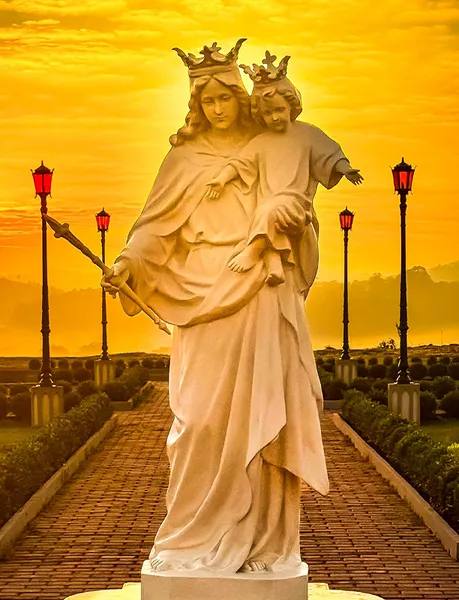 Help of Christians
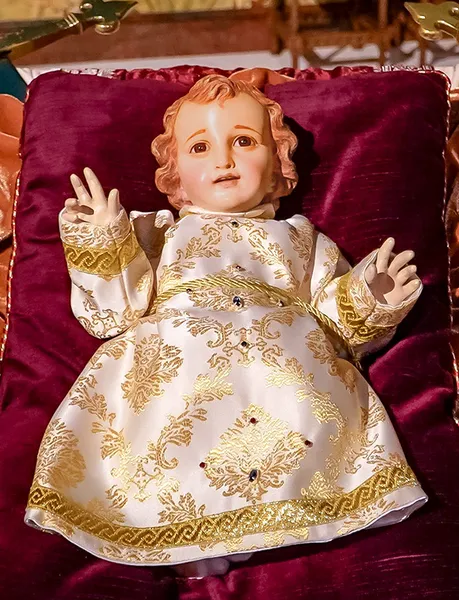 Christmas Carols







The verse from the Acts of the Apostles that raises doubts about its interpretation is the following: “The God who made the world and everything in it, being Lord of Heaven and earth, does not live in shrines made by man.”
First, it is necessary to understand the context of the passage in question. St. Paul was in the Areopagus of Athens.
As an excellent evangelist, he could not, at the beginning of his speech, denounce the errors of the Greeks; it was necessary, first of all, to win their hearts.
St. Bede1 comments that the Apostle to the Gentiles acted gradually: first, he explained that only God is the Creator of the world; then, he openly combated the belief in idolatry; finally, he taught that God, in whose image and likeness man was made, should not be measured by the value of metals.
Despite Paul’s efforts, most of the Athenians rejected his message; only “some men joined him and believed, among them Dionysius the Areopagite and a woman named Damaris and others with them” (Acts 17:34). Thus, the seed of the Gospel was planted.
In this case, the Apostle echoes the words of King Solomon on the day of the dedication of the Temple in Jerusalem: “Behold, heaven and the highest heaven cannot contain Thee; how much less this house which I have built!” (1 Kgs 8:27).
Thomas Aquinas, with unparalleled logic and clarity, explains that external worship of God is indeed necessary.
Since men are endowed with bodies, their worship also needs to be provided with physical matter; therefore, they do it in a concrete place, that is, in the temple.
In this way, they pay greater reverence to Jesus Christ, both in His divinity and in His humanity. Moreover, in sacred precincts, prayers become more worthy of being heard.
For Aquinas, the existence of special times, places, sacred vessels, and ministers for divine worship is also necessary, so as to better demonstrate reverence for God.2
It is worth remembering that when the Child Jesus was twelve years old and had been lost, Mary and Joseph anxiously searched for Him until “after three days they found Him in the Temple” (Lk 2:46).
At the beginning of His public life, Our Lord warned: “Destroy this temple, and in three days I will raise it up” (Jn 2:19), referring to “the temple of His Body” (Jn 2:21).
St. Luke, In turn, describes that shortly before submitting to the redemptive Passion, “every day He was teaching in the Temple, but at night He went out and lodged on the mount called Olivet. And early in the morning all the people came to Him in the Temple to hear Him” (Lk 21:37-38).
By an unfathomable mystery, the very “Temple of God” – Christ – wished to manifest Himself in a special way in the material temple.
In a sublime way, it is also fitting to affirm that the Mother of God was also a temple for the Child Jesus. She conceived Him by the work of the Holy Spirit and contained within herself the very One whom the heavens cannot contain…