 Heralds of the Gospel Magazine, Vol. 20, nº 227, September 2026
 Heralds of the Gospel Magazine, Vol. 20, nº 226, August 2026
 Heralds of the Gospel Magazine, Vol. 20, nº 225, July 2026
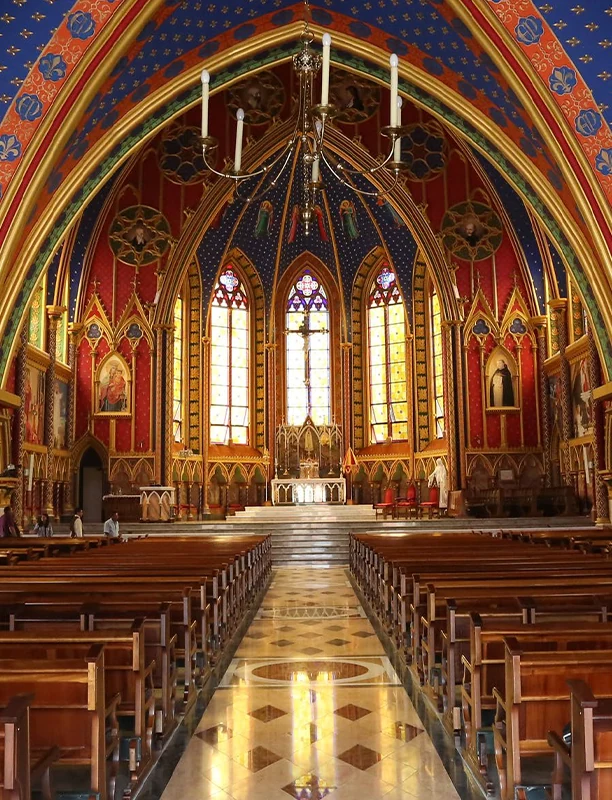 Who are the Heralds of the Gospel?
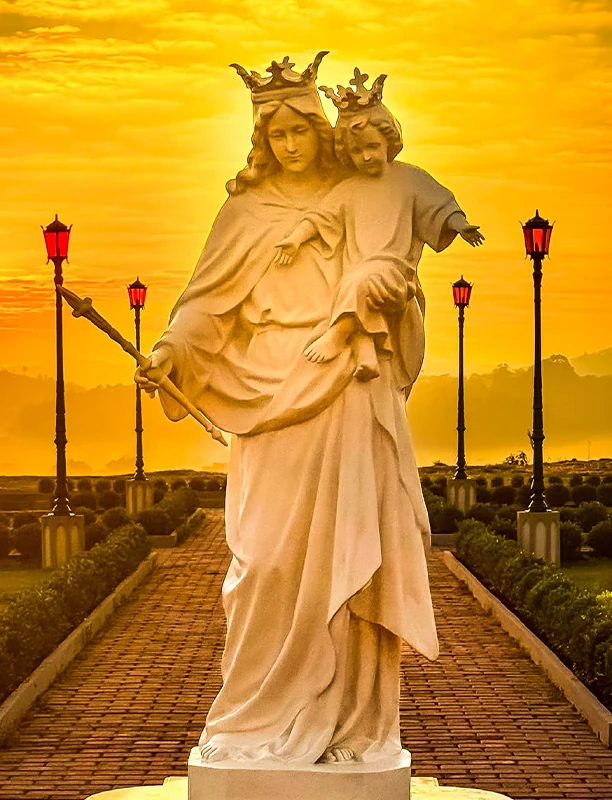 Help of Christians
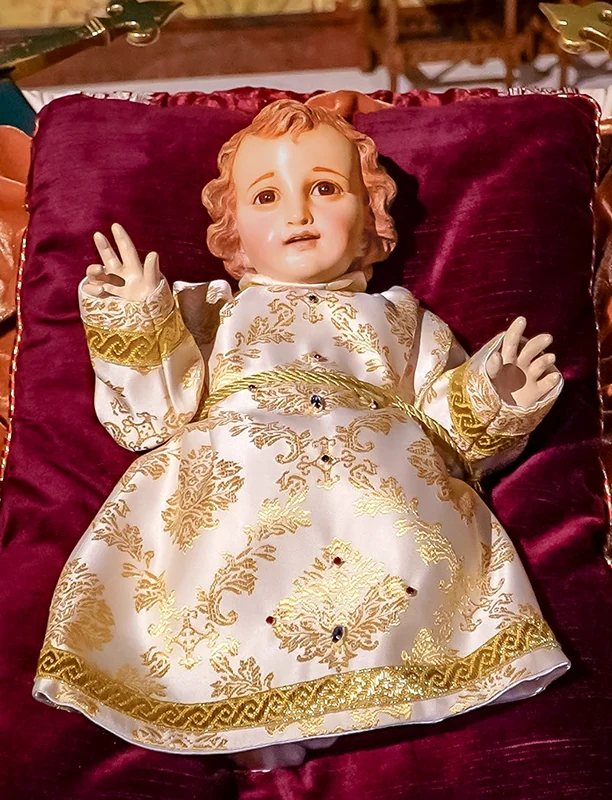 Christmas Carols






From all eternity, the Son planned to erect the infallible chair of His Church in the person of a mortal man. In the glorious scene of Peter’s confession, He manifests for history the perfection of His works and demonstrates just how erroneous human thoughts can be.
Gospel – Feast of the Chair of Peter
13 When Jesus went into the region of Caesarea Philippi He asked His disciples, “Who do people say that the Son of Man is?” 14 They replied, “Some say John the Baptist, others Elijah, still others Jeremiah or one of the prophets.” 15 He said to them, “But who do you say that I am?” 16Simon Peter said in reply, “You are the Christ, the Son of the living God.”
17 Jesus said to him in reply, “Blessed are you, Simon son of Jonah. For flesh and blood has not revealed this to you, but My heavenly Father. 18 And so I say to you, you are Peter, and upon this rock I will build My Church, and the gates of the netherworld shall not prevail against it. 19 I will give you the keys to the Kingdom of Heaven. Whatever you bind on earth shall be bound in Heaven; and whatever you loose on earth shall be loosed in Heaven” (Mt 16:13-19).
I – What Was Lost by Adam, God Restored to His Descendants
The Gospel chosen for the Feast of the Chair of Peter is well known to all Catholics and is close to the heart of the author of these lines because, as well as constituting the foundation of our Church, it also provides the basis for the spirituality of the work he founded: pontifical infallibility, established on the chair that we commemorate today. Contemplated several times over the course of the Liturgical Year, these verses have already been analysed on other occasions in the pages of this magazine.1 However, in this regard the Liturgy resembles the Church, which has fixed characteristics that endure over time, but which never remains static; rather she is enriched by the passing of the years, and the world will only end when the Mystical Bride of Christ has produced the supreme fruit of her last flower. Similarly, it will be enough to turn the “kaleidoscope” of the liturgical texts just a little in order to discover new aspects which have not yet been highlighted in the commentaries made over the last two decades and which will be useful for our spiritual progress.A treasure lost with the sin of Adam
After forming a figure – one of the most beautiful and sui generis objects that came forth from His hands – from the clay of this world2, and with His breath giving life to the first man, God introduced him into Terrestrial Paradise and granted him a very special gift: participation in His divine nature, as well as extraordinary perfections. Among these were infused science, which gave Adam knowledge of all things that could be grasped by the human intellect and a full understanding of the truth, as well as the gift of integrity, by which his lower powers were subjected to superior reason, and finally, immortality. Having created man in His “image and likeness” (Gn 1:26), the Lord was pleased to walk with His masterpiece in the Garden of Eden (cf. Gn 3:8), instructing Adam and building on the wisdom He had infused into him. This entire order of things was broken ex abrupto by the original sin committed by our common father. The notions of goodness, beauty and truth weakened in his soul, his reason became clouded, and an irremediable tendency to evil became the legacy he left us. In order to remedy the unbridled decadence of our race, God himself decided to reveal to men what they would have received from Adam, and to this end He chose a people as the repository of truth. By enlightening the patriarchs, judges and prophets, His words pointed to a great solution for Adam’s sin and to the reopening of the gates of Heaven that had been closed by it. This solution was the Second Person of the Blessed Trinity, who became incarnate and, at a certain moment, clearly showed the universal character of His mission: to make reparation for the fault committed and to save all of humanity, allowing it to return to the state in had enjoyed prior to sin and thus to recover what, in the person of Adam, it had lost in Paradise. However, Our Lord Jesus Christ did not restore this treasure in the same state that the father of the living had left it, but made it multiply throughout history by means of an institution that would be the continuation of His presence on earth: the Holy Catholic Church. In founding it, He offered us a sublime lesson regarding the perfection of His work, perhaps beyond the reach of our intelligence, but full of divine wisdom. These are the marvels which we can especially contemplate in today’s Gospel. Cathedral of Santiago de Compostela (Spain)
II – The Founding of an Immortal Institution
13 When Jesus went into the region of Caesarea Philippi He asked His disciples, “Who do people say that the Son of Man is?”
Looking at the Man, and not at God
14 They replied, “Some say John the Baptist, others Elijah, still others Jeremiah or one of the prophets.”
 St. Peter seated upon his chair -
 St. Peter’s Basilica, Rome
Who “I am”?
15He said to them, “But who do you say that I am?”
An impetus inspired from above
16Simon Peter said in reply, “You are the Christ, the Son of the living God.”
The blessedness of receiving a revelation
17Jesus said to him in reply, “Blessed are you, Simon son of Jonah. For flesh and blood has not revealed this to you, but My heavenly Father.”
 Mosaics from the Basilica St. Paul Outside the Walls depicting the Popes
 St. Peter, St. Clement, St. Eleutherius, St. Caius, St. Sylvester and St. Gregory VII
The immortality of the Church erected upon a mortal man
18 “And so I say to you, you are Peter, and upon this rock I will build My Church, and the gates of the netherworld shall not prevail against it.”
The power to open and to close Heaven
19 “I will give you the keys to the Kingdom of Heaven. Whatever you bind on earth shall be bound in Heaven; and whatever you loose on earth shall be loosed in Heaven.”
III – The Church: Our Reason for Confidence
The commentaries on this Gospel’s verses have been deliberately concise, since on other occasions we have had the opportunity to delve deeper into their exegetical significance. In this article, it will be of greater benefit to consider some of the teachings offered to us in the glorious scene that unfolded at Caesarea Philippi.An invincible institution
Born of the Most Precious Blood of Our Lord Jesus Christ, the Holy Church unites characteristics that make it an unparalleled institution. While yet in this prelude to its foundation, the Redeemer was already granting it even more than He had given Adam in Paradise: infallibility in relation to the truth and the guaranteed assistance of the Holy Spirit to those who occupy the Chair of Peter, when pronouncing on matters of faith and morals. Moreover, by infusing the Church with a power of expansion flowing from a divine sap, He made it catholic, that is to say, universal, for it is made to be known by all and is aimed at the salvation of all. By the Communion of Saints, He also endowed her with the holiness and merits of all those throughout the world who are in God’s grace. And He gave her continuity in the same faith, by which she is enriched with ever new explanations, preserving a unity of doctrine which is never broken. Finally, He adorned her with the gift of immortality, as the Colosseum and the ruins of the Circus Maximus in Rome bear witness, places where millions of martyrs died. Or likewise, cities such as Zaragoza, Lyon and Sebaste, in which many Christians proclaimed their faith with their own blood, not to mention the martyrdoms still happening today. Persecutions, untold apostasies, devastating heresies... Nothing has succeeded in destroying the Church, for she possesses the strength of the Almighty. That is the secret of the perennity of this divine work, despite human deficiencies; that is the beauty of her stability, despite every ordeal. Benedict XVI receives Msgr. João Scognamiglio Clá Dias, EP, in the Library of the Apostolic Palace, on 26/11/2009
And what is our role in this historic setting?
And yet, all of these marvels have as their underpinning that fragile rock which is Peter. Conceived with original sin, he had moreover acquired a series of imperfections, compounded by an impulsive and inconstant temperament... Nevertheless, the Saviour builds His Church upon this rock. Why? He confided the answer to St. Paul: “My power is made perfect in weakness” (2 Cor 12:9). This reality shows how greatly our criteria differ from His, reminding us of the oracle addressed to Isaiah: “For my thoughts are not your thoughts, neither are your ways my ways, says the Lord. For as the heavens are higher than the earth, so are my ways higher than your ways and my thoughts than your thoughts” (55:8-9). If during that conversation at Caesarea Philippi the Divine Master were to turn to us and ask which of the Apostles we would judge to be the most apt to receive the infallible chair of the Church He was to found, probably none of us would choose the spontaneous and somewhat imprudent figure of Simon Peter... Nor would we, perusing the Twelve, deem such a positivist as Thomas to be ideal. John would seem too inexperienced and James rather unkind and given to violence (cf. Lk 9:54). Who can guarantee that we would not choose a balanced man, full of common sense, and with great administrative capacity called Judas Iscariot? How faulty are the judgements of men! The divine choices do not always coincide with ours. If a work belongs to God, we should not want to carry it out by human means; it is up to Him to direct what belongs to Him.God chose us for a better era
Of this Church thus constituted, we have the grace to be living stones! We belong to the Mystical Body of Christ as cells that participate in all the benefits of its Head: all that is of Our Lord is transmitted to us! Led by the Holy Trinity and animated by a “soul” which is the Holy Spirit, nothing that happens in the Church escapes God’s control. We must have faith that, even amidst the confusion that our human eyes witness today, everything has its meaning and takes place in accord with the permission of Providence, directed towards a plenitude which we cannot imagine. In this tumultuous twenty-first century we shall see a glorious continuation of the Church’s history, which will be the Reign of Mary. But it will be constituted with “rocks” far more wretched than Peter, which we could not even call sand. But for this to be accomplished, just as the Apostles were required to believe that the institution which Our Lord had come to found was indeed divine and indestructible, we will be asked to have an unbreakable faith in the triumph of the Immaculate Heart of Mary, both within us and throughout the whole world. Crowning ceremony for of Our Lady of Fatima, held in the Basilica of Our Lady of the Rosary, Caieiras (SP), on 12/5/2019