 Heralds of the Gospel Magazine, Vol. 20, nº 226, August 2026
 Heralds of the Gospel Magazine, Vol. 20, nº 225, July 2026
 Heralds of the Gospel Magazine, Vol. 20, nº 224, June 2026
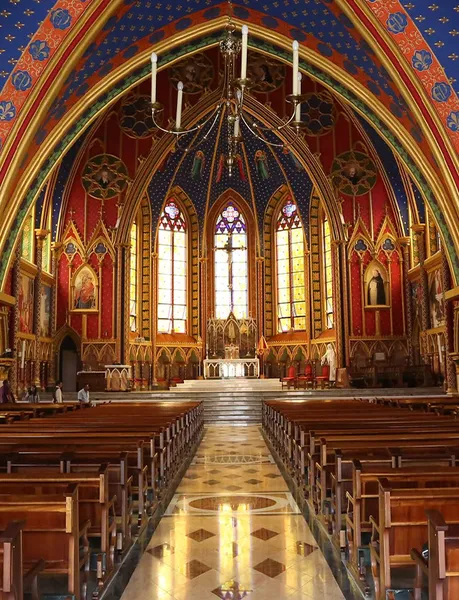 Who are the Heralds of the Gospel?
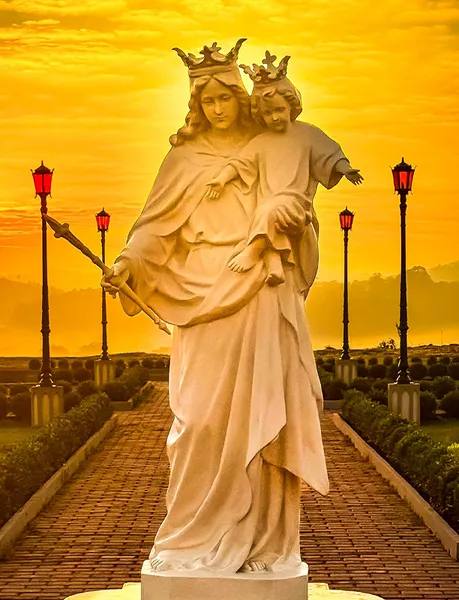 Help of Christians
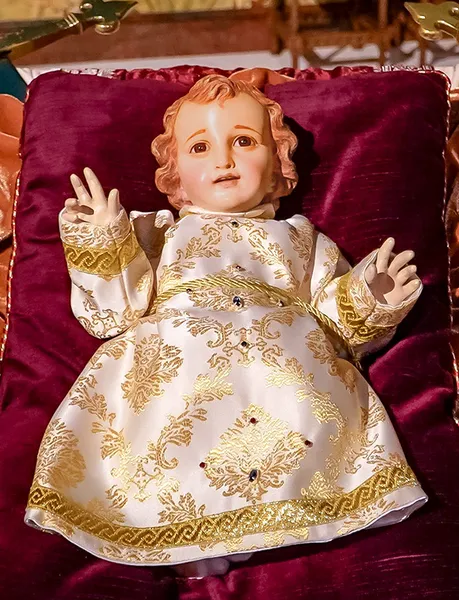 Christmas Carols








If God called Abraham friend, Isaac my servant and Jacob my holy one, He might well call Elijah my prophet.
All the more so because, at the Transfiguration, Our Lord summoned neither the friend nor the holy one, but he who combined both attributes with prophecy: “How glorious you were, O Elijah, in your wondrous deeds! And who has the right to boast which you have?” (Sir 48:4).
Innocent as some, holy as few, fiery as no other, he was a sun to the people of Israel: he illuminated their paths, warmed their hearts with zeal for the Law, dried up idolatrous worship and burned it in the Valley of Kishon.
Yet unlike the sun, his brilliance never set.
Martyr, judge and miracle worker
When God wants to speak in the course of history, He communicates with His closest friends, the prophets, unmistakable heralds of His will.
And since the human will does not always coincide with the divine – to say the least – prophets must fight against a great deal of human respect and mediocrity, facing the hatred of a city or a people at a precise time, and becoming a torch of fidelity and martyrdom, in which the burning wick is himself.
It is, therefore, with a clarion call of fidelity that Elijah bursts into history. In the decadent history of the chosen people…
Israel was going through serious difficulties. Passing from one unstable situation to another, the kingdom came into the hands of an insecure and unfaithful man, whom Scripture accuses of being even worse than all his predecessors (cf. 1 Kgs 16:30): Ahab.
As if it were not enough that he had married a pagan woman – a crime forbidden by God Himself (cf. Dt 7:1-4), given the danger of idolatry – he also introduced the worship of Baal into the temple he had built:
“There was none who sold himself to do what was evil in the sight of the Lord like Ahab, whom Jezebel his wife incited” (1 Kgs 21:25). A tremendous punishment was ravaging the Promised Land because of the sin of its inhabitants.
The only remedy for the situation was a bitter one, but Elijah was not afraid to administer it, and in his capacity as a man of God he commanded the clouds not to produce rain: “By the word of the Lord he shut up the heavens, and also three times brought down fire” (Sir 48:3).
It was the most fitting of corrections, as St. Ambrose comments, who sees in it a “just punishment to adequately repress the lack of temperance, closing the heavens to the wicked who had defiled the things of the earth.”1
It was in this interim that Elijah, by divine order, arrived in Zarephath of Sidon. After subjecting the widow who hosted him to a tremendous test of confidence – culminating in her seeing her son die – he performed the first resurrection narrated in the Scriptures.
There is no indication that the prophet hesitated to perform this miracle; in fact his prayer, preceded by filial complaint, is more like an order given to God than a contingent plea:
“O Lord my God, hast Thou brought calamity even upon the widow with whom I sojourn, by slaying her son? […] let this child’s soul come into him again” (1 Kgs 17:20-21). The Lord heard Elijah’s prayer, and the boy’s life was restored.
Unrivalled denouncer
The drought decreed by the prophet lasted for three long years (cf. 1 Kgs 18:1), and only then did the Most High order him to appear before Ahab, perhaps hoping for a retraction from the wicked monarch…
Far from it, the king accused him of being the cause of the problems plaguing the country: “Is it you, you troubler of Israel?” (1 Kgs 18:17).
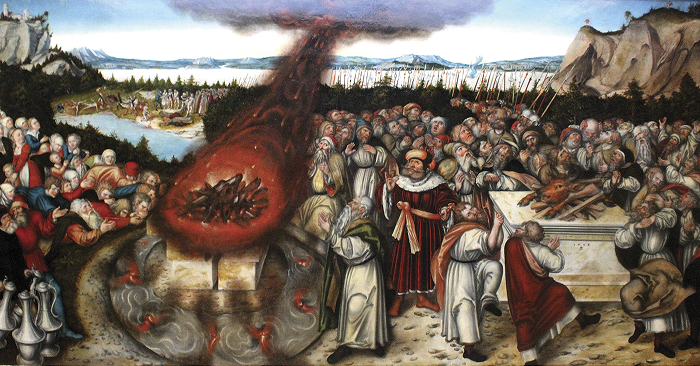
Elijah, whose diplomacy more resembled a lightning bolt than a fencing stroke, rebuked him by summoning Jezebel’s prophets to a sacrifice on Mount Carmel, in order to clearly demonstrate who the true God was.
In an instant, Ahab gathered all the prophets of Baal at the appointed place. Elijah also appeared. The result was quite telling: eight hundred and fifty pagan priests against a single servant of Yahweh.
Why instigate a public manifestation of who the true God was? Did this not evoke a certain pride and recklessness? Would it not have been more prudent, more diplomatic, to retreat to a cave in prayer, waiting for divine vengeance to visit those wicked people? No.
It was necessary for the people who were limping on both feet (cf. 1 Kgs 18:21) to know the truth and, through it, follow the right path. This is one of the characteristics of the prophet: to distinguish truth from error.
Breaking the silence that covered Mount Carmel, Elijah proposed: “‘the God who answers by fire, He is God.’ And all the people answered, ‘It is well spoken’” (1 Kgs 18:24).
The priests of Baal quickly prepared a bull and, in the morning, began to pray. Dancing, singing, supplications… nothing was enough to awaken the Canaanite deity.
At noon, Elijah began to mock them: “Cry aloud, for he is a god; either he is musing, or he has gone aside, or he is on a journey, or perhaps he is asleep and must be awakened” (1 Kgs 18:27).
Stung in their pride and already somewhat uncertain about the truth of their religion, they slashed themselves with swords and spears, covering themselves in blood to move Baal. In vain. Nothing happened…
“Come near to me” (1 Kgs 18:30), Elijah finally exhorted. Erecting an altar to the Lord, he dug a trench around it and poured water over the altar and the sacrifice three times, flooding the trench.
The people watched, spellbound. The prophet did not need to raise his arms, nor even a staff. At most, he raised his eyes to heaven and prayed:
O Lord, God of Abraham, Isaac, and Israel, let it be known this day that Thou art God in Israel, and that I am Thy servant, and that I have done all these things at Thy word.
Answer me, O Lord, answer me, that this people may know that Thou, O Lord, art God, and that Thou hast turned their hearts back (1 Kgs 18:36-37).
Immediately the fire of the Lord descended, consuming not only the victim but also the stones of the altar and the water around it. The Lord had heard the prayer of the righteous one. The Baalites howled. Elijah prayed.
And while the people worshiped the true God, the prophet commanded: “‘Seize the prophets of Baal; let not one of them escape.’ And they seized them; and Elijah brought them down to the brook Kishon, and killed them there” (1 Kgs 18:40).
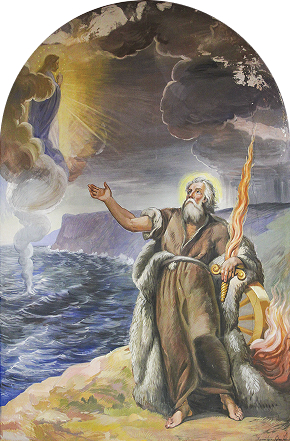
Caudete (Spain)
The first devotee of Mary
After the scene was over, the man of God advised Ahab to eat and drink, for he already heard “a sound of the rushing of rain” (1 Kgs 18:41).
Going up to the top of Mount Carmel, he prostrated himself on the ground and, seven times, sent his servant to look toward the sea. On the seventh time, the servant exclaimed: “Behold, a little cloud like a man’s hand is rising out of the sea” (1 Kgs 18:44).
Elijah warned the king to hurry so that the rain would not stop him on his way. Ahab, who had already seen fire descend from Heaven at the prophet’s word, departed without losing a moment.
The authors agree in relating the small cloud, which announces a torrential storm, to the birth of the Blessed Virgin, who would bring to earth a deluge of graces and the God-Man Himself.
The former was the fruit of a punishment; the latter, of immense forgiveness. It is certainly symbolic that the prefigurement of Mary appears on the horizon right after the defeat of idolatry.
It is when false religion succumbs that Our Lady shines. Or, perhaps, the empire of Satan crumbles at the mere sound of her footsteps.
After a heroic act of fidelity to the true religion, God grants history the greatest prize up to that moment: the promise of a Mother for orphaned humanity.
The depository of fidelity
Now, returning to his home, Ahab hid none of these facts from Jezebel, whom he obeyed with true servitude.
She seethed with rage and sent the prophet the following message: “So may the gods do to me, and more also, if I do not make your life as the life of one of them by this time tomorrow” (1 Kgs 19:2). Elijah was afraid and fled.
Those whom God loves with predilection are tried in a special way, in the very foundation of their axiology: the promise of their own vocation’s fulfilment, the certainty of victory.
Thus, He allows and even brings about apparent denials and failures in the lives of his chosen ones. It was no different with Elijah.
He, who had faced the hatred of an entire nation, who had avenged the Lord’s honour on Carmel, who would yet bring down fire from Heaven upon the soldiers of Ahaziah (cf. 2 Kgs 1:10-12), he who represented unbreakable fidelity… fled from a single woman.
Exhausted by the journey and the ordeal, Elijah collapsed under a juniper tree, saying: “It is enough; now, O Lord, take away my life; for I am no better than my fathers” (1 Kgs 19:4).
Herein lies the prophet’s great perplexity. Called to be the man of all fidelities, he nevertheless feels the miseries of failure. And in this state, he fell asleep.
Over the course of a deep sleep, an Angel of the Lord twice gave him a hearth bread, which gave him strength to walk forty days and forty nights towards Mount Horeb.
Commentators see in this mysterious food a prefiguration of the Eucharist.
Elijah thus became the prophet of God’s two greatest treasures: the Blessed Virgin Mary and her Divine Son. Indeed, he would not be a true prophet of the Mother if he were not also a prophet of the Son.
The mountaintop usually represents, in the Holy Scriptures, the place of divine manifestation. It was on the mountaintop that Moses received the Law (cf. Ex 19, 20); It was on a similar site that the Incarnate Word was transfigured (cf. Mt 17:2).
When Elijah arrived at the top of Horeb, the Lord commanded him to wait for Him on the mountain. Hurricanes split the rocks, terrible earthquakes were felt, and even fire was present… but the Almighty was not in them.
Finally, the murmur of a light breeze was heard. It was the God of Israel passing by: “What are you doing here, Elijah?”
Faced with this question, the prophet responded with a cry that would immortalize him in history and whose echo has lingered on the lips of humanity, whether for the most sincere praise or the most unjust antipathies:
With zeal have I been zealous for the Lord God of hosts: because the children of Israel have forsaken Thy covenant: they have destroyed Thy altars, they have slain Thy prophets with the sword, and I alone am left, and they seek my life to take it away (1 Kgs 19:14).
More than a man, a spirit
Elijah had taken faithfulness to the Lord to such a height that it was no longer possible to keep him among his own people.
Not that the prophet feared the people. They were not worthy of him. As the holy man resumed his journey through the desert, God did not lead him to Israel, but to Damascus.
On the way, he anointed Elisha as a prophet in his place: he placed his mantle upon him, and the new disciple, renouncing everything, followed him. It is when the sun rises that it emits its most radiant splendours.
Certainly, the meeting of the two prophets was one of those moments that illuminated the dawn of an entire historical era, and that would serve as a paradigm of the relationship between founder and disciple, father and son, until the end of the world.
Elijah’s earthly mission was nearing its end.
At the moment of leave-taking, Elisha, addressing the one he had already begun to call father, implored what was necessary for the fulfilment of his own vocation: a “double share” (2 Kgs 2:9) of Elijah’s spirit.
And, while they were talking, “a chariot of fire and horses of fire” (2 Kgs 2:11) separated them, carrying the prophet to Heaven in a fiery whirlwind.
If at dawn the most radiant gleams of the Sun are manifested, it is at sunset that the clouds are tinged with fire. It was in such a fiery firmament that Elisha contemplated his father depart and the double portion of the master’s spirit descend upon him.
Thus, the story of Elijah, far from being over, had just been immortalized in Elisha.
This marked the beginning of what can be called the Eliatic line, a noble lineage of prophets devoted to the Blessed Virgin Mary, whose intrepid feats and heroic virtues are immortal, since they partake in the supernatural light of him who was once the sun of Israel.
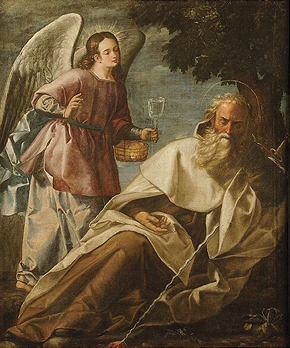
desert by an Angel”, by Felipe Gil de Mena - National
Museum of Sculpture, Valladolid (Spain)