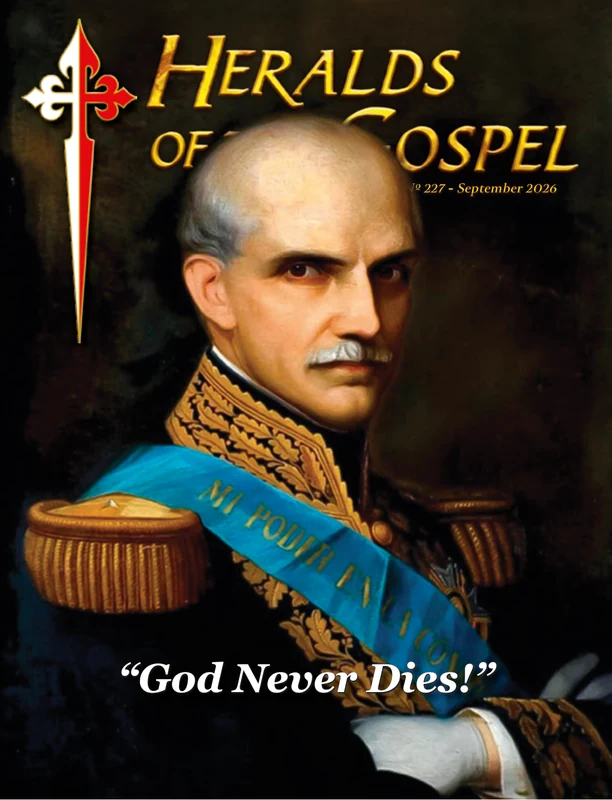
 Heralds of the Gospel Magazine, Vol. 20, nº 227, September 2026
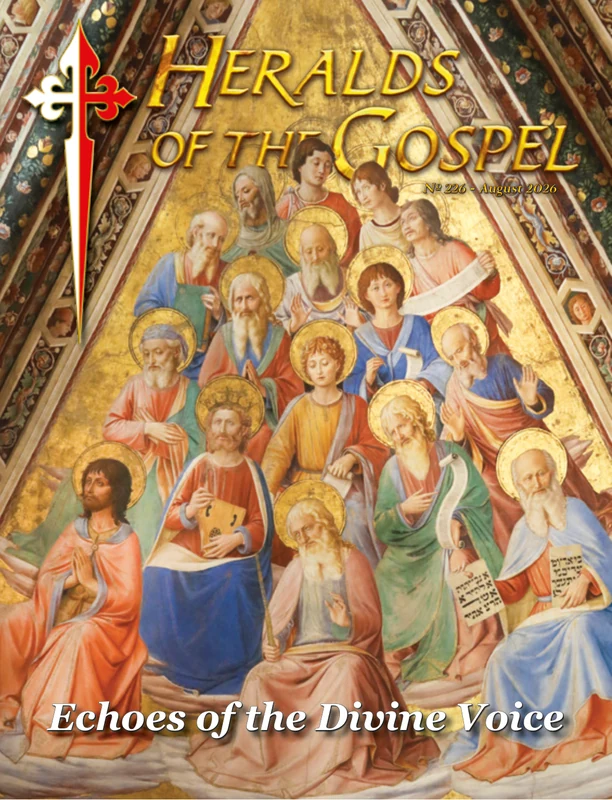 Heralds of the Gospel Magazine, Vol. 20, nº 226, August 2026
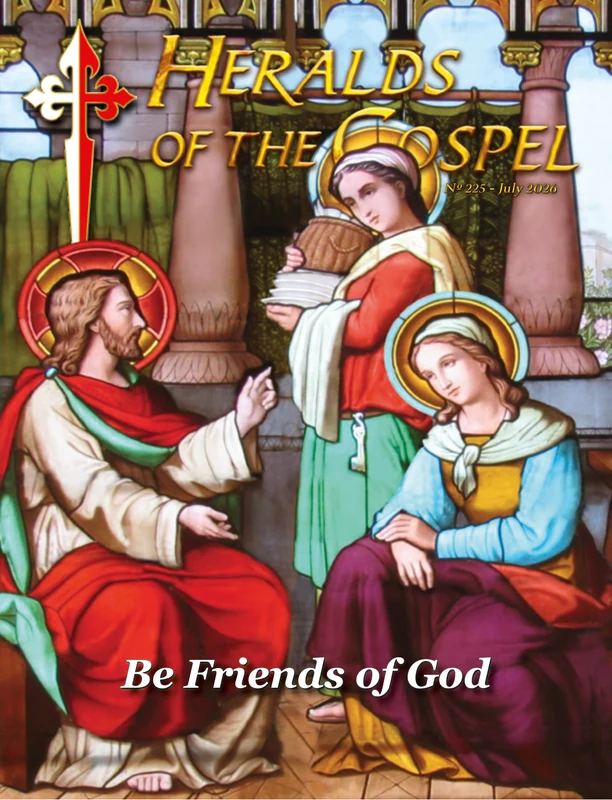 Heralds of the Gospel Magazine, Vol. 20, nº 225, July 2026
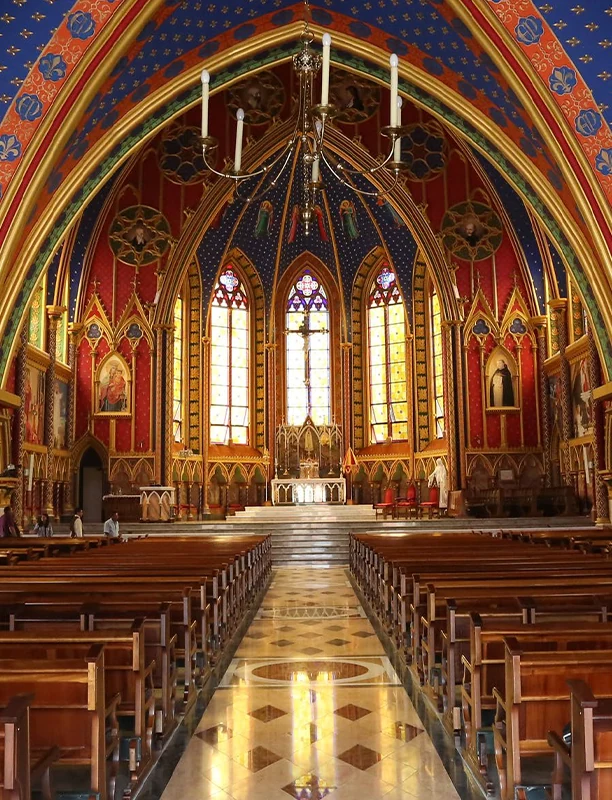 Who are the Heralds of the Gospel?
 Help of Christians
 Christmas Carols








A difficult, but feasible mission
Education has always been and still is a great challenge – quite a daunting one if we consider the magnitude of difficulties presented by today’s world and the legion of enemies, whether hidden or declared, that disturb the parent-child relationship. Difficult, however, does not mean impossible. And the secret to success lies, first of all, in parents realizing the disproportionate task they are taking on and in imploring the special help of God, before whom they promised unconditional fidelity when they embraced the path of marriage. It is above all in prayer that they will find the strength and wisdom to guide each stage of their children’s upbringing. The second step consists in heeding the advice that the Holy Church, as the true Teacher of truth, offers to Christian families of all times.True and balanced affection
According to sound Christian tradition, so often supported by the Magisterium, there are some general principles to be observed in a healthy and Catholic process of formation.

“A mother scolds her son”, by Albert Becker
Love without favouritism
Affection must also observe another important rule, especially in large families: it cannot show favouritism based on temperamental or intellectual affinities, but must pour itself out to the greatest degree possible upon all children, treating each one of them as a gift from God, the most excellent fruit of marriage.2 In the same way, parents should take care not to project their own desires or ambitions onto their children, because their goal must be the child’s well-being and happiness and never personal advantage. Making specific plans for their children’s future, such as planning careers and lifestyles, without taking into account the children’s aptitudes and tendencies is the path to unhappiness.
Educating is not just about saying “yes” or “no”
There are those who think that educating is just about dictating rules of discipline. True teaching goes much further, as it has a twofold scope: it encompasses both body and the soul. Using rules as a means and not as an end, it nurtures physical assets, such as health, disposition and energy, with the aim of creating favourable conditions for the child’s intellectual and spiritual development. In fact, parents have the obligation to encourage, through words and example, the natural and supernatural virtues in their children, a task that ranges from basic instruction – rules of behaviour, cleanliness and courtesy – to the most important: religious education.
Gradual journey
Just as a remedy would become poisonous if ingested in large quantities in one dose, childrearing is a gradual process – it spans from the cradle to full maturity – and would fail if any of its stages were skipped. Each child must be shaped according to age and temperament, in a wise mixture of affection and firmness, recognition and demand, encouragement and correction. In the precious first three years of life, it is recommended that children be given small responsibilities, such as putting away their toys, organizing their belongings, taking dirty clothes to the designated place and learning to dust certain surfaces. This allows them to acquire notions of order and cleanliness. After that, until the age of seven, it is recommended that they help to take care of the family pet, to make their own bed, water the plants and wash some dishes, so that they feel like an active part of the family. If they grow up healthily in terms of responsibilities, they will reach the age of twelve knowing how to help with some household chores, such as preparing simple meals, house cleaning, light laundry duties and even taking care of younger siblings, while being left, however, to fully profit from the joys of childhood.
“Saying Grace”, by Karl Gebhardt - Private collection
Hope of the Church and the world
There is no diploma programme for the preparation of good parents… just as there is no method capable of foreseeing every possible dilemma that may arise in the education of children. One thing, however, is certain: what parents demand of their children in the process of their upbringing will constitute their lot for the rest of their lives, and everything they become in the future will be a reflection of the education they receive at home. Dear fathers and mothers who have devoted yourselves to reading this article, spare no energies in educating your children: under the mantle of family life, they will feel the goodness of God Himself, who promised to be an ever-compassionate Father to mankind (cf. Ps 102:13), and they will have joy in fulfilling the Commandment whose practice the Redeemer Himself wished to set an example: “Honour your father and your mother, that your days may be long in the land” (Ex 20:12). Furthermore, as well-formed young Christians, they will be the hope of the Holy Church for the transformation of society and the world. ◊Notes
1 BOULENGER, Auguste. Doutrina Católica. São Caetano do Sul: Santa Cruz, 2022, t.II, p.86.
2 Cf. CCC 2378.