 Heralds of the Gospel Magazine, Vol. 20, nº 227, September 2026
 Heralds of the Gospel Magazine, Vol. 20, nº 226, August 2026
 Heralds of the Gospel Magazine, Vol. 20, nº 225, July 2026
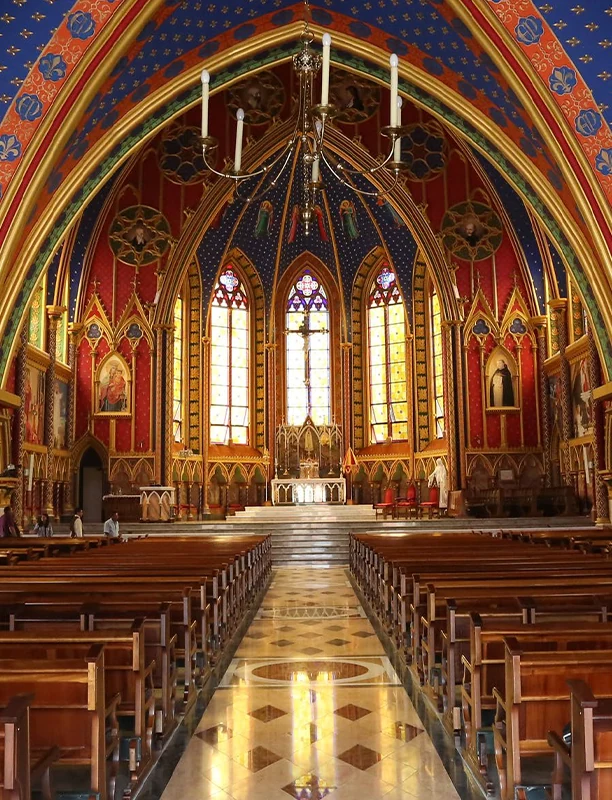 Who are the Heralds of the Gospel?
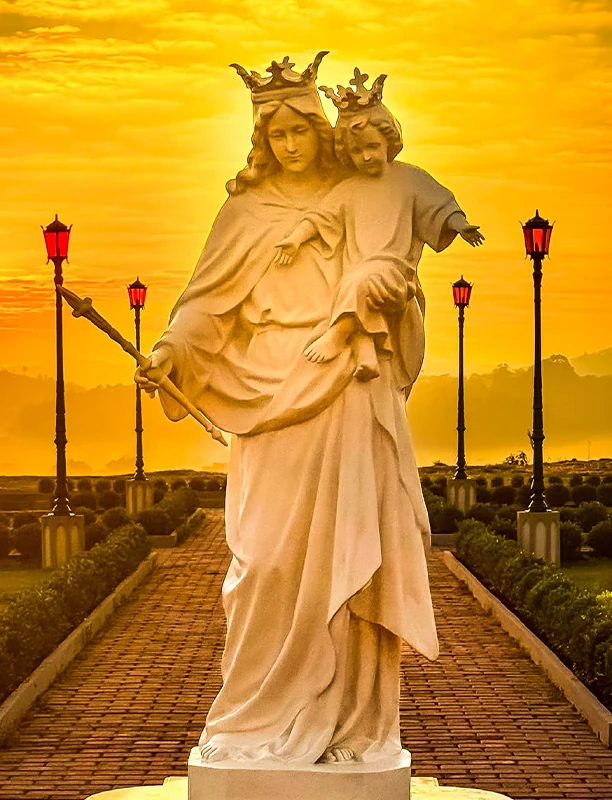 Help of Christians
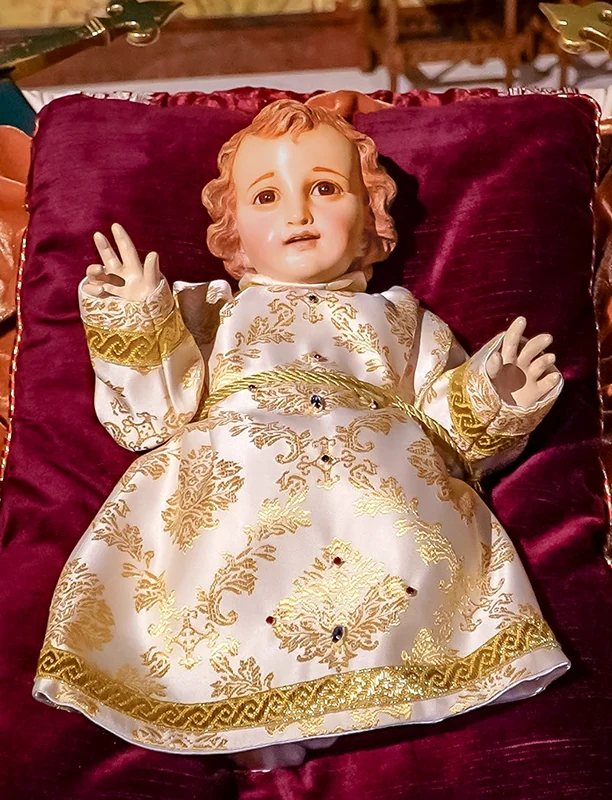 Christmas Carols








As a counsellor to Popes, a mystic and prophetess, she marked the course of history. Her life, pervaded by an ineffable relationship with the supernatural, was consummated in a sublime bond of love for God through her offering as a victim for the purification of the Church.
Childhood marked by intense piety
She was born in 1347, on the day of the Annunciation, which fell on Palm Sunday that year. It was clear from early childhood that Providence had important designs for the little girl. An episode that occurred when she was only six years old illustrates this: returning from a walk with her brother Stephen, Catherine saw Our Lord Jesus Christ clothed in His pontifical garments and seated on a throne, atop the church of the Dominicans, together with St. Peter, St. Paul and St. John the Evangelist. The Divine Master blessed her with special love, filling her with awe, thus marking the beginning of an intimate relationship with the supernatural which would accompany her throughout her life. In fact, the Holy Spirit frequently acted in Catherine’s soul by means of mystical phenomena that were often manifested externally. For example, while yet a child, she used to be carried up and down the stairs in the air, with her feet scarcely touching the steps as she moved. Nevertheless, her only wish was to kneel and make acts of reverence and love to the Blessed Mother of God. The childhood of this providential soul was marked by an intense piety, instilling in her an ardent desire to give herself to God. When she was seven, she took a vow of virginity before an altar of the Blessed Virgin, and some time later she was mystically wed to Our Lord Jesus Christ in the presence of Our Lady, St. Paul, St. John the Evangelist, St. Dominic and King David. At the age of twelve, as was the custom at the time, her family decided to prepare her for marriage. Her mother was very committed to this task, but Catherine always refused to accept her requests and advice. However, her sister Bonaventura insistently pressed her and she eventually consented to some frivolous things. Catherine soon regretted this as if she had committed a serious fault, for she understood that, in heeding her sister’s supplications, she had shown her more love than God. And to seal a definitive break with all that was of this world, she cut her hair, as a sign that from then on she would serve only the Lord.An interior cell constructed in the soul
In response to the young woman’s drastic attitude, and in order to persuade her to change her mind, her family burdened her with domestic chores and no longer allowed her to withdraw to her room to pray. She accepted this turn of events without resistance, dedicating herself to domestic work with an abnegated spirit and religious detachment. Deprived of a physical place to carry out her practices of piety, by divine inspiration she built within the depths of her soul an interior cell where she constantly prayed and united herself to the Blessed Trinity.It was clear from early childhood that Providence had important designs for the little girl
"Oratorio della Camera" in the Sanctuary of the House of St. Catherine, Siena (Italy)
Taking refuge in her interior tabernacle, Catherine remained absorbed in the divine mysteries and her eyes only sought God. In the midst of her earthly tasks, she managed to keep her spirit fixed on the heights of contemplation, and her love for supernatural realities only grew.Victory over parental opposition
After a vision in which St. Dominic of Guzman promised her the habit of his Order, the young woman summoned her courage and told her family that she was called to belong to the Dominican Third Order. In the face of her inspired words and moved by the action of grace, her father was convinced that she was guided by the Holy Spirit and no longer raised obstacles to the divine will. Moreover, he ordered the family to let her fulfil her vocation in peace. With parental opposition overcome, Catherine set out to follow the divine call. After countless refusals, through confident insistence and fervent prayers, she was finally received into the Order of Preachers and clothed in the Dominican tertiary habit. Desiring to serve God radically in her new way of life, she decided to adopt a regime of complete silence. For three years she kept it uninterruptedly; the only words she spoke were her sins to the confessor. During that time, her soul remained absorbed in heavenly communication, conversing with the Blessed Trinity and mystically glimpsing the divine mysteries.Mystical phenomena and intense sufferings
A new reality had begun for Catherine: Our Lord was making her a confidante of His wisdom and love; as the same time, He was asking her to share in the sufferings of His Passion. Thus, inspired by Him, she took on countless penances: she scourged herself, she wore a cilice and, at a certain point in her life, she lived solely on the Eucharist, to which she had great devotion. She also suffered from innumerable illnesses. But by a true miracle, despite the extreme infirmity and weakness of her body, she never lost the vitality necessary to joyfully face any difficulty Providence sent her way. Catherine thus lived her life immersed in constant mystical phenomena, accompanied by intense suffering. It is known, for example, that she was favoured with the stigmata and that she exchanged her will for that of Our Lord Jesus Christ. This remarkable grace, moreover, left physical marks on her: after the Redeemer removed her heart to put His in its place, a scar was left on her chest. All this direct action of God on the pious Catherine perfected her and elevated her soul. Ever receptive to the supernatural lights with which He assisted her, a supernatural relationship imbued with heavenly intimacy was established within her, already during her earthly life.In the crucible of trial
In His unfathomable designs, Providence also allowed Catherine to suffer very strong temptations. The struggle against them cost much blood of both soul and body, for she scourged the latter to the point of drawing blood in order to drive away the demons. While they tormented her, she prayed and placed herself confidently in God’s hands; she never dialogued with the enemy. At a certain phase in her life, another torment was added to her considerable tribulations: Our Lord, who used to visit her so often, seemed to abandon her. She long bore these atrocious sufferings, until one day the Holy Spirit enlightened her and gave her to understand the cause of those temptations. She then renewed her resolution to endure them with courage. Shortly afterwards, during a vision of Our Lord, the enemy who troubled her so much was obliged to withdraw for good.Fruitful apostolic and charitable activity
With this battle won, Our Lord once again began to appear to her frequently, even going so far as to accompany her in prayer. These mystical meetings were so intense and fruitful that she learned to read and write in the process. A good part of the teachings received during her ineffable conversations of love with the Most High are transcribed in The Dialogue. This book was mainly dictated by the Saint herself during her ecstasies. God enriched Catherine’s soul with many facets, enabling her to carry out her apostolate with Popes, cardinals, monks, and kings, as well as simple merchants. The saint’s living faith and deep wisdom, as well as her charitable and apostolic way of treating her neighbour, were of incalculable value for the defence of the Church in the difficult situation it was undergoing at the time. The 381 extant letters written by her demonstrate the extent to which God used her as an instrument to benefit the most varied people with her advice. Catherine also performed countless works of charity. She rendered services in hospitals and, during the plague of 1374, she dedicated herself to assisting the infected, working countless cures. Aided by the gift of miracles, she favoured especially those who were spiritually infirm, converting many sinners with inspired words.A crown of roses and another of thorns
The strength of Catherine’s personality, enhanced by the action of grace, made her increasingly more zealous for heavenly things, and the effects that Divine Love produced in her were extraordinary. For example, she was also an exorcist: with just one sign of the Cross she freed a soul vexed by diabolical attacks. Her holy gestures struck terror in hell and were instrumental in the salvation of the faithful. Our Lord offering the two crowns – Oratorio della Camera in the Sanctuary of the House of St. Catherine, Siena (Italy)
Battle in defence of the Church and the Papacy
However, all of this apostolate seems to have been merely a prelude to the great mission that was reserved for her in the crisis that was besetting the Holy Church, wreaking great tribulations in both spiritual and temporal society. Four decades before Catherine’s birth, political machinations had forced the Chair of Peter out of Rome, and for almost seventy years, several Pontiffs had ruled the Church from the French city of Avignon. The last of them, Gregory XI, re-established the Papacy in Rome precisely due to the influence of our Saint. To obtain the Supreme Pontiff’s return to the Eternal City, Catherine wrote letters to politicians and ecclesiastics, harshly criticizing them for the situation in which the Spouse of Christ found herself. At a certain point, she personally travelled to Avignon to communicate to Gregory XI the will of the Most High, which consisted, in short, of a plan for the reform of the Church for the purpose of re-establishing its internal peace. To make this plan possible, it was indispensable that the Pope return to Rome. At the same time, she worked tirelessly within temporal society, seeking to pacify the conflicts that divided cities, although this came at the price of injustices and persecutions against her. Gregory XI’s return to the Eternal City would not take place until 1377, after countless struggles. His death came in the following year, giving rise to a new period of turbulence in the history of the Church. To replace him, a contentious conclave elevated Urban VI to the pontifical throne, but shortly after a group of cardinals decreed that election invalid and chose as Supreme Pontiff Robert of Geneva who, under the name of Clement VII, established his throne in Avignon. The Great Western Schism was consummated. Ambitions and political interests divided the Church and sought to tarnish it. Some of the faithful obeyed Rome; others, Avignon. Catholics felt uncertain in their faith. However, Catherine confidently defended the legitimacy of Pope Urban VI and, while she sought to placate his mercurial and choleric temperament, she warned him of the seriousness of the situation shaking the Church.Prevision of future events
Unable to prevent such a disaster and seeing the terrible state of the Mystical Bride of Christ, Catherine offered herself to the Lord as a victim. Her life, marked by good works and penance, was thus offered up as a holocaust. Fatigue and weakness gradually dominated her body, although her spirit grew continually stronger. She prayed unceasingly for the Church, recommending it to the care of Our Lady, for she foresaw that the adversities it was undergoing at that time were nothing as compared with the tragic events it would experience in the future. However, she also prophetically saw that after facing so many evils, the Holy Church would be glorified and its ministers renewed. She told her confessor: “When all these tribulations and hardships have come to an end, God will purify the Holy Church in a way that men cannot understand, and He will awaken the spirit of the elect. There will soon follow such great progress in God’s Church and such a renewal of the holy pastors that my soul rejoices in the Lord just to think of it.”1 St. Catherine expels the devil from a possessed woman Vatican Pinacoteca