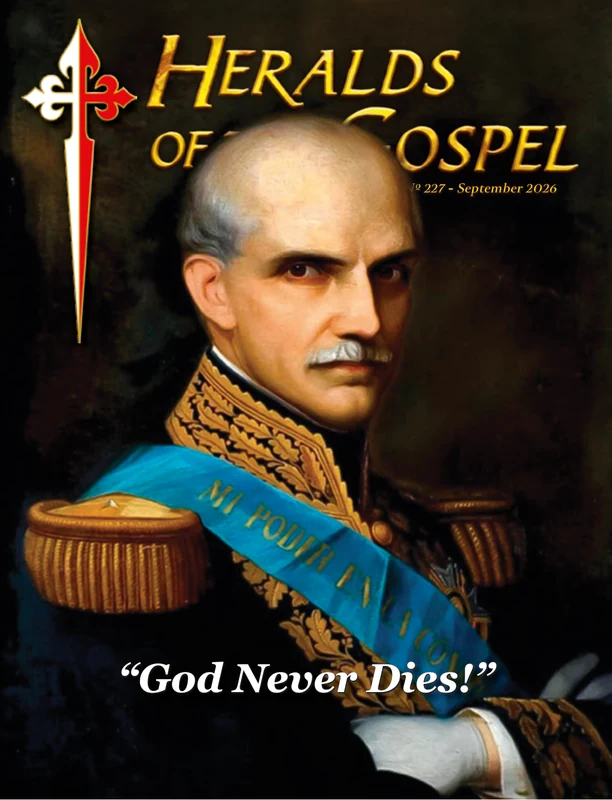
 Heralds of the Gospel Magazine, Vol. 20, nº 227, September 2026
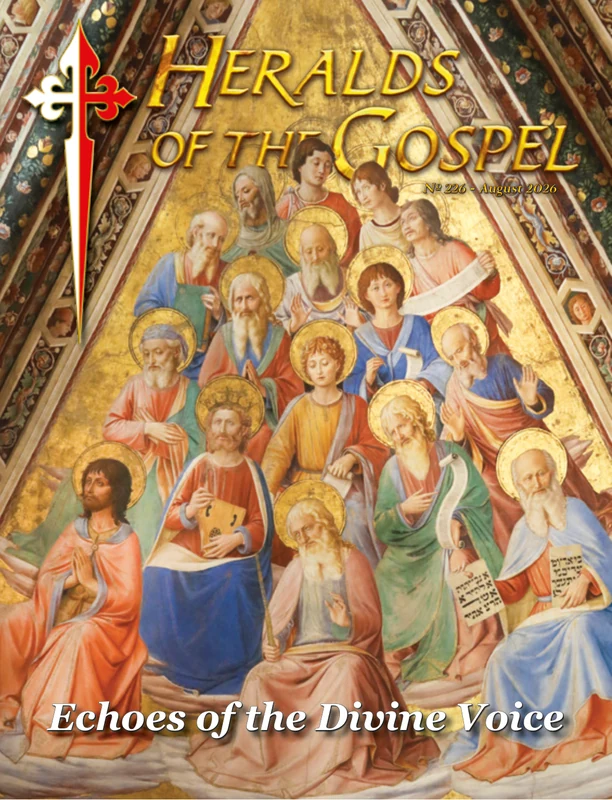 Heralds of the Gospel Magazine, Vol. 20, nº 226, August 2026
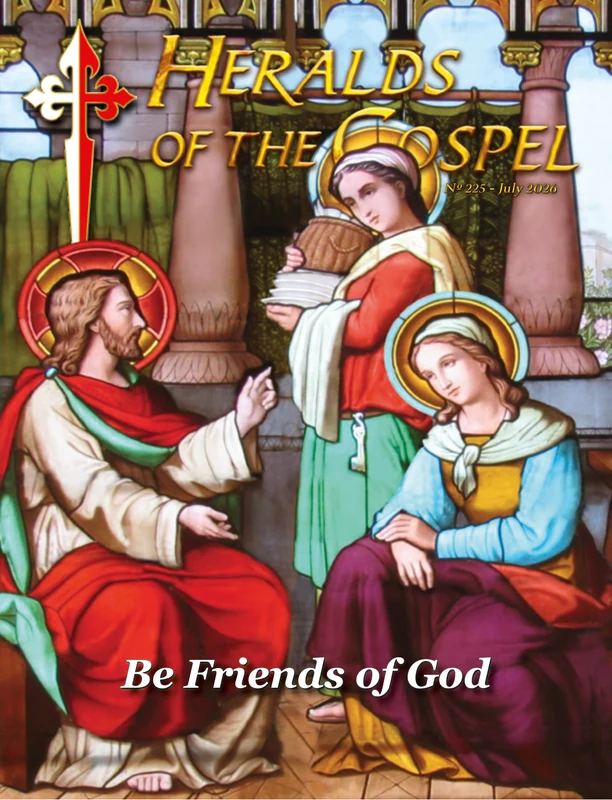 Heralds of the Gospel Magazine, Vol. 20, nº 225, July 2026
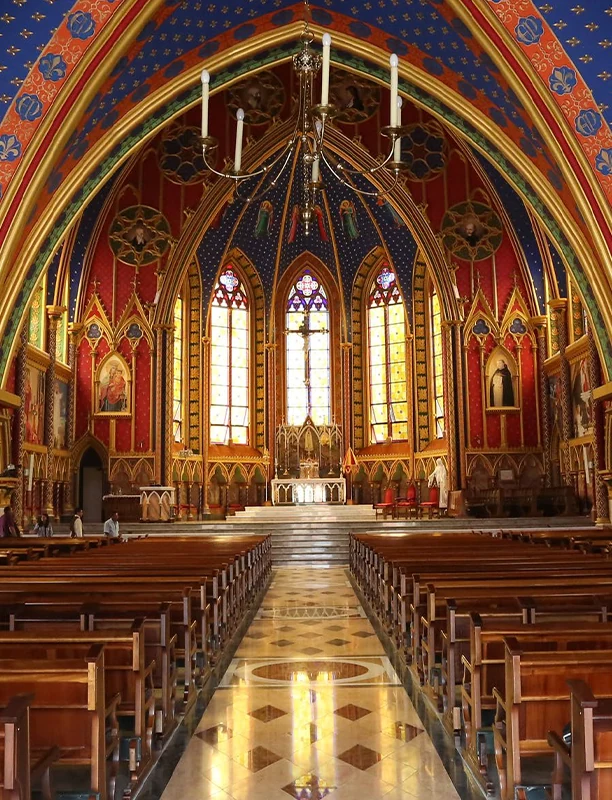 Who are the Heralds of the Gospel?
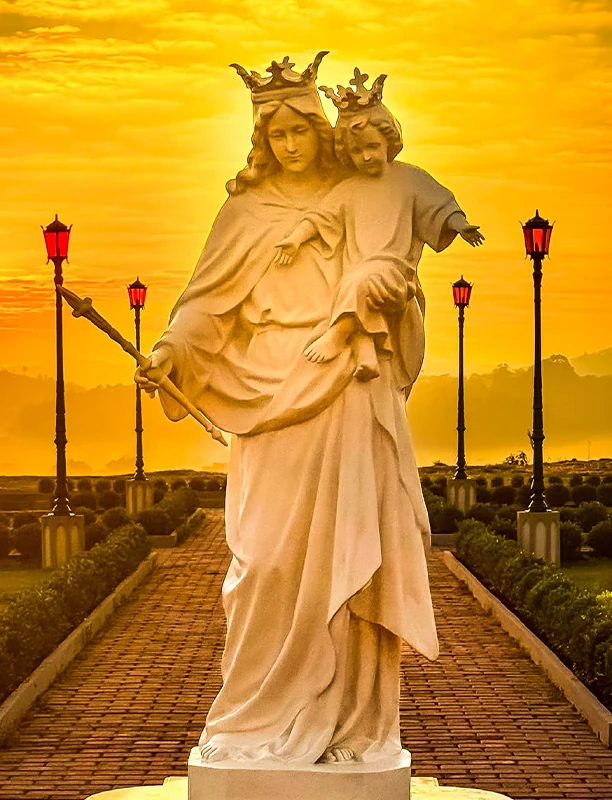 Help of Christians
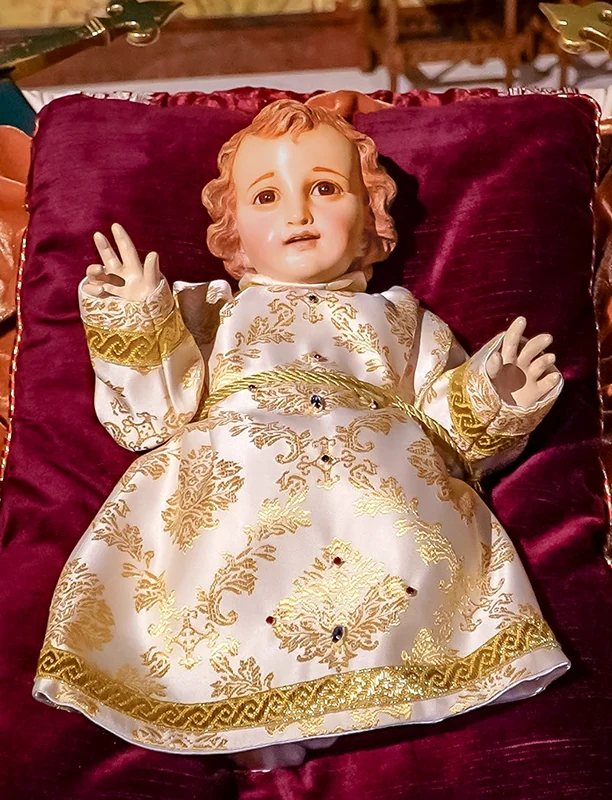 Christmas Carols







The best alms and the most precious gift
Julio Emilio was born and baptized in Beveren-Leie, Belgium, on January 7, 1878. At the age of seventeen, as a boarding student at St. Joseph’s College in Torhout, he heard a bishop’s sermon about the missions in Africa. The prelate spoke about the hardships faced by the poor pagans of that continent and made a plea for alms for the unfortunate needy. The assembly was very moved by the force of his words: the ladies immediately laid down their jewellery and the men handed over watches, chains and gold… Nevertheless, the young De Lombaerde realized at that moment that God was asking of him “the best alms and the most precious gift”3: his very life. In a letter he later wrote to the founder of the Congregation of the Missionaries of the Holy Family, Fr. John Baptiste Berthier, he said: “I have left everything. I have renounced my temporal future and the hopes of my family in order to sacrifice myself to the glory of the Divine Master.”4 As soon as he finished his studies, he joined the Society of the Missionaries of Africa, known as the White Fathers, and in 1895 he left for Algeria as a lay brother. However, when he was stricken with a fever that did not subside and felt an inner urging to become a priest, he promised Our Lady that if She granted him a cure, he would enter the seminary. The fever soon left him and he returned to Europe, eventually joining the aforementioned congregation of Fr. Berthier in 1902.Long live Brazil, country of dreams!
Eight years passed. One day, the congregation’s headquarters in the Dutch city of Grave received a visitor: it was the prelate of Santarém, Brazil, Bishop Amando Bahlmann, who had come to beg Fr. Berthier to send missionaries to his prelature, because it, like so many other regions in that vast country, was suffering from a shortage of priests. And so it was that De Lombaerde, already ordained a priest, was assigned by the founder to the Land of the Holy Cross. “Those who think the sun may be burning out would do well to come and spend a summer in Brazil. […] Here, the sun is scorching… a real, palpable heat, visible even to the naked eye.”5 This is how Fr. Julio Maria, as he later came to be known, begins his account of his first impressions of the country upon his arrival. It was October 15, the liturgical memorial of St. Teresa, a detail he makes a point of noting in his diary. The religious had landed in the city of Recife, from where they were travelling to the Amazon region to carry out their pastoral work there. “It really is the country of dreams,” he comments. “Everything grows on trees here: bread, sugar, [cane] juice and even milk. There are only two things missing, perhaps I will discover them yet: a tree that produces ham, and another that produces eggs. After all this, and despite the heat, everyone will be shouting: long live Brazil!”6 After a few days in Recife, Fr. Julio Maria left for Natal and then headed to the northeastern city of São Gonçalo, where Fr. Louis Bechold, one of the first missionaries of the Holy Family in Brazil, was vicar. There he began to prepare himself for the apostolate, dedicating himself to learning the customs of the country. He spent his days studying Portuguese and getting to know the people, with the aim of “becoming like a Brazilian.”7His apostolate begins
By Christmas Eve, he had mastered the language enough to help with the Holy Night celebrations. And his debut in pastoral activities was a busy one: after the Midnight Mass in one of the parish’s small churches, he went to a second community, where he celebrated at two o’clock in the morning, and then to a third, where he arrived at around half past five, having travelled the long distance between them on horseback. Fr. Julio discerned in Brazilians a deep-seated sincere faith, and a love of their religion without knowing it, “like a spark of faith alive under the ashes, but about to go out if a priestly hand does not come to rekindle it”
Fr. Julio Maria among the children of a First Communion class in Macapá, in the year 1916; on previous page, the Servant of God during his stay in Manhumirim
A people who love the Church without knowing it…
In his missionary diary we see how, as well as making picturesque comments about nature and the climate, Fr. Julio Maria dedicated himself to drawing a moral and psychological portrait of the Brazilian people and describing the religious situation in the country. Right from the start, he was struck by the fact that the majority of the population was practically ignorant of the Faith. According to him, “Brazilians have a deep-seated sincere faith,” but “they love their religion without knowing it; they boast of being Christians without knowing the duties that this title imposes on them.”8 “These are remnants of a religion that is still ingrained and loved,” writes the missionary, “despite the ignorance and indifference that are gradually disfiguring it and threatening to drown it out. They are like remnants that still remain, or better said, a spark of faith alive under the ashes, but about to go out if a priestly hand does not come to rekindle it. How important the civilizing role of the priest is in these countries!”9 Delving deeper into these considerations in order to discern the elements that kept the flame of faith burning in the hearts of those people, it seemed to the Belgian priest that the answer was quite simple: it was their deep-rooted devotion to the Blessed Virgin and, alongside this, a great veneration for the figure of the priest. These interior dispositions were what maintained their adherence to the Catholic Church, despite knowing so little about it. Since he himself was very devoted to the Mother of God, he concluded: “It is impossible for Her not to be interested in a people that honours Her and pays Her so many tender tributes!”10The one who can open the gates of Heaven
There were many episodes in which Fr. Julio Maria marvelled at the manifestations of trust that the faithful had in him because he was a priest. Wherever he went, children came to kiss his hands and women stopped for a moment, looked at him and made the sign of the cross. Once, a septuagenarian who had been longing to find a priest for fifty years approached him and, with tears in his eyes, kissed his hand. When Fr. Julio asked him what he could do for him, he replied: “What do I want, oh Father! What I want is to hear you, because salvation is on your lips.” On another occasion, he saw an elderly woman arriving at the doors of the small local church, stooped under the burden of age and fatigue. She had travelled a long way on foot from her village, motivated by an ardent desire to see the priest and to receive the Holy Eucharist.On the way to Macapá
After his preparation period, in January 1913, Fr. Julio left farther north for Macapá. He had first been to Belém, where he visited the missions in the Colônia do Prata and marvelled at the Amazon rainforest. When he arrived at his final destination, he was greeted by a brother in vocation, Fr. Lauth. After an emotional embrace, the latter tried to start a conversation in their mother tongue, French, but to no avail, as he no longer spoke it well… Unable to understand the “Portuguesified” words that he was hearing, Fr. Julio said to him: “Come on! We are in Brazil. Let us speak Portuguese.”11 Only then did they feel at ease. An exemplary pastor and Catholic polemicist inflamed with zeal, Fr. Julio Maria also founded two thriving institutes in Manhumirim
Fr. Julio Maria with members of the Congregation of the Sacramentine Missionaries in 1938
Militant and fearless Catholicism
His desire to found a congregation of missionary priests led him to head south, where he received the support of Bishop Carloto Távora of Caratinga, Minas Gerais. The prelate entrusted him with the parish of Manhumirim, a small town in the Zona da Mata (Jungle Region), which he took over in April 1928. The new parish priest decided to mark the beginning of his activities with special celebrations in honour of the Blessed Virgin, which displeased the many Protestants in the town, leading them to circulate a pamphlet against Marian devotion. The reaction was not long in coming: Fr. Julio Maria took the opportunity to publish a categorical response in the local newspaper, well grounded in Scripture and theology. Catholics were thrilled to see the lucid, decisive and militant spirit of their leader, and positions were defined. Seeking to avoid controversy, the Manhumirim newspaper asked the priest to write about other subjects… It was then that he decided to found a Catholic weekly, which he named O Lutador (The Fighter). As a result of his apostolic zeal, the church was soon filled with faithful, sacramental life increased, Catholic associations expanded their ranks and social projects, such as the construction of schools, hospitals and asylums, flourished. During this same time, Fr. Julio Maria dedicated himself to founding two thriving institutes: the Sacramentine Missionaries of Our Lady, with the erection of an apostolic seminary, and the Sacramentine Sisters of Our Lady. His work generated both friends and foes… On December 24, 1944, a car accident put an end to his activities on this earth, allowing him to work even more effectively for his people, from eternity.The longings of a missionary’s heart
It is not possible to recount the entire trajectory of Fr. Julio Maria, his works, struggles and hardships in this article. We would instead like to point out one characteristic that stands out in him particularly: his missionary ideal. “O young Levites, give God and the Church in Brazil your strength, your zeal and your lives, which will make a harvest worthy of Xavier and Claver”
Body of Fr. Julio Maria during his wake in 1944
Notes
1 DE LOMBAERDE, Júlio Maria. Diário missionário. Belo Horizonte: O Lutador; 1991, p.28.
2 Idem, p.20.
3 BOTELHO, SDN, Demerval Alves. História dos Missionários Sacramentinos. Belo Horizonte: O Lutador, 1994, v.I, p.28.
4 Idem, p.30.
5 DE LOMBAERDE, op. cit., p.79.
6 Idem, p.81.
7 BOTELHO, op. cit., p.83.
8 DE LOMBAERDE, op. cit., p.84.
9 Idem, p.85.
10 Idem, p.135.
11 Idem, p.244.
12 BOTELHO, op. cit., p.92.
13 DE LOMBAERDE, op. cit., p.259.
14 MIRANDA, SND, Antônio. Pe. Júlio Maria, sua vida e sua missão. 2.ed. Belo Horizonte: Imprensa Oficial, 1957, p.210.
15 DE LOMBAERDE, op. cit., p.234.
16 Idem, p.86.