 Heralds of the Gospel Magazine, Vol. 20, nº 226, August 2026
 Heralds of the Gospel Magazine, Vol. 20, nº 225, July 2026
 Heralds of the Gospel Magazine, Vol. 20, nº 224, June 2026
 Who are the Heralds of the Gospel?
 Help of Christians
 Christmas Carols









Some say that friendship is as old as humanity itself… Indeed, endowed with a sociable nature, human beings have a need to form groups and to interact with one another. This is a natural tendency, immortalized by Cicero as the “instinct of sociability.”1
However, living in society is only possible through harmony, which presupposes an amicable relationship in which sincere friends support one another and mutually approve of one another’s thoughts, convictions and conduct.
Without friendship, any human relationship is subject to division, sedition and discord, confirming the maxim that man is a wolf to his fellow man: Lupus est homo homini.2
This is what we can observe in the early days of humanity, after the Fall, when we encounter hostility and fratricide: Cain was Abel’s brother, but not his friend, and so he killed him out of envy (cf. Gn 4:8).
Unfortunately, we need not go back so far in time, for today’s world, steeped in selfish interests and dominated by the mediocrity of materialism and hedonism, seems to have lost the true meaning of friendship.
The word “friend” is used just as readily in a cold business letter as in a genuine fraternal relationship. In any case, one almost has to search with a magnifying glass to find a true friend.
Never have the wise words of Sacred Scripture been so relevant: “A faithful friend is a sturdy shelter: he that has found one has found a treasure” (Sir 6:14).3
Friendship since Antiquity
It is therefore essential to restore the original meaning of friendship and its value in human relatios.
Aristotle, the great theorist on the subject, emphasized its importance and absolute necessity in the Nicomachean Ethics: “Without friends, no one would wish to live, even if they possessed all other goods.”4
Common sense also makes the need for friendship clear, but what does it actually consist of?
Among the Greeks, friendship arose from relationships of benevolence, affection, pleasure or even utility, whether due to human circumstances or the pursuit of wisdom. Its duration depended on the reason for which it had been formed.
But true friendship, the kind that endures and is faithful, was chiefly linked to the idea of virtue. For the Philosopher,5 when put to the test, such friendship remains firmly established in a selfless love that unites the virtuous in the pursuit of mutual perfection.
And even if there are differences between friends, there will be harmony between them as long as virtue and a common ideal are present.
Among the Latins, the classic definition is attributed to Cicero, in his work De amicitia. He states that friendship is “the harmony of all things divine and human, through benevolence and love.”6
And he goes a step further, saying that “he who looks upon a friend looks upon a portrait of himself,”7 such is the intensity of the bond between them.
The original notion of friendship emerged alongside many conceptual terms, particularly Greek ones, stemming from various understandings of love.
From the term storgē – στοργή, the natural affection within the family, from parents to children and children to parents; through to érōs – ἔρως, passionate, carnal and romantic love; to philía – φιλία, the term that most closely approximates friendship, as it conveys an idea of honest love, brotherhood and affection.
There is also agápē – ἀγάπη, used by philosophers to denote a voluntary and altruistic love.
Agape: the foundation of Christian friendship
However, the Greeks had no concept of a love that was entirely selfless and devoid of selfishness, as the Christian agape came to be.
It was in biblical literature that it took on the meaning of a higher form of friendship, a term found in the New Testament “one hundred and seventeen times, of which seventy-five times in St. Paul and twenty-five in St. John.”8
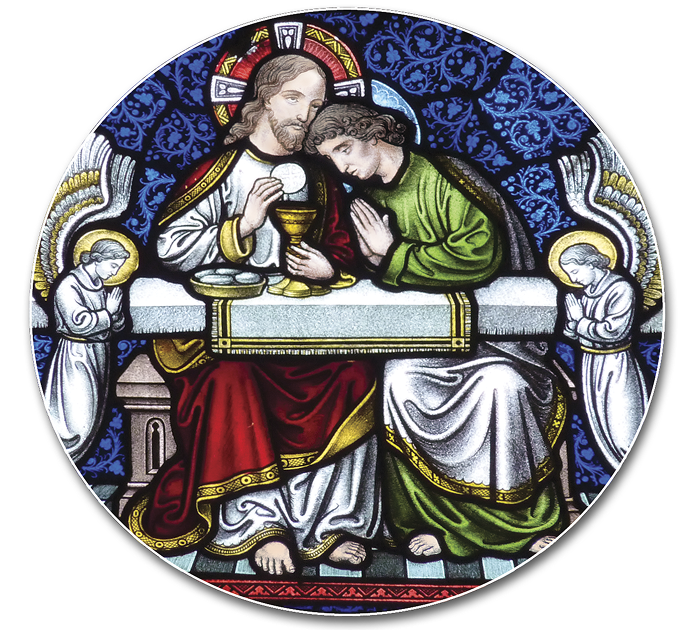
In the Latin translations of the Scriptures, philía, which appears in the Gospel of St. John to express the relationship between Our Lord and His disciples – “I have called you friends, for all that I have heard from my Father I have made known to you” (Jn 15:15) – was translated as amor.
The verb agapao – ἀγαπάω, from which the noun agápē derives, was translated as diligere – a verb that gives rise to the noun dilectio. Agápē was rendered in Latin as caritas.
In the treatise De caritate of the Summa Theologiæ, St. Thomas Aquinas “deals quite precisely with these three terms: amor, dilectio, caritas, to which we must add amicitia,”9 defining the foundations of Christian friendship.
Drawing on ancient insights into friendship, particularly in Aristotle’s Ethics, the Angelic Doctor10 was one of the authors who studied it most extensively, relating it to social life and the virtues, highlighting its most important aspects – especially benevolence, communication and reciprocity – from a Christian perspective: “Nothing inspires love more than knowing that one is loved.”11
This is the attitude of the Christian, who acknowledges that he loves God “because He first loved us” (1 Jn 4:19).
And the philosophy of the Gospel is summed up in this precept, the foundation of friendship as Christian agape: “as I have loved you, that you also love one another. By this all men will know that you are my disciples, if you have love for one another” (Jn 13:34–35).
The divine model: spiritual friendship
St. Augustine was the first Christian author to develop a theory of friendship, and his influence continued well into the Middle Ages.
During this period, Richard of St. Victor – in De Trinitate, his principal work – observes that people are born to live in a community of love.
Now, for Richard, the fulfilment of existence as a personal being can only exist to the extent that there is love for another. There is, therefore, an intrinsic connection between the existence of the person and charity.
In this author’s view, divine love is altruistic and mutual, and thus involves a plurality: the Trinity of Persons.
Thus, Trinitarian love achieves its full realization not only through the mutual love between Father and Son, but also through the communication of this love to a third party, that is, the Holy Spirit.
The love among friends, in this Christian perspective, is nothing other than a vestige of the Trinitarian perichoresis, the divine model of Christian agape friendship or charity, since “Deus caritas est” (1 Jn 4:8).
Charity is, therefore, man’s friendship with God, and man’s friendship with man for love of God. Natural friendship becomes supernatural, “one of the noblest and loftiest human sentiments which divine Grace purifies and transfigures.”12
The value and meaning of friendship towards one’s neighbour is no different, when each person is part of the same Mystical Body: “If one member suffers, all suffer together; if one member is honoured, all rejoice together” (1 Cor 12:26).
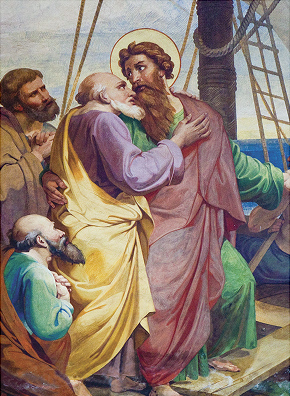
This interconnection is so profound that “true friends have one soul,”13 as Aristotle once stated, as in the close friendship of the early Christians: “the company of those who believed were of one heart and soul” (Acts 4:32), in Christ.
This is the love He revealed to His friends, the foundation of the communion prevailing among the members of the early Church, the koinonía – κοινωνία, which expresses the unity of Christians, grounded in this wholly spiritual friendship.
Friendship is a communion of thinking and willing. […] in friendship, my will grows together with His will, and His will becomes mine: this is how I become truly myself.14
St. Paul Outside the Walls
The example of religious life
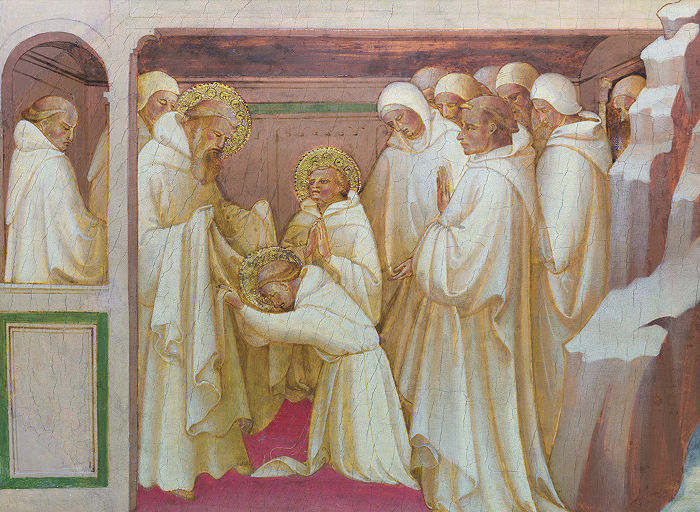
This supernatural friendship reached the height of its fulfilment in monastic life. The Augustinian Rule exhorted religious living in community to be “anima una et cor unum in Deum,”15 to have a unity of friendship in charity.
Centuries later, Aelred, abbot of the Cistercian monastery of Rievaulx and author of the work De spirituali amicitia, deserves special mention; this work earned him the epithet Doctor Amicitiæ – Doctor of Friendship.
By Christianizing the Ciceronian idea of friendship, he established the value of human friendship from its origins, with our first parents, to its permanent fulfilment in the beatific vision.
For him, perfect friendship consists in Cicero’s expression – harmony among all who share the same sense of the divine and the human, and the same will, marked by benevolence and charity16 – for “friendship is a state close to perfection, which consists in the knowledge and love of God, [so that] man, from being a friend of man, becomes a friend of God.”17
Aelred applies to agape friendship what St. John, “the friend of Jesus,” says about charity:
“Is God friendship? […] What he goes on to say about charity, I have no hesitation in applying to friendship: Whoever remains in friendship remains in God and God in him (cf. 1 Jn 4:16).” 18
The virtues that spring from friendship, such as joy and kindness, “are born of Christ, developed through Christ and perfected in Christ.”19
He goes on to remark that “through the love shared between friends, each becomes a ‘second self’ to the other. This is similar to Aristotle’s idea when he says that a friend is to us like a mirror.”20
It is also possible to apply these concepts to consecrated life. In a religious family, there is also the bond with the founder, the source of love among his spiritual children. He is a mirror of God for his disciples.
Indeed, many religious institutes began with a gathering of friends and disciples around a master, whom they sought out because of his reputation for holiness.
Among many others, we might recall St. Anthony, St. Jerome, St. Benedict, St. Francis and St. Clare of Assisi, and St. Dominic of Gusman.
Others formed groups of friends who gathered to discuss their ideals, such as St. Augustine, St. Bernard of Clairvaux, St. Ignatius of Loyola, St. Philip Neri and St. John Bosco.
All led a simple lifestyle, initially without rules or constitutions, for above all they lived under the law of friendship.
A model for society
No religious institution would have survived the centuries without this strong bond with its founder, the source of vitality for every order, for the founder embodies the message of his ideal, making him a reference point and a model.21
For the religious, being faithful to the founding charism and progressing along the paths of charity – which is equivalent to agapic friendship – means assimilating the spirit of the founder22 and becoming like him, being a “portrait” of him.
All humanity is called to become like the Father, its ultimate end, through charity in human relationships.
This, however, is only possible in the presence of true friendship, for “he who does not love his brother whom he has seen, cannot love God whom he has not seen” (1 Jn 4:20).
It is therefore necessary to restore authentically Christian friendship, that is, the kind modelled on the agape of the Son, whose love reached its zenith in giving “His life for His friends” (Jn 15:13).
Finally, it is worth mentioning the role of Our Lady. It was through the Blessed Virgin Mary, the friend of the bride and groom at the Wedding at Cana (cf. Jn 2:3–5), that Christ saved that wedding feast.
It will also be through her that the Divine Paraclete will renew the face of the earth, by restoring true charity in souls. Only in this way will all be cor unum et anima una (Acts 4:32).