Catechism of the Catholic Church
§ 2655 The mission of Christ and of the Holy Spirit […] is continued in the heart that prays. The spiritual writers sometimes compare the heart to an altar. Prayer internalizes and assimilates the Liturgy during and after its celebration. Even when it is lived out “in secret,” (Mt 6:6), prayer is always prayer of the Church; it is a communion with the Holy Trinity.
“For man, prayer is the greatest of goods!”1, exclaims Dom Guéranger abbot of the Monastery of Solesmes, France,
in his work The Liturgical Year, where he comments on
the entire
cycle of the Liturgy, t
he official prayer by which the faithful – priests or laity –
manifest the Church’s authentic nature: human and divine, visible and invisible, active and contemplative, in the world and en route to Heaven…
2 In fact, the administration of the Sacraments “proclaims, makes present, and communicates the mystery of salvation.”
3
However, the Liturgy does not exhaust the obligation to pray incumbent on all the baptized…
God calls the faithful to a life of charity, piety and apostolate4 in order to fulfil the Gospel precept: “They ought always to pray and not lose heart” (Lk 18:1).
St. Paul insists upon this duty: “Pray at all times” (Eph 6:18); “Continue steadfastly in prayer, being watchful in it” (Col 4:2); “I desire then that
in every place the
men should pray” (1 Tm 2:8). Saying
“at all times” and “in every place” extends the space and time of prayer to all the moments when we are not participating in a religious act.
Private prayer or personal devotion
plays a fundamental role in human life.
Jesus Himself teaches it as a way of addressing the Heavenly Father: “When you pray, go into your room and shut the door and pray to your Father who is in secret; and your Father who sees in secret will reward you” (Mt 6:6). And He
promises with a solemn oath that
it will always be answered, if done in His name, as Redeemer and Mediator: “Truly, truly, I say to you, if you ask anything of the Father, He will give it to you in my name” (Jn 16:23).
According to St. John Chrysostom,
5 prayer is to the spirit what the soul is to the body: the principle of life.
The spirit of one who does not pray, lacking this vital flow, decays and begins to exude a foul odour.
Private prayer can take on various forms, of which the Catechism indicates three: vocal prayer, meditation and contemplation.6 Of these,
the recitation of the Rosary – aloud or in silent recollection –
is recommended by the Church both for priests and religious
7 and, with even more earnestness, for lay people of any age or condition.
But
the Holy Rosary is not just a repetition of prayers. It is recommended to meditate on one of the mysteries of the life of Our Lord Jesus Christ in each decade, and once the mystery has been announced, a few moments of contemplation can precede and enrich the recitation of the Hail Marys.
So let us pray
always, without ever giving up, even when our prayers seem to go unanswered.
God never fails, and in the end He
will grant us something much better than what we could have thought necessary.
◊
Notes
1 GUÉRANGER, OSB, Prosper. L’Année Liturgique. L’Avent. 19.ed. Paris: H. Oudin, 1911, t.I, p.IX.
2 Cf. SECOND VATICAN COUNCIL. Sacrosanctum concilium, n.2.
3 CCC 2655.
4 Cf. SECOND VATICAN COUNCIL, op. cit., n.9.
5 Cf. ST. JOHN CHRYSOSTOM. De orando Deum. L.I.
6 Cf. CCC 2699.
7 Cf. CIC, can. 246; 663.
Read this article for free.
Create your free account and you'll have access to all the articles.
Read for free when you register
Are you already registered? Log in.
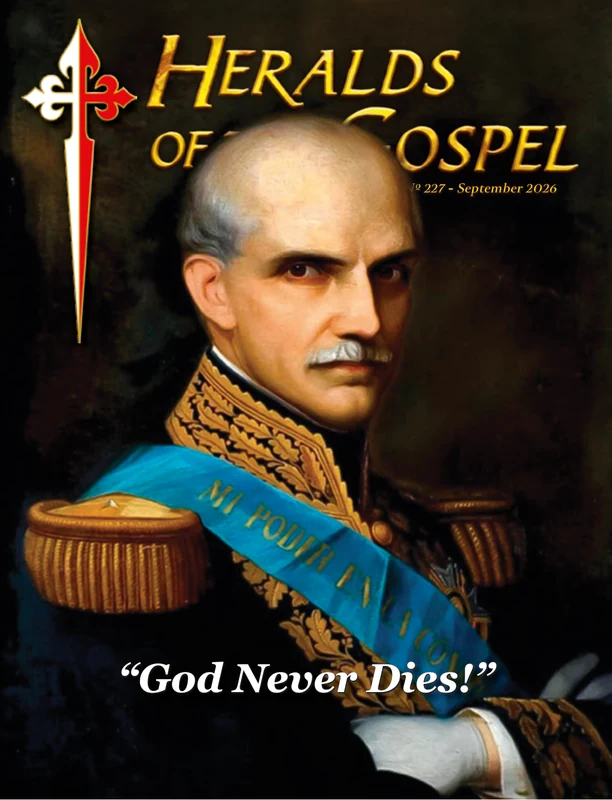 Heralds of the Gospel Magazine, Vol. 20, nº 227, September 2026
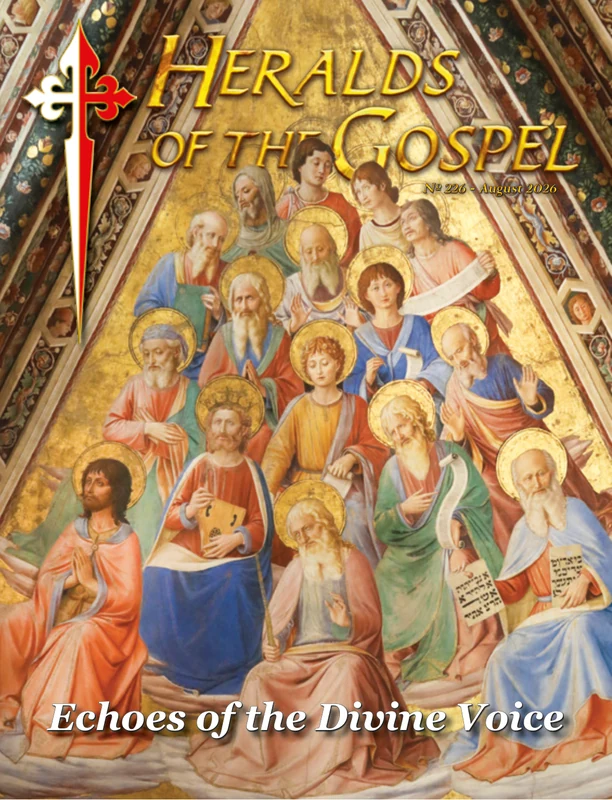 Heralds of the Gospel Magazine, Vol. 20, nº 226, August 2026
 Heralds of the Gospel Magazine, Vol. 20, nº 225, July 2026
 Who are the Heralds of the Gospel?
 Help of Christians
 Christmas Carols