 Heralds of the Gospel Magazine, Vol. 20, nº 226, August 2026
 Heralds of the Gospel Magazine, Vol. 20, nº 225, July 2026
 Heralds of the Gospel Magazine, Vol. 20, nº 224, June 2026
 Who are the Heralds of the Gospel?
 Help of Christians
 Christmas Carols







Such is the Church’s love for Jesus Christ that, after the Bridegroom ascended to Heaven, she was not content to encounter Him again only during Holy Mass, but wished to adore Him every day, wherever it was celebrated.
Tabernacles arose in order to satisfy this desire. The God whom the heavens could not contain would also dwell on earth.
Alongside this primary reason, there were other serious motives – among them, the groans of the agonizing. The Council of Nicaea (325) prescribed that the dying should not be deprived of the Eucharistic viaticum.
But how could this spiritual comfort be brought to them if the consecrated Hosts were not reserved?
A more concrete answer to this question can be found in the Apostolic Constitutions.
In them, deacons were instructed to deposit the holy particles in what the Latins called a secretarium or sacrarium – hence the term sacrament house or tabernacle – which was locked and guarded by sacred ministers.
This custom continued until the 9th century. Variations then arose regarding the styly and location of the tabernacle.
In certain temples, it was placed behind the altar, with the name of propitiatory; in other churches, it was the sacristy that had the honour of housing the King of Heaven.
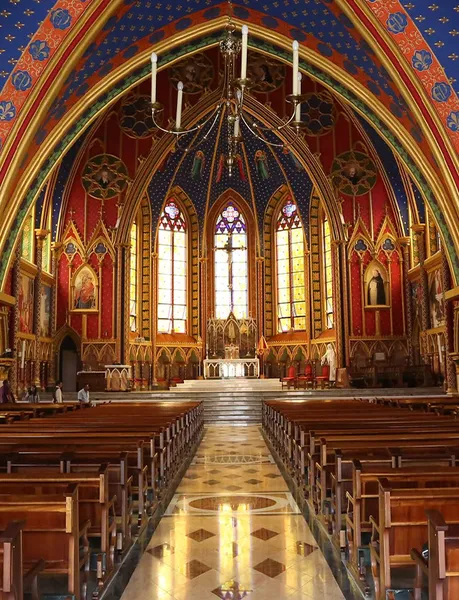
Especially in the great Gothic or Renaissance cathedrals, tabernacles were adorned with colourful murals and statuary.
From the 16th century onwards, it became visible on high altars. And there is also the custom of keeping it in a side chapel.
The Divine Master’s love for His disciples is so unfathomable that He desires to be present not only in the Holy Mass or in the tabernacles of the whole world, but also in the tabernacles of the souls of the faithful.