 Heralds of the Gospel Magazine, Vol. 20, nº 227, September 2026
 Heralds of the Gospel Magazine, Vol. 20, nº 226, August 2026
 Heralds of the Gospel Magazine, Vol. 20, nº 225, July 2026
 Who are the Heralds of the Gospel?
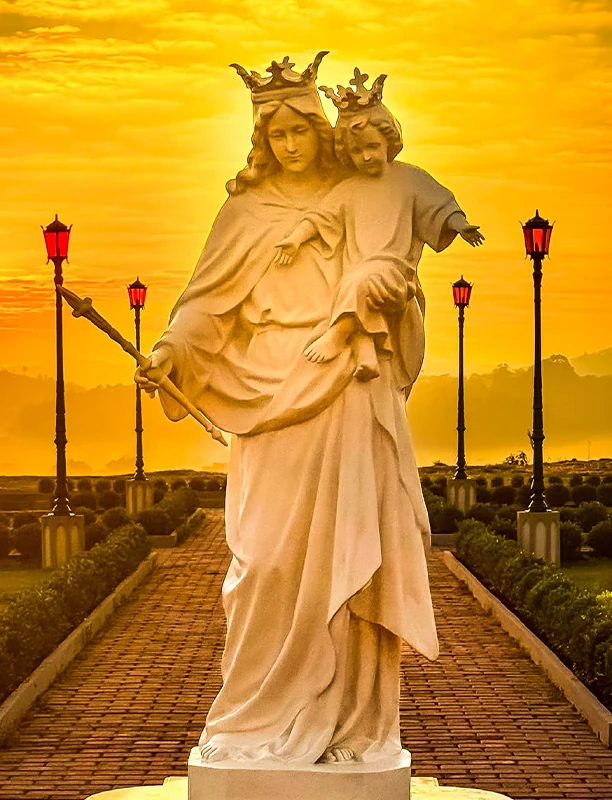 Help of Christians
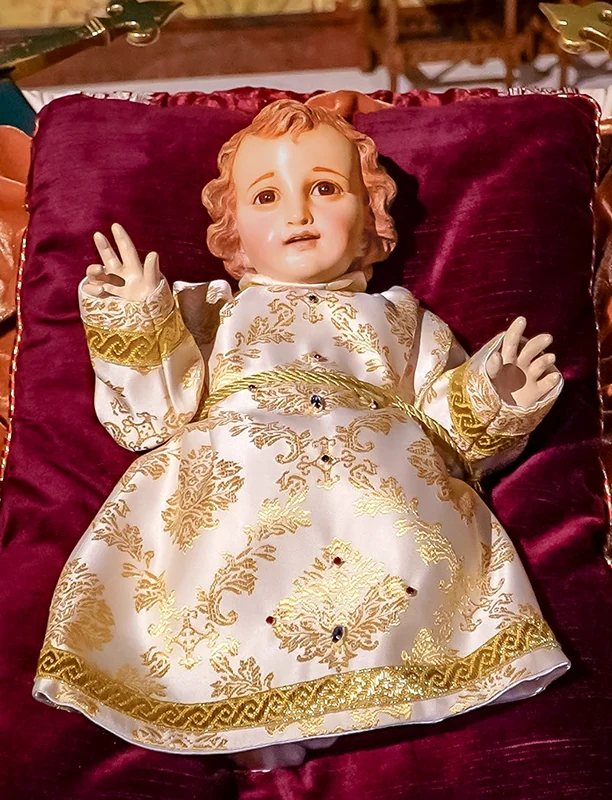 Christmas Carols








An unwanted wedding
A wedding is usually a day of joyful celebration, especially when accompanied by the pomp of nobility. However, the marriage of the heir to the throne, Franz Ferdinand, was not celebrated in Vienna with distinguished guests, carriages parading through decorated streets and large crowds cheering. There were no receptions, balls or banquets in honour of the newlyweds. Nothing.
Archduke Franz Ferdinand and Sophie Chotek
Nobility tempered by suffering
But who, in fact, was Countess Sophie Chotek? Daughter of Count Bohuslav Chotek, a diplomat, and Wilhelmine Kinsky, she was a true descendant of the Bohemian aristocracy; however, her family did not have a great fortune and she grew up with few privileges and much effort, which in fact imparted to her nobility a tone that few ladies of the court possessed. “More elegant and imposing than beautiful, Sophie was graceful, serene and dignified. Cultured, she had acquired more than the usual knowledge of History, Literature, Mathematics, Religion and Science, but also had a keen perception of political affairs thanks to her father. She spoke German, English and French fluently. […] She danced elegantly, painted, rode horseback and played tennis very well. Perceptive and amiable, unpretentious and ‘extremely affable’, she was both uninhibited and modest.”2 Without much hope of changing her life circumstances, Sophie had followed the expected path for young women aristocrats of little fortune: she entered the household of a great lady, the Archduchess Isabella of Croÿ, as a lady-in-waiting. However, when Franz Ferdinand’s intention to marry her became public, she was humiliatingly dismissed from service and sought refuge in her sister’s house. The injustices committed against Sophie and the virtuous attitude with which she endured them confirmed the archduke in his decision. In his own words, he did not want a woman who was too young, because he was already too old to educate her, but rather a “lovable, intelligent, beautiful and kind wife […], with maturity of both character and ideas.” Furthermore, being a very religious person, Sophie had all the qualities he needed, despite her status as a mere countess. But, unfortunately, the exceptional nobility of soul she clearly possessed seemed insufficient to merit an exception that ultimately depended on the emperor’s decision as the last word. And there were more than a few precedents to the contrary. Franz Joseph himself had contradicted his mother’s wishes when he married his cousin Elisabeth of Bavaria – the famous Sissi, considered the most beautiful woman of her time –, an extremely self-centred young lady with an unstable temperament. His marriage, quite unhappy, resulted in a runaway empress and a publicly unfaithful husband, while Rudolf, his son, was a dissolute youth who ended his days with a mysterious suicide in insalubrious company. In the case of Sophie, what no one admired was perhaps what most attracted Franz Ferdinand, who, despite not having led a morally impeccable life before meeting her, allowed himself to be influenced by the purity of her soul and, discovering in her the virtuous woman of the Scriptures, realized that her value was “far more precious than jewels” (Prv 31:10). The Archduke then proceeded as Our Lord Jesus Christ advises in the Gospel (cf. Mt 13:45-46), preferring her to all the glories he could enjoy in court life.In marriage, a happy influence
Franz Ferdinand and Sophie were united before God on July 1, 1900. Constant suffering now became the couple’s greatest uniting factor. By reducing Sophie to the status of a morganatic wife, Franz Ferdinand was aware of the permanent humiliation that this would entail for her. She, however, gave proof of real heroism by enduring everything with uncommon composure, bearing up under hardship with illustrious virtues which garnered admiration for her from all sectors of society.
Portrait of the Duchess in about 1890
The last journey
Appointed inspector general of the empire’s armed forces in August 1913, Franz Ferdinand was compelled to make a trip to Bosnia. The reason for the rather suspicious invitation from Governor General Oskar Potiorek is still debated today. In an atmosphere of great political and military tension, he insistently demanded that the Archduke visit the capital on the very day that the Serbs commemorated a historic battle in which their nation had been reduced to servitude. It was a highly unsuitable date for an heir to the Austrian throne to visit the city of Sarajevo… The day before, the Archduke’s secretary thought that the trip was unnecessary, to which Franz Ferdinand agreed; however, the governor claimed that the people would be offended… Thus, on Sunday, June 28, 1914, the couple went on an official visit to Sarajevo, aware of the extremely serious risk they were taking. The day passed in the tension of a possible attack, which transpired hours later when a nationalist threw a bomb at the Archduke’s vehicle. However, the explosive hit only the car of his assistants, injuring them seriously. Franz Ferdinand insisted on visiting the men in the hospital and Sophie was urged not to accompany him, for her own safety. However, she refused to heed the warning, and declared: “As long as the Archduke shows himself in public today, I will not leave him.” Did she perhaps sense that her presence with her husband was necessary, since they were both in danger of death? Perhaps, remembering the promise she had made before God, Sophie understood that her fidelity would be consummated in a holocaust… Shortly afterwards, they went out together for the last time. This time, one of the conspirators in the assassination suddenly found himself two metres away from the Archduke’s car, while it was manoeuvring to avoid the dangers of the main street. Sophie’s noble figure made him hesitate for a moment, but he then fired at close range, hitting both husband and wife. Seeing the blood running down her husband’s uniform, Sophie had time to ask him what had happened, before she herself collapsed, struck by a bullet. While the attendants thought she had simply fainted, the Archduke realized that his beloved wife’s life was ebbing and appealed: “Do not die! Stay alive for our children!”
At left, Franz Ferdinand with his eldest daughter, Princess Sophie; at right, a portrait of the couple with their three children: from left to right, Prince Ernst, Princess Sophie and Prince Maximilian. In the background, a view of Artstetten Castle, a family estate where the couple was buried - Artstetten-Pöbring (Austria)
The fruit of fidelity: a beautiful family
The couple’s children – Sophie, thirteen, Maximilian, eleven, and Ernst, ten – would be left completely orphaned that day. Little Sophie’s comment after receiving the fateful news reveals the beginning of a frightful suffering: “The anguish was indescribable, as was the feeling of total bewilderment. All our lives, we had known only love and absolute security.” The parents had showered their children with torrents of affection, the fruit of the constant fidelity that united them. “Their home was like those we read about in books, but never see in real life,” a niece would comment. The children’s rooms were close to their parents’, they always had their meals with them, and in the late afternoon they would go for walks, play the piano or entertain themselves by acting out plays. Raised in this wholesome family atmosphere, they were known as the best behaved and most well-mannered children of the entire Habsburg offspring. “When I finish my long day’s work and return to my family,” the Archduke once said, “and I see my wife doing needlework and my children playing about, then I leave my cares at the doorstep and can hardly believe the happiness that surrounds me.” “The children,” he admitted, “are my delight and my pride. I sit with them for hours and admire them, for I love them very much.” Knowing that his wife could not be buried in the Habsburg crypt, Franz Ferdinand had arranged in his will that they be buried together in a tomb built exclusively for his family, and it was only there that the children were able to pay their final respects to their parents, as they had been excluded from the funeral ceremonies due to their morganatic status. As they left, little Sophie said sweetly: “God wanted Papa and Mama to be reunited with Him at the same time. It was better that they died together because Papa could not live without Mama and Mama could not survive without Papa.” Just as they had been united for life, God also wished to unite them at the hour of death.
On the left, Franz Ferdinand and Sophie in Sarajevo (Bosnia), shortly before their assassination on June 28, 1914; on the right, an article published in the Italian newspaper ‘Domenica del Corriere’ depicting the moment of the assassination
A lesson for the future
The death of this couple is considered to be the trigger for the First World War, and historians offer several political reasons for this. On the other hand, how many subsequent, impartial analyses attest to the geopolitical disaster inherent in the disappearance from the international scene of the dual monarchy, whose sceptre would have come into the hands of the archduke!… However, if we seek to analyse history not as a conglomeration of disconnected facts, but as the realization of Providence’s plans, we could analyse this event from another perspective, possibly accidental but of great importance. Perhaps, seeing the outrages suffered by the future emperor and his wife, whose marriage should have served as an example for society, God allowed their murder to be the starting point of an irrevocable debacle. In fact, what remains today of that conjugal fidelity which so distinguished them? What other misfortunes have occurred in history – or may yet occur – when humanity has strayed from God’s Commandments or forgotten its promises of fidelity to the Lord? Only time, or perhaps events, will tell us… ◊Notes
1 The historical information contained in this article, as well as the excerpts from dialogues or letters transcribed in quotation marks, were taken from: KING, Greg; WOOLMANS, Sue. O assassinato do arquiduque. São Paulo: Cultrix, 2014.
2 Idem, p.80.
3 Idem, p.151.
4 Sophie received the title of Princess of Hohenberg from Emperor Franz Joseph on her wedding day and, on October 4, 1909, the higher title of Duchess of Hohenberg.