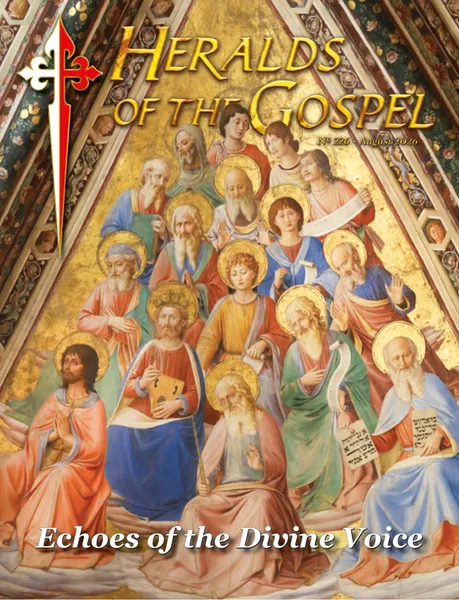
 Heralds of the Gospel Magazine, Vol. 20, nº 226, August 2026
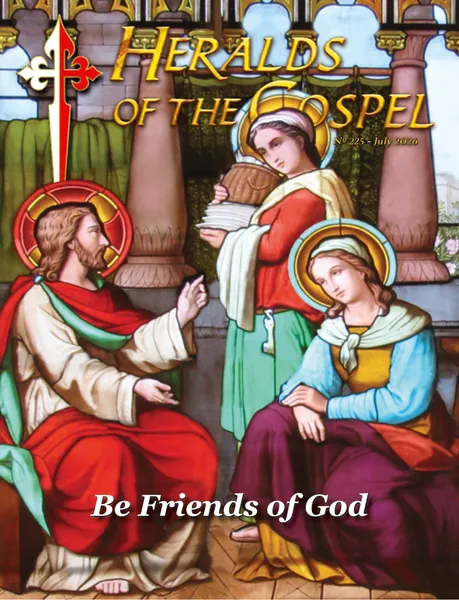 Heralds of the Gospel Magazine, Vol. 20, nº 225, July 2026
 Heralds of the Gospel Magazine, Vol. 20, nº 224, June 2026
 Who are the Heralds of the Gospel?
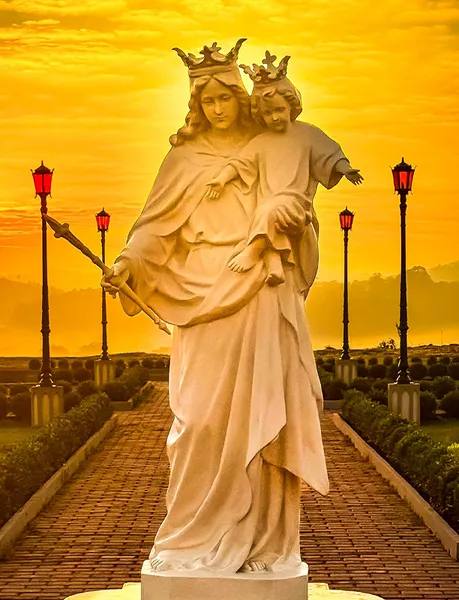 Help of Christians
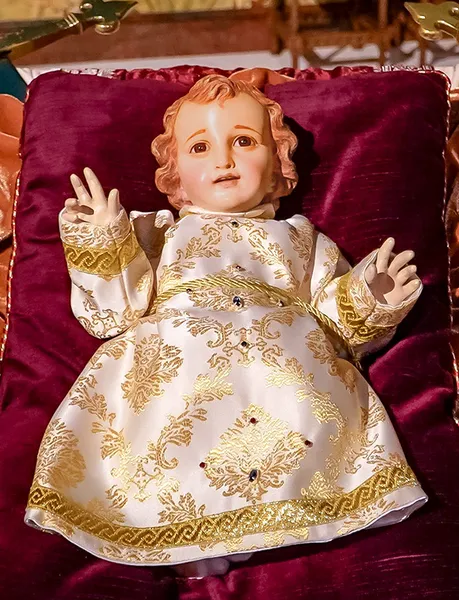 Christmas Carols








July 19 – 16th Sunday in Ordinary Time
(Wis 12:13,16-19; Ps 85; Rom 8:26-27; Mt 13:24-43)
How easy it is to correct with excessive rigour, especially when it comes to someone else’s fault that bothers us! In the parable of the wheat and the tares, however, Our Lord Jesus Christ shows us a different path.
True authority is not exercised only through power, but is nurtured by charity and patience, as the Book of Wisdom reminds us: “For your might is the source of justice; your mastery over all things makes you lenient to all” (Wis 12:16).
In the Gospel account, the enemy – the devil – seeks to ruin the harvest by sowing tares. In view of this adversity, God does not react rashly: He exercises longsuffering, hoping for a conversion.
First, He considers: “if you pull up the weeds you might uproot the wheat along with them”; then, He waits with clemency: “Let them grow together until harvest.”
If the weeds persist in their scheme and do not repent, then they will be pulled up and tied “in bundles for burning” (Mt 13:29-30).
The teaching contained in this divine parable bore fruit in the golden ages of Christendom, serving as a paradigm for holy kings such as St. Louis of France and St. Ferdinand of Castile.
These monarchs understood that authority must be exercised in accordance with divine precepts: through their goodness, they protected and encouraged what was good with paternal solicitude; through deterrence, they exemplarily repressed the evil that threatened the wheat of their kingdoms.
It might be argued that, by letting both grow together, there is a risk that the more aggressive tares will choke the wheat. Nevertheless, the owner of the field, with divine prudence, awaits the development of both plants.
As the months go by, the difference becomes evident: the ears of wheat, laden with grains, bow humbly; the tares stand straight with arrogance, but without bearing fruit.
The true wheat does not let itself be overcome by the tares; it faces them patiently until the end. This is the moment to proceed, energetically and unhesitatingly, with the definitive separation.
Applying this to the context of the Church, many pass for good Catholics, while inwardly they operate like weeds in the Lord’s garden…
In fact, at harvest time the abyss that separates one from the other becomes evident: the wheat bears the mark of charity; the tares serve only themselves; they are sterile. Therefore, they deserve the fire.
The final judgement of the owner of the field is, therefore, one of absolute justice: to separate those who lived in a spirit of service, in the patience of good works from those who, driven by a spirit of pride, have spent their lives seeking to stand out above the wheatfields.
How long will it be until the final harvest? We do not know. In any case, even if at times we feel suffocated by the tares and weakened by adversity, let us be certain that “The Spirit comes to the aid of our weakness” (Rom 8:26).
Through Him we remain firm ears of wheat, under the protection of the Virgin Mary. Thus, we will never be consumed by the infernal fire destined for those who embraced the tares of the devil.