 Heralds of the Gospel Magazine, Vol. 20, nº 226, August 2026
 Heralds of the Gospel Magazine, Vol. 20, nº 225, July 2026
 Heralds of the Gospel Magazine, Vol. 20, nº 224, June 2026
 Who are the Heralds of the Gospel?
 Help of Christians
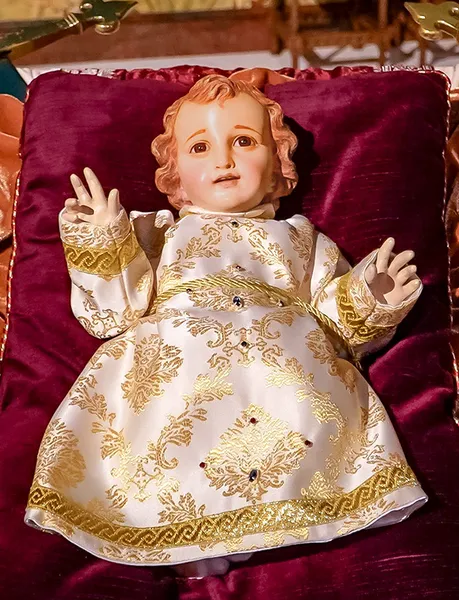 Christmas Carols









Following the bitter years of the French Revolution (1789–1799), the diplomat Talleyrand, reflecting on the collapse of the Ancien Régime, left a nostalgic account: “Those who did not live in the 18th century, before the Revolution, do not know the sweetness of life.”1
Without turning a blind eye to the dark side of the French absolutist regime of the 16th to 18th centuries, we must acknowledge one of its great legacies: the refinement of good manners, that is, politeness.
This, as the word itself suggests, polishes and refines actions, words and behaviours. It transcends mere etiquette, symbolizing, in human interaction, an effort to smooth out the rough edges of social life and favour civility.
Under the Ancien Régime, Paris was the beacon of the world, the City of Light that radiated culture across the globe. There, good manners permeated everything from the grand palace salons to the villages and their everyday interactions.
It is said that Goethe, the most famous German writer, upon entering a small shop in Longwy, north-eastern France, was greeted with such deference by the shop clerk that he, aware of his own less than “sweet” manners, felt compelled to raise his own level of courtesy to match the gentility of his interlocutor.2
Similarly, an Austrian nobleman, also travelling through France, noticed that the coachman went about with a work by the writer Corneille. Impressed, he exclaimed: “What a country! What a people! Even the coachmen read the classics!”3
Indeed, the France of yesteryear excelled so greatly in graciousness that its customs clashed with those of other nations less accustomed to the douceur de vivre.
Rather incisively, the sardonic Montesquieu remarked: “The English are too busy; they have no time to be civilized.”4 It seems, perhaps, that the French writer’s own schedule was a bit demanding…
The adornment of virtues
In those golden days, courtesy was intertwined with Western civilization.
Contrary to popular belief, politeness was neither an artificial nor a pretentious custom, but rather the embodiment of respect, elegance and benevolence in the minutiae of daily life.
It is undeniable that good manners can degenerate into hypocrisy, a mere mask of virtue. Even scoundrels are capable of displaying a certain civility… but abuse does not preclude proper use.
Courtesy was, above all, the adornment of virtues. It was imbued with the fraternal charity advocated in Scripture: “You shall love your neighbour as yourself” (Lv 19:18; Mt 22:39).
For this reason, in response to the hypocrites, the French coined the expression politeness of the heart to indicate that civility springs from within, from a virtuous life.
Now, the “science of good manners” proves to be “indispensable to men’s happiness and virtue.”5
And as Dr. Plinio Corrêa de Oliveira so aptly put it, “courtesy is the musicality of human relations.”6 In short, virtue resembles a painting, whose frame is called politeness.
Christ: a model of good manners
In the art of living together, humility is the cornerstone and the antidote to selfishness and incivility. Christ taught us this lesson through His own life: He was “gentle and lowly in heart” (Mt 11:29) and the “Master of humility”.7
Before sending the Apostles out to preach, “He appointed twelve, to be with Him” (Mk 3:14). Jesus wished, above all, to live in community. Thus, the Word did not become incarnate solely to redeem humanity from sin, but also to introduce a new way of life (cf. Acts 5:20).
Balzac was right to remark that “true politeness presupposes Christian thought; it is like the flower of charity, and consists in truly forgetting oneself.”8
There is an almost liturgical dimension to civility: it harmonizes self-denial, kindness and reverence, transforming everyday life into a ritual of mutual elevation.
Like the rubrics of a Missal, the rules of courtesy curb individualism, while honouring actions and exhorting us to the sublime.
Politeness goes hand in hand with graciousness
However, politeness must be tempered with firmness: “Being courteous does not preclude being valiant,” as the Spanish proverb puts it.
Thus, the sweetness of life sometimes requires a pinch of salt to season social interaction with flavours that are, shall we say, more robust…
In this sense, the Apostle exhorts: “Let your speech always be gracious, seasoned with salt, so that you may know how you ought to answer every one” (Col 4:6).
Merely formal social interaction is insipid. To make it palatable, it needs to be seasoned with grace, lightness and a touch of cheer.
An episode involving Napoleon III (1808–1873) illustrates that courtesy, when devoid of wisdom, becomes insipid, whereas “salt”, used in moderation, is the spirited seasoning of life’s salads.9
One day, upon returning exhausted to his chambers, the emperor grew irritated by the constant complaints of his wife Eugénie. In a fit of pique, he snapped:
“Do you know the difference between you and a mirror?”
“No!” she replied.
“It’s that the mirror reflects and you don’t…”
The empress didn’t let it go at that:
“Now, do you know the difference between you and a mirror?”
Faced with her husband’s mystified negative, Eugénie concluded:
“It’s that a mirror is polished and you aren’t!”…
After the “spicy” but good-humoured argument, they smiled sweetly at one another…
Rediscovering the joy of conviviality
Let us leave the France of yesteryear behind and return to the present day, a time of haste, of irreverence, of encounters increasingly mediated by technology. Is there still room for politeness? More than ever!
Through good manners, it is possible to rediscover the original flavour of human coexistence. It must never be nourished by bitterness, the fruit of so many sins – especially envy. Nor by sourness, a direct consequence of one of the cardinal sins of our century: impatience.
The recipe lies in restoring wisdom – sapientia, a virtue whose etymology points to the Latin sapor –flavour. The wise know how regulate, to flavour things in just the right measure: sometimes by sweetening, sometimes by salting…