 Heralds of the Gospel Magazine, Vol. 20, nº 227, September 2026
 Heralds of the Gospel Magazine, Vol. 20, nº 226, August 2026
 Heralds of the Gospel Magazine, Vol. 20, nº 225, July 2026
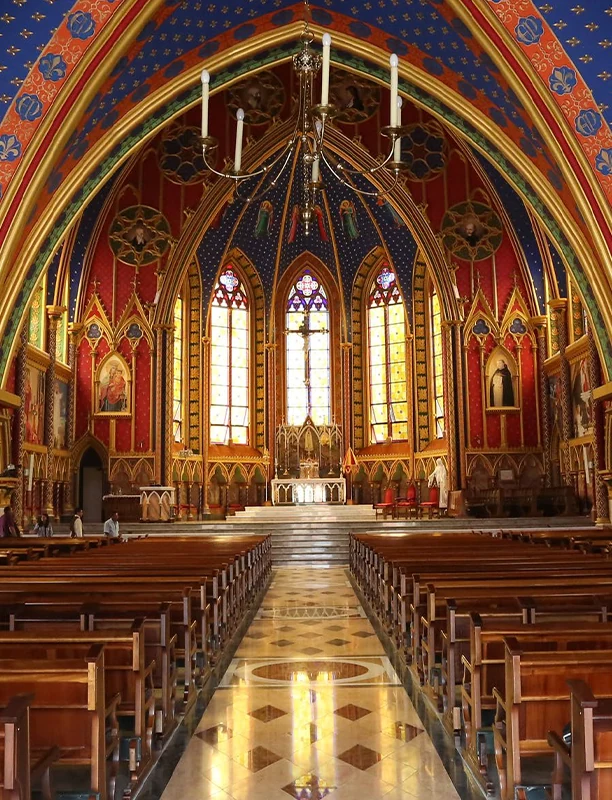 Who are the Heralds of the Gospel?
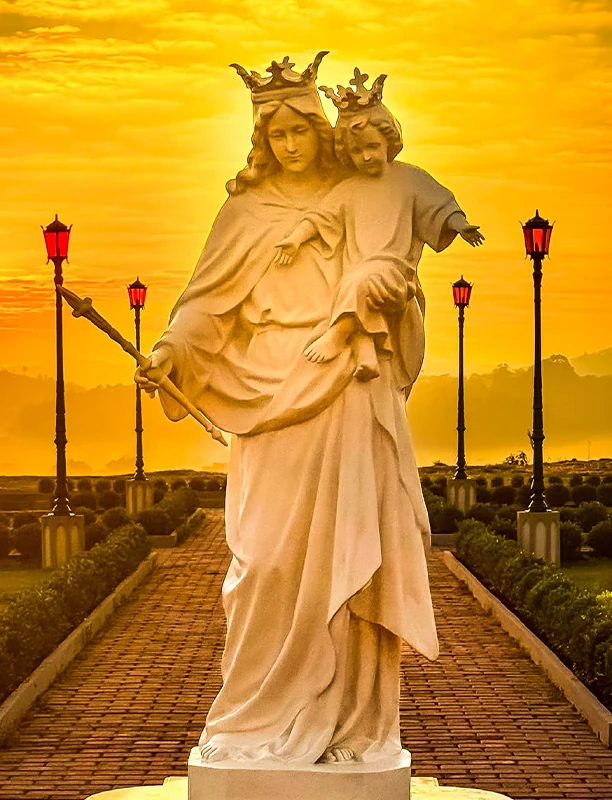 Help of Christians
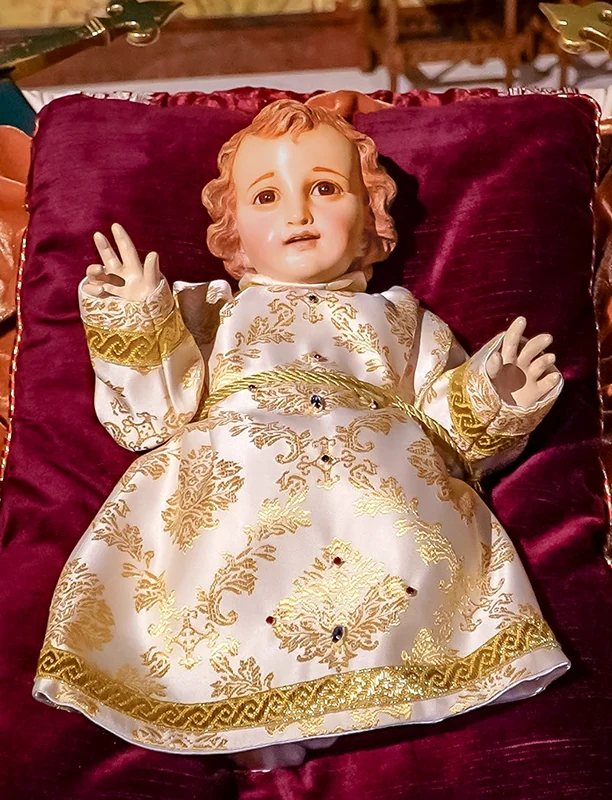 Christmas Carols








The year of the birth of Our Lord Jesus Christ
For us, accustomed as we are to being situated in the twenty-first century after Christ, it is difficult to think of a calendar that does not have the Saviour’s birth as its origin. However, this reference point came into common usage little by little during the Middle Ages. It was only in the sixth century that the monk Dionysius Exiguus – as he liked to call himself out of humility, despite his notable culture – thought of calculating when the Divine Infant had most likely been born. The religious came to the conclusion that Our Lord’s coming took place in the year 753 of the foundation of Rome, and so he made 754 correspond to the year 1 of the Christian era, thereby dispensing with the need to include a “year zero”. Although it was not immediately known by all, this new way of reckoning time spread throughout Christendom until it became the most widespread and widely used calendar in the world, in preference to other alternatives, such as that of the Jews or the Chinese. It is a pity that the calculation made by Dionysius was slightly inaccurate, perhaps owing to an error in counting the years of government of an emperor. In fact, the Gospel states that Our Lord was born during the reign of Herod, who had the Holy Innocents killed in order to eliminate the Messiah with them (cf. Lk 1:5; Mt 2:1,13-18). We know, however, that this monarch died in the spring of the year 750 of the foundation of Rome. Therefore, the birth of Jesus must have taken place at least four years before Christ… A second piece of information provided by the Gospels is that Our Lord came into this world in the time of Caesar Augustus, who ordered a census when Quirinius was ruling Syria (cf. Lk 2:1-2). There is debate among scholars about this detail, but it is perfectly possible to maintain that the census took place between 8 and 6 BC. We hope, therefore, not to disturb the piety of any reader by stating that the most probable date of Our Lord’s birth lies between 8 and 4 BC.1Why December 25?
 Perpetual calendar of the Cathedral of Messina (Italy)
The theory of the feast of “Sol Invictus”
A widespread explanation is that this date corresponded to a pagan celebration that existed in Rome: the day of the Sol Invictus, instituted by the Emperor Aurelianus in 274 AD. The Nativity of Our Lord, the true “Sun of Justice” (Mal 4:2), would have been assimilated to the feast of the false god, in order to eliminate it.5 This theory, however, does not satisfy everyone for several reasons. Analysing the psychology of the Christians of that period, it is worth asking: would they contaminate such a sublime feast by assimilating it to a pagan festival? Having just been persecuted by the Romans and preferring to spill their blood rather than burn a little incense to idols, would they consent to take such a date for the Solemnity of Christmas? These and other motives have led authors such as Cardinal Ratzinger, the future Pope Benedict XVI, to affirm that “today the ancient theories according to which the 25th of December arose in Rome in opposition to the myth of Mithras, or also as a Christian reaction to the cult of the Sol Invictus, are untenable.”6 In the work we have quoted, the then Cardinal preferred to defend another theory,7 perhaps the most poetic and theological of all.The perfection of symbolism
 “The Virgin of the Annunciation”, by Giovanni del Biondo - Detroit Institute
of Art, Detroit (MI)
The conception of St. John the Baptist
Another current calculates the period in which the Saviour was born on the basis of the Gospels. The four hagiographers, however, do not suggest any specific date for the advent of the Messiah. What we know from their writings is that at the sublime moment of the Annunciation to Our Lady – and consequently of her virginal conception – the Archangel Gabriel mentioned the state of her cousin Elizabeth. She had conceived a child, and it was already the sixth month for her that everyone considered barren (cf. Lk 1:36). In nine months’ time, the Saviour would be born. Now, if we calculate the period that goes from the conception of St. John the Baptist – six months before the Annunciation – to the Nativity of Our Lord – nine months after the Annunciation – we obtain the sum of fifteen months. In other words, the Precursor was conceived one year and three months before Jesus was born. If we can find out the exact date on which Elizabeth became pregnant, it will be easy to define the date of Christ’s birth. However, how can we find the day of the Baptist’s conception? Although Elizabeth and her husband desired offspring, this was made impossible by their sterility and advanced age. But one day, when Zechariah was “serving as priest before God when his division was on duty, according to the custom of the priesthood, it fell to him by lot to enter the Temple of the Lord and burn incense” (Lk 1:8-9). On that occasion, the Angel of the Lord appeared to him to tell him that the supplications of the two had been answered: his wife would bear a son. It is known that the priests took turns serving the Temple in groups twice a year. Zechariah belonged to the eighth shift, that of Abijah (cf. Lk 1:5). According to an ancient Christian tradition which dates back to at least the second century, he exercised his priestly functions during the Jewish festival of Yom Kippur, the day of atonement, which was celebrated at the end of September. Add to that fifteen months, and we arrive at the last days of December, when Our Lord would have been born. Among the staunchest defenders of this thesis is St. John Chrysostom,8 Patriarch of Constantinople, who used the same argumentation to establish Christmas on the 25th, as we still celebrate it today.9Christmas in the Liturgy
It is clear that, twenty centuries after these events, trying to define the date of Christmas in an indisputable way becomes a very difficult task, if not an impossible one. We can hope that this will be one of the many questions that we will be able to ask when, by God’s mercy, we reach Heaven and beseech Our Lady to tell us a little of the history surrounding those wonderful and mysterious days when the “Word became flesh and dwelt among us” (Jn 1:14). For the moment we must limit ourselves to savouring the crumbs that time has not devoured, in order to identify, to the degree possible, the origin of this solemnity which, together with Easter, constitutes the principal feast of the true Religion. Nevertheless, much more than a simple historical reality, the celebration of Christmas on December 25 contains a profound theological reality. Providence willed that it be celebrated during the period when, in the northern hemisphere, the winter solstice occurs – the day of the year when night is longest – in order to better reflect God’s way of acting in history. Sunrise over the Mantiqueira Mountain Range
Notes
1 Cf. DI BERARDINO, Angelo (Dir.). Patrología. Madrid: BAC, 2000, v.IV, p. 237-239; LEAL, SJ, Juan; PÁRAMO, SJ, Severiano; ALONSO, SJ, José. La Sagrada Escritura. Evangelios. Madrid: BAC, 1964, v.I, p.570-571.
2 RATZINGER, Joseph. El espíritu de la Liturgia. Una introducción. Madrid: Cristiandad, 2001, p.129.
3 Cf. PIUS XII. Mediator Dei, n.2-3.
4 The oldest reference to December 25 that has come down to us is from St. Hippolytus (cf. Commentaire sur Daniel, IV, 23: SC 14, 307), in a work written between 202 and 204. However, many authors dispute the authenticity of the passage in which the date is mentioned.
5 Cf. RIGHETTI, Mario. Historia de la Liturgia. 2.ed. Madrid: BAC, 1955, v.I, p.689.
6 RATZINGER, op. cit., p.130.
7 Cf. Idem, p.131-133. See also: BRADSHAW, Paul. La Liturgie chrétienne en ses origines. Paris: Du Cerf, 1995, p.227-229.
8 Cf. ST. JOHN CHRYSOSTOM. Homilia in diem natalem Domini Nostri Jesu Christi, n.4: PG 49, 356-358.
9 Based on the Qumran findings, some scholars have corroborated that the second week of service of Abijah’s watch occurred in late September (cf. FEDERICI, Tommaso. 25 dicembre, una data storica. In: www.30giorni.it).