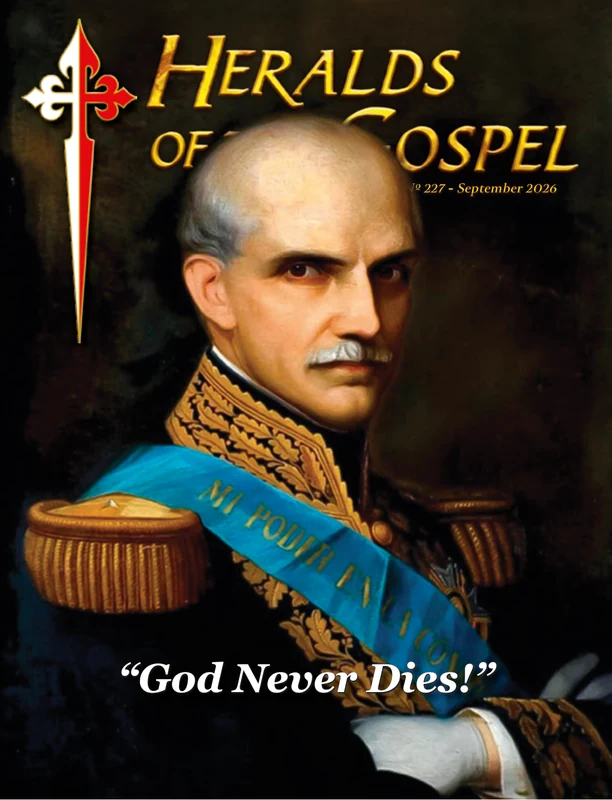
 Heralds of the Gospel Magazine, Vol. 20, nº 227, September 2026
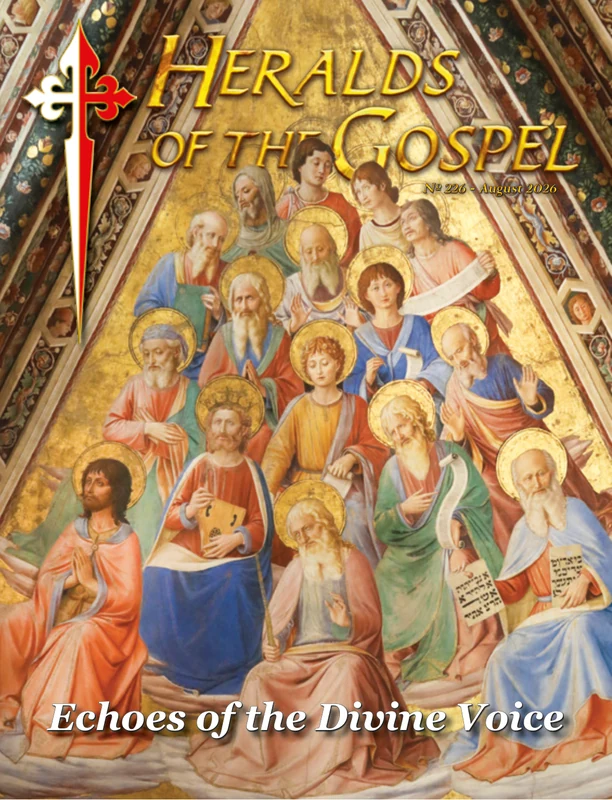 Heralds of the Gospel Magazine, Vol. 20, nº 226, August 2026
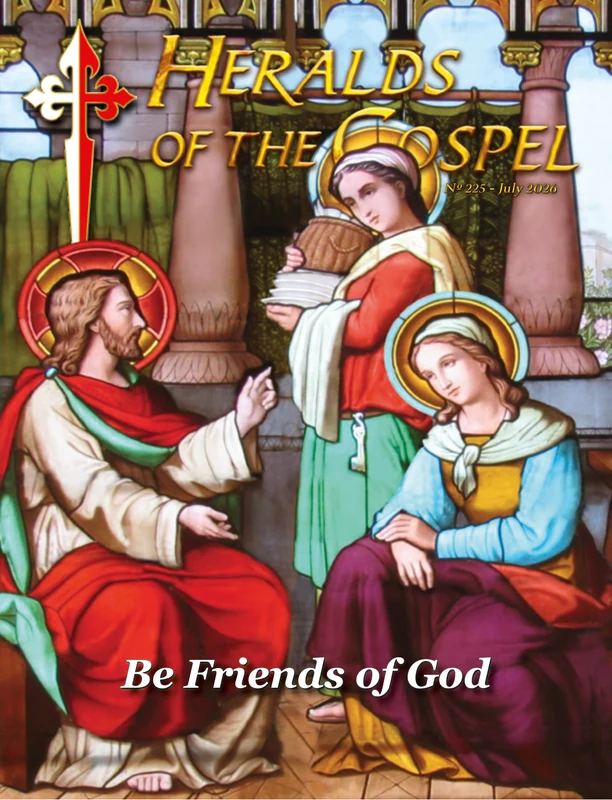 Heralds of the Gospel Magazine, Vol. 20, nº 225, July 2026
 Who are the Heralds of the Gospel?
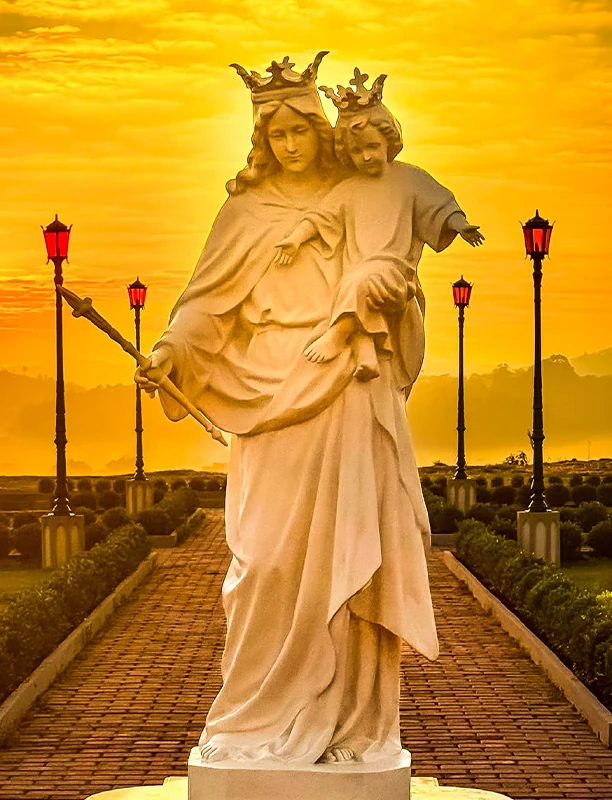 Help of Christians
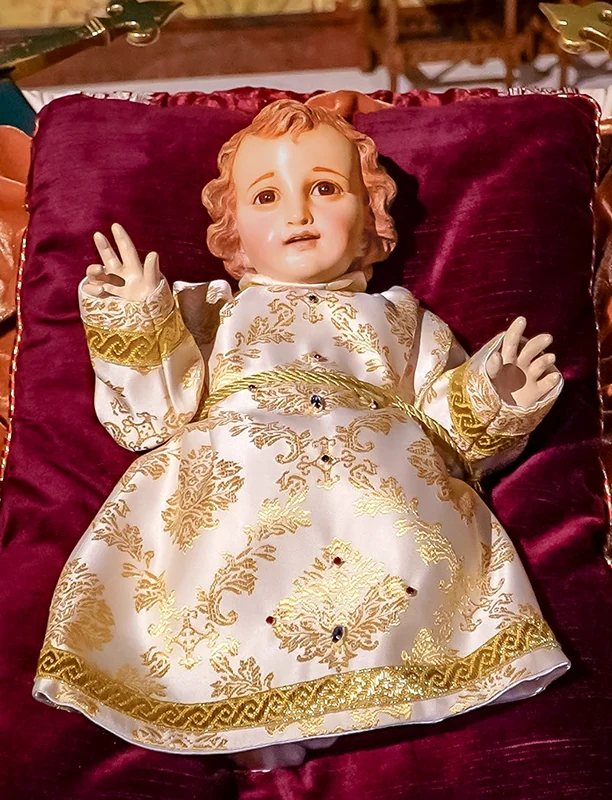 Christmas Carols
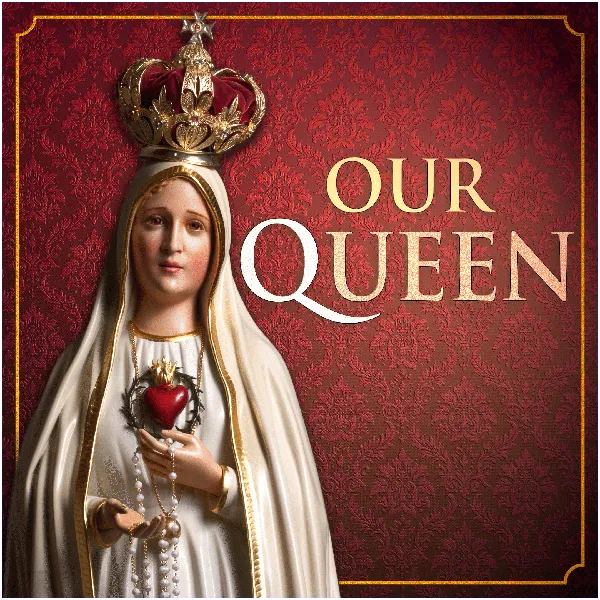








Gospel of the 3rd Sunday in Ordinary Time – Year A
12 When Jesus heard that John had been arrested, He withdrew to Galilee. 13 He left Nazareth and went to live in Capernaum by the sea, 14 in the region of Zebulun and Naphtali, that what had been said through Isaiah the prophet might be fulfilled: 15 Land of Zebulun and land of Naphtali, the way to the sea, beyond the Jordan, Galilee of the Gentiles, 16 the people who sit in darkness have seen a great light, on those dwelling in a land overshadowed by death light has arisen.”
17 From that time on, Jesus began to preach and say, “Repent, for the Kingdom of Heaven is at hand.” 18 As He was walking by the Sea of Galilee, He saw two brothers, Simon who is called Peter, and his brother Andrew, casting a net into the sea; they were fishermen. 19 He said to them, “Come after Me, and I will make you fishers of men.” 20 At once they left their nets and followed Him.
21 He walked along from there and saw two other brothers, James, the son of Zebedee, and his brother John. They were in a boat, with their father Zebedee, mending their nets. He called them, 22 and immediately they left their boat and their father and followed Him.
23 He went around all of Galilee, teaching in their synagogues, proclaiming the Gospel of the Kingdom, and curing every disease and illness among the people (Mt 4:12-23).
I – The Struggle of Light Against Darkness
The Creed proclaims the divinity of Jesus by affirming that He is “God from God, Light from Light.” It is interesting to note the fact that the term Light is used to allude to the consubstantiality of the Son with the Father, which makes Two Persons one and the same being: God. On the other hand, in the prologue of St. John’s Gospel, the Incarnate Word appears as “the true Light which, coming into the world, enlightens every man” (1:9). These statements carefully preserved by the Church in the deposit of Faith bring us face to face with a very difficult question: what does Light mean when it refers to God himself?Called to see the absolute Light
We know of light through our senses. Our eyes, however healthy they may be, lose their usefulness without daylight, for the total absence of luminosity leaves man in a state equivalent to blindness. Only a few animals, such as owls and bats, manage to see at night. For the human being, therefore, light is what allows him to see things and to distinguish forms and colours. Without it there is no vision, and our understanding of the reality that surrounds us is compromised. But material light bears only a vague analogy with the Light, in an absolute sense, which is the Blessed Trinity. If we compare the glow of a candle to the radiance of the sun at its zenith, we have a pale idea of the distance between created light and uncreated Light, which consists of the full, radiant and perfect knowledge that God has of himself and of all created beings, as well as those that could be created. This knowledge proper to the divinity is called, in theology, “lumen gloriæ”. On being rewarded with eternal happiness, the blessed share in this light, so that they see God as He sees himself, though without grasping all His grandeur, for He alone is able to comprehend His own infinite beauty in its entirety. According to the astute expression of St. Thomas Aquinas, the Angels and Saints in Heaven see God “totum sed non totaliter,”1 that is, the whole of God, but not in His totality. This very high knowledge that we will possess in Heaven constitutes the beatific vision, well defined by St. John in one of his epistles when he says that in Heaven “we shall be like Him, for we shall see Him as He is” (1 Jn 3:2). It is a loving knowledge, which will so fill the hearts of the elect with joy as to completely satisfy their noblest desires and expectations. To immediately and intuitively contemplate the divine essence, which is absolute Love, presupposes a joy that surpasses human understanding. On the one hand, it means a reward too great for creatures as small and miserable as we are; on the other hand, it is on a par with the immeasurable magnificence of the good God.A still latent treasure
To attain this gift which is the greatest of all, man must administer well another gift, also precious: grace, a sharing in the divine life. Indeed, there is a direct and inseparable relationship between the life of grace, which we receive in Baptism, and the light of glory. The one is to the other as the dawn is to the rising of the sun, since the beatific vision is the natural and unsurpassable culmination of the dawn of grace, as St. John the Evangelist explains: “Beloved, we are God’s children now; it does not yet appear what we shall be” (1 Jn 3:2). The splendour of grace subtly but effectively reveals to mankind the pulchritude of revealed truth, the fascination of holiness, the unimaginable love of God for the children of Adam. This light burst upon the earth irresistibly at the Incarnation of the Word, for “in Him was life, and the life was the light of men” (Jn 1:4). Not everyone, however, opened their souls as they should have to this beneficial light. Sinners entrenched in vice perceived a mortal threat in the coming of the Redeemer: “And this is the judgment, that the light has come into the world, and men loved darkness rather than light, because their deeds were evil. For every one who does evil hates the light, and does not come to the light, lest his deeds should be exposed” (Jn 3:19-20). This Light to which Isaiah refers in this Sunday’s first reading (cf. Is 8:23b-9:3) is Jesus Christ himself. The furious reaction of the hearts shrouded in evil was not long in coming, and with deadly hatred they tried to extinguish the radiance of this new Sun born from on high. Then began the most tremendous battle in history, which is still being fiercely waged in every human heart, in the bosom of the Holy Church and in society. And only the victors will receive the crown of glory in eternity.II – Irresistible Attraction of the First Flashes of Light
The Gospel of the 3rd Sunday in Ordinary Time tells of the emergence of this Light, entirely supernatural and salutary, in a region which was in the darkness of sin, Galilee of the Gentiles. In this passage we contemplate the first rays begin to stream, before the eyes of the world, of the One who would heal every sickness of the people, cast out demons with unlimited power and, for those who freely accepted it, would infuse into hearts the light of grace, raising simple men to share in the divine race. However, a more intense radiance would fall upon some fishermen of the Sea of Galilee who had just met Jesus and had marvelled at the brightness of His splendour: Peter and Andrew, brothers from Bethsaida, as well as James and John, sons of Zebedee, the first four Apostles of the Divine Master.Vocation: commitment to evangelize
These disciples, called to follow Our Lord and to become fishers of men, received a sublime vocation. Yes, they were to cast the nets of preaching and catch new Christians, preaching the Word in season and out of season, as St. Paul advises Timothy (cf. 2 Tim 4:1-2). The Apostle of the Gentiles furthermore insists on the necessity of rebuking adversaries, admonishing sinners and counselling the good, with patience and a desire to instruct. And he warns: “For the time is coming when people will not endure sound teaching, but having itching ears they will accumulate for themselves teachers to suit their own likings, and will turn away from listening to the truth and wander into myths” (2 Tim 4:3-4). It is necessary to be always alert and to dedicate oneself wholeheartedly to the evangelization, which consists in shouting from the housetops what has been whispered in the ear (cf. Mt 10:27). The sacrosanct “nets” of these skilled fishers of men present us with incontrovertible evidence: it is not enough for the Christian to be content with the witness of good example or works of charity, as some wolves disguised as shepherds recommend; it is necessary to proclaim the revealed truth loud and clear. This is what Jesus himself did, announcing the proximity of the Kingdom of Heaven and exhorting the Galileans to conversion. Sunrise over the Sea of Galilee (Israel)
Light and darkness, Life and death
12 When Jesus heard that John had been arrested, He withdrew to Galilee. 13 He left Nazareth and went to live in Capernaum by the sea, 14 in the region of Zebulun and Naphtali, that what had been said through Isaiah the prophet might be fulfilled: 15 Land of Zebulun and land of Naphtali, the way to the sea, beyond the Jordan, Galilee of the Gentiles, 16 the people who sit in darkness have seen a great light, on those dwelling in a land overshadowed by death light has arisen.”
Conversion or ruin
17 From that time on, Jesus began to preach and say, “Repent, for the Kingdom of Heaven is at hand.”
Promptness in doing good, a sign of authentic vocations
18 As He was walking by the Sea of Galilee, He saw two brothers, Simon who is called Peter, and his brother Andrew, casting a net into the sea; they were fishermen. 19 He said to them, “Come after Me, and I will make you fishers of men.” 20 At once they left their nets and followed Him.
The primacy of the supernatural link
21 He walked along from there and saw two other brothers, James, the son of Zebedee, and his brother John. They were in a boat, with their father Zebedee, mending their nets. He called them, 22 and immediately they left their boat and their father and followed Him.
The Divine Evangelizer
23 He went around all of Galilee, teaching in their synagogues, proclaiming the Gospel of the Kingdom, and curing every disease and illness among the people.
 Jesus Christ, the Light of the world - Newick (England)
III – Heralds of Light in a World Shrouded in Darkness
In this Sunday’s Gospel we contemplate with deep emotion the fulfilment of the promise made by Isaiah to the pagans who lived in the region of Galilee and, by extension, to the entire world. It is a prophecy full of hope, for it announces the appearance of a life-giving and beneficent Light, which in its turn generates new lights. Indeed, thanks to the promptness with which the first four Apostles responded to the Divine Master’s call, the Church Militant is born. The path of this Light will be tragic and glorious. The sons of darkness, dazzled by its saving rays, will seek to extinguish the radiance of Christ and of His Church. And, in this sense, the Lord’s Cross represents the first frustrated attempt of the wicked to extinguish the radiance of the Redemption. The splendour of Easter morning dispelled forever the darkness of sin and death, but the struggle did not end with this culminating event. Throughout the centuries, the Light will suffer a thousand forms of persecution. Realizing that it is inextinguishable, the wicked will seek to eclipse it to the extreme, and our present age represents the culmination of this impious endeavour. Great evils call for great remedies… Consequently, we are at the gates of the most brilliant manifestation of the divine Light, which will take place with the collaboration of those faithful hearts who, during the dense night, keep the torch of faith burning. We too are called by Our Lord to a mission unique for its loftiness and nobility: to be warriors of the Light in this world of darkness. Let us respond with apostolic promptness to this vocation and prepare our spirits to fight against the current of vice, so that the Sun of justice may rise once again on the horizon of history to establish the entirely Marian Reign of peace and holiness promised by Our Lady at Fatima. And after facing the worst risks and undertaking sacrosanct exploits, at the hour of our death we shall see this lumen Christi dawn for us, which will be our eternal delight and consolation. ◊Notes
1 ST. THOMAS AQUINAS. De veritate, q.8, a.4, ad 11.