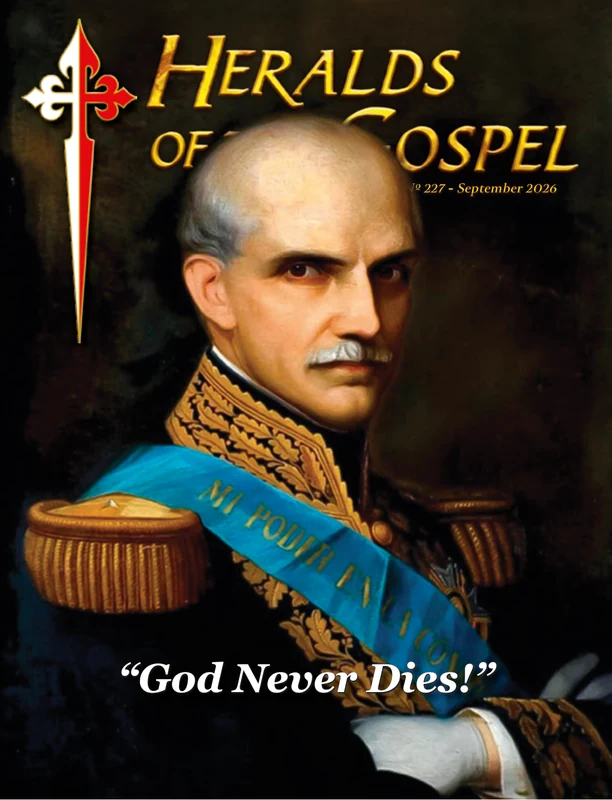
 Heralds of the Gospel Magazine, Vol. 20, nº 227, September 2026
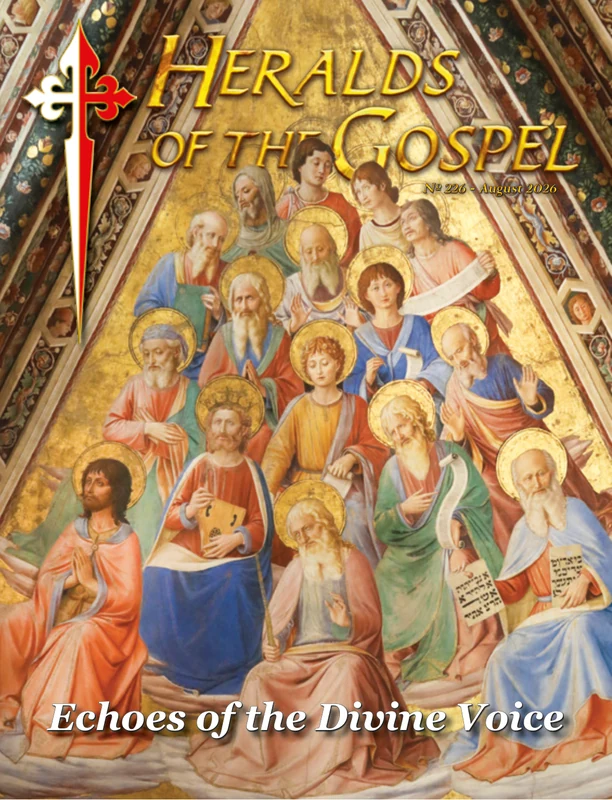 Heralds of the Gospel Magazine, Vol. 20, nº 226, August 2026
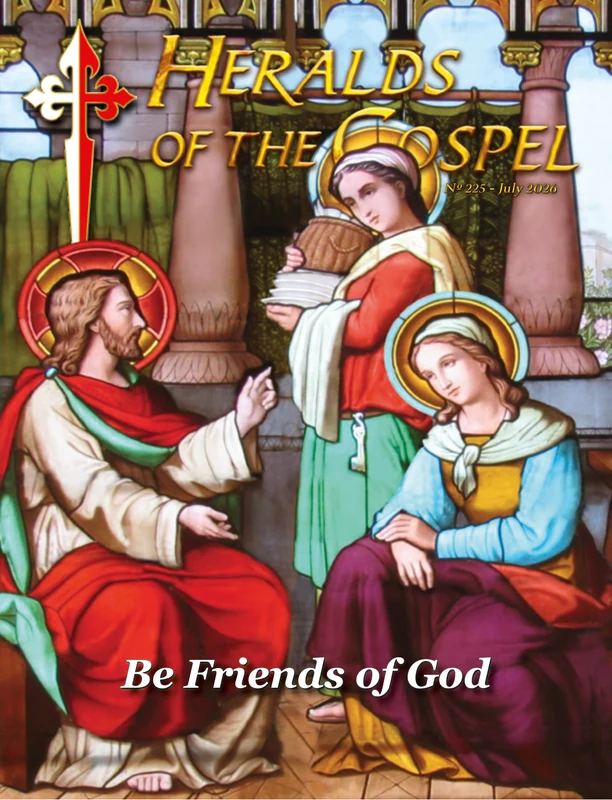 Heralds of the Gospel Magazine, Vol. 20, nº 225, July 2026
 Who are the Heralds of the Gospel?
 Help of Christians
 Christmas Carols






The god Moloch
The first scene is virtually audible. The crackling of the rising and constantly fuelled fire is almost drowned out by the surrounding noise. The timpani players strike their instruments with all the strength of their arms and the ebriety they experience in this supreme ritual moment. The trumpets blare to the ever more frenetic rhythm of the percussion. A man standing with his arms outstretched, performing a supposedly priestly office, seems to be competing, through his clamouring prayers, with the din around him. Others, on their knees, repeat contorted obeisances. An amorphous crowd watches the ceremony. Dominating the scene is Moloch: immense, solid, severe and brutish. His eyes, which never deign to look down on the worshippers, becomes colder with the fire burning under the bronze image. Yes, more terribly icy… This is the Moloch of the Phoenicians and Carthaginians, the powerful god who – according to their belief – brought them victory over every army, assured them of rain, the harvest and commerce; the god who gave them everything… under one terrible condition. And to fulfil it, his worshippers perform this rite.1 The man standing before the divinity lifts a child in his arms: the most precious gift of the nation, the tender son of the highest aristocracy, the future of the people, a promise just beginning to be fulfilled. Why lift him up? To throw him into the incandescent arms of the idol, to be burned alive by the flames that vivify the dead god. At that fateful moment, the culmination of the cult, the cacophony rises in intensity and delirium to overpower the cries of the condemned innocent.
The “Beau Dieu” of Amiens
What a contrast with the second image!
Between two masters
One kills; the Other gives life. One demands innocent blood in order to give; the Other, Innocent, has given us His own Blood. Behind one billows the black smoke of earthly and ephemeral goods; behind the Other, an everlasting Heaven of light awaits us. These are the two lords who once disputed the empire of souls. Even the Holy Land became a battleground: many waited for the Messiah, while others “sacrificed their sons and their daughters to the demons” (Ps 106:37). Later – O sorrow! – even the Son of God would be immolated. These are the two lords who now dispute the empire of souls. Moloch tyrannizes those who, in order to satisfy their conveniences and whims, are willing to sacrifice anything except their pleasure and selfishness. Jesus Christ, on the other hand, reigns lovingly over the innocent who have the courage to admire Him in a world that idolizes pleasure, that is adverse to, and even intolerant of, Gospel teachings. They are not just different but incompatible and mutually exclusive masters, as Jesus Christ Himself repeatedly said (cf. Mt 6:24; Lk 11:23). You may only serve one. And which one will you choose? ◊Notes
1 Cf. WAGNER, Carlos González. Moloc. In: ROPERO BERZOSA, Alfonso (Ed.). Gran diccionario enciclopédico de la Biblia. 7.ed. Barcelona: Clie, 2021, p.1725-1727.