 Heralds of the Gospel Magazine, Vol. 20, nº 227, September 2026
 Heralds of the Gospel Magazine, Vol. 20, nº 226, August 2026
 Heralds of the Gospel Magazine, Vol. 20, nº 225, July 2026
 Who are the Heralds of the Gospel?
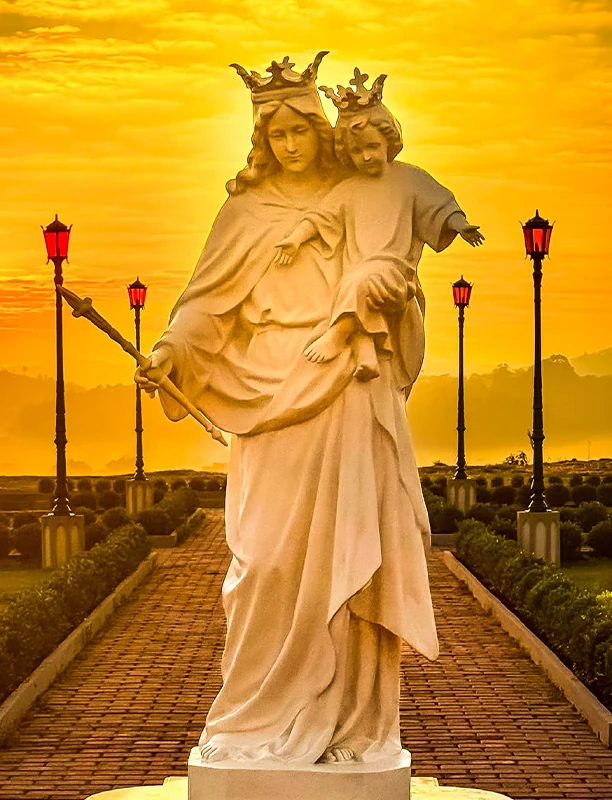 Help of Christians
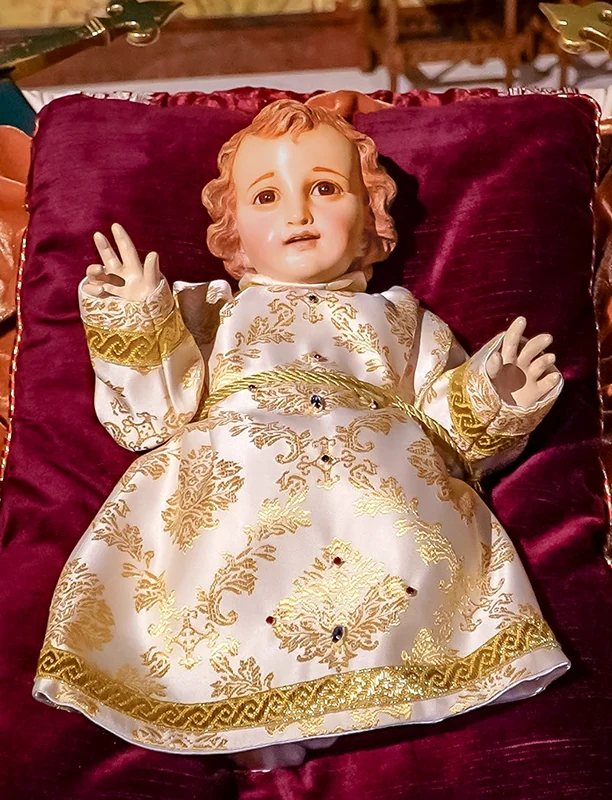 Christmas Carols







Fatherly repartee
One day, after observing Dona Lucilia’s prolonged prayers, he engaged her in some light-hearted repartee: “My daughter,” he said affectionately, “you must be terribly bothersome to Divine Providence.” “But why, Papa?” “Because you talk to Him all day long! He must grow tired of hearing you ask, ask, and ask. What do you ask for, by the way?” “I always ask for the same things.” Dr. Antônio concluded, in the same fatherly tone: “You see? Isn’t that bothersome?” Years later, she would smile as she herself told the story. With the intention of praising her, but in the same tone of gentle irony, Dr. Antônio used to say that she could never live next to a church, for if she did, she would flee from the house and spend the whole day praying there. Sometimes Dr. João Paulo, her husband, would make the same affectionate remark.“This is not a question you ask a mother!”
Dona Lucilia faced the state of matrimony with candour and clear sightedness. With an elevated spirit, she put herself under the care and protection of the Blessed Virgin in fulfilling her duties as wife and mother with perfection.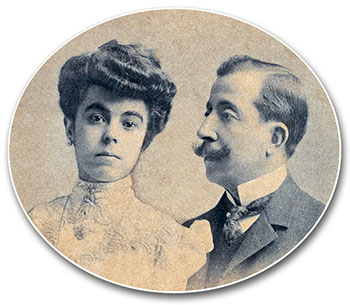 The matrimonial state deepened Dona Lucilia’s supernatural spirit
Dona Lucilia and Dr. João Paulo, shortly before their marriage
Perhaps her happiest photograph
The photograph of Dona Lucilia with her newborn son in her arms vividly portrays the baptismal grace she guarded and cultivated until the end of her life at 92. She is looking at her son with tender affection. Her smile expresses torrents of love, compassion, and protectiveness in view of the boy’s frailty. She is visibly enchanted with the innocence she sees in the child. Of all the photographs taken of her throughout her life, this may be the one in which she appears the happiest. She brims with joy not because she has been praised or pleased, but simply because of the little son she carries in her arms. “Being with her was paradise,” this beloved son would reminisce. “I felt cared for and understood. I sensed my own smallness and sickliness, but she changed this by means of various treatments. I knew that I could even have died, but at the same time I sensed her enveloping tenderness and her very great desire that I live. These were like tonics transmitting vitality to me. “From within my weakness, the idea struck me: ‘She has so much desire and can do so much, she will probably be able to make me into a healthy person. It would be tragic if I were to die, for this would take me far away from her.’ “I wanted to live, and I felt that my life depended on her. These thoughts came to my mind not only regarding this earthly life, but also the next. I could not picture a heavenly atmosphere different from the one that I felt when close to her. Mama was a paradise for me until the moment she closed her eyes to this life. “What is more, she led me into another garden, incomparably more paradisiacal: She taught me to know and love the Holy Catholic Church and instilled in me devotion to the Sacred Heart of Jesus and Our Lady.”“Where is Jesus?”
All of Dona Lucilia’s attentions were centred on Rosée1 and Plinio. She exercised a salutary and exemplary influence over them, encouraging them to esteem the dignified and the supernatural. In her mission as educator, the crystalline depths of her noble soul shone more clearly than ever. Because of her efforts, her two children were able to distinguish between her two devotional statues of the Sacred Heart of Jesus and Our Lady of Grace from the first glimmer of reason. In response to the simple question, “Where is Jesus?” or “Where is Mary?” the youngsters would immediately point out the corresponding statue. Later on, the first words from their lips would be the names of their Redeemer and His Holy Mother. ◊Taken, with minor adaptations, from: Dona Lucilia. Città del Vaticano-Nobleton: LEV; Heralds of the Gospel, 2013, 105-110
Notes
1 Name by which Rosenda was most commonly known.