 Heralds of the Gospel Magazine, Vol. 20, nº 227, September 2026
 Heralds of the Gospel Magazine, Vol. 20, nº 226, August 2026
 Heralds of the Gospel Magazine, Vol. 20, nº 225, July 2026
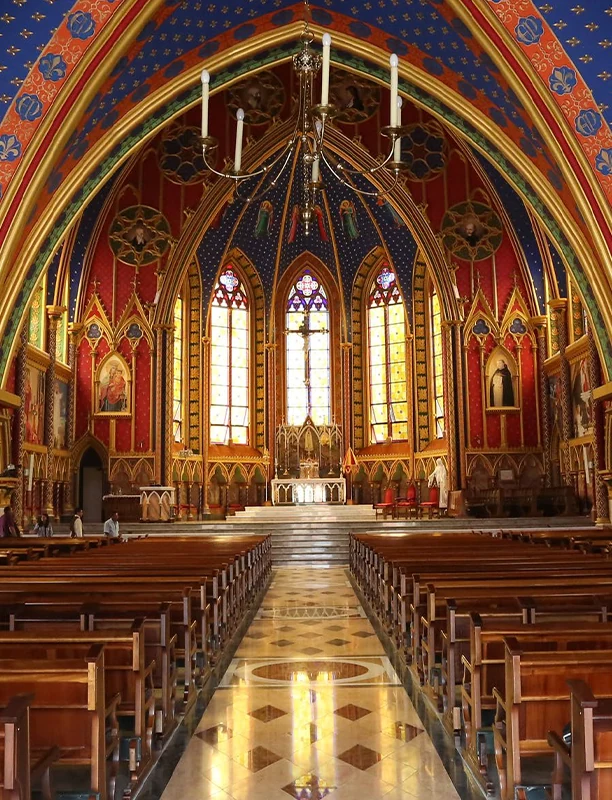 Who are the Heralds of the Gospel?
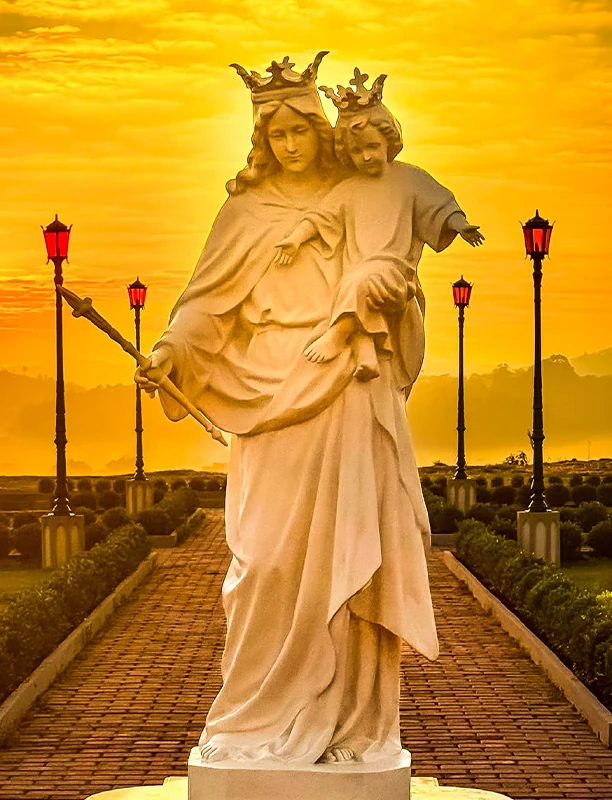 Help of Christians
 Christmas Carols






Gospel – Feast of St. Philip and St. James the Lesser, Apostles
Jesus said to Thomas, 6 “I am the way and the truth and the life. No one comes to the Father except through Me. 7 If you know Me, then you will also know my Father. From now on you do know Him and have seen Him.”
8 Philip said to Him, “Master, show us the Father, and that will be enough for us.” 9 Jesus said to him, “Have I been with you for so long a time and you still do not know Me, Philip? Whoever has seen Me has seen the Father. How can you say, ‘Show us the Father’? 10 Do you not believe that I am in the Father and the Father is in Me? The words that I speak to you I do not speak on my own. The Father who dwells in Me is doing His works. 11 Believe Me that I am in the Father and the Father is in Me, or else, believe because of the works themselves. 12 Amen, amen, I say to you, whoever believes in Me will do the works that I do, and will do greater ones than these, because I am going to the Father. 13 And whatever you ask in my name, I will do, so that the Father may be glorified in the Son. 14If you ask anything of Me in my name, I will do it” (Jn 14:6-14).
I – Magnificent Pillars of the Church
The feast of St. Philip and St. James the Lesser reminds us of the glory of Christ’s Apostles, chosen by Him, formed and finally sanctified on the day of Pentecost. On it we celebrate two pillars of the Church of particular brilliance. St. Philip is mentioned four times in St. John’s Gospel. Thanks to the Beloved Disciple, we know that the Apostle came from Bethsaida, the town of his brothers Simon and Andrew. He was invited by Jesus to follow Him (cf. Jn 1:43) and, full of enthusiasm, he told Nathanael that he had found the Messiah announced in the Scriptures (cf. Jn 1:45-46). In the episode of the multiplication of the loaves, the Divine Master questions him, asking where he could find bread to satisfy the crowd (cf. Jn 6:5-7). Later, some Greek proselytes came to him asking to see Jesus (cf. Jn 12:20-22) and, finally, we have the dialogue faithfully transmitted in the Gospel for this feast.After the Lord’s Resurrection, Philip went to preach in the city of Hierapolis, in the region of Anatolia, where archaeological evidence of his tomb has recently been found. There he was martyred, and with his blood, probably shed on the cross, he won the incorruptible crown of victory. St. James the Lesser, son of Alphaeus, considered by venerable tradition to be a relative of Our Lord and to have a physical resemblance to Him, was Bishop of Jerusalem, the city where he also attained the glory of martyrdom, following in the footsteps of the Divine Victim. These Apostles of the Lamb are the foundations and gates of the heavenly Jerusalem, as the Apocalypse tells us (cf. Rv 21:14), and they shine in the firmament of the Church like stars of unrivalled greatness. They were upright in their works and, moved by the fire of the Holy Spirit, they fearlessly and boldly proclaimed the Name that is above every name, to the point of giving up their lives for Christ. May they serve as an example to the Christians of our times, who are so often asleep or anaesthetised in their faith.When we speak of union in the human sphere, we think of a bond that joins two people in a communion of ideals or of sentiments
II – The Most Intimate Union
When we talk about a union in the human sphere, we think of a bond, generally of a moral or affective nature, which links two people in a communion of ideals or sentiments. Nevertheless, as strong as such a bond may be it is subject to deterioration and threatened by the risk of possible dissolution. The most solid bond between souls is that of friendship, which consists of doing good to one’s neighbour in a selfless way and being reciprocated in the same way. Friendship conceived in this way is based on acquired virtue and enjoys a certain stability for as long as that virtue lasts; when it fails, the concord is dissolved. Thus, for man, union is something extrinsic to his own being, in a way, and with a note of precariousness, although it is still possible for him to establish relationships with others that are to a greater or lesser extent lasting. This also applies to marriage, the essence of which is that two become as one, although they always remain two distinct beings, who may even have very different eternal destinies. The Blessed Trinity - Collegiate Church of Santa Maria, Gandia (Spain)
Here, in uplifting and accessible language, the Gospel of the feast of St. Philip and St. James illustrates this truth which is at the centre of our faith: the existence of a Triune God, Three Persons who are One. This is the intimate life of divinity, the communion of infinite happiness, joy and holiness in which we will participate if, by the supplications of our most blessed Mother, Mary, we attain salvation. St. John also shows us the beneficial consequences of the Incarnation of the Son for humanity, of which he himself is the great proclaimer. In fact, the Prologue of his Gospel affirms the existence of the Word in the bosom of the Father and His entry into time to dwell among us, becoming Man in the most pure womb of Holy Mary, ever Virgin. This is another very high mystery of our Faith which, among many gifts, brings us the fact that Jesus Christ Man is the perfect icon of the Father and an infallible intercessor before Him. These truths of the Faith, although they impress us because of their sublimity, should awaken in us the joy of hope. The intimate life of divinity revealed by Our Lord is not an ethereal concept unattainable by us. On the contrary, we are invited by Him to share in His unsurpassable joy for all eternity, as the Book of Revelation proclaims: “Blessed are those who are invited to the marriage supper of the Lamb” (19:9).Rising to the plane of the most Blessed Trinity, the word “union” acquires a meaning that is new for us: Three distinct Persons who share the same Being
True God and true Man
Jesus said to Thomas, 6“I am the way and the truth and the life. No one comes to the Father except through Me.”
The image of the invisible God
7 “If you know Me, then you will also know my Father. From now on you do know Him and have seen Him.”
The culmination of this theophany took place at the Transfiguration, but only three Apostles witnessed this episode. It is certain, therefore, that at certain moments during their time with Jesus, His closest followers saw with the eyes of their hearts certain intense and evident glimmers of His divine nature, which led them to reach the pinnacle of the virtue of faith. It must have been clear to them that He was “the image of the invisible God, the First-born of all creation” (Col 1:15), so that all the Apostles, including St. Philip and St. James, could affirm with St. John in the Prologue to his Gospel: “And the Word became flesh and dwelt among us, full of grace and truth; we have beheld His glory, glory as of the only Son from the Father” (1:14).Those who saw the Son with a pure inner gaze were raised supernaturally to the level of the Trinity, and thus also knew the Father and the Holy Spirit
 “The Transfiguration”, by Duccio di Buoninsegna - National Gallery, London
The divine reproach
8 Philip said to Him, “Master, show us the Father, and that will be enough for us.”
9 Jesus said to him, “Have I been with you for so long a time and you still do not know Me, Philip? Whoever has seen Me has seen the Father. How can you say, ‘Show us the Father’?”
The mystery of true union
10 “Do you not believe that I am in the Father and the Father is in Me? The words that I speak to you I do not speak on my own. The Father who dwells in Me is doing His works.”
 St. Philip works a miracle, by Spinello Aretino - Basilica of St. Dominic, Arezzo (Italy)
The evidence of miracles
11 “Believe Me that I am in the Father and the Father is in Me, or else, believe because of the works themselves.”
In fact, no prophet in Israel’s centuries-old tradition had ever accomplished the feats of Our Lord, in terms of either quantity or quality. The mightiest waterfalls give a pale idea of the unprecedented wonders that came from His bountiful hands. No illness, not even death, could resist the force of His invincible benevolence. “Were every one of them [His works] to be written, I suppose that the world itself could not contain the books that would be written” (Jn 21:25), the Beloved Disciple well summarized.The disciples will do greater works than the Master, for He is going to the Father, and at the right hand of the Divine Majesty, Jesus will show even greater power through His followers
Even greater works
12 “Amen, amen, I say to you, whoever believes in Me will do the works that I do, and will do greater ones than these, because I am going to the Father.”
The weapon of prayer
13 “And whatever you ask in my name, I will do, so that the Father may be glorified in the Son. 14If you ask anything of Me in my name, I will do it.”
 St. James blesses the beggars, by Spinello Aretino - Basilica of St. Dominic, Arezzo (Italy)
III – We Are Called to Participate in this Union!
During this Easter season, we rejoice in the fact that the secret of the great King has been revealed to us, that is, the intimate life of the Most Holy Trinity. The fact that the Divine Persons – spiritual, diaphanous and holy – abide in one another, sharing in the fullness of God’s being, speaks to us of the perfect, unsurpassable and glorious union that our heart dreams of, even if not explicitly.Yes, because man is called to this union and created to participate in it. Are not romantic illusions a spurious way of giving vent to this superior sentiment, which impels him to look for someone to unite with completely? And if the puerile and superficial idealizations of sentimentality are nothing more than a crass deception, is the inner longing in the human soul for absolute union with someone who can bring happiness due to chance? No. Just as there is a natural desire for God, about which illustrious theologians have spoken, there is also a very strong and dominant inclination in the human heart towards complete union with the Holy Trinity, a union that constitutes the unalloyed happiness that he so desperately longs for. This union was achieved in an exquisite and unsurpassable way by Mary Most Holy, Daughter of the Father, Mother of the Son and Spouse of the Paraclete. Let us raise our trusting gaze to her and ask, through the intercession of St. Philip and St. James, for the grace to pray, work and struggle in this life with a soul brimming with faith, in order to attain in Heaven the most perfect union possible with the One who created us for himself and wants to become one with us, surpassing our greatest expectations. ◊Through the intercession of St. Philip and St. James, let us implore the grace to pray and work in this life with a soul full of faith, so as to attain union with Him who created us for himself
Notes
1 Cf. ST. THOMAS AQUINAS. De veritate, q.2, a.9.