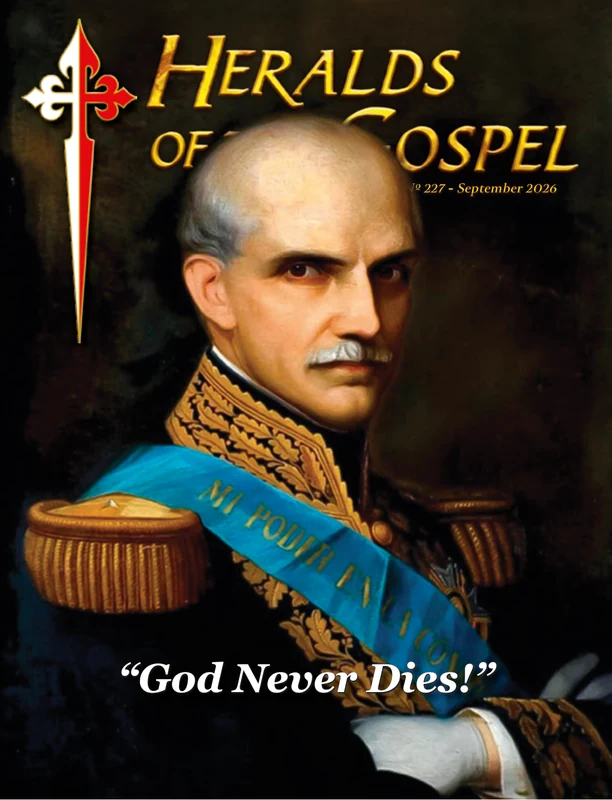
 Heralds of the Gospel Magazine, Vol. 20, nº 227, September 2026
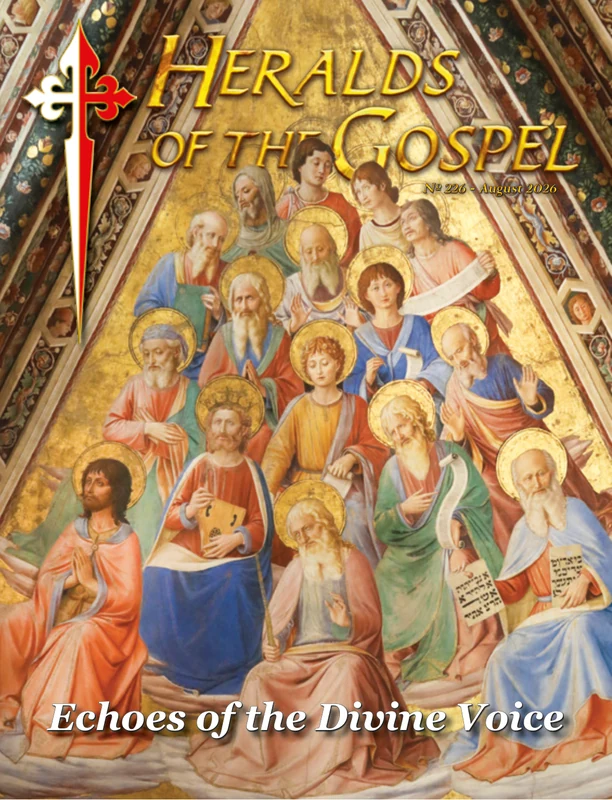 Heralds of the Gospel Magazine, Vol. 20, nº 226, August 2026
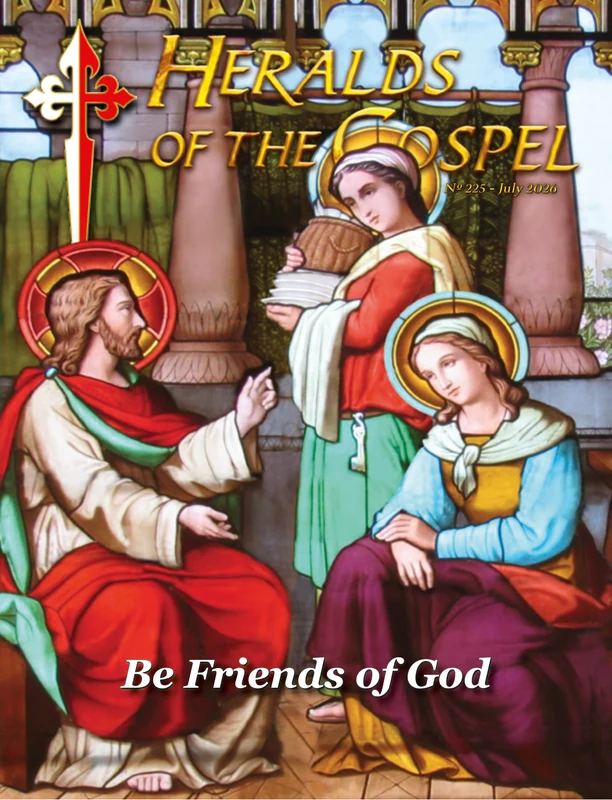 Heralds of the Gospel Magazine, Vol. 20, nº 225, July 2026
 Who are the Heralds of the Gospel?
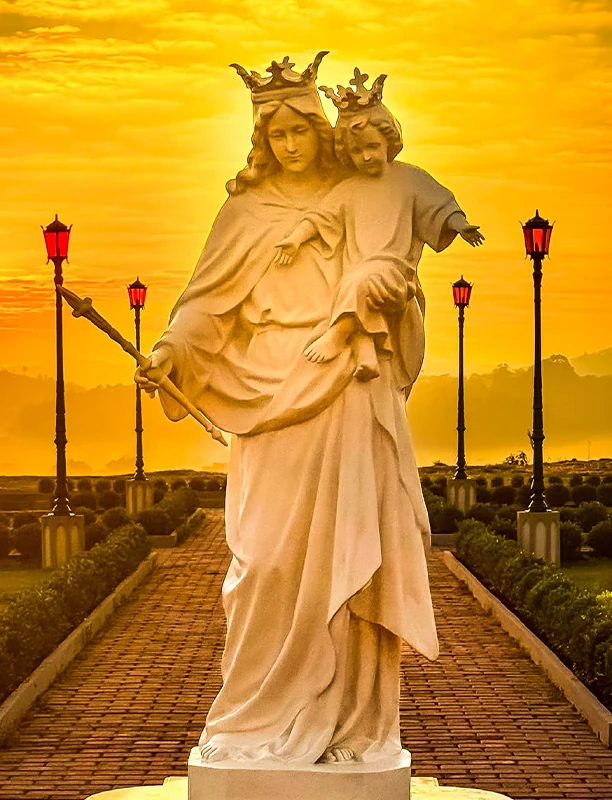 Help of Christians
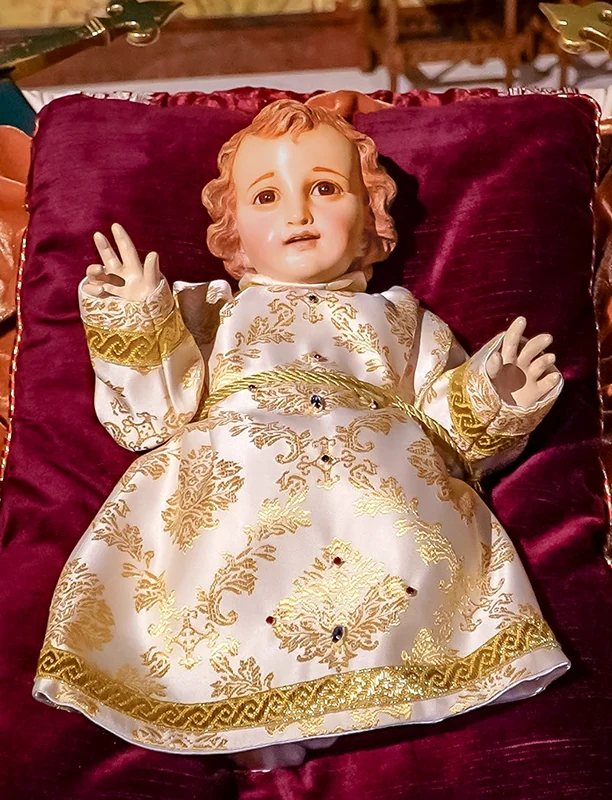 Christmas Carols
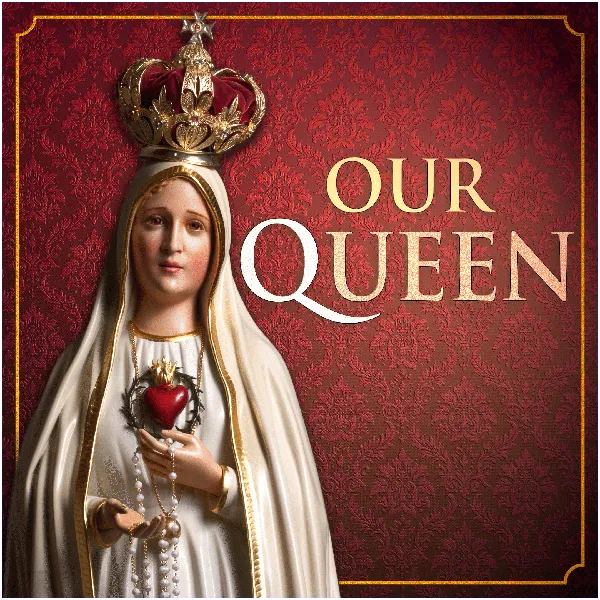








Peter, the first Pontiff, upon receiving the keys to the Kingdom of Heaven from the Master, first received His Divine Heart. Possessing the Heart of Christ, capable of loving all humanity, Peter could be Christ on earth. […] This is the august mystery that makes the Roman Pontiff the universal Father of peoples, the provident distributor of the bread of truth, the sure guide on the tortuous paths of peace and justice.
For twenty centuries humanity has recognized him as such. Despite the struggles, persecutions, and aberrations of all times, individuals and peoples, great and small, in moments of sorrow and misfortune, turn to Rome, appealing to the one who, without distinction of caste or race, hears all, welcomes all, consoles all, and blesses all. The moral strength of the Pontiff is the same as always, today, yesterday, and throughout all periods of history.
He is the point of attraction for all intelligences and all hearts. His majesty, sublime and exalted above all, surpasses the human, and reaches the divine. King of a tiny State, he is seated on a throne that is the guarantee of all thrones, because he is the great infallible moral authority that, more than the trappings of power and the valour of armies, defends order.
Whoever, wishing to know the real moral power of the Pontiff, need do no more than to stand, one day, on the first steps of the staircase that leads to the Vatican. “Who is passing by?” He would ask, at every moment, enmarvelled. It is a rich gentleman, from overseas. He has travelled around the globe; he has visited all the wonders of the world. He has reserved the greatest of all for last: before returning to his British Isles, or to his America capitals, he wants to see the Pope of Rome.
“Who is passing by?” It is a Sister of Charity, with her white veil fluttering in the wind. She left an orphanage, a shelter, a school in the most isolated rural area of India: she comes to kiss the feet of the Holy Father, to return, happy, among her orphans and consecrate her whole life to him. “Who is passing by?” It is a venerable prelate, with white hair and aged, worn down by cares.
He comes from Canada, from the Rocky Mountains or from the immense grasslands of South America. He comes to see the Holy Father, to implore his blessing. “Who is passing by?” It is the ambassador of the most powerful sovereign in the world. He is Protestant, but he does not hesitate to honour the septuagenarian, who is king only of a tiny state, but who is the universal Father of all peoples.
“Who is passing by?” It is a missionary from Japan, a religious from Spain, a missionary from Africa. They come to report to the Vicar of Christ the success of their efforts, the fruit of their apostolic labours. “Who is passing by, with all this pomp, with all this retinue?”
It is a Christian prince, an august descendant of the ancient warriors who repelled the barbarians, who waged the crusades. Bearing in his veins the blood and in his heart the sentiments of his ancestors, he does not fail to come and place at the feet of the sweet Christ on earth the tribute of his affection, the homage of his subjects. “Who is passing by?” It is a pilgrim from Poland, a monk from Armenia or Syria, a man of letters, a humble daughter of the people, a freethinker, a naval captain.
All anxiously climb those stairs. They impatiently traverse the halls of the Vatican, to see the elderly man dressed in white, to kiss his hands and feet, to hear his voice, to receive his blessing. And then, radiant with joy, they descend, blissfully returning to their lands, to their homes, to their tasks – never to forget that auspicious day.
This is the story of every day, of every week, of every month, of every year. This is the story of every century. Such is the mysterious force, the centre of the new Rome, which, emanating from the Vatican, radiates throughout the world, touches hearts, penetrates everything, moves all.
And when an afflicted or devoted soul does not have the good fortune to approach the Holy Father to present a grievance or proclaim his love, behold, even from distant lands, it casts a glance and a cry in the direction of the Dome of St. Peter, towering as a beacon of justice.
Philip Augustus, King of France, intending to repudiate his legitimate wife, Ingeborg, Princess of Denmark, unites himself to Agnes of Merania. The unfortunate queen, finding herself alone in exile, far from her own, repudiated and rejected by her unfaithful husband, gives a cry of anguish, but also of unparalleled sublimity: “Rome! Rome!” Oh, how beautiful is that cry of the oppressed soul, of innocence, of the victim, invoking justice from Rome. […]
This is the moral strength of the Pontiff. The same yesterday as today; the same in the past as in the future, the only one capable of saving the world.