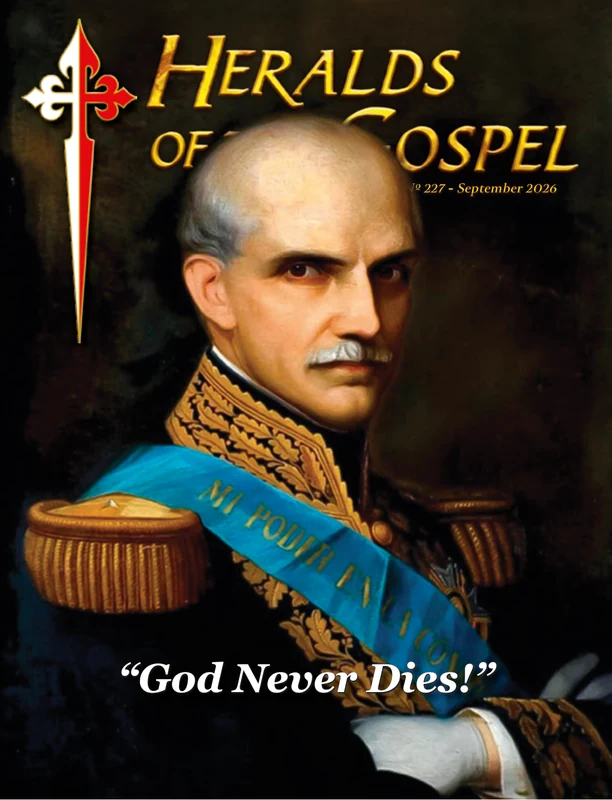
 Heralds of the Gospel Magazine, Vol. 20, nº 227, September 2026
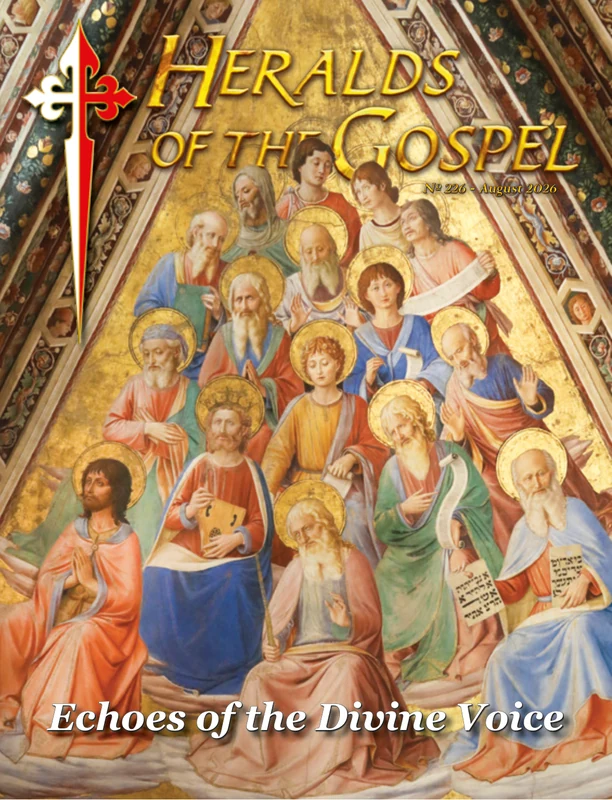 Heralds of the Gospel Magazine, Vol. 20, nº 226, August 2026
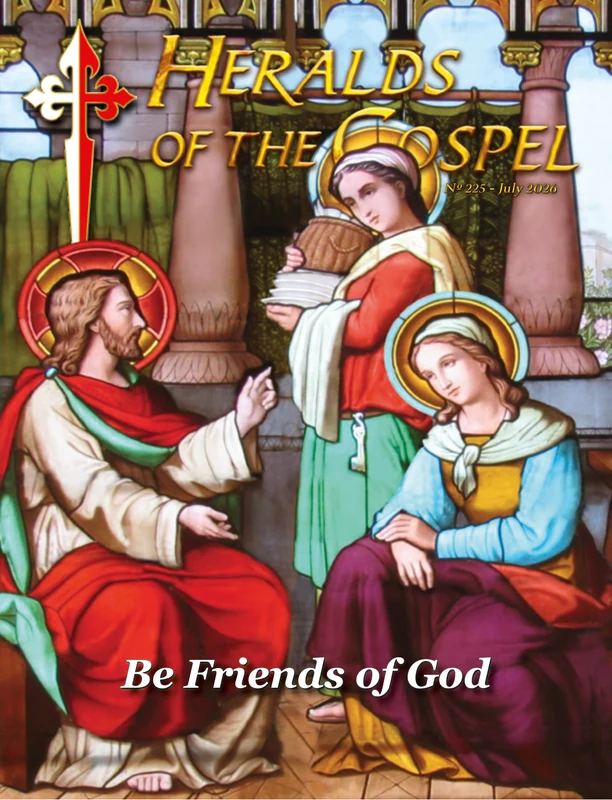 Heralds of the Gospel Magazine, Vol. 20, nº 225, July 2026
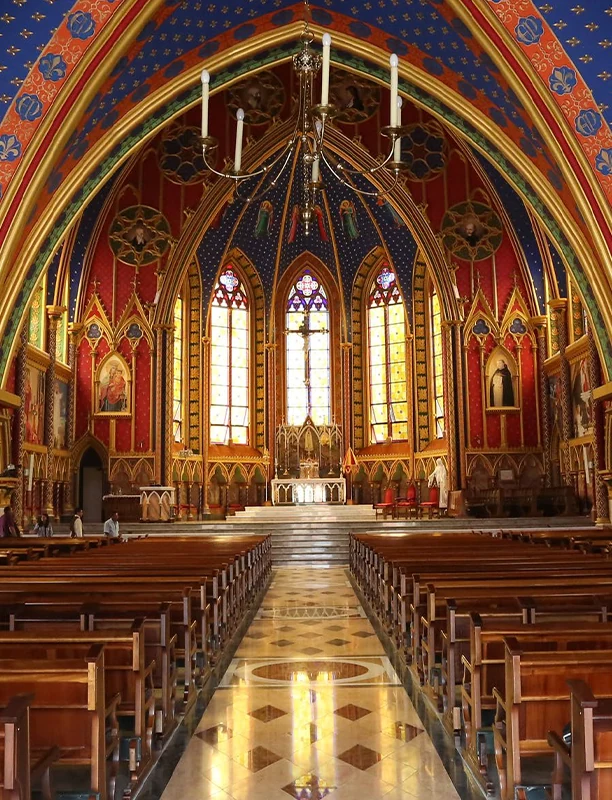 Who are the Heralds of the Gospel?
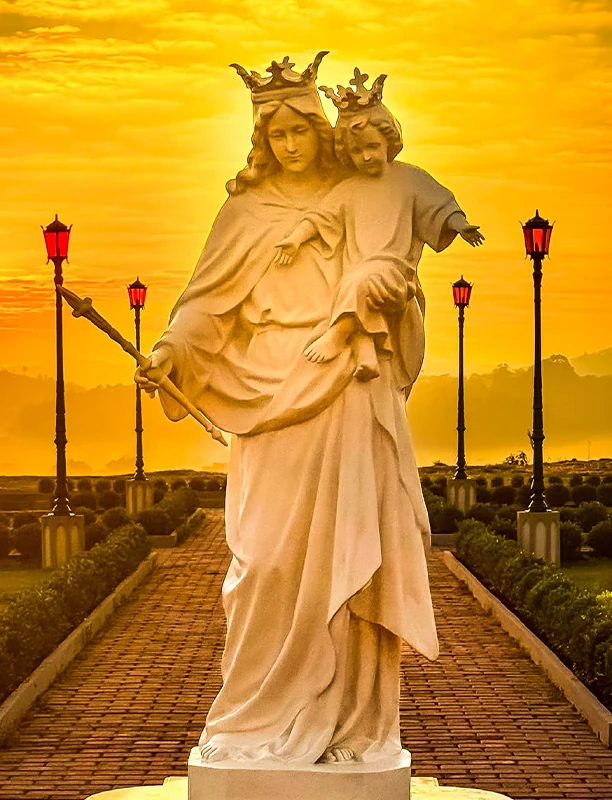 Help of Christians
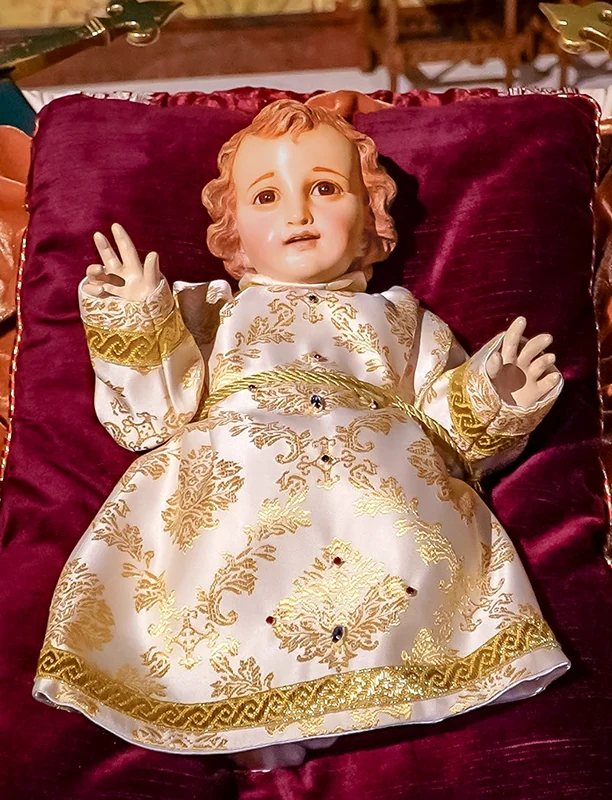 Christmas Carols







Gospel of the Fourth Sunday of Easter
27 “Jesus said: ‘My sheep hear My voice; I know them, and they follow Me. 28 I give them eternal life, and they shall never perish. No one can take them out of My hand. 29 My Father, who has given them to Me, is greater than all, and no one can take them out of the Father’s hand. 30 The Father and I are one” (Jn 10:27-30).
I – New Division Among the Jews
This Sunday’s Gospel is called that of the Good Shepherd, the fourth of the Easter Season. It contains the words Our Lord spoken during one of His last journeys to Jerusalem. We are in the tenth chapter of St. John and, therefore, at this point the Redeemer has already multiplied the loaves, walked upon the water, and operated many cures. In short, He has performed countless and indisputable miracles, and is known by everyone. His fame has spread, and throughout Israel there is uneasiness regarding Him. The Apostles have already acknowledged Him as the Messiah, but Our Lord has ordered them not to tell anyone. Meanwhile, public opinion is adopting contrasting positions regarding Jesus: some like Him and believe in His Messianic mission; others dislike and reject Him.A parable that divides the waters
Before the verses chosen for this Sunday’s Liturgy, the Evangelist narrates the miracle of the cure of the man blind from birth (cf. Jn 9), after which the Divine Master engages in a heated polemic with the Pharisees and employs, for the first time, the figure of the Good Shepherd and the sheepfold, clearly applying to His opponents the image of the thief and the mercenary (cf. Jn 10:1-13). The use of parables, such as the one just mentioned, enabled Our Lord to make Himself understood by His own, while leaving His enemies in doubt as to the meaning of His words. Upon hearing Him say “I am the Good Shepherd; I know my own and my own know Me” (Jn 10:14), the evil ones conjecture with disdain: “They say that this Nazarene was a carpenter. Could it be that now He has also become a shepherd?” But those who had adhered to Jesus thought: “I need to be part of this flock!” Thus, “There was again a division among the Jews because of these words” (Jn 10:19). It marked the setting when the Saviour appeared in the Temple for the feast of the Dedication, during the somewhat harsh winter in those regions.“If You are the Christ, tell us plainly”
We can imagine Him walking in Solomon’s Porch on a cold morning, His mantle covering His head. Knowledge of His presence in the Holy City had spread quickly and, in light of the situation created, His enemies plotted to take advantage of the occasion to put Him against the wall and oblige Him to declare if He were truly the Messiah. “How long will You keep us in suspense? If You are the Christ, tell us plainly” (Jn 10:24), the Jews asked as they surrounded Him. Knowing their evil intent, the Divine Master simply replied: “I told you, and you do not believe. The works that I do in My Father’s name, they bear witness to Me” (Jn 10:25). And He ended the dispute explaining the deepest reason for this refusal: “You do not believe, because you do not belong to My sheep” (Jn 10:26). Thereby He very clearly demonstrated that there was a division in humanity: on one side the sheep of the flock of Our Lord Jesus Christ, who truly give themselves over to God, ready to conform their lives to Him; and on the other the sheep of satan, who, so to speak, seek a god according to their caprices, so as to continue undisturbed in the terrible state in which they live. “Good Shepherd”, Pio Clementino - Museum, Vatican City
II – The Voice of the Good Shepherd
Having these foregoing presuppositions are indispensable for more readily comprehending the key to the Gospel for this Fourth Sunday of Easter, which aims to teach us what it means to be Jesus’ sheep.Figures idealized from all eternity
27a “Jesus said: ‘My sheep hear My voice…”
The distinctive sign of the true sheep
27b “...I know them and they follow Me.”
Created participation in the Trinitarian life
28a “I give them eternal life, and they shall never perish.”
 The Blessed Trinity - Cologne Cathedral (Germany)
No one can take them out of His hand
Our Lord continues:28b “No one can take them out of My hand.”
Following the voice of the Shepherd is to be in God
29 “My Father, who has given them to Me, is greater than all, and no one can take them out of the Father’s hand. 30The Father and I are one.”
A naturalist vision of the Messiah
The Jewish people who rejected Our Lord did so because they considered Him from a merely human perspective. They awaited a Messiah in accordance with their worldly criteria, entirely dedicated to resolving the political, social and financial problems of Israel. In seeing the portentous miracles of Our Lord, they believe that the one who would assure their supremacy over all other nations had finally arrived. They accordingly saw in the Divine Master a justification for their egoistic and delirious yearning for temporal dominion, they would delight with the expectancy that He would declare Himself the Messiah; however, not if they heard Him preaching a spiritual kingdom, that would demand of them a change of customs and mentality. In other words, they desired to build a bridge between the evil in which they lived and the good that is God. Therefore, it was a problem of faith, not reasoning. Despite their intelligence, they had become incapable of understanding things from on high, for they lacked the virtue of faith. Naturalism had obscured them to the evidence of an entirely uncommon Man, so extraordinary that He could not be a mere Man!No one lacks the grace to believe
Once again, it is clear that when the sheep put themselves into the hands of the Shepherd with faith, they are in some sense confirmed in grace. On the contrary, from the moment in which they refuse to believe and escape from divine love, they put themselves at risk. This is what happened with those Jews, who chose to neither hear nor understand His voice, despite being invited. This is a fundamental theological principle: no one lacks the graces necessary to adhere to the truth. Even a savage, who has never met a missionary, just by contemplating the order of nature will receive the graces to understand the existence of the God who created him and, as St. Thomas Aquinas teaches,1 can be saved, for those who encounter something superior to themselves and love it more than themselves, are justified at that moment. The crux of the matter lies in the acceptance or rejection of these graces and the eternal destiny of each one after death depends on this. In the presence of the Author of grace, the Son of God Incarnate, those sons of Abraham rejected the graces that were given to them and a few days later crucified Him. However, others, seeing the many signs He performed, accepted them and acknowledged that He was the Saviour, thereby joining His flock! “The Good Shepherd” - Blessed Sacrament Church, Bronx, New York
III – Jesus Convokes Us to Follow Him
This Sunday’s Gospel contains a serious warning for us. Can we say that we have given ourselves entirely to the Good Shepherd? Or do we act like those Jews who actually wanted a Messiah who would justify their vices, without demanding any spiritual progress on their part? We should take the care to ask ourselves if we want God to adapt Himself to our defects, or if we seek to eradicate them in order to be sheep who hear Jesus’ voice and follow Him? The point is that when we recognize the divinity of Our Lord, we must to change our life!Pressure to lead a life divorced from eternity
In this twenty-first century how much pressure is applied to good Catholics to reject this invitation of grace! Pressure from the world, television, the internet, and social interaction… always geared on leading a life without faith; divorced from eternity, a life from which Our Lord Jesus Christ is absent. If we were to attempt to list all of the modern habits that support this there would not be enough paper in the world! However, aided by the promise of the Divine Shepherd that no one will take the sheep from His hands, I must decide. If, for example, I like watching inappropriate television programs, I must stop doing this! If I socialize with those who lead me to sin, I have to avoid them! If I am not used to keeping custody of the eyes and I make concessions to the immorality so rampant on the streets, I must change now!Let us be sheep of the Good Shepherd!
God desires, He has always desired and will always desire to save everyone and to grant them the eternal life of which Our Lord speaks in this Gospel. But, for this to happen, He imposes a law: “You shall love the Lord your God with all your heart, and with all your soul, and with all your mind” (Mt 22:37). All the other Commandments derive from this, and the fulfilment of it makes our daily actions similar to the divine model. This is the gate of Jesus’ sheepfold and we must enter by it; on the contrary, we will not be numbered among His sheep. The voice of the Good Shepherd calls us today to listen to and follow Him like docile sheep, wishing to be instructed in Catholic doctrine, to receive the Sacraments, to avoid sin, in short, to take another step toward the goal that He has set for each of us which is holiness! Let us, then, be sheep of Christ’s flock! ◊ Flock of sheep on the outskirts of Avila (Spain))
Notes
1 ST. THOMAS AQUINAS. Summa Theologiae. I-II, q.89, a.6.