 Heralds of the Gospel Magazine, Vol. 20, nº 227, September 2026
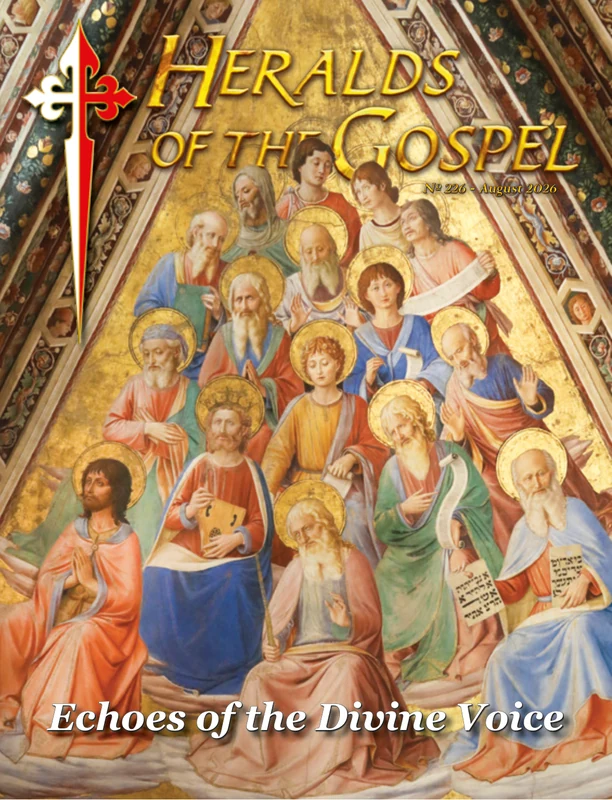 Heralds of the Gospel Magazine, Vol. 20, nº 226, August 2026
 Heralds of the Gospel Magazine, Vol. 20, nº 225, July 2026
 Who are the Heralds of the Gospel?
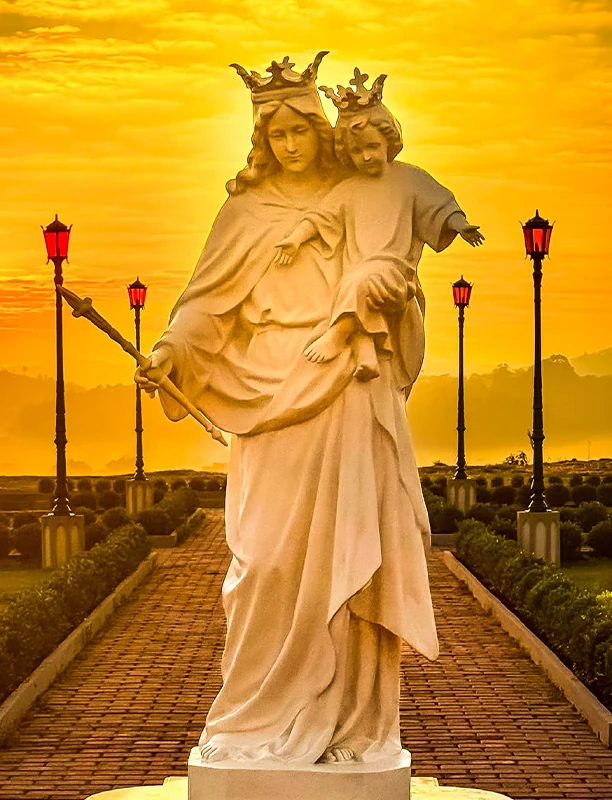 Help of Christians
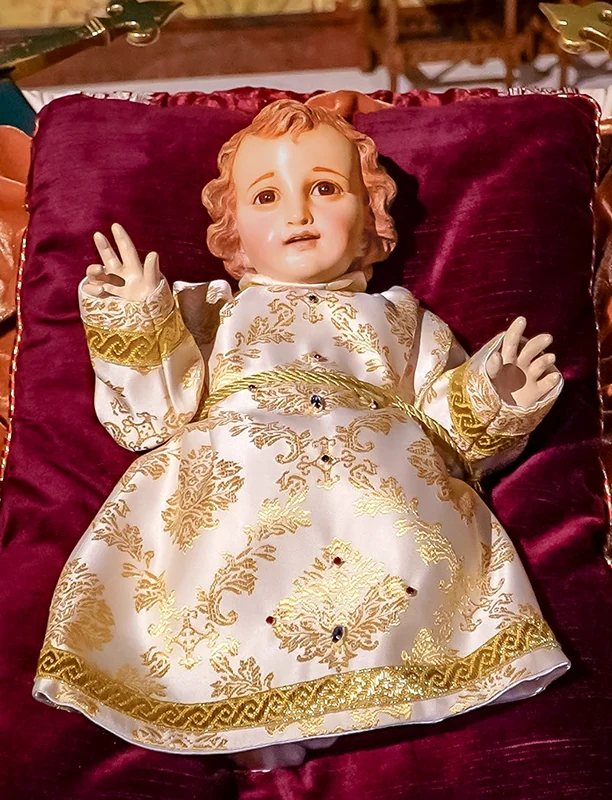 Christmas Carols









Noble gravity and tenderness
On the other hand, Dona Lucilia’s Brazilian affectivity set in French terms was honed; it was a delicate, refined and noble affection, conserved even within the privacy of the home, and regardless of the occasion. She had a most expressive way of making even the simplest request to Dr. Plinio: “Filhão, you wouldn’t mind fetching such-and-such an item for your mother would you?” Her form was never harsh; it was always affable and decorous. A certain air of seigniorial gravity, befitting a lady of old São Paulo, shone in all of her attitudes, even as she went through the rooms of her own home, for example, to fetch a piece of sewing material. This side of her personality formed a harmonic contrast with her tenderness, which had a preeminent place in her life. She used a rocking chair brought from the United States by an uncle. She preferred to get up unaided, rising to her feet on her own in a stately way. Her step was generally swift and discreet, but at times it could be slow and solemn as she withdrew to her quarters…Exceptional piety
Over the course of those 70 years Dona Lucilia never wavered in her love for Our Lady, whose omnipotent intercession before the Sacred Heart of Jesus she understood so well. The Blessed Virgin had cared for her from the moment of her birth, for Dona Gabriela had chosen the Holy Virgin of Penha as her godmother. In the same oratory that housed the statue of the Sacred Heart of Jesus in her bedroom, was another, smaller image of Our Lady of Graces. On the left side of the bed, a second wooden oratory affixed to the wall contained a statue of Our Lady of the Immaculate Conception. And, as could be expected of one so devoted to the Blessed Virgin, the recitation of the Holy Rosary – even in childhood – held a prominent place in her devotions. Her Marian devotion shone especially during the month of May when she would place flowers before some of the statues of Our Lady in the house. Dona Lucilia belonged to the Association of Christian Mothers and participated in some of its retreats, with due recollection, seriousness and love. Another testimony of her continual state of prayer comes in the form of numerous prayer books that she carefully kept in a drawer in her bedroom to have at hand when she desired. As the years went by, she did not lessen her desire to participate in religious solemnities, in which she could satisfy the highest aspirations of her exceptional piety, in spite of the effort which the weight of 70 years of suffering required.Firm in sweetness, sweet in firmness
These customs gradually shaped Dona Lucilia’s soul, and her great act of heroism consisted in remaining ever faithful to Catholic principles; or, rather, of becoming ever more similar to her Divine Model, the Sacred Heart of Jesus. This implied living out a daily, moment-by-moment martyrdom, for the prevailing attitude was one of concession and compromise toward evil. She needed unbreakable rectitude, and to engage in a continual and all-out fight to guard her unshakeable position of fidelity. But through it all, her sweetness showed how human her rectitude was. Were it not for this, it could hint of heartlessness. “Baccarat” crystal, strong, but with a certain flexibility, could serve as an apt symbol of this lady
A “Baccarat” crystal goblet
Harmonious equilibrium
This richness, which encompassed such contrasting qualities, can only be explained by the fact that Dona Lucilia had an essential aspect of equilibrium, which constituted the physiognomy of her soul. God, who does not see just specific attitudes, but also looks at their source, certainly considered her in this way. Dona Lucilia lived, so to speak, within a glass dome, guarding all of her faculties from agitation, with neither the tedium of idleness nor useless anguish, like the petals of a flower that do not compete with one another for space, but act as sisters adorning the corolla. Thus, she acted with entire ease within a myriad of events and, depending on the circumstance, was sagacious, sweet, amiable, courageous, prudent… Even more beautiful than the eminent acts of virtue that she practised was her soul’s harmony, which aided her in maintaining this state of balance. ◊Taken, with adaptations, from: Dona Lucilia. Città del Vaticano-Nobleton: LEV; Heralds of the Gospel, 2013, p.410-414