 Heralds of the Gospel Magazine, Vol. 20, nº 227, September 2026
 Heralds of the Gospel Magazine, Vol. 20, nº 226, August 2026
 Heralds of the Gospel Magazine, Vol. 20, nº 225, July 2026
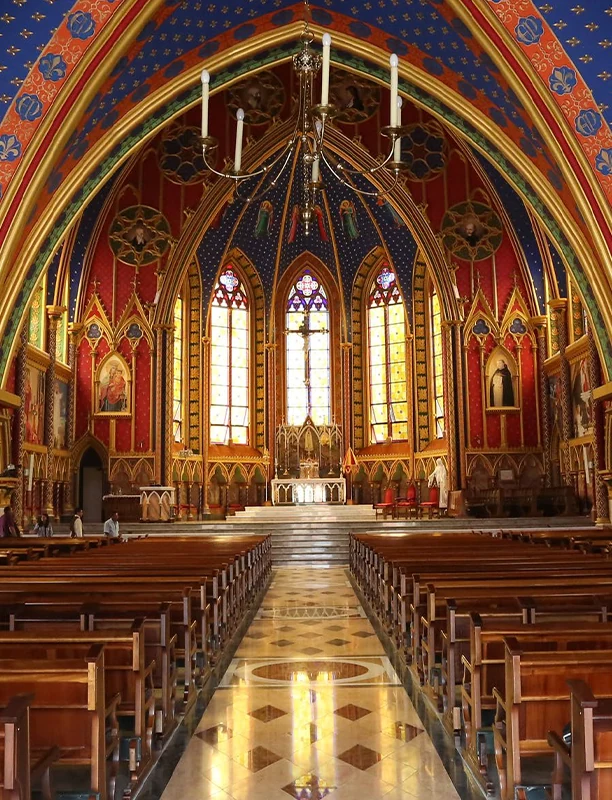 Who are the Heralds of the Gospel?
 Help of Christians
 Christmas Carols








When the Law of God is at stake, all sacrifice, all dedication and all steadfastness in the faith must be rendered. As He is King and Lord, He has the right to be praised and obeyed, even if it costs us the blood of body and soul.
Antiochus Epiphanes, a sinful root
It is the fourth century BC. Alexander the Great had become one of the greatest potentates of the world, to the point that no army could oppose him: “And he went through even to the ends of the earth, and took the spoils of many nations: and the earth was quiet before him” (1 Mc 1:3). However, after subjecting to his yoke some of the most influential nations of that time – such as the kingdom of the Persians – he felt that death was approaching. He then summoned the high-ranking officers and divided his empire among them. They all bore royal crowns, and their children succeeded them for many years, causing evil to multiply on earth (cf. 1 Mc 1:7-10). It is not surprising that among these kings “came forth a sinful root, Antiochus Epiphanes” (1 Mc 1:11), who rose to the throne of Syria in 175 BC. “He also became known by the nickname of Epimanes – maniac – because of his pride, which drove him to equate himself with Zeus.”1 In the grip of ambition, Antiochus planned to conquer Egypt. He attacked King Ptolemy VI, who fled in fear, and on his way back to Syria he marched on Jerusalem, where he entered triumphantly. He plundered the Temple, seizing the valuables that adorned it, and returned to his land after killing the Jews who opposed him. Two years later, he attacked Jerusalem again, establishing a citadel there. And he prescribed to the inhabitants of Judah “to forbid burnt offerings and sacrifices and drink offerings in the sanctuary, to profane Sabbaths and feasts, to defile the sanctuary and the priests, to build altars and sacred precincts and shrines for idols, to sacrifice swine and unclean animals, and to leave their sons uncircumcised. They were to make themselves abominable by everything unclean and profane, so that they should forget the law” (1 Mc 1:45-49). Moreover, he had what the First Book of Maccabees calls “a desolating sacrilege” (1:54) erected on the altar, whom the Jews were to worship as a god. No one who defied his orders would be spared punishment.A long-prepared conquest
A great number of Jews showed no resistance, for heir souls had long been so corroded by disaffection for the God of Israel and His cause that many of them had already joined with the pagans in adopting their wicked customs and perverse practices (cf. 1 Mc 1:11-13). Indeed, the Book of Maccabees describes that even before the invasion of Antiochus, the Israelites who were partisans of Hellenism had “built a gymnasium in Jerusalem, according to Gentile custom, and removed the marks of circumcision, and abandoned the holy covenant. They joined with the Gentiles and sold themselves to do evil” (1 Mc 1:14-15). The desire for a life more adapted to the new habits of the Greeks daily consumed the hearts of the aggiornati Jews of that time. The religion, customs, morals and instructions of their ancestors had fallen into disuse and were destined to complete oblivion... For them, it was better to live according to the dictates of the earth than to the laws of Heaven.The desolation of the faithful few
The few who dared to stand up to the conqueror were cruelly massacred by his soldiers. Scripture says that “very great wrath came upon Israel” (1 Mc 1:64): the women who circumcised their children, those who had performed the rite and the children themselves were murdered at the king’s command. The same fate befell those who kept some book of the Covenant or persisted in following the prescriptions of the Law. Those who survived the wrath of the pagans took refuge in solitary places and there they upheld, as far as possible, the practice of the true religion. But their situation was becoming more and more difficult... Perhaps this is why the First and Second Books of Maccabees were initially called in the Latin translations Angustiæ filiorum Dei and Angustiæ templi,2 respectively. To accept this desolation and allow themselves to be massacred was, for these Jews, their expression of love for God and the Law. But was this enough?
Spurred by righteous anger
“In those days Mattathias the son of John, son of Simeon, a priest of the sons of Joarib, moved from Jerusalem and settled in Modein” (1 Mc 2:1) with his five sons: John surnamed Gaddi; Simon called Thassi; Judas called Maccabeus; Eleazar surnamed Avaran; and Jonathan known as Apphus. Emissaries of Antiochus came to Modein to force its inhabitants to sacrifice to the idol. They were especially concerned with obtaining the apostasy of Mattathias, who, being an influential and respected man, would serve as an example to his compatriots of how to abandon the Law without scruples or regret. On the day set for the sacrifice, Mattathias came to the place to see how events would unfold. When summoned by the emissaries to carry out the royal order, he flatly refused, declaring that he, together with his whole family, would not deviate from the true religion “to the right hand or to the left” (1 Mc 2:22). However, as soon as he had spoken these words, a Jew came forward to sacrifice to the idol before the whole assembly. As soon as Mattathias saw this, “he burned with zeal and his heart was stirred. He gave vent to righteous anger; he ran and killed him upon the altar” (1 Mc 2:24). He also took the life of the king’s officer in charge of forcing them to apostasy; inviting to join him those who wished to resist, for love of God, until the end.Beginning of the resistance
Once the revolt of the Maccabees was established, they took refuge in shelters far from the city. Mattathias’ conduct had been quite different from that of the Israelites until then. He aimed not to lose, but to win. In fact, it is at the time of trial that the true children of God appear, with all the impetus of love. Now it happened that many of the Jews who were refugees in the desert were found by the Syrians and massacred without any resistance, letting themselves be killed, for it was the Sabbath day and they did not want to break the rest prescribed by the Law... When he heard this, Mattathias resolved not to act likewise, even if he was attacked on a Sabbath; otherwise, no one would survive the onslaughts of the pagans. He gathered an army and began to traverse the country, exterminating the transgressor Jews, destroying the altars to the idols and pursuing their enemies (cf. 1 Mc 2:44-47). Mattathias’ attitude reveals something of that cunning of the serpent which the Divine Master would enjoin for the children of light (cf. Mt 10:16). He did not cling to the letter of the Law, but he knew how to discern the need to give up a holy custom in order to defend even higher values! On the other hand, the attitude of his followers is also worthy of admiration: they heeded the voice of the man of God, certain that the path he had pointed out led to victory.
Consolation, Pierrelongue (France)