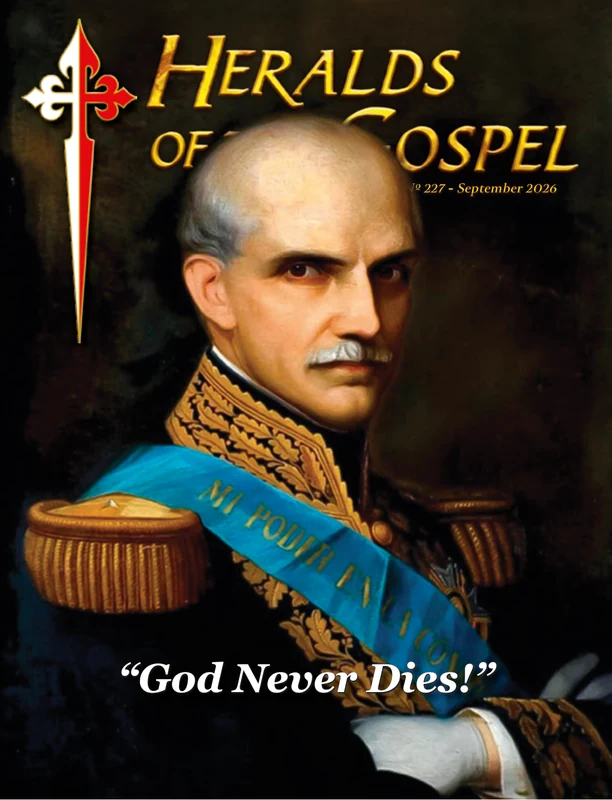
 Heralds of the Gospel Magazine, Vol. 20, nº 227, September 2026
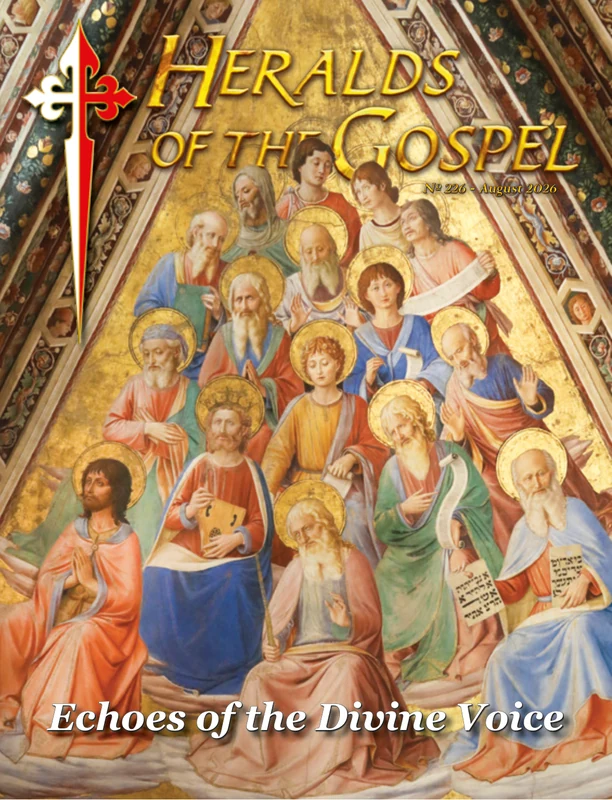 Heralds of the Gospel Magazine, Vol. 20, nº 226, August 2026
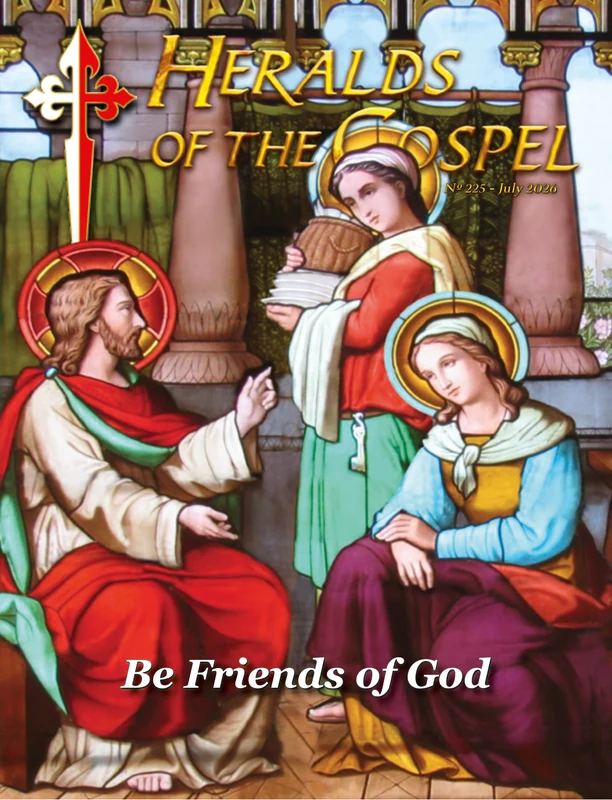 Heralds of the Gospel Magazine, Vol. 20, nº 225, July 2026
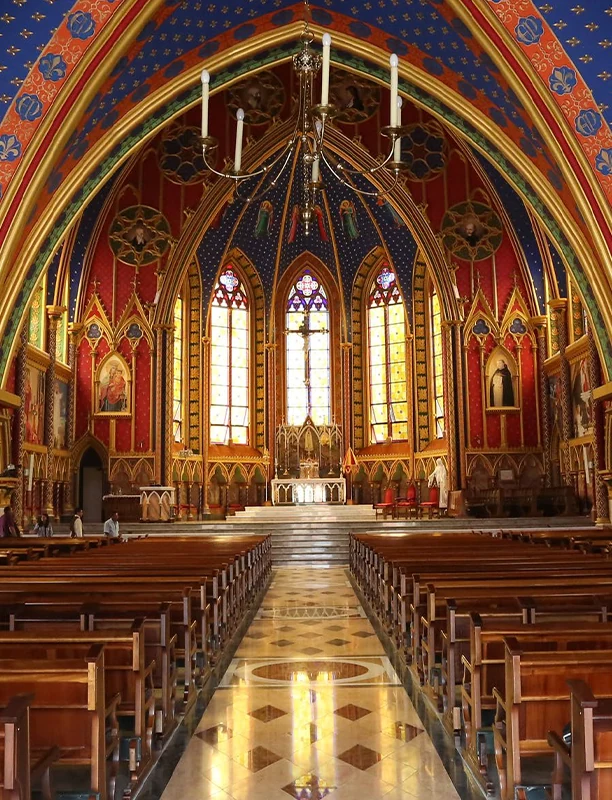 Who are the Heralds of the Gospel?
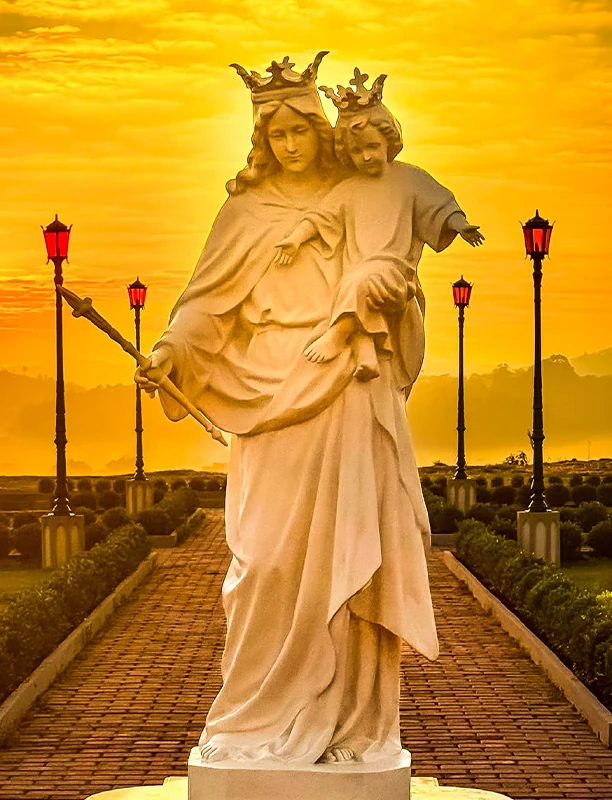 Help of Christians
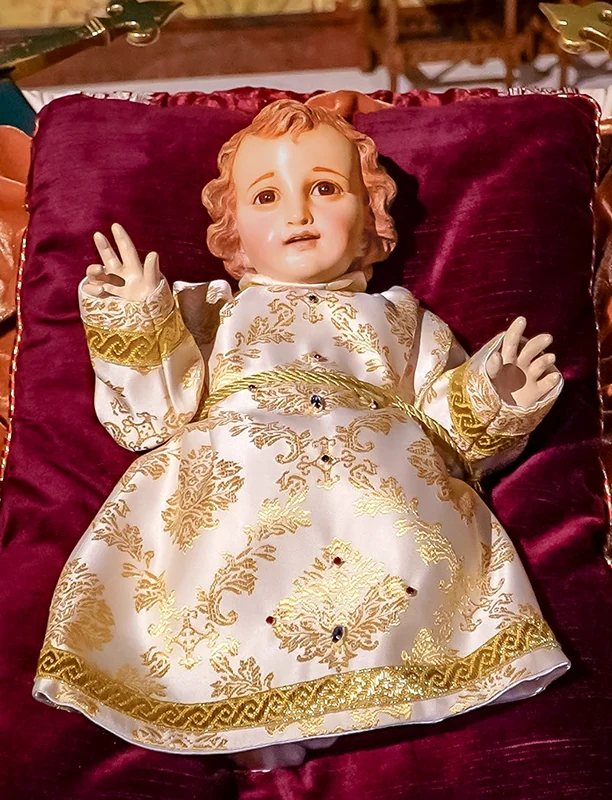 Christmas Carols






The more the faithful see the likeness of Christ in priests, the more apt they will be to allow themselves to be guided by them. And priestly ministry will be thereby more efficacious.
The sanctity of the priest, a requirement
Since the time of the Old Law, the person of the priest has been surrounded with a dignity that demands an exemplary life. Thus, in the Book of Leviticus, we find a twofold appeal to sanctity. On one hand, at God’s command, Moses exhorts the people of Israel to seek perfection: “Say to all the congregation of the people of Israel, You shall be holy; for I the Lord your God am holy” (Lv 19:1). But holiness is more rightly demanded of priests, since it is they who offer the sacrifices, acting as intermediaries between God and the people. To present oneself to exercise the priestly duties before the Most High, stained by sin, would be an affront to the Creator. “They shall be holy to their God, and not profane the name of their God; for they offer the offerings by fire to the Lord, the bread of their God; therefore they shall be holy” (Lv 21:6). And since the Old Testament is a figure of the New, the need for sanctity to reach a much higher degree in the New Covenant is evident. This appears in Thomistic theology, which presents the ordained minister as one who was elevated, from among the other faithful of Christ, to a royal dignity, because he represents Him and, on diverse occasions, acts in persona Christi. It is impossible to imagine a higher title. And as he is called to be the mediator between God and men, in addition to being their guide to divine things, he should necessarily be superior to them in sanctity, although all of the baptized are called to perfection. “The Curé of Ars” - Basilica of Ars, Ars-sur-Formans (France)
Priests are models for the faithful
Seen by the faithful as persons chosen by God to guide them, ordained ministers should always be outstanding examples of virtue, as the Apostle recommends his disciple Titus: “Show yourself in all respects a model of good deeds, and in your teaching, show integrity, gravity, and sound speech that cannot be censured, so that an opponent may be put to shame, having nothing evil to say of us” (Ti 2:7-8). Accordingly, blameless conduct, burning charity, and bearing witness to the beauty of the Church and the truth of the Gospel message, will speak much more deeply and effectively to souls than the most logical and eloquent speeches: “The ornament of the master is the virtuous life of the disciple, just as the health of the infirm redounds in praise for the physician. [...] If we present our good works, the doctrine of Christ will be praised.” 8 Christ is the true model of the consecrated minister. The priest should mould himself after Him, not only in the sacramental character, but also through the imitation of His perfections, in such a way that the faithful can see another Christ in him. Only in this way will they be drawn by the good example of their pastor and guide. Given man’s social nature, the good reputation stemming from the practice of virtue leads others to imitation. Thus, the more the faithful see the likeness of Christ in the ministers of God, the more apt they will be to allow themselves to be guided by them. And their ministry will thereby be more efficacious.The sacrality of the priest
An element related to good example is the proportionate respectability with which the minister of God ought to be enveloped—not only by his irreproachable conduct, but also by his bearing, way of being and his attire—so that his action exercises a greater influence on the souls of the faithful. Even today, admiration is shown toward religious or priests who present themselves as such. This respectability, that to some may appear artificial, is ultimately a valuable aid for the minister, since it helps him to constantly bear in mind the high dignity invested in him, the mark of which is imprinted on his soul for all eternity. It likewise serves as a wholesome protection against the countless seductions of the world. Benedict XVI incenses the altar at the beginning of the Mass of the Epiphany of the Lord (6/1/2010)
The Mass, source of priestly sanctity
In this Year for Priests, inaugurated on the 150th anniversary of the death of the holy Cure of Ars, model of priests, it is fitting to recall his deep and ardent devotion to the Holy Mass: “If we knew the value of the Mass, we would die. To celebrate it worthily, the priest must be a saint. When we go to Heaven, we will see what the Mass is, and how many times we celebrated it without due reverence, adoration and recollection.” 9 In the decree Presbyterorum ordinis, the Second Vatican Council, in perfect harmony with Thomist doctrine, admirably summarizes the centrality of the Eucharist in the spiritual life of the priest, as his principal means of sanctification. It goes on to recall that it is through the ordained ministry that the spiritual sacrifice of the faithful is consummated in union with Christ’s sacrifice, offered in the Eucharist in an unbloody and sacramental manner. And it affirms that “the ministry of priests is directed to this goal and is perfected in it. Their ministry, which begins with the evangelical proclamation, derives its power and force from the sacrifice of Christ.” 10 This is equivalent to saying that the priest lives for the Eucharistic Celebration and, from it, he should draw the strength to progress in the practice of virtue. Garrigou-Lagrange sums up this doctrine: “The priest should consider himself ordained above all to offer the Sacrifice of the Mass. In his life, this Sacrifice is more important than study and exterior works of apostolate. Accordingly, his study should aim at providing him with a deepened understanding of the mystery of Christ, supreme Priest, and his apostolate should stem from the union with Christ, the foremost Priest.” 11 In commenting on the exhortation of the Roman Pontifical, made by the Bishop to the candidates for priestly ordination, Royo Marin emphatically affirms that the Holy Mass is “the noblest and most august function of the priest of Christ.” 12 And, aware of the many pastoral occupations of a priest, which can easily deviate him from the essence of his vocation as mediator between God and men, he reinforces the same idea, with words burning with priestly zeal: “One is a priest, first and foremost, to glorify God through the offering of the Holy Sacrifice of the Mass.” 13 In treating of the priestly vocation and spirituality, from the pastoral perspective, Benedict XVI affirms: “The Eucharistic Celebration is the greatest and highest act of prayer, and constitutes the centre and the source from which even the other forms receive ‘nourishment’: the Liturgy of the Hours, Eucharistic adoration, Lectio divina, the Holy Rosary, meditation.” 14The efficacy of the priestly ministry
As we have previously seen, the holiness of the priest’s life, as an example for Christ’s faithful, is a powerful element to lead them to perfection. Dom Chautard rightly points out that a holy priest makes a fervent people; a fervent priest, a pious people; a pious priest, a decent people; a decent priest, a godless people. 15 Therefore, a minister’s virtue plays an exceedingly important role in the success of his ministry. Regarding the application of the value of the Holy Mass for propitiation, we see that it has a subjective efficacy, which depends on the dispositions of the one who celebrates it and those to whom it is applied, as St. Thomas explains: “Therefore, although this offering suffices of its own quantity to satisfy for all punishment, yet it becomes satisfactory for them for whom it is offered, or even for the offerers, according to the measure of their devotion, and not for the whole punishment.” 16 On this passage of the Angelic Doctor, Albert Raulin states: “It would be a pernicious illusion to believe that the offerer is dispensed of fervour under the pretext that Christ, offering Himself in the Mass, fully satisfied for all the sins of the world.” 17 Before this reality, the priest has two great duties. One toward himself, and the other toward the people, since both profit from the fruits of the Holy Mass, especially the celebrant, depending on the degree of his fervour or devotion. 18 In this way, he will correspond to the lofty dignity of his ministry, as the Cure of Ars affirms: “Without the Sacrament of Holy Orders, we would not have the Lord. Who put him there in that tabernacle? The priest. Who welcomed your soul at the beginning of your life? The priest. Who feeds your soul and gives it strength for its journey? The priest. Who will prepare it to appear before God, bathing it one last time in the blood of Jesus Christ? The priest, always the priest. And if this soul should happen to die [as a result of sin], who will raise it up, who will restore its calm and peace? Again, the priest… After God, the priest is everything! … Only in heaven will he fully realize what he is.” 19 “Our Lady of the Clergy”- Church of St. Cecilia, São Paulo (Brazil)
The voice of the Chair of Peter
In ending this study, rather than summarizing the material covered, as academic styling would suggest, we feel that it would be a more filial gesture toward the Chair of Peter to conclude by recalling some important points from recent documents of the Pontifical Magisterium on the priesthood. It is truly touching that in his last Letter to Priests, in 2005, Pope John Paul II chose to focus this document on the words of the Consecration, as if to emphasize that the apex of his priestly life drew near, with the offering of his own sacrifice, by the complete giving of his life united to the sacrifice of Christ. This offering is recommended by the present Pontiff in the Letter Proclaiming a Year for Priests, citing these words of the Holy Cure of Ars: “What a good thing it is for a priest each morning to offer himself to God in sacrifice!” In fact, John Paul II began this last Letter recalling that “if the whole Church draws life from the Eucharist, all the more then must the life of a priest be ‘shaped’ by the Eucharist.” 20 It is indispensable that the priest, to save those entrusted to him, offers his own sacrifice, united to that of Christ, following the example of St. Paul: “Now I rejoice in my sufferings for your sake, in my flesh I complete what is lacking in Christ’s afflictions for the sake of his body, that is, the Church” (Col 1:24). In this way the words of the Consecration are transformed into a “formula of life”, as the Servant of God John Paul II demonstrated. The teaching of the latter is also remembered by his successor, Benedict XVI: “Souls have been won at the price of Jesus’ own blood, and a priest cannot devote himself to their salvation if he refuses to share personally in the ‘precious cost’ of redemption.” 21 Finally, we cannot fail to evoke the irreplaceable role of the Mother of God in the priestly life. “Who more than Mary can help us taste the greatness of the Eucharistic mystery? She more than anyone can teach us how to celebrate the sacred mysteries with due fervour and to commune with her Son, hidden in the Eucharist.” 22 This Marian Pope, John Paul II, further teaches in his Encyclical Ecclesia de Eucaristia: “In the ‘memorial’ of Calvary all that Christ accomplished by his passion and his death is present. Consequently all that Christ did with regard to his Mother for our sake is also present. To her he gave the beloved disciple and, in him, each of us: ‘Behold, your Son!’ To each of us he also says: ‘Behold your mother!’” (cf. Jn 19: 26-27). In this Year for Priests, let us seek to be especially united to the sacrifice of Christ with the spirit of Mary, He who made of His entire existence an anticipated Eucharist, preparing Himself day by day for the supreme sacrifice at Calvary.◊(Excerpts from the study prepared for the Pontifical Congregation for the Clergy, for the occasion of the Year for Priests – Complete text available in Portuguese only at www.annussacerdotalis.org, section “Estudos”)