 Heralds of the Gospel Magazine, Vol. 20, nº 227, September 2026
 Heralds of the Gospel Magazine, Vol. 20, nº 226, August 2026
 Heralds of the Gospel Magazine, Vol. 20, nº 225, July 2026
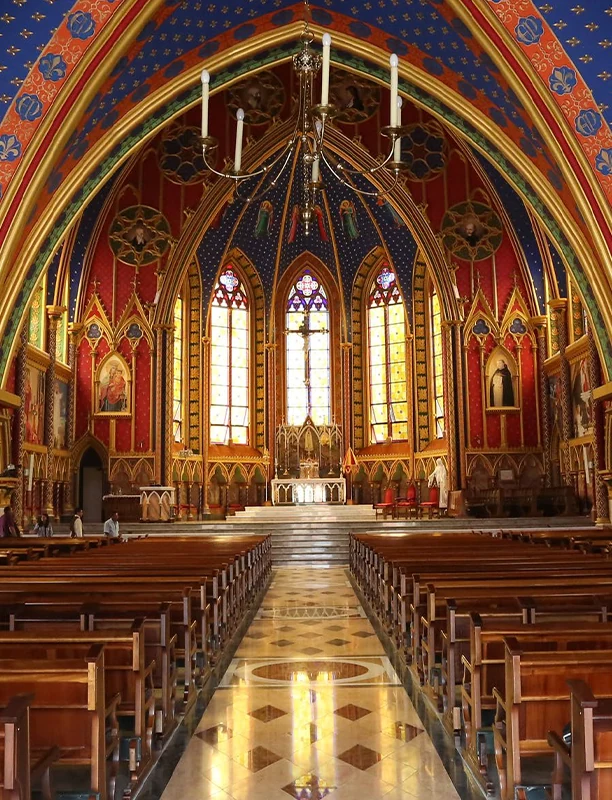 Who are the Heralds of the Gospel?
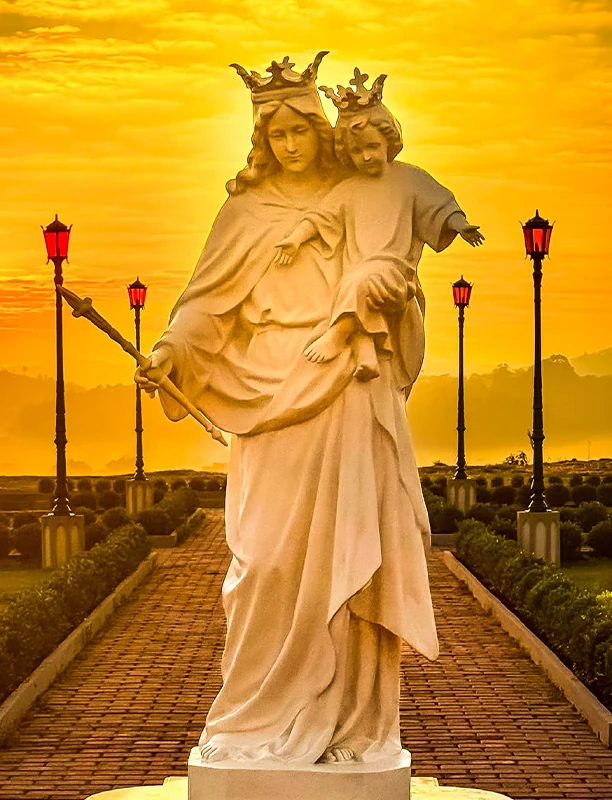 Help of Christians
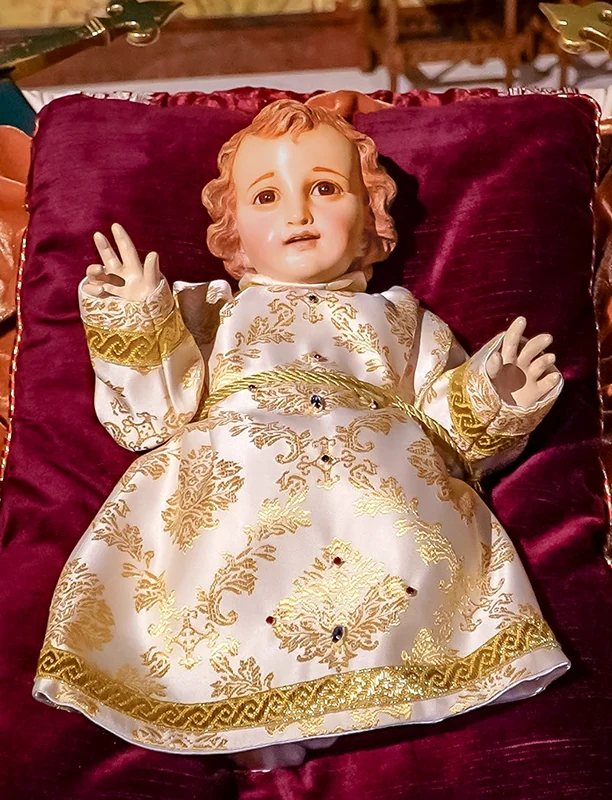 Christmas Carols






This paragraph of the Catechism, entitled The Predestination of Mary, presents a series of biblical Marian attributes, focusing on the privilege of her Divine Motherhood.
Of the four Marian dogmas – Perpetual Virginity, the Immaculate Conception, the Assumption and Divine Motherhood – the latter is the most sublime, as it is the foundation for the others.
During the Council of Ephesus, held in the year 431, the Church defined that the Virgin Mary is truly the Mother of God, since She conceived by the power of the Holy Spirit and gave birth, according to the flesh, to Him who possesses two natures –human and divine – united in a single Person, the Eternal Word.
This theological framework, which the Church has not yet grasped conclusively, makes it clear that the Father willed to predestine Our Lady, from all eternity, for the fulfilment of the sublime and infinitely great work of the Incarnation.
This is an ineffable dignity, confirmed by St. Thomas Aquinas1 when he teaches that everything the Creator made could have been better.
With three exceptions: the humanity of Christ, because it is hypostatically united to the Person of the Son; the Most Holy Virgin, because She is the Mother of God; and the beatific vision, because it consists in the vision of God Himself.
In light of these considerations, it can be better understood why St. Louis Grignion de Montfort2 emphasizes that the mystery of the Incarnation is central to the practice of total consecration of oneself to Jesus Christ, through the hands of Mary.
The Incarnation shows that God the Father, although He had no need of Our Lady, chose to make use of her to give the world the Saviour. The Almighty could have brought about the Redemption of humanity in another way.
However, His infinitely wise plan had contemplated the Incarnation of the Only-begotten Son from all eternity.
Thus, the divine design of choosing and predestining Mary to be the Mother of God is perfectly accomplished, even though our human understanding is incapable of assimilating its entire significance.
From this perspective, it follows that the Blessed Virgin’s “yes” at the Annunciation was the most splendid and momentous decision in history, dividing it into two parts: before and after Christ.
At the same time, it was an eloquent manifestation of her fullness of grace, love and self-surrender: “Behold, I am the handmaid of the Lord” (Lk 1:38).
Every believer is likewise called to say “yes” to the universal call to holiness. To this end, there is nothing better than to follow the example of her whom all generations will call blessed, for in her the Almighty has worked wonders (cf. Lk 1:48–49). In us too, through grace, He can do the same.