 Heralds of the Gospel Magazine, Vol. 20, nº 227, September 2026
 Heralds of the Gospel Magazine, Vol. 20, nº 226, August 2026
 Heralds of the Gospel Magazine, Vol. 20, nº 225, July 2026
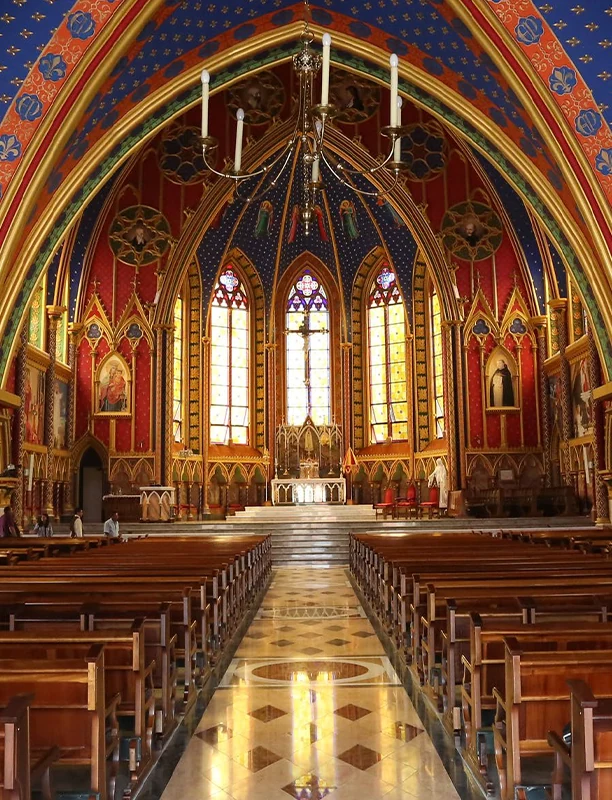 Who are the Heralds of the Gospel?
 Help of Christians
 Christmas Carols







The Soviet threat
The Treaty of Versailles, in 1919, finally put an end to the territorial disputes which led to one of the greatest events of the 20th century: the First World War. As a result of the agreement, the borders of many countries were altered, with Poland being one of the greatest beneficiaries. In fact, since the 18th century this nation had been divided between the Austrian, Prussian and Russian Empires, and the pact restored its independence. Meanwhile, in the country of the Tsars, another event caught the world’s attention: the Communist Revolution. In 1917, the Bolsheviks deposed Emperor Nicholas II and established the Soviet socialist regime under the leadership of Vladimir Lenin. The aim of the Reds was, from Russia, to dominate the whole world: “The interests of socialism and world revolution are above national interests, above the interests of the State,”1 Lenin affirmed in May 1918. To this end, it was of utmost importance to conquer other territories in order to confront Western capitalism.Polish-Soviet War
In the thick of Russia’s claim to universal rule, the Polish-Soviet War began. Polish General Josef Pilsudski broke through the border of Soviet Ukraine, together with the Ukrainian nationalist leader Symon Petliura, and advanced on Kiev. Although the first attack was frustrated and the Polish-Ukrainian phalanxes were forced to withdraw, Lenin used the occasion as a pretext to send in the Red Army in order to sovietize Poland. The Poles retreated about fifteen kilometres per day. After a series of victories, the Bolsheviks reached Warsaw, commanded by Tukhatchevsky, a “twenty-eight year old Soviet ‘Napoleon’.”2 Russian victory seemed inevitable. Distraught and with no hope of help from other Western countries, thousands of Poles gathered in Częstochowa to turn to the only one who could help them at that moment. She had saved them once before; why would She not do it again?Our Lady of Częstochowa
 During the communist invasion, the people turned to Her...
Original icon of Our Lady of Częstochowa - Monastery of Jasna Gora, Częstochowa (Poland)
The Battle of Vistula
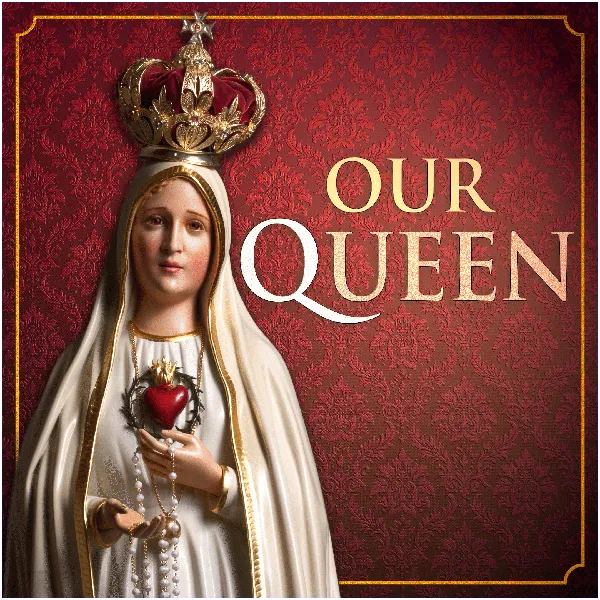
The final battle took place on August 15, 1920, the feast of the Assumption of the Blessed Virgin Mary, on the banks of the Vistula River. Suddenly, the Russian armada began to retreat. The Poles soon launched a counter-offensive which pushed them towards East Prussia. Almost one hundred thousand Russian soldiers surrendered to the Polish army. Some historians claim that, to this day, it seems impossible to find the cause of the “crushing defeat suffered by the Red Army.”3 However, we disagree. It is impossible for them to find it, because they are looking in the wrong place. What is the use of searching earth for something found in Heaven? On that day Our Lady appeared in the clouds over Warsaw, driving the communists away. Immediately the victory was attributed to the Black Virgin and the event became known as the Miracle on the Vistula.Mary is the Queen of history
The Book of Proverbs says: “The horse is made ready for the day of battle, but the victory belongs to the Lord” (Prv 21:31). Human forces were powerless to halt the onslaught of the adversary, but the Queen of Heaven herself, “terrible as an army set in array” (Cant 6:3), decided to intervene. We might almost say that this is a rule of Marian assistance in every era and on all occasions: it is usually manifested only when men have reached the extreme limit of their efforts and feel themselves overcome by the acrid odour of failure, so that they realize that the victory is due solely to the action of the Virgin. Thus, even when all seems lost, we can be sure that our Queen and Protectress continues to hold the reins of history in her hands. ◊Notes
1 PIPES, Richard. História concisa da Revolução Russa. Rio de Janeiro: BestBolso, 2008, p.305.
2 DANIEL-ROPS, Henri. A Igreja das Revoluções. II – Um combate por Deus. São Paulo: Quadrante, 2006, p.318.
3 PIPES, op. cit., p.313.