 Heralds of the Gospel Magazine, Vol. 20, nº 227, September 2026
 Heralds of the Gospel Magazine, Vol. 20, nº 226, August 2026
 Heralds of the Gospel Magazine, Vol. 20, nº 225, July 2026
 Who are the Heralds of the Gospel?
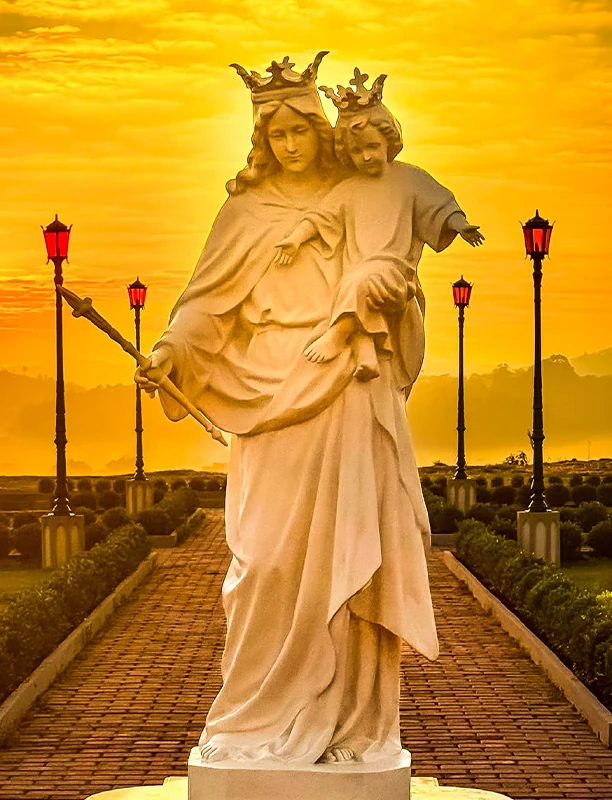 Help of Christians
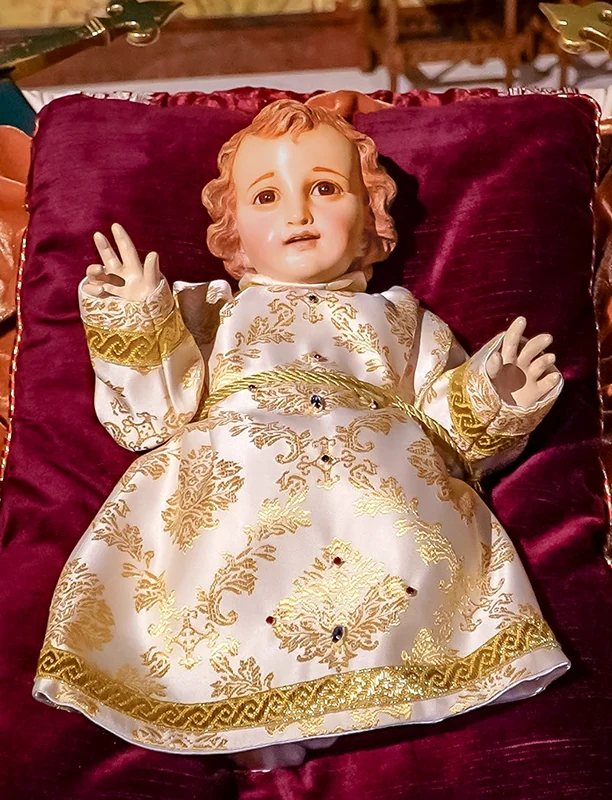 Christmas Carols







Gospel of the Easter Sunday of the Resurrection of the Lord
1 On the first day of the week, Mary of Magdala came to the tomb early in the morning, while it was still dark, and saw the stone removed from the tomb. 2 So she ran and went to Simon Peter and to the other disciple whom Jesus loved, and told them, “They have taken the Lord from the tomb, and we don’t know where they put Him.” 3 So Peter and the other disciple went out and came to the tomb.4 They both ran, but the other disciple ran faster than Peter and arrived at the tomb first; 5 he bent down and saw the burial cloths there, but did not go in. 6 When Simon Peter arrived after him, he went into the tomb and saw the burial cloths there, 7 and the cloth that had covered His head, not with the burial cloths but rolled up in a separate place. 8 Then the other disciple also went in, the one who had arrived at the tomb first, and he saw and believed. 9 For they did not yet understand the Scripture that He had to rise from the dead (Jn 20:1-9).
I – Scrutinizing the Secret of Mary
The joy of the Lord’s Resurrection is an inscrutable mystery for ordinary men. How can we measure the height, the extent and the depth of the almost infinite joy that pervaded the Heart of Jesus in recovering His Body and raising it to the glorious state, triumphing definitively over sin and death? This is a reality so sublime that it greatly surpasses our feeble intelligence. Although He is truly Man, Our Lord sets the roots of His personality in the Person of the Word by the grace of hypostatic union. Thus, His identity is fully divine and, as a result, His feelings and emotions reach such a height of perfection that they become somehow unattainable for us. Thus, to know as closely as possible the jubilation experienced by Jesus in the Easter triumph, Divine Wisdom gave us the Virgin Mary, Mother and closest companion of the Redeemer. Our Lady was a most faithful echo chamber of her Son’s ineffable delight, for She was closely linked to Him throughout the entire epic of salvation.The perfect congruity of Mary’s Co-redemption
The Blessed Virgin is, in the highest sense of the term, the Co-redemptrix of sinners. Although her cooperation in the Passion of Christ was not per se necessary, it was made so by the will of the Father of Lights, who in His divine designs determined to give the New Adam a faithful companion, in opposition to the first prevaricating woman who dragged Adam into the abyss of sin. For this reason, the most ancient Fathers of the Church designate Mary as the New Eve, entirely holy, immaculate and obedient. Her cooperation made reparation, in the most beautiful way, for the fault of the first couple, guilty of rebellion and the cause of humanity’s misfortunes. St. John, in his Gospel (cf. Jn 19:25-27), is keen to emphasize the compassionate role of the Virgin Mother in the shadow of the Cross. She stood fast during the sacrifice of the Lamb of God and, in a priestly spirit, and offered Him up to the Heavenly Father in an act of supreme submission. The harrowing sorrows of the Son were shared by the Mother, who immolated herself at His side with an ardent desire to snatch from Satan’s filthy clutches the souls bound by sin and enslaved by death.United in sorrow, inseparable in victory
Consequently, the suffering Hearts of Jesus and Mary, united as they were by the same afflictions and the same charity, were rightly to experience in unison the consolations of the Resurrection. This is why many Saints claim that it was Our Lady who was the first to meet Our Lord on that dawn abounding with the blessings of the true Easter. But our filial piety takes us further. Because of the close supernatural bond between them and the gift of the permanence of the Eucharistic Species, the Blessed Virgin certainly accompanied, step by step, all the episodes of her Son’s Passion and Resurrection. Following this, She must have received a visit from Jesus full of life and joy, which filled her maternal spirit with the most sublime joys. It is in contemplating the jubilant Heart of Mary, sweetly embraced by her triumphant Son, that we can ascend to the height of the great event we recall today.II – The First Signs of a Foretold Victory
The Gospel for this Easter Sunday succinctly describes the first signs of the Resurrection, which were difficult for the disciples and the Holy Women to perceive. In fact, their hearts were too earth-bound and as yet imperfect, not yet ready to open themselves to the radiance of the greatest event in history. This hardness of heart becomes clear in St. Mark’s account of the episode of the Transfiguration (cf. Mk 9:2-13). After His manifestation on the mountain, Jesus had imposed secrecy on the three witnesses chosen until He had risen from the dead. The Apostles obeyed the Master, without, however, understanding what this reference to the resurrection of the dead meant. Later on, in the same Gospel (cf. Mk 9:31-32), the Lord reveals His future Death and Resurrection to all the disciples. They do not understand what is announced to them and are afraid to ask. It is, in all certainty, thanks to their association with the Co-redemptrix that St. Peter and St. John, like the other disciples, will open their eyes, clouded by sadness, to the divine wonder that has just taken place. However, their limitation will serve us as a stepping-stone to the perfection of joy that moved the depths of the Immaculate Heart of Mary with irresistible impetus.A fiery but imperfect love
1 On the first day of the week, Mary of Magdala came to the tomb early in the morning, while it was still dark, and saw the stone removed from the tomb.
 “The Resurrection of Christ”, by Fra Angelico - National Museum of San Marco, Florence
Without the light of faith, all is darkness
2 So she ran and went to Simon Peter and to the other disciple whom Jesus loved, and told them, “They have taken the Lord from the tomb, and we don’t know where they put Him.”
Before and after Mary
3 So Peter and the other disciple went out and came to the tomb.4 They both ran, but the other disciple ran faster than Peter and arrived at the tomb first…
Hierarchical charity
5...he bent down and saw the burial cloths there, but did not go in.
The first sign of the Resurrection
6 When Simon Peter arrived after him, he went into the tomb and saw the burial cloths there, 7 and the cloth that had covered His head, not with the burial cloths but rolled up in a separate place.
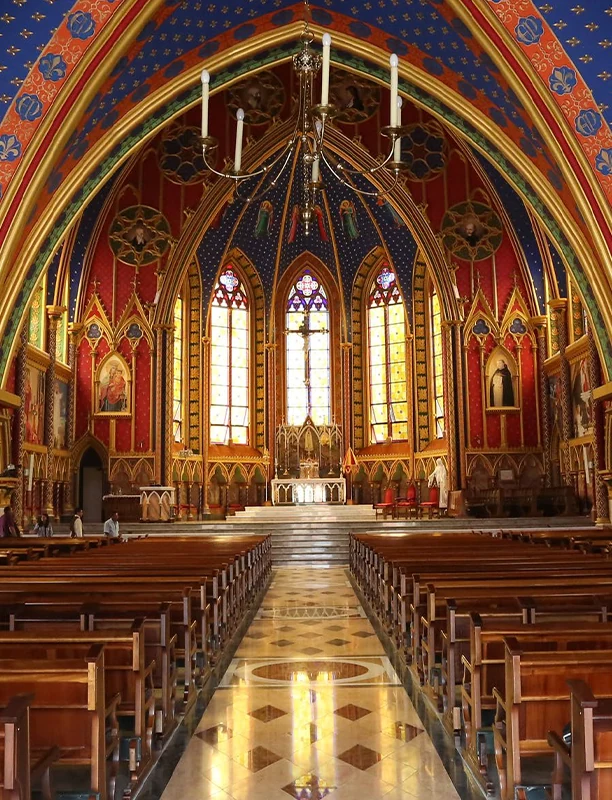
 The Immaculate Heart of Mary - Church of St. Cecilia, São Paulo
The flame of faith is kindled by the influence of Mary
8 Then the other disciple also went in, the one who had arrived at the tomb first, and he saw and believed. 9 For they did not yet understand the Scripture that He had to rise from the dead.
III – Easter in the Light of Mary
Our Lady was always a sea of deep, transparent and virginal recollection. She treasured and pondered in her Heart every gesture and word of her Divine Son, with an infinite thirst to understand and love the meaning of the most varied nuances regarding Him that were revealed to Her. In this way her spirit became persevering, strong and resilient. She remained standing by the Cross, accompanied only by the Holy Women and St. John, who bore a filial affection for Her. The other disciples remained distant and fearful. Only Mary could in the truest sense suffer with the Immaculate Lamb and unite herself to Him in the sacrifice that He made of himself. Our Lady was in some way a victim with the Supreme Victim and a priest with the Divine Priest. It was not a question of a sacramental priesthood, like that of bishops and priests, but of a direct participation in the very priesthood of Jesus, Supreme Pontiff of the New and Eternal Covenant, which, in this very special case, gave Her the prerogative whereby, consenting to every step in the Passion of her Son, She herself in a certain sense offered Him up to the Father. This made the Blessed Virgin a Co-redemptrix with the Redeemer, a glory surpassed perhaps only by the Divine Maternity. And if the struggle was arduous, the prize was sublime and the joy unspeakable. Contemplating this Marian joy that was enkindled at the precise moment when the Lord of glory reassumed His Body, we can ascend to the boundless happiness that flooded the Most Sacred Heart of Jesus forever on the most beautiful Sunday in history.A Marian Church
In view of this Gospel and the discreet reference to the faith of the Blessed Virgin discerned between its lines, a question of capital importance emerges regarding the future of the Church. If the role of Mary, Mother of God and ours, was crucial at the Passion, Death and Resurrection of the Lord, in the sense of manifesting with unique splendour the virtue of hope, so dimmed in the spirit of the disciples, what will her mission be in the current situation, in which revealed truth is forgotten, ridiculed and even trampled underfoot by wolves disguised as shepherds? Moreover, if Jesus wanted the precious gift of faith to be preserved by His Mother when all others were vacillating, has He not entrusted to Her the task of safeguarding with maternal care the integrity of faith of the Apostles of the Latter Times, heralded by prophets of the stature of a St. Louis-Marie Grignion de Montfort? And how will this virtue be in men and women called to hope against all hope? In view of the considerations made above, it is possible to foresee a faith which is entirely Marian, and therefore a bold, invincible and glorious faith; an ardent faith which will set the world on fire and renew the face of the earth, inundating it with exultation. From this faith will be born a Marian Church, capable of irresistibly attracting all souls who will be converted before the imposing manifestations of the mercy and justice of God; a Church which, like Our Lady, will be an indomitable warrior and, with the strength that will come to her from the Holy Spirit, will cast Satan and his followers into the bowels of hell; a Church radiant with holy joy, animated with divine enthusiasm, which with the smile of the Virgin-Mother will irresistibly illuminate the whole universe. ◊Notes
1 THE BLESSED VIRGIN MARY AT THE FOOT OF THE CROSS (I). Prayer Over the Offerings. In: CONFERÊNCIA EPISCOPAL PORTUGUESA. Coletânea de Missas da Virgem Santa Maria. Missal. Fátima: Secretariado Nacional de Liturgia, 2014, p.74.
2 Cf. BENEDICT XVI. Act of Veneration to the Immaculate at the Spanish Steps, 8/12/2007.