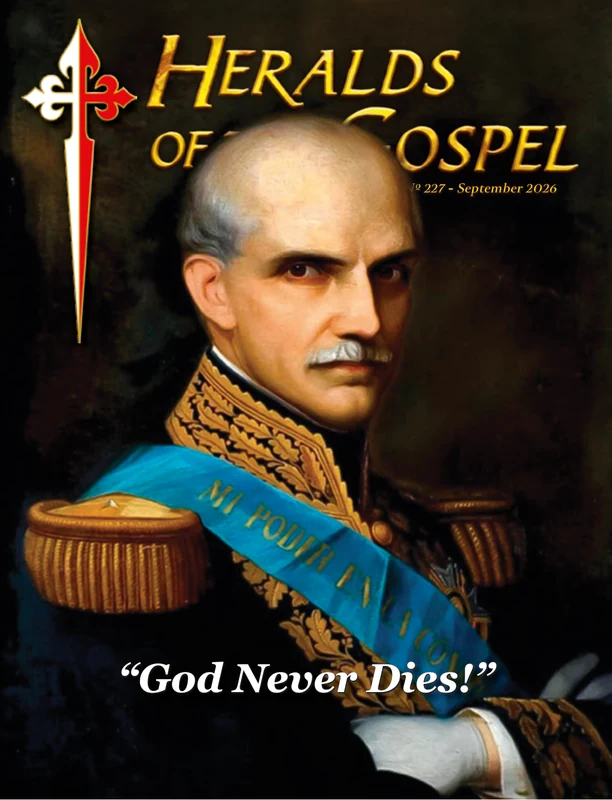
 Heralds of the Gospel Magazine, Vol. 20, nº 227, September 2026
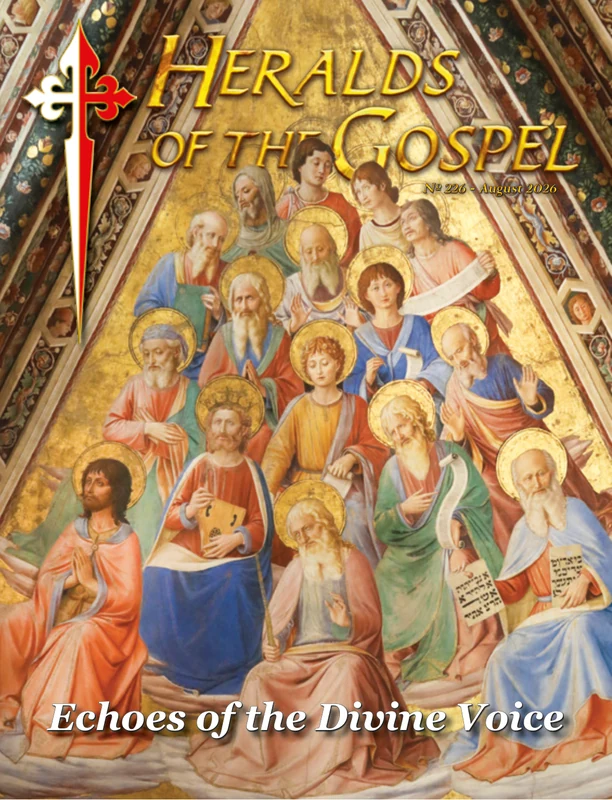 Heralds of the Gospel Magazine, Vol. 20, nº 226, August 2026
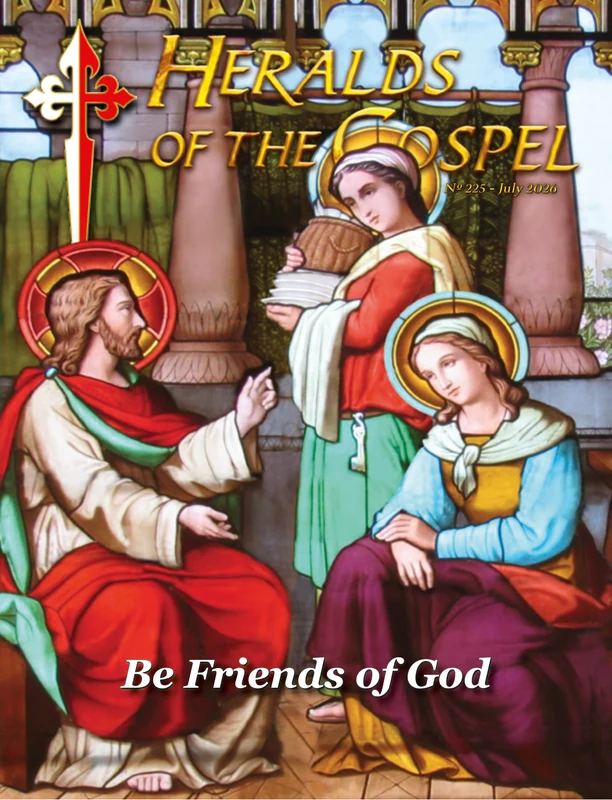 Heralds of the Gospel Magazine, Vol. 20, nº 225, July 2026
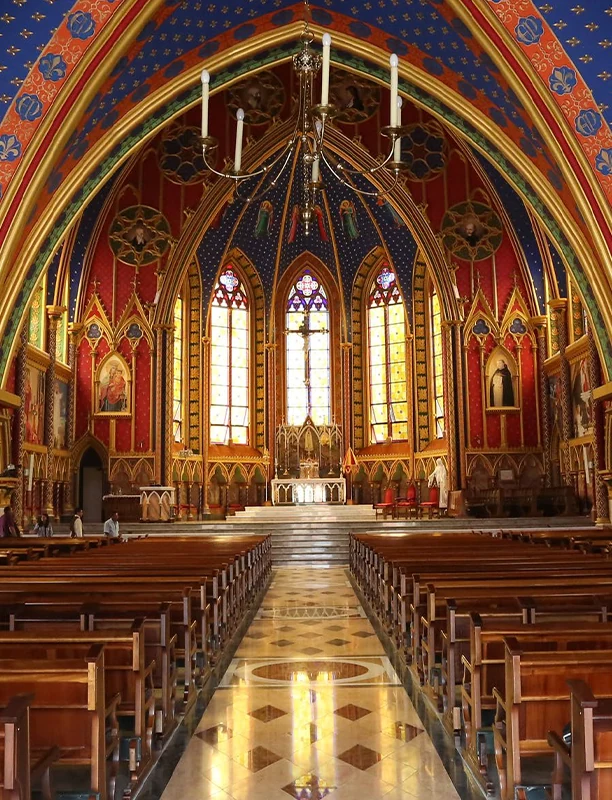 Who are the Heralds of the Gospel?
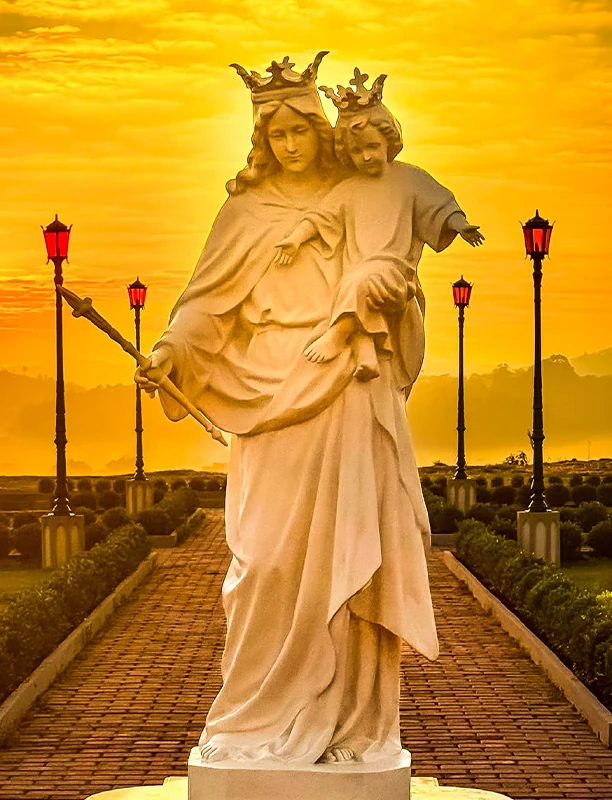 Help of Christians
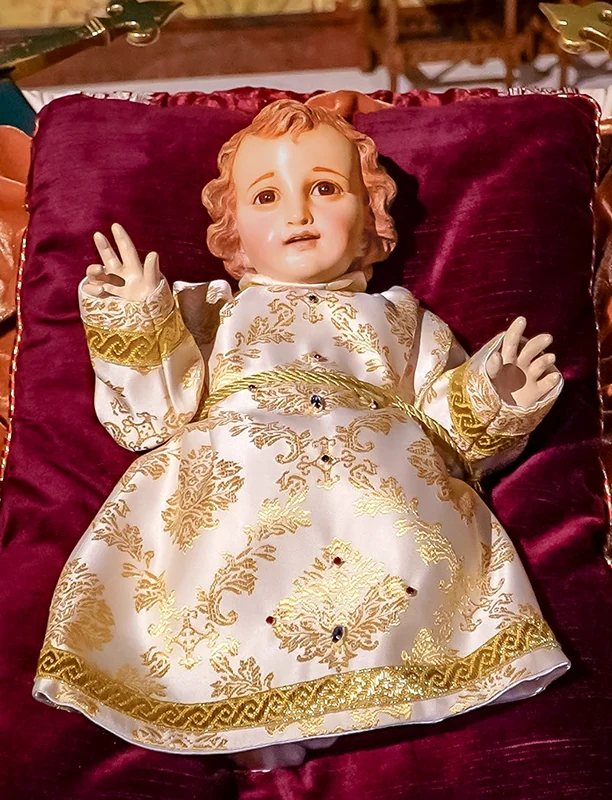 Christmas Carols






Jesus’ incessant supplication to the Father
But before these words were spoken by Jesus of Nazareth, the psalmist had expressed them in the context of the Covenant concluded by Yahweh with His people. They are therefore words addressed to the God of the Covenant. Then, addressing himself precisely to God, who is the rock of man’s salvation, Jesus proclaims: “You are my Father”! Using the expression of a son’s utmost trust in his father, He says: “Abba,” my Father!Abba, my Father! This is what Jesus calls the Father in Heaven, and He makes it possible for us to address Him in the same way, to the One of whom He is the consubstantial and eternal Son. Jesus authorizes us to express ourselves in this way, to pray to the Father in this way. Today’s Liturgy introduces us in a meaningful way to the prayer that the Son of God incessantly presents to the Heavenly Father.The Son of God, Son of Mary, conceived by the work of the Holy Spirit, was entrusted to the paternal care of St. Joseph
Joseph’s participation in the paternity of the Eternal Father
At the same time, from His prayerful invocation that focuses on the fatherhood of God, there emerges, in some way, a singular salvific plan concerning the man named Joseph, to whom the Eternal Father entrusted a special participation in His own fatherhood.
Joseph, “your father”
When Jesus was only twelve years old, did His Mother not say to Him in the Temple in Jerusalem: “Son, why have You treated us so? Behold, your father and I have been looking for You anxiously” (Lk 2:48). When speaking of Joseph, Mary uses the expression “your father”. Jesus’ response to His parents on that occasion was quite unique: “How is it that you sought Me? Did you not know that I must be in my Father’s house?” (Lk 2:49). Jesus thus reveals the profound truth of His divine filiation: the truth concerning the Father, who “so loved the world that He gave His only Son, that whoever believes in Him should not perish but have eternal life” (Jn 3:16).The Child Jesus replies to Mary and Joseph: “I must be in my Father’s house.” Although at first glance these words seem to overshadow Joseph’s “fatherhood”, in reality they highlight it even more as the loving fatherhood of the unique “descendant of David”, Joseph of Nazareth.He to whom the Eternal Father confided his Son also extends his protection over the Mystical Body of Christ, which is the Church
Protector of the Church
This, dear brothers and sisters, is the central point of today’s liturgical solemnity: the loving fatherhood of St. Joseph. He is the guardian and protector who, together with his vocation as the putative father of the Redeemer, received from Divine Providence the mission of protecting His growth in wisdom, age and grace. In the litanies dedicated to him, we invoke him with marvellous titles. We call him “Illustrious son of David”, “Light of the patriarchs”, “Spouse of the Mother of God”, “Chaste guardian of the Virgin”, “Foster-father of the Son of God”, “Watchful defender of Christ”, and “Head of the Holy Family”. With an expression that sums up the biblical truth about him, we invoke him as “Protector of Holy Church”. This invocation is deeply rooted in the revelation of the New Covenant. The Church is, in fact, the Body of Christ. Was it not therefore logical and necessary that the one to whom the Eternal Father entrusted His Son should also extend his protection over this Body of Christ which – according to the teaching of the Apostle Paul – is the Church? […] “You are my father”… Most faithful Joseph, we turn to you. Do not cease to intercede for us; do not cease to intercede for the whole human family! ◊Excerpts from: ST. JOHN PAUL II. Homily, 19/3/1993