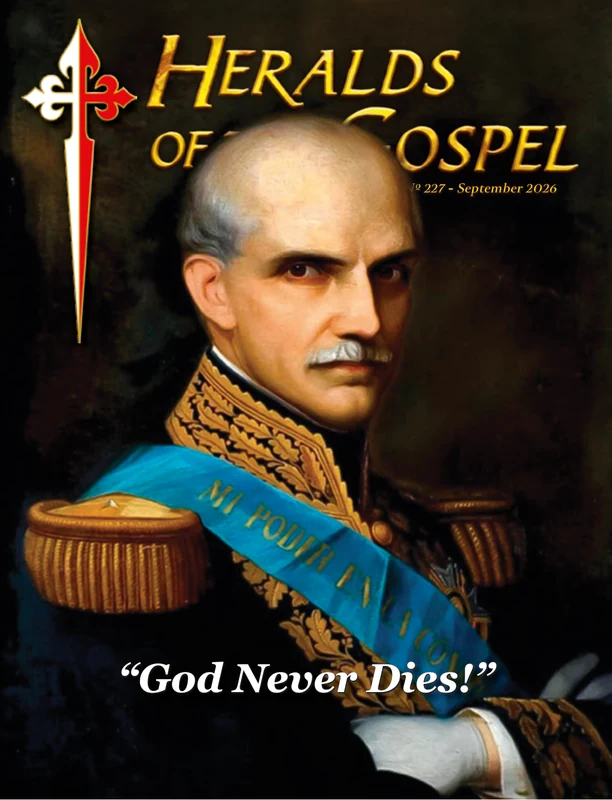
 Heralds of the Gospel Magazine, Vol. 20, nº 227, September 2026
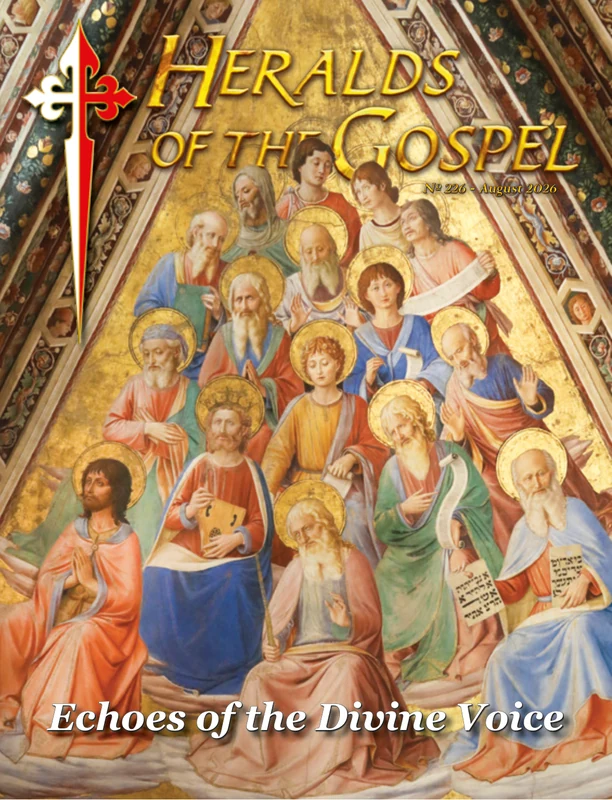 Heralds of the Gospel Magazine, Vol. 20, nº 226, August 2026
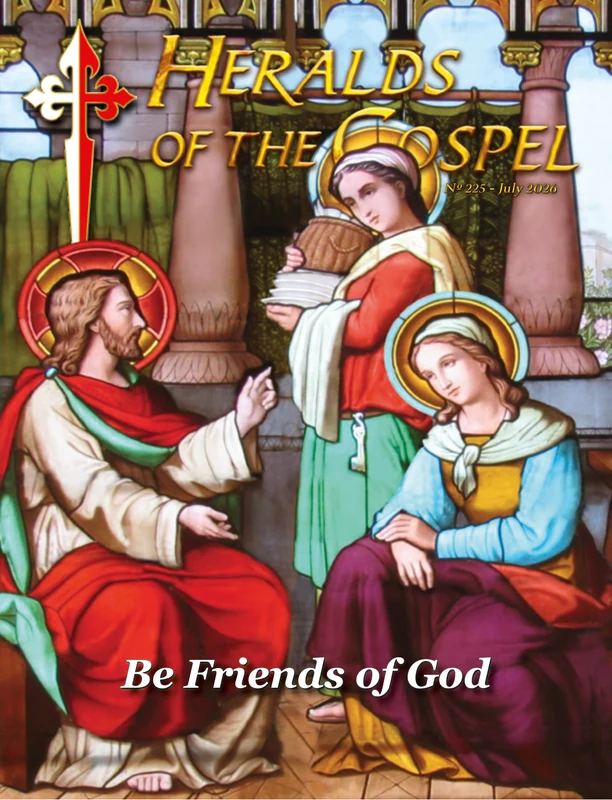 Heralds of the Gospel Magazine, Vol. 20, nº 225, July 2026
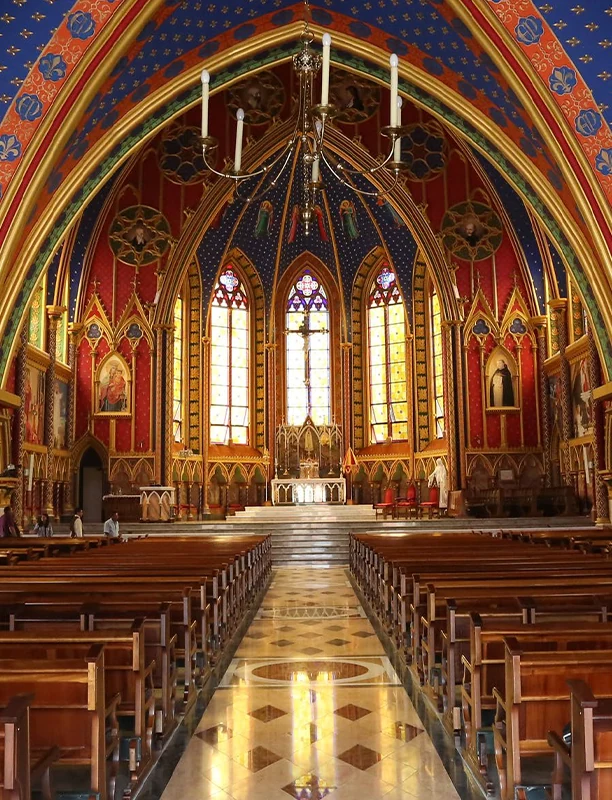 Who are the Heralds of the Gospel?
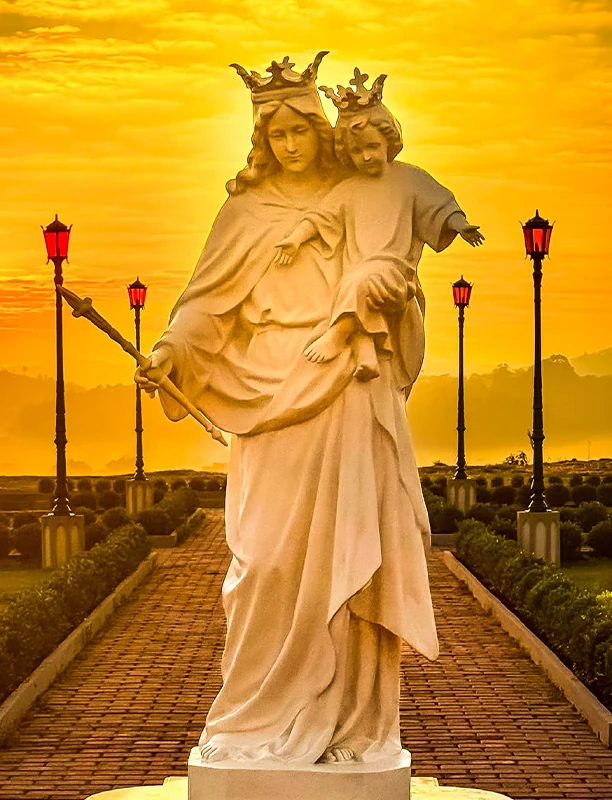 Help of Christians
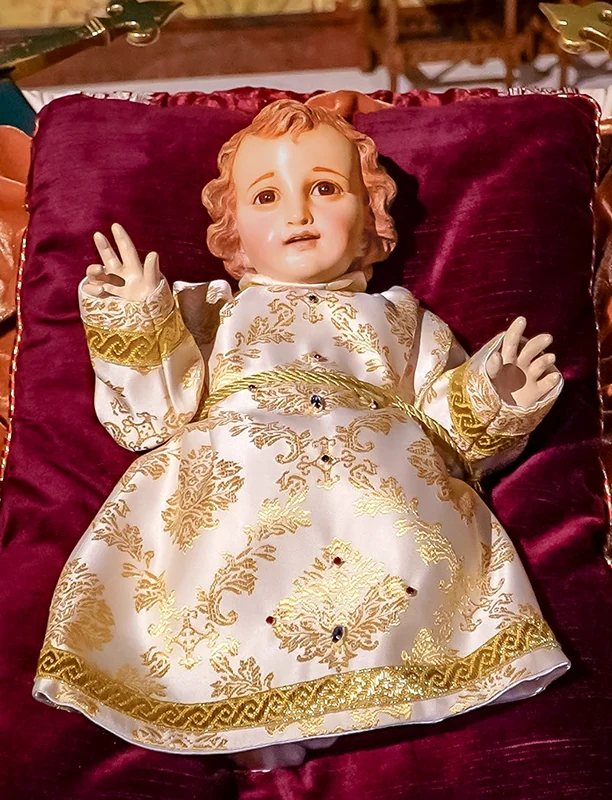 Christmas Carols






St. Gabriel: loving knowledge
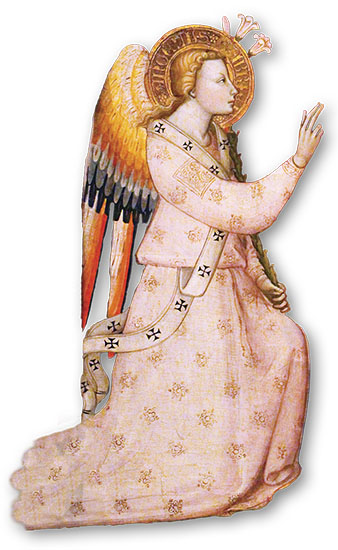 The Archangel St. Gabriel, by Bicci di Lorenzo - Santa Maria Assunta Collection, Stia (Italy)
St. Michael: struggle, oblation and holocaust
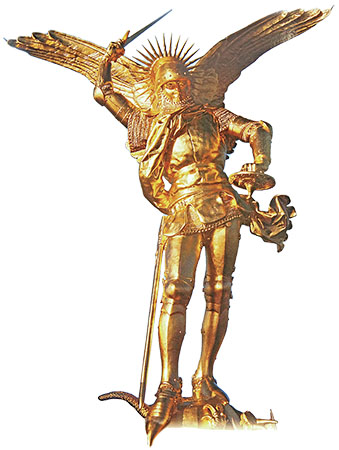 St. Michael - Mont-Saint-Michel (France)
St. Raphael: thoughtful action
Here action enters into the picture, and action seems far inferior to contemplation and to the fight, to oblation. But one might even say that action is a struggle. In this sense, when a City Hall employee leaves the house and his wife asks “Where are you going?”, he replies: “I am going into the fray.” However, such usage is explained in view of a very material conception of action. As regards St. Raphael himself, what remains in our minds, at least for me, is the quaint and ingenuous drawing that illustrated my Sacred History: the Archangel walking along with a staff from which hung a kind of jug, and chatting cheerfully with Tobias. He would thus be the Angel who walks, who covers long distances. This is not the whole truth. St. Raphael manifested a superior active wisdom, which helped Tobias to see what his aims should in fact be on the journey, and which gave him strength and encouragement – this is the meaning of company – while providing him with the means to reach his destination. The material aspects of the journey were nothing to the Archangel – traveling on foot, making the speaking figure that he took on, and which Tobias took to be a man. Clearly, then, in order to speak of St. Raphael as the Archangel of action, we must refer to the highest degrees and standards of action. That is to say, much more than fully active operational action, we are talking about thoughtful action. To use a real-life example, we may illustrate with a phrase attributed in several different forms to Marshal Foch: “Ma droite est pressée, ma gauche est menacée, ma arrière est coupée… Que fais-je? J’attaque.”1 That is magnificent! In other words: “I am in a total bind; I will attack!” One could call this a “Raphaelic” action, in that sense of the word, which demonstrates thought over action, a lofty category of action.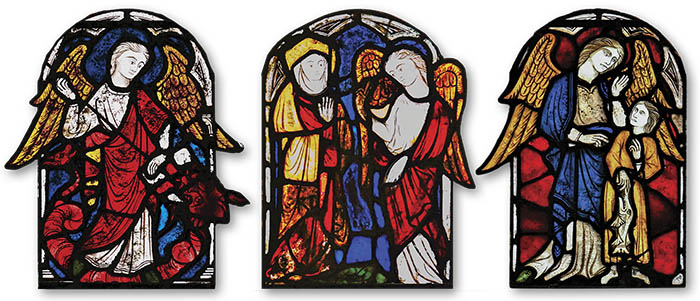 St. Michael, St. Gabriel and St. Raphael - Church of St. Michael and All Angles, Kingsland (UK)
The role of each Archangel in relation to man
Thus, the art of governing, of directing action prophetically, would be with St. Raphael; to St. Michael would correspond prophesy in the fight and in the holocaust, and not in common life; and the regency would correspond to St. Raphael. Here we understand the beauty of the distinction between the various missions. St. Gabriel is the prophet who inspires the king; he outlines the metaphysical action. The one who provides the “metapolitics” – understood as the highest aspect of the directive function – is St. Raphael. The one who engages in the “metafight”, with the special task of repelling the demons, is St. Michael. As counter-revolutionaries, what is the role of the three Archangels? I would say that St. Gabriel inspires the truly counter-revolutionary spirit, with the whole ideal of the Reign of Mary, with the desire and conception of the most sublime things, in such a way that he gives us an idea of the fundamental features of how human order should be. Starting with this supreme order, what is the modus operandi for organizing it? What are the means to bring it into effect? It is St. Raphael who specifies them. And to fight against the adversaries who oppose it is the mission of St. Michael. Transposing this idea to the human field, we see that St. Louis-Marie Grignion de Montfort, for example, had “Gabriel-like” moments, “Raphael-like” moments and “Michael-like” moments, depending on the preponderance of one or another aspect in his mission. We sense this in reading the Treatise on True Devotion to the Blessed Virgin. There are passages where we have the impression that it is St. Gabriel who is announcing some sublime truth. When St. Louis, as an apostle, builds up the argumentation to convince a third party and enkindles a spiritual fire to call him, St. Raphael transpires. In the movements of indignation, because there is an adamantine intransigence in his book from beginning to end, it is the hour of St. Michael. That is to say, there are keynotes.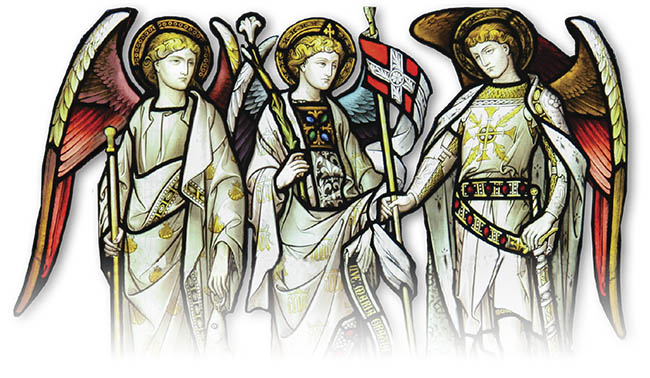 St. Raphael, St. Gabriel and St. Michael - St. Dominic Convent, Stone (England)
Which angelic aspect shone most in the life of Our Lord?
Such considerations do not obviate the deeper problem of knowing which of these aspects, absolutely speaking, is the keynote in God. We might ask which of them shone most in the most holy and august life of Our Lord Jesus Christ, and on what occasions He conducted Himself as the God of Gabriel, the God of Michael and the God of Raphael. Enquiries of this nature would give rise to a most beautiful study of the Gospel. I would say, for example, that His intimate life with Our Lady, or His Transfiguration on Mount Tabor, appear to be eminently connected with St. Gabriel. His Passion, evidently, has more to do with St. Michael. It is the moment of holocaust and of struggle, when He conquers the world. Agony, in Greek, means struggle of the athlete; the athletes were called agonists. And St. Raphael is associated more with His public life, with the Teacher doing apostolate. It is very enlightening for the soul to reflect on these problems. They shed light even when we do not solve them. And if after thinking like this we consult a book on Angelology, in ten minutes the question is clarified. In my opinion, it would be in accordance with our mental methods – without saying it is the only way – and I think that Our Lady blesses this approach: to first try to make hypotheses with the light that She has given us, and then to study what the Church teaches, in a spirit of submission, of desire to learn. And then theology is well understood. This seems to me a very worthy and very correct way to proceed, and it is what I have tried to do in this conference. ◊ Taken, with adaptations, from: Dr. Plinio. São Paulo. Year XIX. N.222 (Sept., 2016); p.26-31Notes
1 From the French: “I am pressed from the right, I am threatened from the left and I am cut off from the rear… What do I do? I attack!” Marshal Foch was a French military officer who decisively commanded the Allied forces during the First World War, leading them to victory.