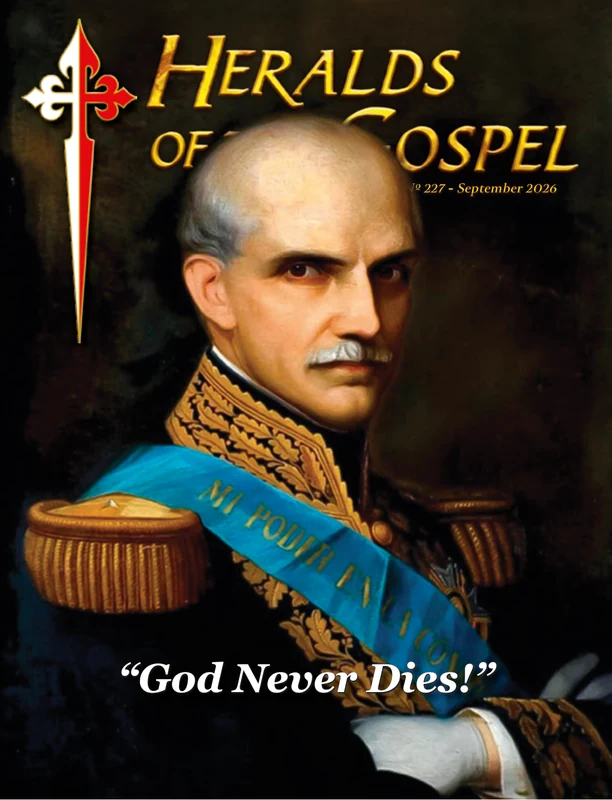
 Heralds of the Gospel Magazine, Vol. 20, nº 227, September 2026
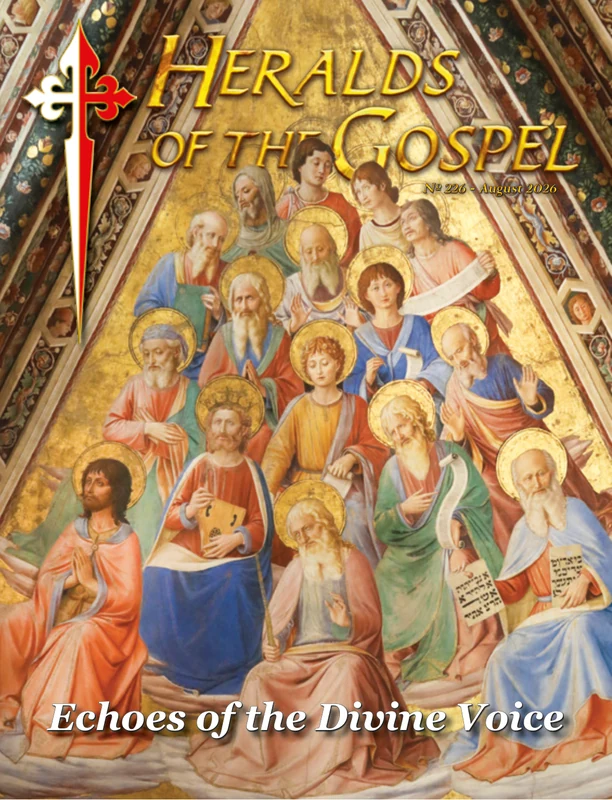 Heralds of the Gospel Magazine, Vol. 20, nº 226, August 2026
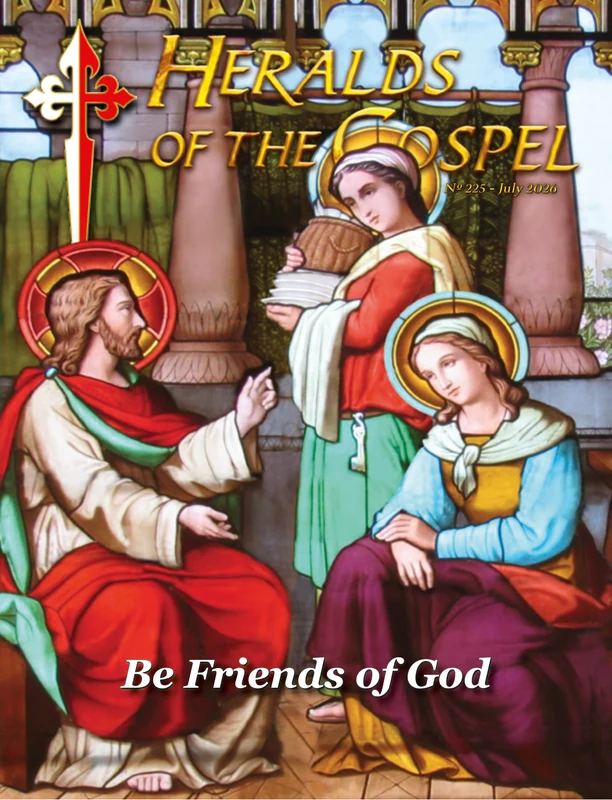 Heralds of the Gospel Magazine, Vol. 20, nº 225, July 2026
 Who are the Heralds of the Gospel?
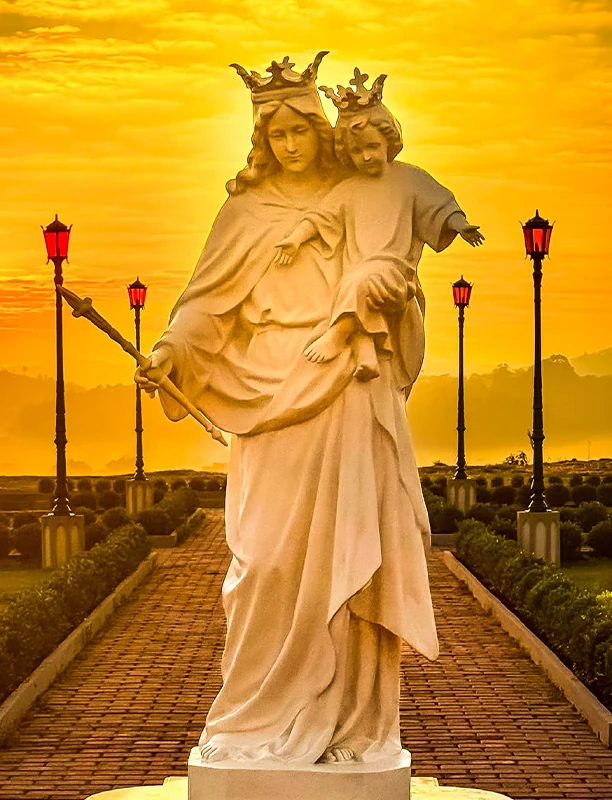 Help of Christians
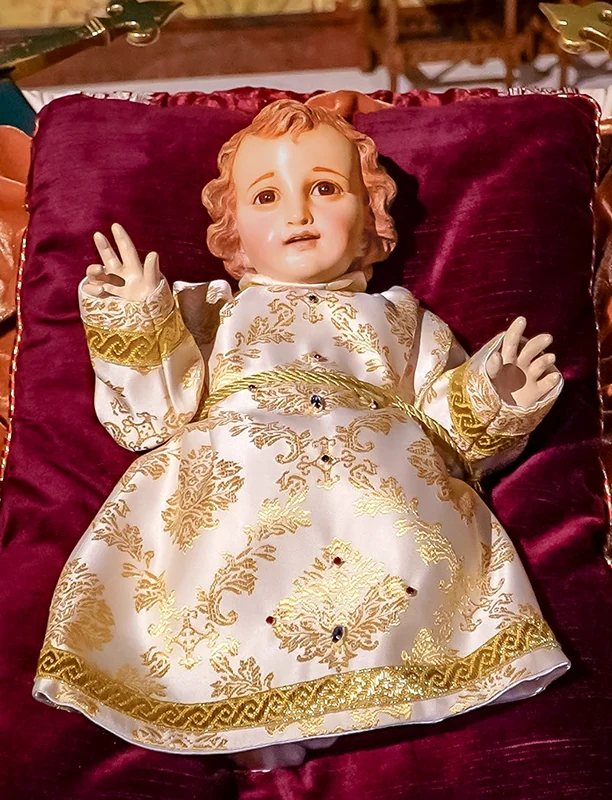 Christmas Carols







Exclusive mission, with no proportion to human capacity
What characterizes a providential man? He must, in the first place, carry out a task far greater than himself. There is no providential man whose stature is equal to what he needs to accomplish, because what God requires of him is generally something so great that it does not fall within the limits of human capacity. In the second place, providential action always has a supernatural aspect, which consists in the operation of grace over souls, of which man can be a channel, but not the author. And what grace does, no one can do, so that this action is invariably much greater than man. In this sense, there are great providential men whose eminent capacities God uses to accomplish tasks even beyond these capacities. However, He can also choose lesser souls from whom he draws providential fruit. St. Therese of the Child Jesus in July of 1896
Understanding, appetency and sensibility for the mission
The providential man, for his part, has an understanding of his mission, an appetency and a sensitivity towards it that others do not possess. He perceives its meaning and importance, he knows how it must be carried out, he knows the ends that must be reached, as well as the means to achieve them; he has the tactics, the manoeuvres and the knack for achieving them. In the life of Charlemagne, for example, we see this in a splendid way. He was the mighty emperor and the magnificent patriarch who inspired enthusiasm; he was the warrior who struck fear into all the adversaries of the Church. He intervened in the regional councils of Gaul to demand that matters proceed properly. He argued with the bishops – without being considered anticlerical – and often it was his opinion that prevailed, although he had never studied theology. On the other hand, Charlemagne was a formidable warrior; not just a general, but the head of a family of souls in his army. He gathered around himself his famous peers, who were other copies of himself, and these peers in turn gathered around themselves other knights. His army was almost like a religious order, praying or singing as it advanced towards the enemy, with Charlemagne at the head, brandishing his sword and facing every risk, always for the Catholic Church and Christian Civilization.An invariable aspect: contradictions
There is yet another characteristic of providential man, which differs greatly from the modern mentality. Many people think that he is a comic book hero: that he has a magic gaze and is similar to a dracula who, when cornered and placed in a difficult situation, climbs to the ceiling using one finger and solves the problem from on high. In the end, everything works out; he never experiences setbacks. However, the providential man is the opposite of this. He goes through horrendous crises, during which things truly run the risk of going wrong if he does not make an effort and, above all, if he does not pray a great deal, placing his confidence in Our Lady. And these difficulties, in which everything almost collapses, often make of him a humiliated, persecuted, and despised man, with every appearance of having been defeated. He is not always a victorious man, who has made the heads of others the ground on which he walks; rather, his head is often the ground for others to tread upon. But he trusts in Providence, who comes to his aid, sustains him, lifts him up, encourages him and ends up bringing his work to a successful conclusion. A requirement to which the providential man is absolutely subject is that the disproportion between himself and his task appears clearly to the eyes of others, often leaving him in situations that make it clear that if it were not for grace he would achieve nothing, and if it were not for his faithfulness he would be crushed.The waysides of history are full of providential men who abandoned their mission
Someone will say: “Dr. Plinio, I am not sure if this is true, because I see that all the providential men in history always succeed.” This is because history only presents those who have succeeded. How many providential men have fallen by the waysides of history! Men who have faltered, sold themselves, became soft or deteriorated in some way and, for this reason, they capitulate. The objector may add, “However, there are some who are so favoured by Providence that they could not go astray.” It is true! The Apostles, for example. But how rare that is! Once again, I repeat, how many providential men fill the waysides… Along one such road there is a fig tree, from which dangles a hanged man. And that hanged man was a providential man, whose name was Judas Iscariot… To such an extent is this true that, although it is theologically certain that the Apostles were confirmed in grace after Pentecost, they fought and struggled as if they were not, because they were not aware of it.A calling apparent to the eyes of all, sometimes from the cradle
One could also say that there is an imponderable characteristic in the providential man. In general, he has a certain aura, and the people who have contact with him from his earliest days perceive a kind of predestination, an uncommon factor that makes him stand out and differentiates him from others. Using a comparison, this calling manifests itself in him as, for example, life can be seen on human skin. It is enough to look at the hand of a living person to realize that it does not belong to a corpse. Thus something imponderable appears in the providential man that makes his mission – sometimes even initiated by Providence from the cradle – apparent to the eyes of all. However, one should beware of self-love, because every proud person thinks that he has been prepared for some mission from the cradle, and he has the tendency to take on the role of the providential man for himself and to fabricate the characteristics of his aura. So, what differentiates the proud from the providential man? Few see it, but there is a clear element. The former is all made up of the desire to appear and, for him, the cause is a banner that he waves in front of others to make a good impression. The providential man, on the contrary, however weak or even miserable he may be, sees and understands that he has a divine mission, which he really loves, with an understanding and a vision that come from this love. This is the sign of the vocation that shines out in him, sometimes in spite of gross deficiencies, and that indicates a permanent call of God to something superior.Providentiality in our days
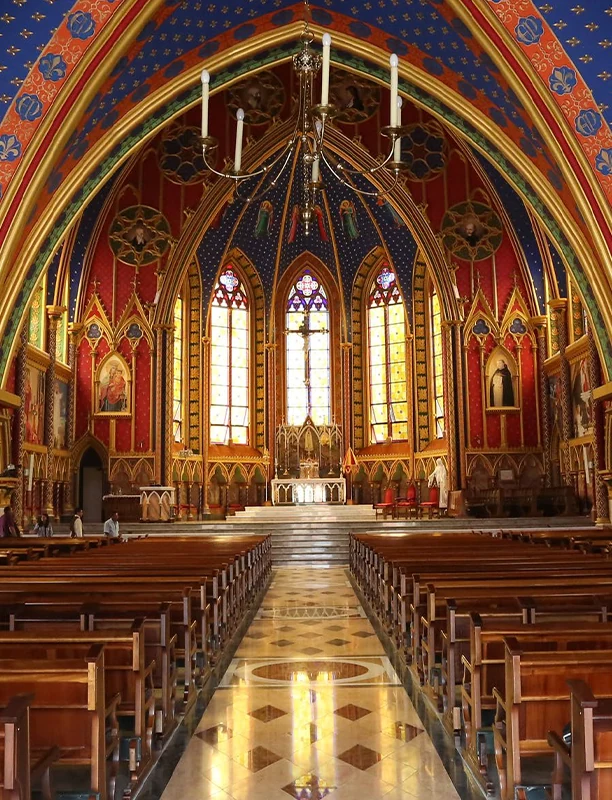
 Façade of the Basilica of Our Lady of the Rosary, Caieiras (Brazil)
Taken, with minor adaptations for the written language, from: Conference. São Paulo, 30/12/1965
Queen of History from All Eternity
 Statue of Our Lady of the Immaculate Conception in the church dedicated to Her in Overveen (Netherlands)
Taken, with adaptations, from: Dr. Plinio. São Paulo. Year XIV. N.164 (Nov., 2011); p.6-13