 Heralds of the Gospel Magazine, Vol. 20, nº 227, September 2026
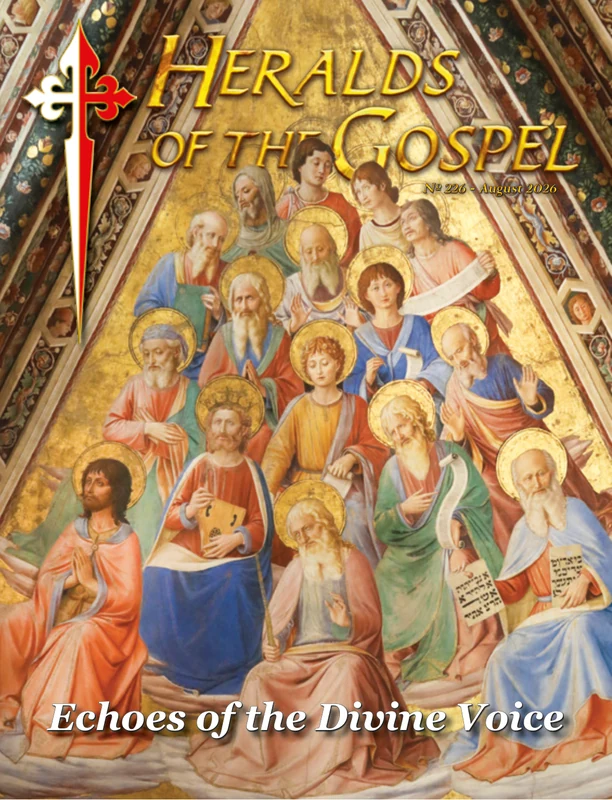 Heralds of the Gospel Magazine, Vol. 20, nº 226, August 2026
 Heralds of the Gospel Magazine, Vol. 20, nº 225, July 2026
 Who are the Heralds of the Gospel?
 Help of Christians
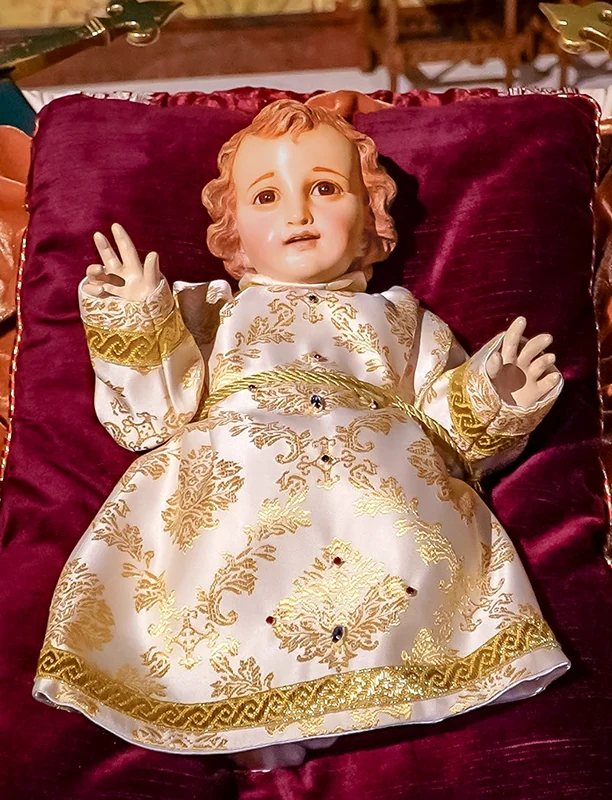 Christmas Carols









In this way, we should not be surprised that more conversions have taken place in recent times due to the Story of a Soul – to cite just one example – than through the reading of any patristic work… After all, the same God who inspired sublime thoughts of vertiginous grandeur in St. John Chrysostom, St. Ambrose or even St. Augustine, can also associate the humble writings of an unknown Carmelite nun – such as St. Therese of the Child Jesus – with the spiritual renewal of thousands, perhaps millions, of the faithful. These are the mysteries of Providence… A similar phenomenon has taken place in relation to a book that has become very popular in recent decades: the Diary of St. Faustina, also known as the Diary of Divine Mercy, six manuscripts that testify to the infinite love of a God who longs to welcome, forgive and sanctify souls.The Diary of Divine Mercy is the testimony of the infinite love of a God who desires to welcome, forgive and sanctify souls
Written out of obedience
The text was written by the Saint during the last four years of her life, on the express orders of her confessor and of Our Lord Jesus Christ Himself. On June 4, 1937, the Redeemer addressed her in these terms: “My daughter, be diligent in writing down every sentence I tell you concerning My mercy, because this is meant for a great number of souls who will profit from it.”1In simple language, but imbued with that supernatural unction that only virtue can bestow, the nun tells the story of her vocation and sets out her spiritual goals and struggles, without hiding the difficulties and temptations that came her way. Could there be any greater proof of the purity of intention of this humble writer, and of the authenticity of her revelations, than the admirable simplicity of her accounts? In the midst of descriptions of extraordinary mystical graces, phrases like these punctuate the diary from beginning to end: “As regards Holy Confession, I shall choose what costs and humiliates me most. Sometimes a trifle costs more than something greater”; or “The rules that I most often fail to obey: sometimes I break silence; disobedience to the signal of the bell; sometimes I meddle in other people’s affairs. I will do my very best to improve.”2In language that was simple but permeated with supernatural unction, St. Faustina narrated the story of her vocation
In the divine school of mercy
Above all, the diary is an extraordinary account of the apparitions of the Merciful Jesus, His words, His wishes and His counsel. Over the course of the six notebooks she wrote, St. Faustina bequeathed to the Church one of the most authentic treatises on Divine Mercy ever known.
A lesson overflowing with goodness
One day, when the nun had told Our Lord about her spiritual needs with a certain degree of fear and anguish, she heard this sublime lesson from Him:6 “Imagine that you are the sovereign of all the world and have the power to dispose of all things according to your good pleasure. You have the power to do all the good you want, and suddenly a little child knocks on your door, all trembling and in tears and, trusting in your kindness, asks for a piece of bread lest he die of starvation. What would you do for this child? Answer Me, my daughter.” To which Faustina replied: “Jesus, I would give the child all it asked and a thousand times more.” “That” – concluded the Saviour – “is how I am treating your soul.”“My child, you please Me most by suffering”
The course of learning at this divine school would be incomplete if it failed to contemplate a reality that is inseparable from holiness. Our Lord Himself once declared to her: “You often call Me your Master. This is pleasing to My Heart; but do not forget, My disciple, that you are a disciple of a crucified Master. Let that one word be enough for you. You know what is contained in the cross.”7
The thermometer of love
Making His divine voice heard in the middle of the 20th century, in a simple Polish convent, the Saviour addressed His appeal to a humanity that was increasingly distanced from God’s Law and increasingly forgetful of His infinite mercy.“O that today you would hearken to his voice! Harden not your hearts” (Ps 94:7-8). May the words of a merciful God, enshrined in such a simple diary, encourage us to offer God what we sometimes find so difficult to recognize: our miseries. God’s desire is no other: “My daughter,” Our Lord said to the religious on one occasion, “look into the abyss of My mercy and give praise and glory to this mercy of mine. Do it in this way: Gather all sinners from the entire world and immerse them in the abyss of My mercy. I want to give Myself to souls; I yearn for souls, My daughter.”10May the words of so a merciful God, set down with such simplicity in that diary, encourage us to offer even our miseries to Him

Notes
1 ST. FAUSTINA KOWALSKA. Diary. Divine Mercy in My Soul, n.1142. Marian Press: Stockbridge MA, 2008. The remaining citations from the diary, all transcribed from the same edition, will be indicated only by the internal numbering of the work.
2 Idem, n.225-226.
3 Idem, n.56.
4 Idem, n.219.
5 Idem, n.1481.
6 Cf. Idem, n.229.
7 Idem, n.1513.
8 Idem, n.279.
9 Idem, n.498.
10 Idem, n.206.