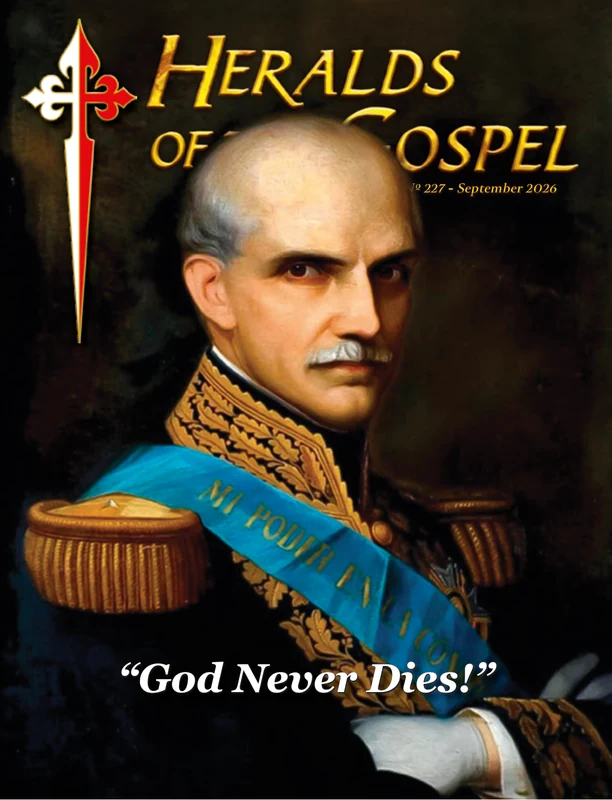
 Heralds of the Gospel Magazine, Vol. 20, nº 227, September 2026
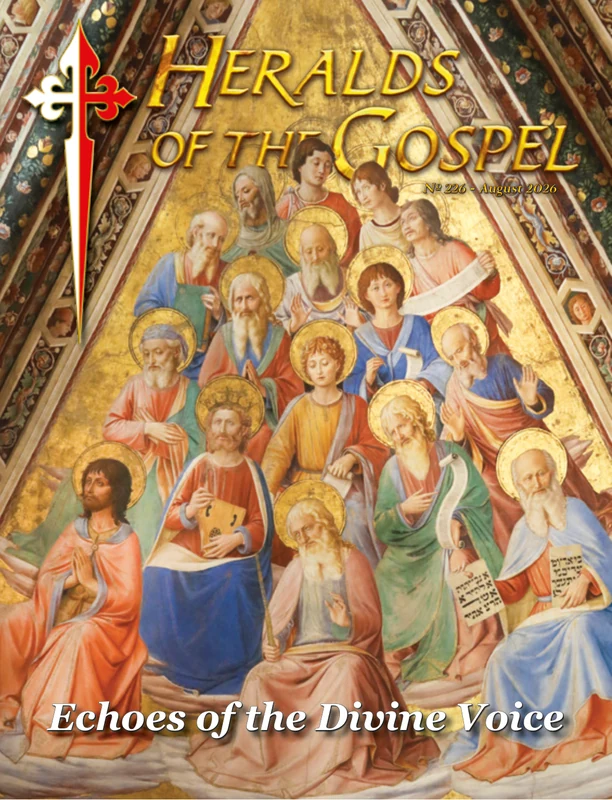 Heralds of the Gospel Magazine, Vol. 20, nº 226, August 2026
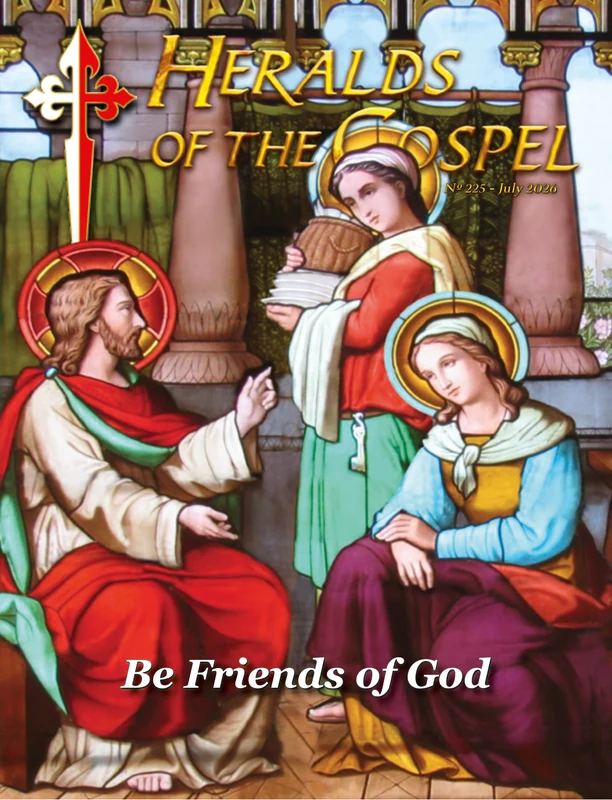 Heralds of the Gospel Magazine, Vol. 20, nº 225, July 2026
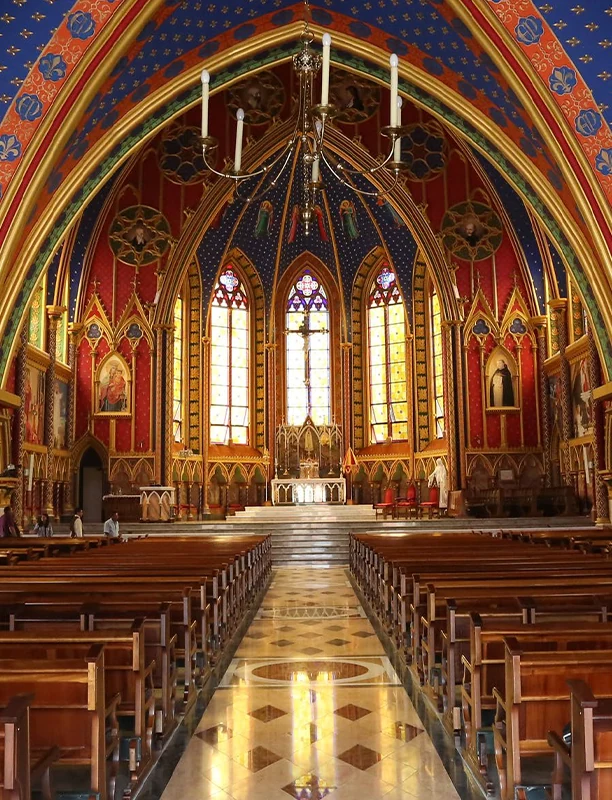 Who are the Heralds of the Gospel?
 Help of Christians
 Christmas Carols







May 31 – Solemnity of the Most Holy Trinity
The Solemnity of the Most Holy Trinity reminds us of the sublime reality by which the baptized become “gods” (cf. Jn 10:34-36). A lofty mystery of our Faith, the Trinitarian indwelling means that the Three Divine Persons truly dwell within us.
Such an elevated aspect of spiritual life cannot be vulgarized in our dealings with God. This is why Moses, after experiencing the greatness of the divine, prostrated himself on the ground and worshipped Him (cf. Ex 34:8-9), as narrated in today’s second reading.
This posture of reverence will be present in the piety of the authentic heroes of the Faith throughout history. When the Infant God, so tender, manifests Himself to the world, the Magi will repeat Moses’ gesture of adoration.
Christ Himself, during His prayer in the Garden of Olives, will address the Eternal Father, prostrating Himself in prayer before Him.
How many saints, throughout the centuries, will also feel compelled to cast themselves to the ground! Even the shepherd children of Fatima will do so, in an attitude of adoration, when the Angel shows them the radiance of God’s presence in the Eucharist.
In short, this is the immediate attitude of the human soul before the overwhelming and irresistible presence of the Divinity.
On the other hand, in Lourdes, the Mother of God, enchanted by Bernadette’s pure soul, treats her with great consideration, greeting her with gracious bows, a kind smile, and profound respect. This is the way Our Lady addresses an uneducated but holy peasant girl.1
Now, these considerations can be summarized in the term sacrality, which, in practice, allows us to participate in the joys of the relationship among the Three Divine Persons: “delighting in the sons of men” (Prv 8:31).
It is the happiness of the inferior has in feeling his own smallness, and in honouring, respecting, obeying, and paying homage to the one superior to him.
How different this form of relationship is from certain “spiritualities” or “liturgies” that trivialize the sacred, even to the point of obliterating it completely!
Such deviations are evident, for example, in the vulgar treatment of God, in careless celebrations, and even in the loss of the sense of the sacred in daily contact with others.
All this ends up hindering our contact with the sublime mystery of the Trinitarian indwelling within us.
Respect for the sacred has been translated throughout the centuries by the liturgical tradition and its richness in expressing divine worship through reverences, genuflections, and prostrations, embellished by the organ, Gregorian chant, and polyphony, providing the splendour typical of the sacramental celebration.
How effective such external realities are in helping us to understand that we are bearers of this most sublime mystery: God the Father, Son, and Holy Spirit live within us!