 Heralds of the Gospel Magazine, Vol. 20, nº 227, September 2026
 Heralds of the Gospel Magazine, Vol. 20, nº 226, August 2026
 Heralds of the Gospel Magazine, Vol. 20, nº 225, July 2026
 Who are the Heralds of the Gospel?
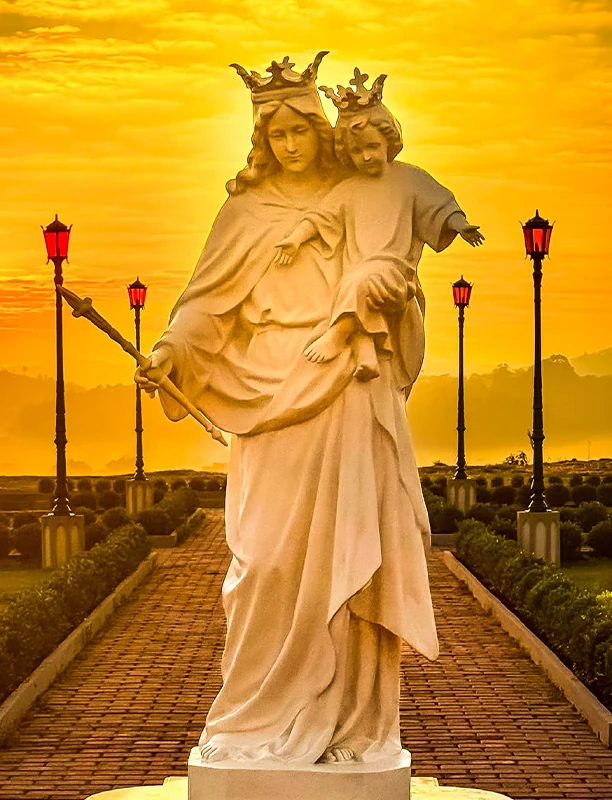 Help of Christians
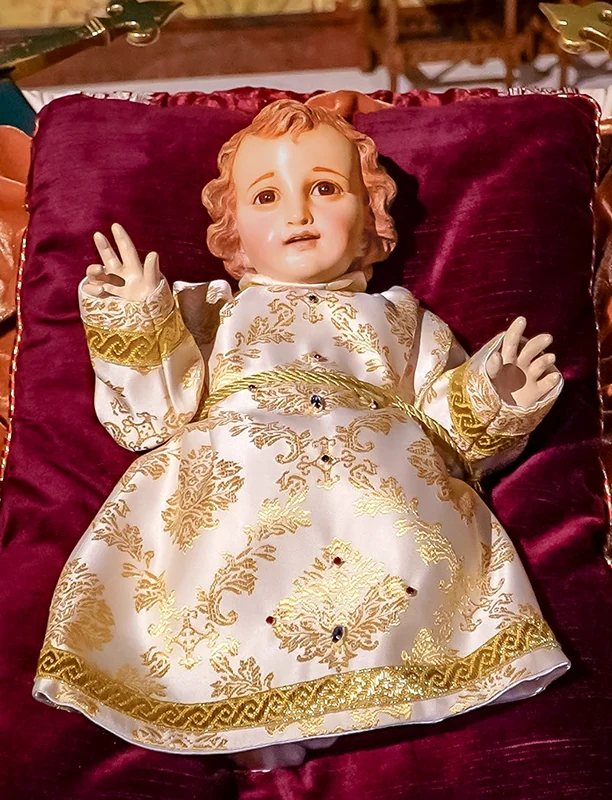 Christmas Carols







Gospel Commentary – Twenty-Fifth Sunday in Ordinary Time
1 Jesus said to His disciples, “A rich man had a steward who was reported to him for squandering his property. 2 He summoned him and said, ‘What is this I hear about you? Prepare a full account of your stewardship, because you can no longer be my steward.’ 3 The steward said to himself, ‘What shall I do, now that my master is taking the position of steward away from me? I am not strong enough to dig and I am ashamed to beg. 4 I know what I shall do so that, when I am removed from the stewardship, they may welcome me into their homes.’ 5 He called in his master’s debtors one by one. To the first he said, ‘How much do you owe my master?’ 6 He replied, ‘One hundred measures of olive oil.’ He said to him, ‘Here is your promissory note. Sit down and quickly write one for fifty.’ 7 Then to another the steward said, ‘And you, how much do you owe?’ He replied, ‘One hundred kors of wheat.’ The steward said to him, ‘Here is your promissory note; write one for eighty.’ 8 And the master commended that dishonest steward for acting prudently. For the children of this world are more prudent in dealing with their own generation than are the children of light. 9 I tell you, make friends for yourselves with dishonest wealth, so that when it fails, you will be welcomed into eternal dwellings. 10 The person who is trustworthy in very small matters is also trustworthy in great ones; and the person who is dishonest in very small matters is also dishonest in great ones. 11 If, therefore, you are not trustworthy with dishonest wealth, who will trust you with true wealth? 12 If you are not trustworthy with what belongs to another, who will give you what is yours? 13 No servant can serve two masters. He will either hate one and love the other, or be devoted to one and despise the other. You cannot serve both God and mammon” (Lk 16:1-13).
I – The Good Example of a Bad Steward
This Sunday’s Gospel centres on the well-known parable of the unfaithful steward; it has always intrigued Church Fathers, Doctors and commentators, due to the difficulties surrounding its interpretation. Many prominent authors find it not only mystifying, but even impossible to grasp. It is, in fact, sui generis for, proposing the fraudulent dealings of a steward as an example, seems to suggest, at first glance that Our Lord is praising this bad conduct. However, when contemplated from the proper perspective, which completely excludes this superficial impression, this parable loses its complexity. The Liturgy for the 25th Sunday in Ordinary Time offers this perspective with wisdom, in the Collect that says: “O God, who founded all the commands of your sacred Law upon love of You and of our neighbour, grant that, by keeping Your precepts, we may merit to attain eternal life.”1 The entire Law is summarized in these two points, by which we gain eternal happiness. But this happiness will escape us if, instead, we cede to our nature’s terrible tendency to want for ourselves not only what belongs to God, but also what belongs to others. The clash between human egoism and love of God, waged on earth since Adam and Eve were expelled from Paradise, is a struggle that will endure until the end of the world. All men conceived in original sin must undergo this struggle, and it is the subject matter for this Liturgy’s Gospel.The danger of becoming comfortable in one’s position
1 Jesus said to His disciples, “A rich man had a steward who was reported to him for squandering his property. 2 He summoned him and said, ‘What is this I hear about you? Prepare a full account of your stewardship, because you can no longer be my steward.’”
The lazy man rises up like a lion
3 “The steward said to himself, ‘What shall I do, now that my master is taking the position of steward away from me? I am not strong enough to dig and I am ashamed to beg. 4 I know what I shall do so that, when I am removed from the stewardship, they may welcome me into their homes.’”
The solution: making friends
5 “He called in his master’s debtors one by one. To the first he said, ‘How much do you owe my master?’ 6 He replied, ‘One hundred measures of olive oil.’ He said to him, ‘Here is your promissory note. Sit down and quickly write one for fifty.’ 7 Then to another the steward said, ‘And you, how much do you owe?’ He replied, ‘One hundred kors of wheat.’ The steward said to him, ‘Here is your promissory note; write one for eighty.’”
 The moneychanger and his wife, by Marinus van Reymerswale - Prado Museum, Madrid
In praise of prudence, not of fraud
8 “And the master commended that dishonest steward for acting prudently. For the children of this world are more prudent in dealing with their own generation than are the children of light.”
II – Dangers and Advantages of “Dishonest Money”
After this vital teaching on the sagacity that the sons of light should have, the Divine Master draws on the theme of the parable to deal with a key problem of the spiritual life: the use of goods received from Providence, and more specifically of money, which is among those that most often lead people astray from the path of God.9 “I tell you, make friends for yourselves with dishonest wealth, so that when it fails, you will be welcomed into eternal dwellings.”
Money also belongs to God
In addition to this allegorical meaning, Our Lord refers to money itself. This, incredible as it may seem, also belongs to God. However, it is among those things to which man is most inclined to attach himself and to claim ownership, judging himself a god, which is not legitimate. Anyone, from a beggar to a magnate, if not virtuous, will pounce upon a coin he receives. Those who act in this way steal from God, and money is therefore qualified as dishonest by the Saviour. It was just when it left God’s hands and will remain so if it is used as Our Lord Jesus Christ and Our Lady would do… in other words, if placed in the hands of a Saint. Money is given us not only to administer it. As creatures, and like faithful stewards, we must use it for the glory of the Creator, who is the owner. Therefore, any use that is not for benefitting souls, spreading the Kingdom of God or for one’s upkeep, but by reason of Him, makes it dishonest. Jesus teaching His disciples - St. Martin’s Charterhouse, Naples (Italy)
Making friendships that yield eternal interest
Our Lord then concludes the parable showing the need to “make friends” with this same “dishonest wealth”. This suggests a beautiful application of the sagacity of the sons of darkness, previously mentioned, to the realm of the good and of virtue. How should the Saviour’s counsel be understood? All the above-mentioned goods, including money, are not meant to be hoarded… On the contrary, we must have the sagacity to “apply them” to the benefit of others and, by this means forge good friendships. Who are these friends? The deal of which Our Lord speaks is extra-temporal… Firstly, His intention was that we understand the importance of “winning” God’s friendship. But not only His; also that of all those who can help us attain our ultimate goal, eternal happiness. The steward won the sympathy of those whose debts he had partially pardoned and even the admiration of the owner of the fortune. Likewise, Our Lord will tally up and take into account our actions done for the benefit of our neighbour for love of God, using the gifts that Providence has given us, or even “dishonest wealth”. Similarly, the Guardian Angels of those benefited and the other Angels and Blessed enjoying the beatific vision will be pleased with this conduct and will look upon us with sympathy and benevolence. A strong friendship will be formed, which will be of great help at the moment we appear before the Divine Judge, that is, when our money “fails”, for at death we will no longer have a way to use it, not even for good. Therefore, they can return to us the “money” invested, with good interest! It is fitting to consider a beautiful principle Our Lord gives in saying: “you will be welcomed into eternal dwellings.” This means that heavenly friends will implore God for the salvation of those who used the dishonest wealth in this way. Therefore, there is a mediation of affection in Heaven for, as St. Thomas Aquinas affirms,2 proximity to Him who has everything confers greater possibility of intercession, just as in a kingdom, the closer to the king an intermediary is, the more readily will he obtain what he seeks for his protégés. Thus, it will be worthwhile to have made this assemblage of friends, offering them “measures of oil” and “kors of wheat” during life, so that they return with interest the efforts we have made for the good on this earth. This is exactly the meaning of the proverb: “He who is kind to the poor lends to the Lord” (Prv 19:17). The goods of this world must be taken and used with the diplomacy of the steward, without ever, evidently, straying from the path of morals. By dedicating ourselves to the apostolate that will gain us friends in Heaven, in the hour of our need we will them to help us, intercede for us and procure special graces for us. It is advantageous, then, to make good deals in the supernatural realm, strengthening this type of friendship! How dreadful, in contrast, is the plight of one who acts otherwise… On the day of his death it will be of no use to have a particular sum stored in the bank only for his own interest. If he stands before the judgement of God in a state of mortal sin, this money will be burning in expectation of his soul, which will be condemned forever.The daily routine is preparation for great occasions
10 “The person who is trustworthy in very small matters is also trustworthy in great ones; and the person who is dishonest in very small matters is also dishonest in great ones. 11If, therefore, you are not trustworthy with dishonest wealth, who will trust you with true wealth?”
12 “If you are not trustworthy with what belongs to another, who will give you what is yours?”
The true God and the god of money
13 “No servant can serve two masters. He will either hate one and love the other, or be devoted to one and despise the other. You cannot serve both God and mammon.”
 Detail of the Last Judgement - Amiens Cathedral (France)
III – Supernatural Transactions!
We know that earthly transactions, when skilfully carried out, yield interest and benefits. But, in the best case scenario, they can be of merely material use and only until the hour of death. Supernatural transactions, on the other hand, produce wealth appointed for all eternity, and are not subject to the fluctuations of financial enterprises here below. This is the best enterprise: to store up treasure in Heaven, not being concerned with the goods of this life, other than to apply them on behalf of the wealthy Lord who gave them to us to administer. At the moment of our judgement, when all our wretchedness is placed on a scale and we fear a sentence of condemnation, we will have others to come to our aid and say to Our Lord: “He is our friend! He made a friendship with us with the ‘dishonest wealth’, for he constantly applied it for Thy greater glory.” Therefore, it is a good deal to give oneself entirely to serving God, in the desire to praise Him, sanctify our souls and save others. Let us learn to make supernatural transactions! ◊Notes
1 TWENTY-FIFTH SUNDAY IN ORDINARY TIME. Collect. In: THE ROMAN MISSAL. English translation according to the Third Typical Edition approved by the United States Conference of Catholic Bishops and confirmed by the Apostolic See. Chicago: Liturgy Training Publications, 2011, p.485.
2 Cf. ST. THOMAS AQUINAS. Summa Theologiæ. II-II, q.83, a.11.
3 Cf. ST. AUGUSTINE. De Civitate Dei. L.XIV, c.28. In: Obras. Madrid: BAC, 1958, v.XVI-XVII, p.984.