 Heralds of the Gospel Magazine, Vol. 20, nº 226, August 2026
 Heralds of the Gospel Magazine, Vol. 20, nº 225, July 2026
 Heralds of the Gospel Magazine, Vol. 20, nº 224, June 2026
 Who are the Heralds of the Gospel?
 Help of Christians
 Christmas Carols
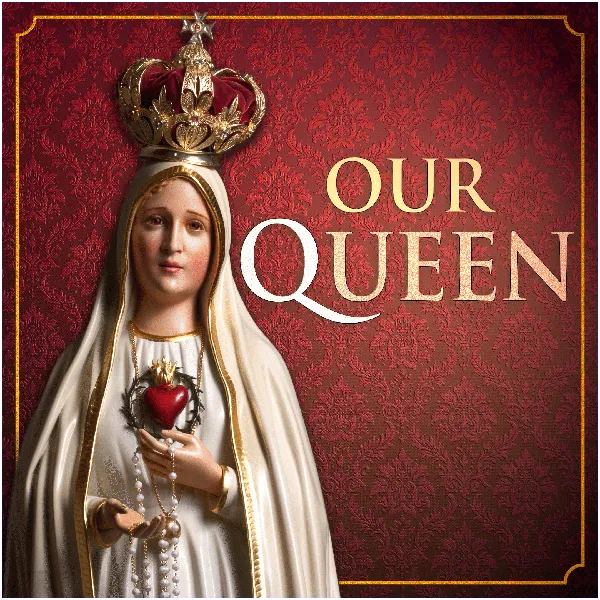






In the firmament of the Holy Church, certain stars seem to shine exclusively for God.
There are, of course, vocations that have become known for the feats witnessed by all; others, however, go almost unnoticed in the pages of history, because their mission consisted of glorifying the Creator in the anonymity of ordinary, everyday life.
Among these discreet luminaries we can find a virgin of brief existence, whose radiance invites us today to raise our eyes to Heaven, allowing ourselves to be illuminated by her.
Among heroes and martyrs… Teresita
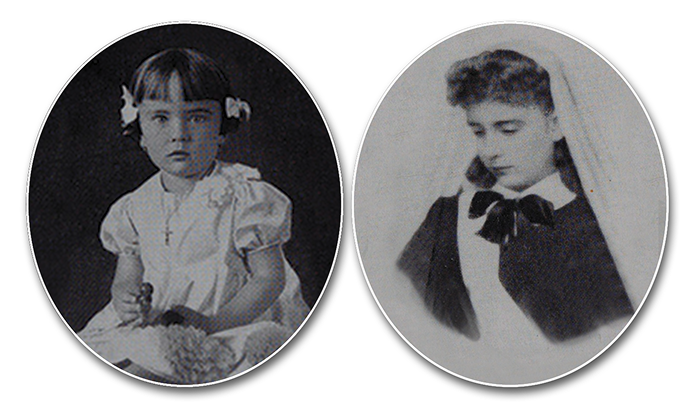
Amidst the joys of the Lord’s Resurrection, Maria Teresa González-Quevedo y Cadarso came into the world in the glorious Spain of martyrs and heroes, on April 14, 1930.1
Her father, Dr. Calixto González-Quevedo y Monfort, as well as her mother, María del Carmen Cadarso y González, descended from deeply Catholic families, and several of their members, during the terrible years of the Civil War, would add to the nobility of their blood an even more precious attribute: that of fidelity unto the sacrifice of their own lives.
Teresita – as she was affectionately called at home – had a high standard to live up to, to follow the edifying example of her family.
But she seemed to enlist under other banners…
She was a strong-willed, impetuous, and extroverted girl, overflowing with life and joy, with a generous but determined temperament, always asserting herself over others and capable of great vexation when contradicted…
Her childish stubbornness earned her the family nickname of el venenito, “the little venom”, because it was impossible to dissuade that child, so impulsive in her tastes and demands, from any decision taken.
However, above these and so many other flaws, hovered a loving divine design, and early in Teresita’s childhood a special hue shone in her energetic character: love for the Blessed Virgin Mary.
For her Lady, that strong personality would be ready for the greatest sacrifices, determined, even, to climb the steep ascent of sanctity at all costs: “I have decided to be a saint,” she wrote in her diary when she was only nine years old.
And only God would know the meaning of that resolution, for her captivating joy would conceal from others the magnitude of the sacrifices made and the battles fought against herself.
Time would show Teresita the way in which her life would be consumed in holocaust, but before that she had already found her north star, the ultimate goal of all her actions: Heaven.
Two Teresitas…
At nine years old, Teresita was far from imagining herself as a nun.
She was still up to her old tricks, and this incurable stubbornness and indiscipline made it very difficult for her to study diligently, obey school rules, or even to accept a meal she that was not to her liking without complaint…
A single aspect mysteriously revealed Teresita’s exalted calling: her purity. Wherever she went, the candour of her whole being was striking, and her angelic bearing was merely a reflection of an unblemished chastity, the fruit of divine predilection.
In a sense, a true angel of purity hid beneath that undisciplined and noisy shell, and this innocence, combined with devotion to her Heavenly Mother, would constitute a root of goodness so strong and vigorous that it would override her whims by far.
“I love her so much! I would do anything for her!”, she frequently exclaimed.
The moment when Teresita surrendered to the love of her life, that is, to the Blessed Virgin Mary, was the month especially dedicated to her by the Holy Church: May!
The festivities, intensely celebrated at the school due to the fervour of the nuns who taught there, encouraged in her a great generosity of soul to face thirty-one days of small sacrifices, acts of love and prayers, which could not go unnoticed by the Queen of Heaven.
However, the “month of holiness” ended on the last feast day of May, and then the ever-stubborn Teresita reappeared… somewhat more purified than in the previous May, but still far from the holiness of her yearnings.
A happy event, however, came to establish the light in her soul – and this time, forever!
Teresita’s “conversion”
Having overcome the horrors with which the Civil War had shaken Spanish society, it was necessary to rebuild, on the solid foundations of Faith, the youth for the future.
With this in mind, the Carmelites of Charity, responsible for the school where Teresita studied, decided to found Marian Congregations among the students, in order to encourage in the girls a serious life of piety and a profound devotion to the Blessed Virgin.
The preparations for the foundation, the selection of the first candidates and their consecration demonstrated how much love Teresita had for the Queen of Heaven.
In fact, she had always been very devoted to Mary, and even exemplary in her life of piety – a marvel, given her natural tendency towards dissipation – but, in a matter of months, her transformation was evident to the entire school.
The clever retorts to avoid reprimands ceased, the disciplinary problems, the shunning of obligations, the show of displeasure at sacrifice.
For the world, Teresita was unable to take her life seriously, but for Mary… what would she not do to please her?
Thus, her days transformed into a continuous “May,” and all could see a studious, disciplined, mortified, abnegated, and even silent girl emerging in her…
Teresita had resolved to fulfil entirely the norms of the Marian Congregations that aimed at the perfection of their members, and on the day of her consecration, December 13, 1944, she promised to increase and promote devotion to the Blessed Virgin as a means of sanctification for herself and others, being a model pupil in both virtue and studies.
Summarizing her resolutions, she chose as her motto as a member of the Congregation: “My Mother, may whoever looks at me see You.”
It wasn’t long before the presence of Our Lady became noticeable in all her actions, especially when she received Holy Communion: it was impossible not to look at her, her companions commented.
The devotion and dignity with which she attended Holy Mass attracted young girls, and her example drew a great number of them to a life of piety.
About two years later, Teresita added a vow of chastity to her determinations, made in the hands of her spiritual director.
Thus, this Marian congregant began a unique communion with the Mother of God, through which grace began to prepare her to live only for God. In what way?
And at the hour of death… religious or not?
The inspiration to embrace religious life came to her through one of her worst enemies: a book.
Teresita had always detested them, but one day, while reading, as a form of mortification, a book that had been given to her, she discovered God’s will for her in its pages, as she later revealed:
When I reached the chapter dealing with the religious vocation, I understood that it was the best, that this was decidedly what I needed. That last question: ‘What will I want to have been at the hour of death, religious or not?’ was a decisive blow for me.
Ardent in everything she did, Teresita decided to give herself entirely and immediately, reserving nothing for this passing world. She was then seventeen years old.
Hearing the plans of one of her friends to enjoy life during her youth, and then embrace religious life in old age, she told her without hesitation:
How miserly and selfish! How can you think Jesus will accept you already haggard, after you have offered the best of your life to the world? Jesus has better taste and wants you as an offering in your youth, giving it with your joys and dreams.
How many Catholics today would benefit from this rebuke, to reserve the best of themselves for God and not for the world?…
Before entering the convent, however, she asked Heaven for a snowfall as a farewell gift…
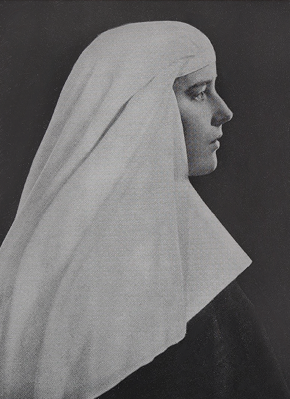
And on the morning of February 23, 1948, when she left home for the novitiate of the Carmelites of Charity, she saw her childlike wish fulfilled: all of Madrid had awoken under a beautiful snowy mantle, as a farewell to that soul of immaculate purity.
A light was fading to the world and beginning to shine only for God.
Another chosen one, in the choir of virgins
From her first days in the consecrated life, Sister Maria Teresa demonstrated a single fear: that of being a mediocre religious.
After abandoning everything, she wanted to be a true Carmelite of Charity, and for this she employed all her strength and prayers.
And the reader should not imagine that the struggle was easy! Some vestiges of the old Teresita still persisted in her, cheerful and carefree, more inclined to enjoy than to suffer…
But she deeply loved community life, taking advantage of the smallest opportunities to perfect herself and grow in holiness.
On her initiative, the novices created the custom of pointing out each other’s faults at recreation time, in order to help one another improve.
For her companions, it was quite a task to find some fault to correct in her…
Thus, Sister Maria Teresa had very few imperfections to record in her diary, most of them remnants from the past: “[They told me] that I laugh quite loudly, that when I speak, I get excited and raise my voice, that when they say something to a sister, I laugh a lot…”
An exemplary novice, always cheerful, a lover of obedience and the rule, zealous in recollection and silence… virginal. This is the word that best defined her until the end of her life.
As a mirror of the Blessed Virgin Mary, her conduct did not allow for mediocrity: she was upright both in the fulfillment of the rules and in the struggle against her personal defects, immaculate in her love for God and her vocation, a true consecrated virgin and daughter of Mother Church, according to the image used by St. Augustine.2
This virginity was translated into concrete acts, a reflection of the intense love she had for angelic virtue: decorum and cleanliness shone through in her notebooks and clothes, everything bore the mark of being orderly and pristine for the love of God.
She asked the nuns in charge of assisting her in the novitiate:
Tell me, for charity’s sake, if I exaggerate in my desire to be neat and to wear my habit properly.
It is because I like to see people well-dressed, and even more so future or already spouses of Christ, because poverty does not oppose this.
If we see that people in the world dress so well because they are daughters or wives of X, how much more so should we!
Another precious lesson for us! Let us imitate her in this decorum, a precious ornament of souls desirous of perfection.
A final gift
Through struggles, falls, and victories, Sister Maria Teresa swiftly progressed along the path to holiness. It was to be expected that her enthusiasm would lead her to offer herself entirely to God, which she did on the day she turned eighteen:
At Communion I had such a strong desire to give myself completely to Jesus, to demonstrate how much I desired to love Him, that I offered myself as a “little victim” so that He can do with me as He wills.
Maria Teresa then combined courage with chastity (cf. Jdt 16:22) in order to climb the steep mountain of Calvary. And God would accept – even hastily – her offering, taking her in the best stage of her life.
The tuberculous meningitis that would take her life was the path of her immolation, to the last drop of blood. No one could measure the extent of her pain, discomfort and trials, for a gentle and smiling countenance welcomed all who approached her.
That innocent victim took advantage of the seconds she had left on earth to love, demanding even the impossible of herself in her observance of the rules, in chastity and in daily generosity.
Given the seriousness of the illness, the last Sacraments were administered, and she was allowed to make the profession of vows, ardently desired by her!
Her contentment was so great, and contrasted so sharply with the concern about her imminent departure, that one would say that the fear of death did not assail her: “How can I be afraid,” she asked, “having a Mother in Heaven who will come out to meet me? Love the Virgin very much; as for me, the only consolation I enjoy now is having loved her so much.”
Teresita felt like the Good Thief: she had done almost nothing to deserve the reward, but at the last hour Our Lady had obtained Heaven for her as a gift from the Lord… Or perhaps Teresita was a gift to God.
A victim associated with the Divine Victim
In the life of a true Catholic, explained Dr. Plinio Corrêa de Oliveira, “great sorrows alternate with unimaginable joys. Terrible sufferings like Calvaries and exuberant joys like Easters make up a single tableau.”3
Teresita drank one by one the sufferings of this divine chalice: prevented from moving, eating, singing… she accepted with full consciousness even the loss of reason, all to fulfil her “do with me as You will.”
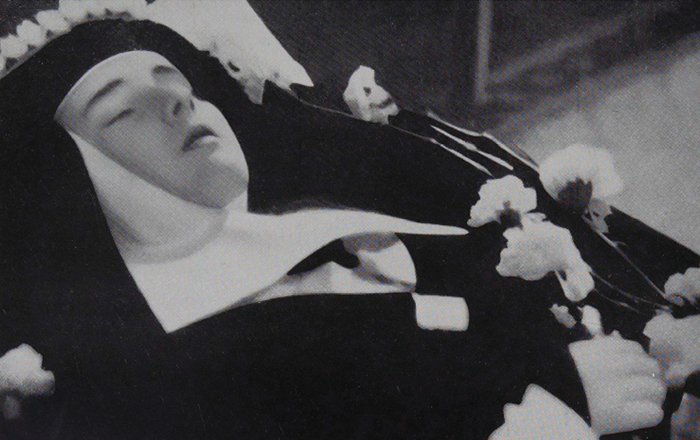
On Holy Saturday, April 8, 1950, amid the prayers and weeping of the community surrounding her, Teresita left a body exhausted by suffering.
Her eyes, now expressionless, and two tears on her cheeks announced the end of the passion of the one who, joyfully united with the Divine Victim, celebrated the eternal Easter in Heaven with the Mother of Jesus.
The tears for her departure mingled with the alleluias of Resurrection Sunday, a beautiful farewell for one who on this earth had become a living tabernacle of Mary, worthy of receiving God Himself spiritually within her, as the Immaculate Virgin had received Him bodily.4
Without a doubt, one must have a pure heart to know how to admire this predilection of God!
Let us ask Teresita to intercede with Our Lady to keep these little stars, which are the virgin souls, burning in the firmament of the Church, for as long as their light illuminates our world immersed in the darkness of sin, we will be able to exclaim, paraphrasing the Apostle (cf. I Cor 13:8): “Virginity never ends!”