 Heralds of the Gospel Magazine, Vol. 20, nº 227, September 2026
 Heralds of the Gospel Magazine, Vol. 20, nº 226, August 2026
 Heralds of the Gospel Magazine, Vol. 20, nº 225, July 2026
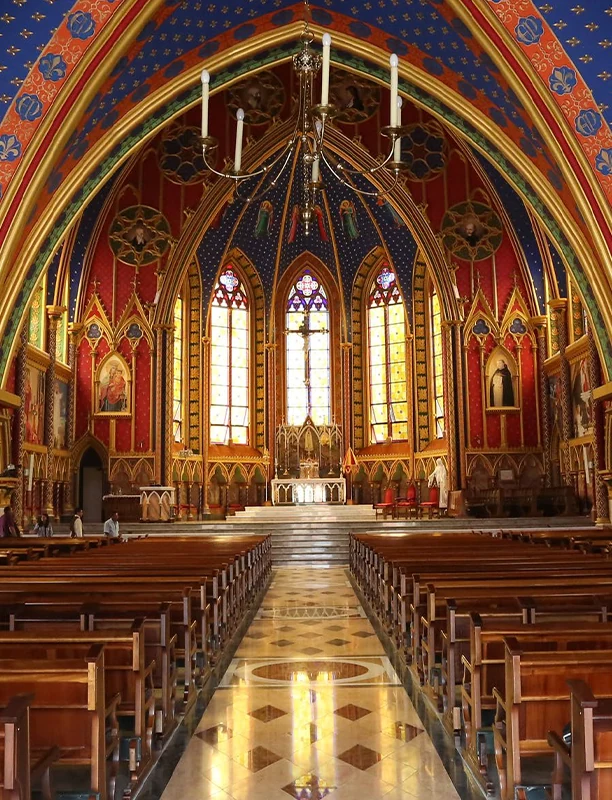 Who are the Heralds of the Gospel?
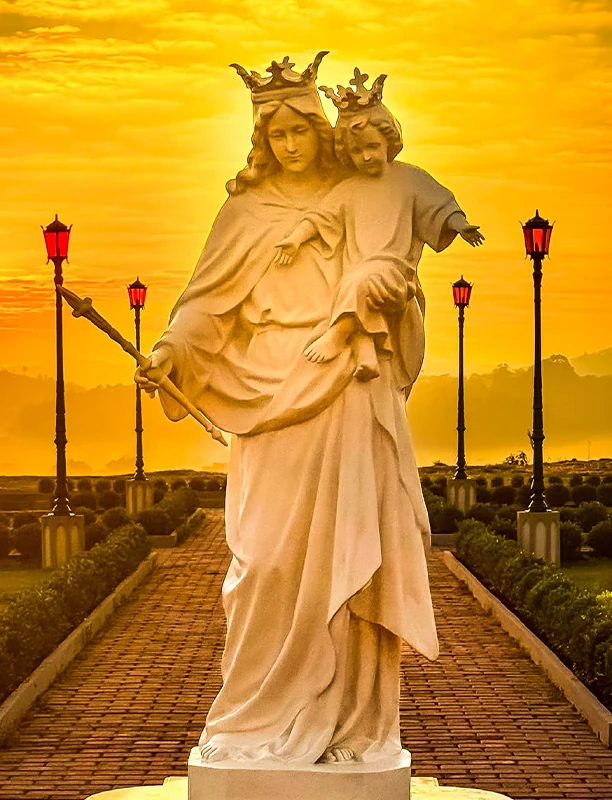 Help of Christians
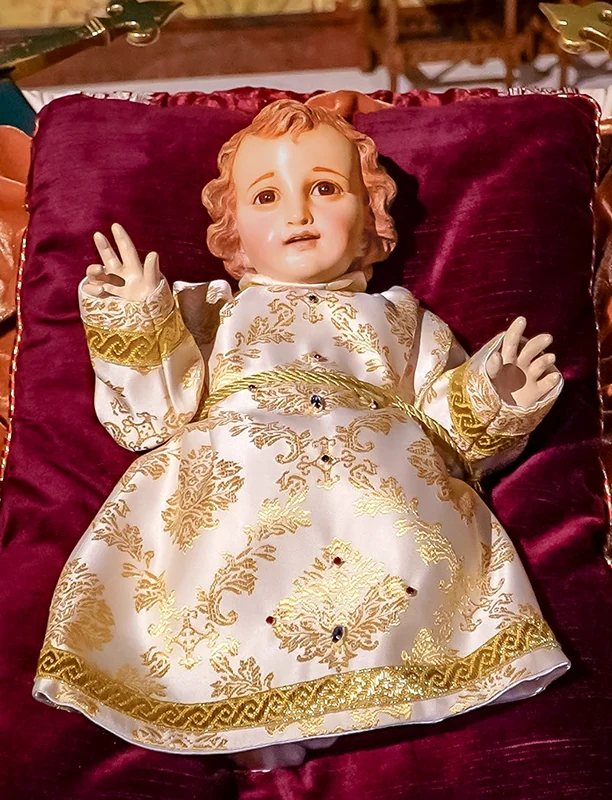 Christmas Carols







Love of contemplative life and, above all, God’s will
His name was Nicholas, and he was born in March 1417. He was a native of Unterwalden, which shortly afterwards would form, with other cantons, the present-day Swiss Confederation. Although his parents were simple farmers, they tried to provide him with an education far superior to that generally given a farm boy. ive farmer. From a very early age, the boy showed lucid and unusual intelligence, as well as admirable piety. Family and friends admired his temperament so inclined to meditation, and from an early age he was graced by mystical visions that invited him to do so. On the other hand, he mortified himself with great seriousness, imposing such fasts and penances upon himself that his mother became concerned that such rigours would harm his health. Although strongly inclined to the religious and contemplative life, Nicholas wanted above all to do the will of God. He married Dorothée Wyzling, a girl of exemplary character and piety, with whom he had ten children. The thorough religious and moral formation that the numerous offspring received from their father was crowned with his own example, for, although married, Nicholas continued to love recollection and prayer. This is illustrated by a custom witnessed by his eldest son, who recounted that his father used to arise at night to pray, while everyone was sleeping.1A valiant soldier and promoter of peace
Today’s Switzerland, which has long been divided into small provinces, was at that time in a critical and decisive historical period. The regions that composed it, called “cantons”, were practically independent from each other and were subject to the contested influence of neighbouring countries, such as France, Germany and Italy, which were fighting – sometimes through diplomatic means, sometimes by war – to gain the sympathy of the Swiss people, in order to annex land, obtain soldiers and increase their power.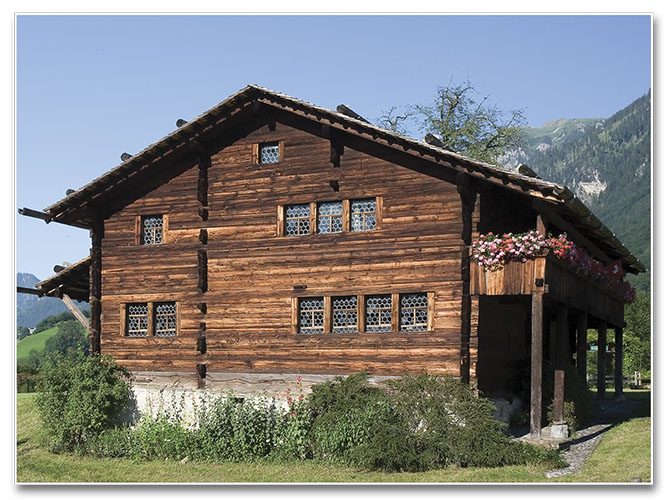 Exterior of the house of St. Nicholas of Flüe, Sachseln (Switzerland)
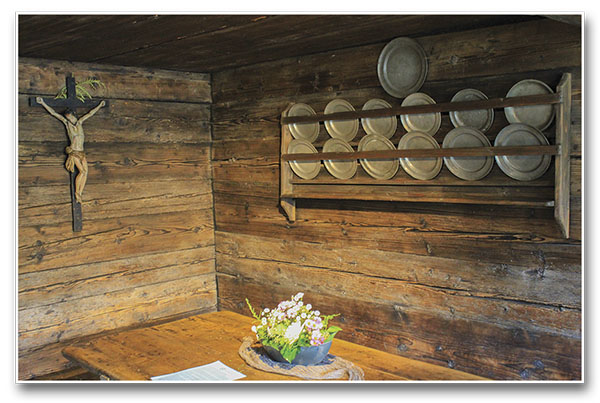 Interior of the house of St. Nicholas of Flüe, Sachseln (Switzerland)
Crowned with merit, he remained humble
At the end of each of these wars, Nicholas returned home. Far from giving himself over to a quiet and mediocre life, enjoying an agreeable family life in a selfish way, he placed himself at the service of his fellow citizens, guiding and helping them in every way that he could. Such was his wisdom and balance in solving the questions that were presented to him that, on one occasion, they wanted to make him mayor, but he refused, alleging the simplicity of his origin. Besides renouncing the glories of the world, he thus showed his respect for the higher-ranking people of the canton, whom he sincerely believed to be more leaned and better equipped for governing. What an example of unpretentiousness! Indeed, the acts in the lives of the Saints are founded on humility, the mother of all virtues. What pride denies and destroys, humility reaffirms and consolidates. However, at the insistent requests of the people, he eventually accepted the offices of cantonal judge and town councillor, through which he continued to exercise pious and exemplary influence in the region, with invariable kindness, charity and conscientious discernment. According to his oldest biographers, Nicholas resigned from these public offices after an unfair trial in which his energetic interventions had no effect on the other judges, who were rigidly biased and issued a fraudulent sentence.A message from Heaven
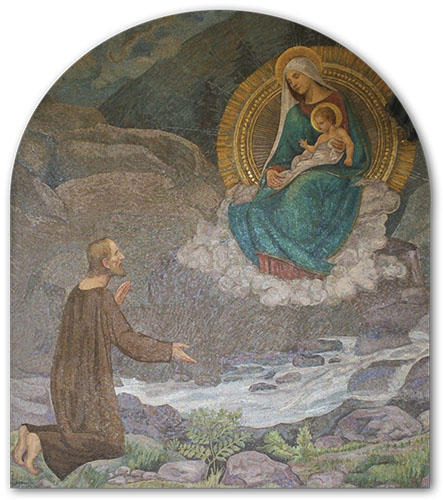 St. Nicholas of Flüe recieving a vision - Church of St. Theodore, Sachseln (Switzerland)
The decisive call
However, God was asking St. Nicholas to make a very special commitment, which only became clear to him after much meditation: he was to embrace complete solitude! Thus, he obtained his wife’s consent to live as a hermit, and left her company and that of their ten children, as inspired by the passage from Genesis: “Go from your country and your kindred and your father’s house to the land that I will show you” (12:1). Heaven was to be his only homeland! Nicholas went to live in a hut whose ceiling was no higher than he was. For years – twenty, according to some authors – he was nourished only by the Holy Eucharist, received once a month. Despite his remote location, his fellow citizens and family soon discovered him, but they respected his new lifestyle without, however, ceasing to benefit from his virtues. Nicholas was increasingly loved and venerated by those who came to him for advice, prayers and guidance. On some occasions he even had to abandon his beloved solitude to resolve the feuds between the Swiss cantons, as in the negotiations that resulted in the Treaty of Stans signed in December 1481. In this, as in other interventions, peace was re-established thanks to the man now known as the father of the homeland. The success of St. Nicholas in such missions was impressive, for he prevented bloodshed among Christians and promoting the union of those who should be together under the same standard. Free of any trace of hypocrisy or falsehood, he answered questions in a very simple and punctual manner, with remarkable serenity of soul. Although there is a certain sentimental notion that a just man never fears death, there have been many Saints who have watched the approach of death with dread, but have sought their comfort in God, and to Him they have delivered up their souls in great serenity. Such was the case of St. Nicholas when he saw his end approaching. Groaning amid atrocious pain, he even exclaimed, “How terrible is death!” However, as a true hero of the Faith, he knew that he was strong because he was united to God and, after piously receiving Viaticum, he quietly exhaled his last breath.Exemplary in the fight against evil
Visiting the church in Sachseln, a commune in the canton of Obwalden, Switzerland, today, the faithful may contemplate under the altar a silver image within which are preserved the remains of Brother Klaus, so called by his countrymen of the past and present. In former times, it was the custom for Swiss soldiers to place the decorations they had won in battle there. This was a gesture of special nobility and elevation, as Dr. Plinio Corrêa de Oliveira points out: “the hero who removes the decoration from his chest to honour the Saint, his forefather, makes it seem more beautiful to be the posterity of St. Nicholas than to be covered with all the honours of the earth.”3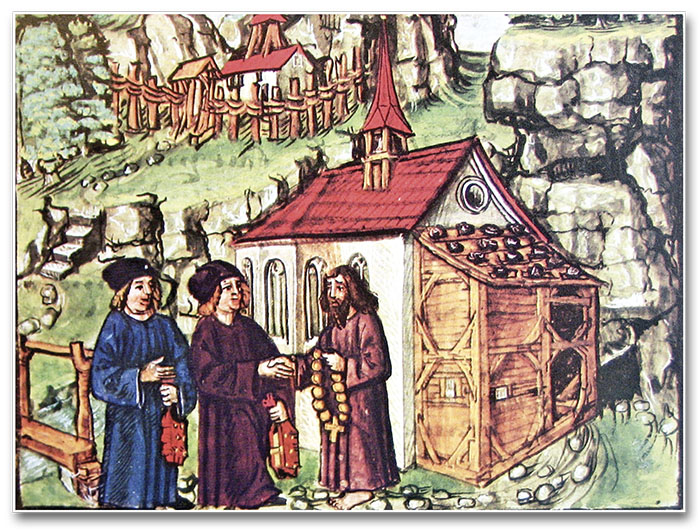 The mediation of St. Nicholas is sought to settle conflicts over the Swiss cantons - Lucerne Chronicle, by Diebold Schilling
Notes
1 Cf. BAUD, Philippe. Nicolas de Flue. Un silence que fonde la Suisse. Paris: Du Cerf, 1993, p.32.
2 PIUS XII. Address to the Swiss pilgrims in Rome for the canonization of St. Nicholas of Flüe, 16/5/1947.
3 CORRÊA DE OLIVEIRA, Plinio. Um guerreiro perfeito [A Perfect Warrior]. In: Dr. Plinio. São Paulo. Year XXI. No.240 (March, 2018); p.30.