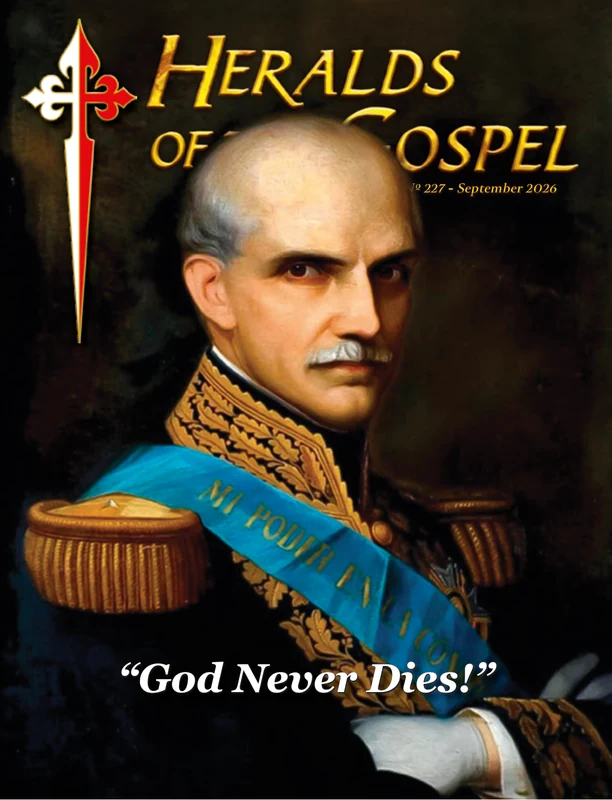
 Heralds of the Gospel Magazine, Vol. 20, nº 227, September 2026
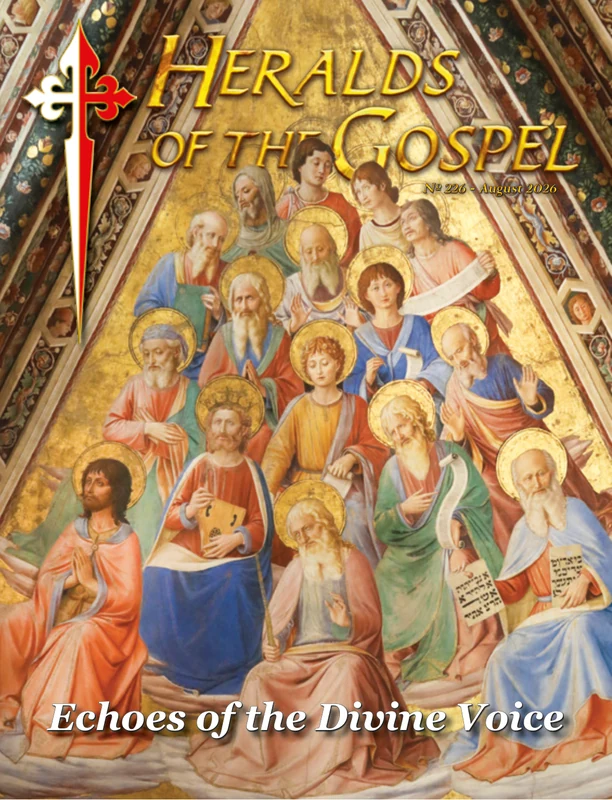 Heralds of the Gospel Magazine, Vol. 20, nº 226, August 2026
 Heralds of the Gospel Magazine, Vol. 20, nº 225, July 2026
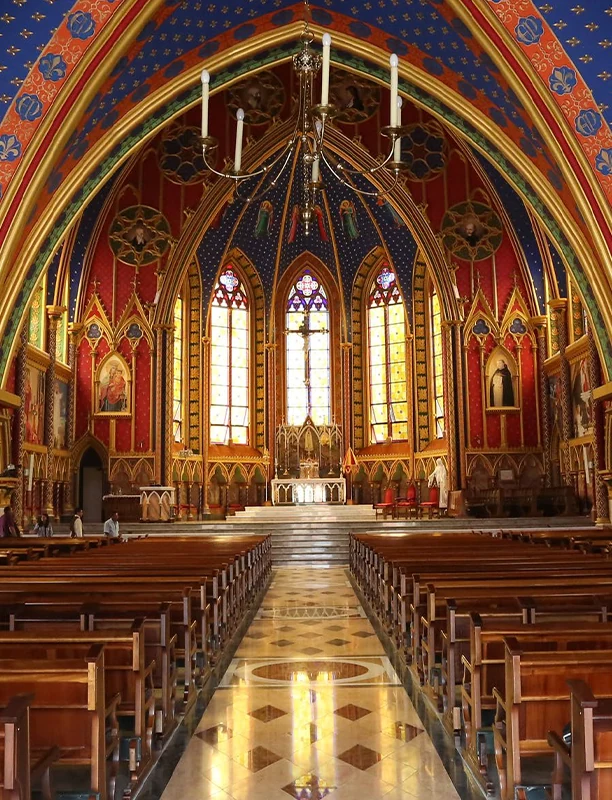 Who are the Heralds of the Gospel?
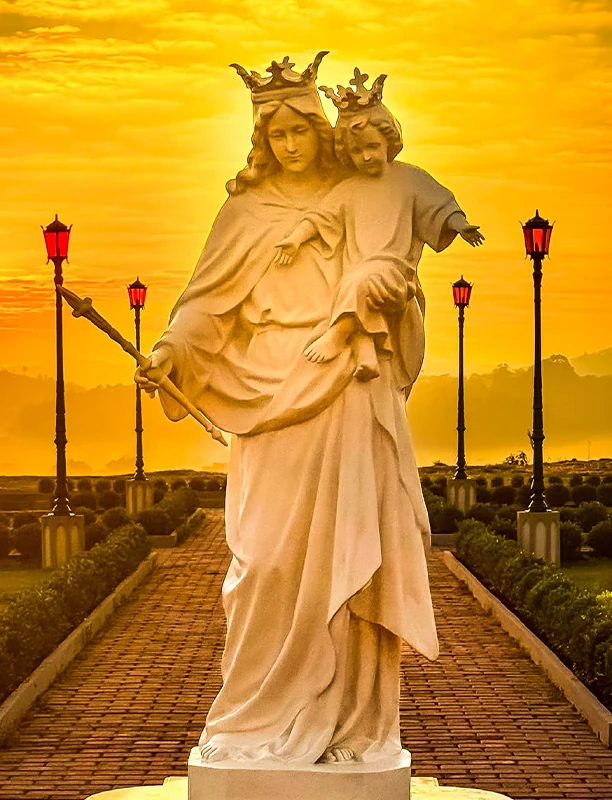 Help of Christians
 Christmas Carols







Faced with such evidence, we can only overflow with gratitude towards our most loving Redeemer. For what more could He have done out of love for us? In fact, the only condition required by divine justice for a sinner to find mercy is sincere repentance of his faults: “a broken and contrite heart, O God, Thou wilt not despise” (cf. Ps 51:17). However, equally frequent are the passages in which we can glimpse Our Lord’s inexorable justice and the radicality that He demands of His followers: “If your right eye causes you to sin, pluck it out and throw it away; it is better that you lose one of your members than that your whole body be thrown into hell” (Mt 5:29). So is there a contradiction in the Gospels? No. All these concepts are harmonious and make up a single, divinely architectonic whole, even though some passages may cause us a certain unease from time to time, due to our limited grasp of their authentic meaning.In its extreme manifestation, blasphemy constitutes the gravest of sins, the worst form of blasphemy being that against the Holy Spirit
A sin that “will not be forgiven”
In this sense, the Synoptic Gospels record a mysterious passage that seems to contradict other teachings of the Divine Master. St. Mark writes: “all sins will be forgiven the sons of men, and whatever blasphemies they utter; but whoever blasphemes against the Holy Spirit never has forgiveness, but is guilty of an eternal sin” (3:28-29). St. Matthew puts it in similar terms: “every sin and blasphemy will be forgiven men, but the blasphemy against the Spirit will not be forgiven. And whoever says a word against the Son of man will be forgiven; but whoever speaks against the Holy Spirit will not be forgiven, either in this age or in the age to come” (12:31-32). Finally, St. Luke the Evangelist says: “And every one who speaks a word against the Son of man will be forgiven; but he who blasphemes against the Holy Spirit will not be forgiven” (Lk 12:10). Was it not Jesus himself who taught Peter that there are no limits to forgiveness (cf. Mt 18:21-22)? How can any kind of sin be in itself unforgivable? This theme is brilliantly developed by St. Thomas Aquinas, in whose works we find a meticulous explanation combined with the broad and very clear theological vision so characteristic of this giant of Christian thought.A topic addressed in various works
Blasphemy against the Holy Spirit is a recurring theme in various writings by the Angelic Doctor: in his Commentary on the Sentences of Peter Lombard, in the Disputed Questions on Evil, in The Quodlibetal Questions and in the Commentary on the Corpus Paulinum. In addition, various thoughts from Church Fathers and Christian authors on the subject are collected in his Catena Aurea. Finally, the famous Summa Theologiae, on which we will focus our attention in particular, contains the peculiar methodical and elucidative explanation that any reader who habitually refers to this work is so familiar with.1Dedicated specifically to blasphemy against the Holy Spirit, question 14 of the Secunda secundæ is part of the Treatise on Faith, and is preceded by considerations on blasphemy in general, in question 13. In the latter question, the Aquinate2 affirms that blasphemy in its extreme manifestation – that is, infidelity accompanied by an aversion of the will that detests divine honour – constitutes the gravest of sins. From this basis, we can now examine that blasphemy which, being among the most grievous of sins, is the worst of all. For St. Thomas,3 blasphemy against the Holy Spirit can be considered through three prisms, at once diverse and correlated, based on the opinions of the Fathers of the Church and other authors on the subject.The scribes sinned against the Holy Spirit for having blasphemed against Christ inasmuch as He is God, and not only as Man
Blasphemy, impenitence and malice
In the first place, a sin against the Holy Spirit is said to exist when a blasphemous statement is literally made against Him, whether considering the Holy Spirit as the proper name of the Third Person of the Most Holy Trinity, or attributing it as the essential name of the entire Trinity, of which each Person is a spirit and is holy. This is why Sacred Scripture distinguishes blasphemy against the Holy Spirit from blasphemy against the Son of Man. For Our Lord Jesus Christ practised acts proper to humanity, such as eating, for which the Jews reviled Him with slander, saying that He was excessive in eating and drinking (cf. Mt 11:19). This offence constituted a sin against the Son of Man, Jesus, in terms of His most holy humanity. However, the Redeemer also performed acts proper to His divinity, such as casting out demons and raising the dead. And it was because they blasphemed Christ as God that the scribes sinned against the Holy Spirit, since they attributed to the devil what belongs to the Creator, when they said: “by the prince of demons He casts out the demons” (Mk 3:22).
In a second sense, this time according to St. Augustine, the sin against the Holy Spirit can be understood as final impenitence itself, whereby someone persists in their fault until death. And why would such a sin bear this name? Because it is precisely through the Divine Paraclete, the Love of the Father and the Son, that the remission of sins takes place. Thus, by rejecting divine forgiveness, the sinner rejects the one who offers it to him: God himself. St. Thomas presents a third way of understanding this very serious sin, but without mentioning the names of the teachers to whom the development of the subject is attributed. Here is the explanation: just as power belongs to the Father and wisdom to the Son, goodness belongs to the Holy Spirit. As a result, we can also list three categories of sin, each directed specifically at a Person of the Holy Trinity: those of weakness, in opposition to power, against the Father; those of ignorance, in opposition to wisdom, against the Son; and finally those of malice, in opposition to goodness, against the Holy Spirit. To sin against goodness, and therefore against the Paraclete, is to sin by malice, by freely choosing evil, that is, by consciously choosing it without any excuse of weakness of the flesh or ignorance of the mind.5By rejecting divine mercy, the sinner rejects God himself, and in a particular way rejects the goodness of the Paraclete Spirit
A sin of hatred towards God
But the question remains: why is the sin against the Holy Spirit considered irremediable and unpardonable? To answer this question, let us analyse this fault under the third meaning given by St. Thomas. If we consider that the sin of malice is committed by consciously despising the effects of the Holy Spirit on the human soul,6 we come to the grave conclusion that whoever does this hates God. A distinction must be made here. The evil of sin consists in turning away from God, and this can happen in two ways: in a relative way, as occurs in the sins of lust or gluttony, in which man craves a disordered pleasure that brings with it turning away from the Lord as a necessary consequence; and in a voluntary and direct way, as in the case of hatred of Him. Thus, because of the malice that this fault entails, “hatred of God is chiefly a sin against the Holy Spirit.”7The species of sin against the Holy Spirit
This sin is, moreover, divided into six species,8 which are related to the means man can use to avoid the faults or to remain in them. Thus, what first guards us from sin is the consideration of divine judgement, against which two errors arise: despair, contrary to hope in God’s mercy, and presumption, which presumes to attain glory without merit or penance for faults and opposes the fear of divine justice, which punishes sins. God’s gifts can also keep us from sin, such as the knowledge of the truth, against which arises resistance of the known truth, that is, the denial of the truth of the Faith known as such, with the aim of sinning more freely. There is also the precious help of interior grace, eliminated by envy of a brother’s spiritual good, namely the grace at work in another. This is an eminently diabolical sin, which leads a person to feel sorrow not only for the spiritual benefits granted to his neighbour, but also for the increase of God’s grace in the world.Finally, the consideration of sin can serve man as a means of turning away from evil, either because of its vileness and horror, which distance him from God, or because of the pettiness of the transitory goods that are attained through it, which should impede the fixation of the will on sin. But the consideration of the misery of sin and the aversion of God is opposed by impenitence of the heart, understood as the deliberate intention never to repent of one’s faults; and against the meditation on the paltry advantages of sin rises obstinacy, by which man clings firmly and blindly to his own faults and his despicable pleasures. Thus, the question posed above finds an adequate answer: blasphemy against the Holy Spirit is not called “unpardonable” because it can never be forgiven, but because it effectively excludes the means that can lead man to repent and ask for forgiveness, just as a disease is said to be incurable when it deprives the sick person of the conditions favourable to its cure.9 “The sin against the Holy Spirit precludes the path to grace. For this reason, with the sin against the Holy Spirit remaining, the capacity for grace does not remain on the part of the one who sins,”10 says the Aquinate.Blasphemy against the Holy Spirit excludes the means that lead man to repent and ask pardon, which is why it is called “unpardonable”
Vigilance and confidence!
Reflection on this very serious sin – the worst of all sins – serves to help us to grow in vigilance and confidence.
Notes
1 On this subject, see: ST. THOMAS AQUINAS. Commentary on the Sentences of Peter Lombard. L.II, dist.43; Disputed Questions on Evil, q.2, a.8, ad 4; Quodlibet II, q.8, a.1; Commentary on the Epistle to the Romans, c.II; Catena Aurea. Gospel according to Matthew, c.XII, v.31-32; Gospel according to Mark, c.III, v.23-30; Summa Theologiæ. II-II, q.14.
2 Cf. ST. THOMAS AQUINAS. Summa Theologiæ. II-II, q.13, a.3.
3 Cf. Idem, q.14, a.1.
4 Cf. Idem, a.3.
5 Cf. Idem, I-II, q.78, a.1.
6 Cf. Idem, II-II, q.14, a.2.
7 Idem, q.34, a.2, ad 1.
8 Cf. Idem, q.14, a.2.
9 Cf. Idem, a.3.
10 ST. THOMAS AQUINAS. Commentary on the Sentences of Peter Lombard. L.II, dist.43, q.1, a.4, ad 1.
11 Cf. ST. THOMAS AQUINAS. Summa Theologiæ. II-II, q.14, a.3.