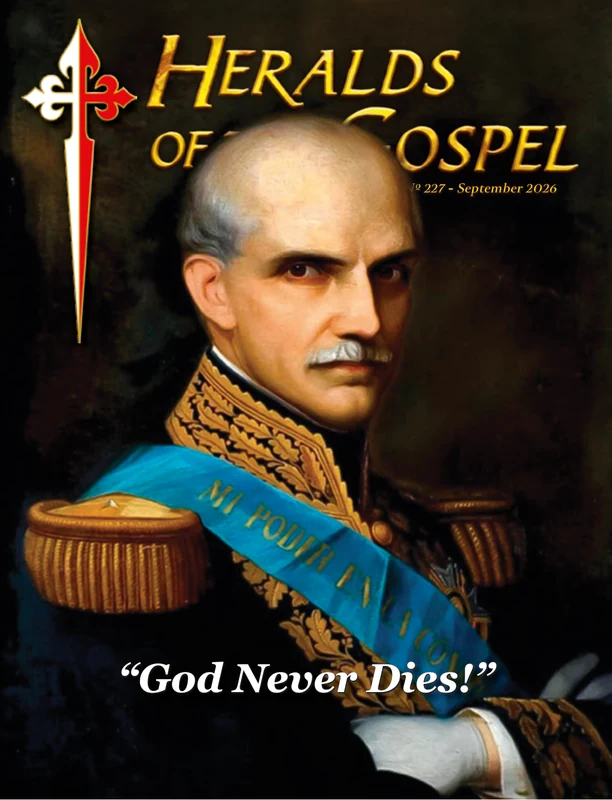
 Heralds of the Gospel Magazine, Vol. 20, nº 227, September 2026
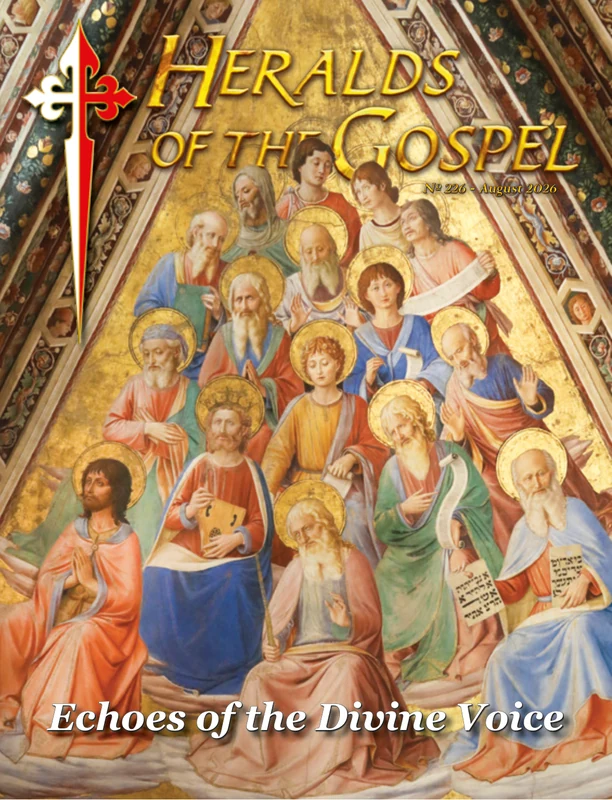 Heralds of the Gospel Magazine, Vol. 20, nº 226, August 2026
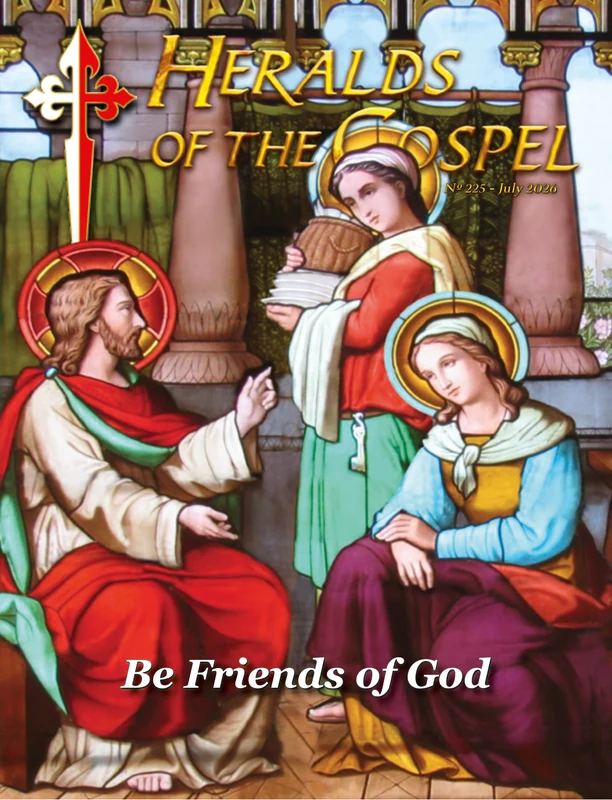 Heralds of the Gospel Magazine, Vol. 20, nº 225, July 2026
 Who are the Heralds of the Gospel?
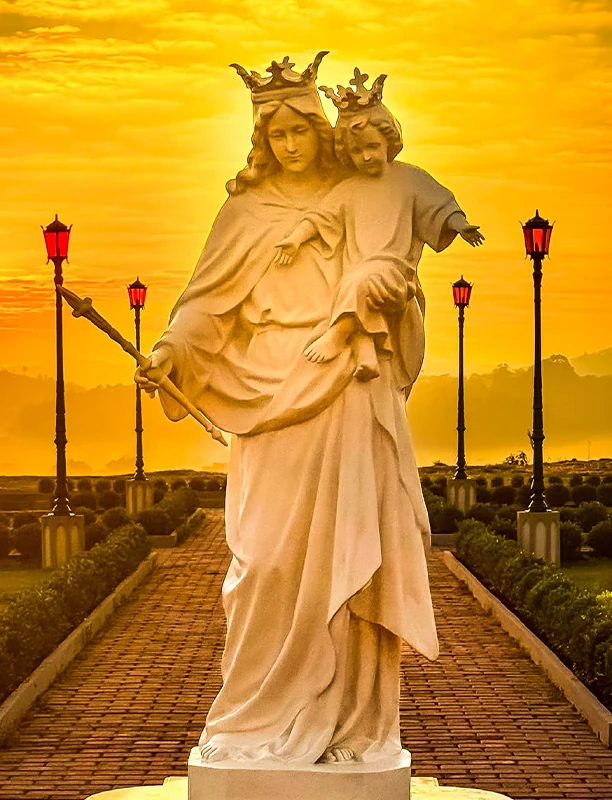 Help of Christians
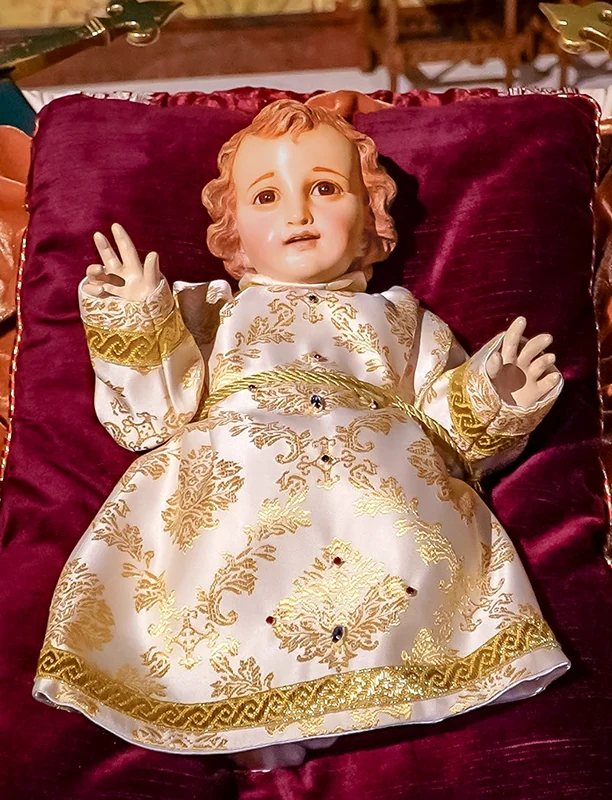 Christmas Carols






Today, anyone who wants to own a Bible can buy one for an often negligible sum. They come large and small, illustrated, bilingual… in short, there is a Bible for every taste. But if, while leafing through its pages, we go back to its Author and to His “scribes”, who worked since ancient times to transmit the wonders of the Lord to posterity, we will realize how many difficulties had to be overcome for the numerous copies we have today to have taken their current configuration. Indeed, a quick overview of this book’s marvellous history will certainly make us look at its pages in a different light.Learning the journey of the Sacred Scriptures, the Book whose author is God Himself, makes us look at its pages in a different light
From “rule” to “rule of life”
In order to understand this intricate story, our readers will need to familiarize themselves with some specialized terms throughout the article. The first of these is canon, because the books of the Bible are catalogued in the so-called canon of Sacred Scripture. The word has Semitic roots, although we inherited it from the Greeks: κανον, kanōn came from the Hebrew word qaneh, which in time immemorial designated a reed used for measuring, as mentioned by the prophet Ezekiel (cf. Ez 40:3-5), but which, in a derivative sense, was applied to everything that was measured or regulated. Ancient Greek grammarians designated as κανον collections of classical works that could serve as literary models, and in profane Greek the term also acquired the meaning of norm or moral rule, with some even applying it metaphorically to those who set themselves as examples of conduct. At some point in history the Greek word was transliterated into Latin, giving rise to the word canon.1 In Sacred Scripture, the pioneer to use the term in the sense of a moral rule was probably St. Paul. The Apostle to the Gentiles employed it in his letters, writing, for example, to the Galatians: “Peace and mercy be upon all who walk by this rule, upon the Israel of God” (6:16). From then on, the Pauline epistles certainly became rules of life for Christians, but it would be centuries before they would become an official part of the biblical canon… But let us not get ahead of ourselves. We will now return to the Old Testament.The beginning of the divergence between Christians and Jews
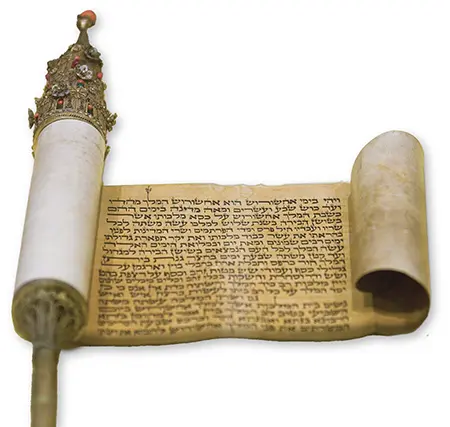
The pre-Messianic books, written at God’s command and compiled with admirable zeal by the Chosen People, constituted the first source of inspiration for the Christians of the communities born from Calvary.2 The Divine Master had given eminent proof of scriptural knowledge and His Apostles would continue to pray with the Psalms, meditating on the divine precepts entrusted to Moses and verifying the fulfilment of all the prophecies with the Pentateuch and other sacred works. All these books were accepted as the canon of the Old Testament since the middle of the first century. However, if the reader wants to compare our Old Testament with current Jewish scripture, he will find several differences… Why? The explanation lies between the end of the first century and the beginning of the second century of the Christian era. A great gulf already separated the old Synagogue from the nascent Catholic Church when, gathered in Jamnia, eminent rabbis, Pharisees and priests of the Jewish people defined which books they would accept as sacred and which they would not. In the end, of the numerous writings in circulation, they approved only twenty-three, and eliminated, among others, the Book of Sirach, Wisdom, Baruch, Judith, Tobit, the two Books of the Maccabees – the latter because their protagonists were not politically aligned with them – and the Greek passages of Esther and Daniel – since this language was considered pagan.3Several pre-Messianic books accepted in the Old Testament canon were excluded by the Jewish people between the 1st and 2nd centuries AD
The New Testament emerges
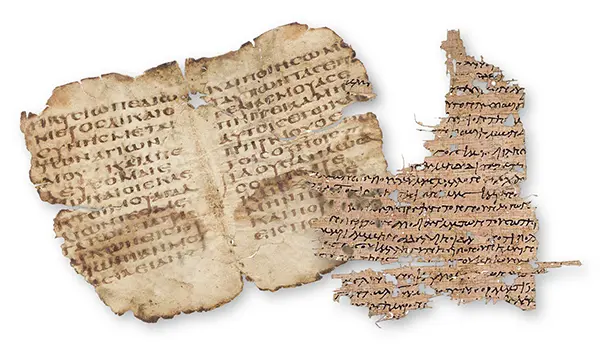
While this was happening, the canon of the New Testament was being born. The Gospels were written until the end of the first century, as were the Acts of the Apostles, Revelation and the Epistles of Peter, James, John, Paul and Jude. These missives, addressed to specific recipients but disseminated by the nascent communities in an organic way, were included into what we know today as the New Testament. However, do not think that the process was simple. There were heated discussions about the veracity of some writings, translations that rendered certain passages obscure, inexplicable mutilations, epistles that were lost forever and even falsified passages with the aim of diverting the faithful from the true faith or of further “embellishing” the story of the Divine Master and His Apostles – of itself already unsurpassable… As far as the brevity of this article allows, we will consider some of the details of this process.Disagreements among Christians
Over the centuries, controversies concerning the biblical canon have united and separated supporters of different theories, who have fought to prove their positions in a veritable “minefield” on which not even the saints have been exempt from error. The starting point for the disagreements was translation.4 While some – following the rabbinical school – accepted only the texts written in Hebrew or Aramaic, the majority of the communities defended the Version of the Seventy, written in Greek. The first group included illustrious names: St. Jerome, Origen and Rufinus. However, the champions of the Greek version were not far behind: among them were St. Augustine, St. Irenaeus and Tertullian. On neutral ground, but with some still very imprecise conceptions, there were some like St. Athanasius, St. Cyril of Jerusalem, St. Gregory Nazianzen and St. Epiphanius.To further cloud the picture, heretics and gnostics of all kinds also appeared on the scene, such as Marcion who, denying the divine origin of the Old Testament, accepted only the Gospel of St. Luke – full of erasures! – and some of St. Paul’s epistles. There was also Montanus who, claiming to be a “prophet” of the New Testament, tried to introduce his own “prophecies” into the biblical canon of the Bible.5 Crowning this uproar, apocryphal books – from the Greek word απόκρυφος, apokryphos, hidden – began to proliferate everywhere, a term which initially referred to “hidden writings” and was later also applied to various biblical texts which, presented as inspired, were in reality the work of forgers, some even pious, others often heretical. The multiplication of these compositions contributed greatly to spreading doubt among the faithful, who were unable to distinguish the false from the true.To define the biblical canon, it was necessary to face polemics and combat heretics, distinguishing revealed text from apocryphal writings
The Church’s wise intervention
For this delicate selection procedure, the Holy Church needed to discern the voice of the Lord in the writings of men. “Biblical inspiration is a supernatural action of God, at once discreet and profound, which fully respects the personality of the human authors – for God does not maim the man He Himself made – but elevates him above himself, since He is capable of doing so. Thus, the books arising from the activity of these authors are not just human, but divine; they do not only express a human thought, but God’s thought. And yet they are rooted in human nature: in them everything is man’s and everything is God’s.”6 In analysing the various texts, three criteria were used, which can be identified as external, internal and ecclesial.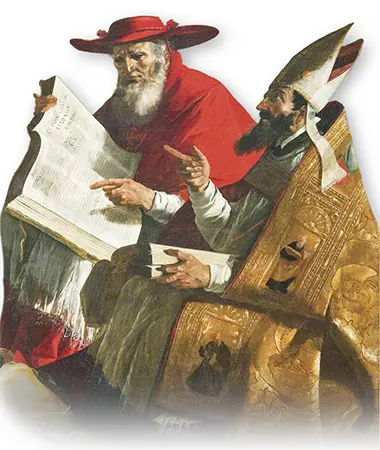
Thus it came down to us
It is amazing to think of how many controversies took place in the first centuries of Christianity! Thereafter, the Bible still had to face the whims of the Renaissance and the Reformation, the clashes against the adulterated translations of Luther, Zwingli and Calvin, the contentions of modern researchers, the revealing clarifications of science… in short, a veritable odyssey.In spite of everything, the decisions of Trent endured and were reiterated in various subsequent magisterial documents, such as the Dogmatic Constitution Dei Filius of the First Vatican Council, the Encyclical Providentissimus Deus of Leo XIII and the Dogmatic Constitution on Divine Revelation Dei Verbum of the Second Vatican Council, which brought the centuries of discussion to a close. This is how we received the treasure of Sacred Scripture, the apostolic legacy and bulwark of our Faith, the Book written by God to illuminate human history! ◊The Church as Teacher of the truth showed the way, and we thus received the treasure of Sacred Scripture, apostolic legacy and bulwark of our Faith
Notes
1 Cf. PAUL, André. La inspiración y el canon de las Escrituras. Navarra: Verbo Divino, 1985, p.45-47.
2 Since ancient times, the Jews separated their sacred writings into three groups: the Torah, meaning law, comprised the Pentateuch; the Nevi’im, prophets, brought together the prophetic books; and the Ketuvim, meaning writings, grouped together the rest of the works.
3 Despite this, reminiscences of these writings and references to them are found in the Jewish midrash.
4 Cf. ARTOLA, Antonio M.; CARO, José Manuel Sánchez. Biblia y Palabra de Dios. Navarra: Verbo Divino, 1989, p.90-100.
5 Cf. BARUCQ, A.; CAZELLES, H. Los libros inspirados. In: ROBERT, A.; FEUILLET, A. (Dir.). Introducción a la Biblia. 2.ed. Barcelona: Herder, 1967, v.I, p.69-70.
6 Idem, p.36.
7 SECOND VATICAN COUNCIL. Dei Verbum, n.9.
8 Cf. ARTOLA, op. cit., p.64.
9 Cf. DH 1501-1505.