 Heralds of the Gospel Magazine, Vol. 20, nº 227, September 2026
 Heralds of the Gospel Magazine, Vol. 20, nº 226, August 2026
 Heralds of the Gospel Magazine, Vol. 20, nº 225, July 2026
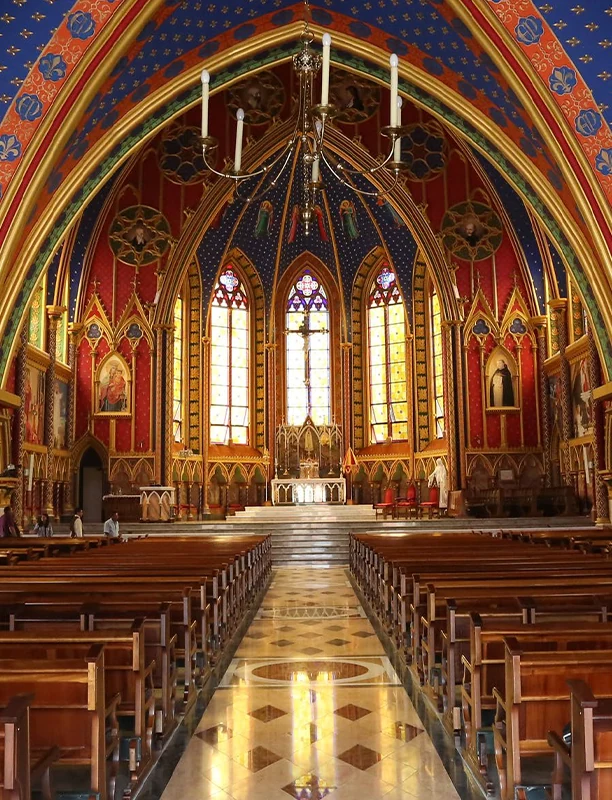 Who are the Heralds of the Gospel?
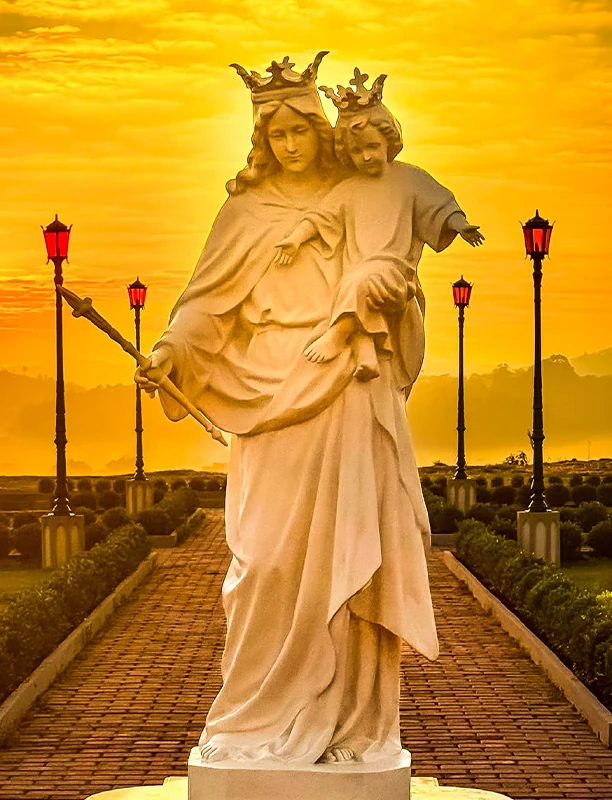 Help of Christians
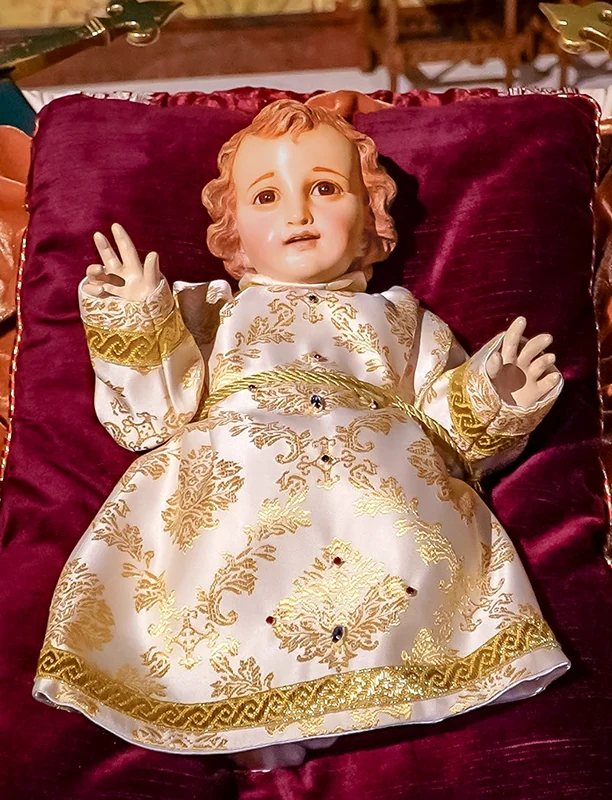 Christmas Carols







In a pagan world, some souls awaited a restoration
Despite the sin of Adam and Eve, there was a kind of patriarchal innocence of the first ages of humanity, the vestiges of which became increasingly rarer throughout history. And one or another person in varied places still reflected this primitive righteousness. These were a handful of isolated people who did not know each other, because they had no contact, and consequently did not form an ensemble, but were nostalgic for a past so distant that perhaps they did not have even a shred of knowledge about it. They looked at the state of humanity of their time, which displayed a terrible decadence, most evident where power and vigour was then greatest: in the Roman Empire. This was the quintessential, latest and maximum product of progress. However, it would not last long due to its depravity, and would soon meet the inglorious end of being trampled underfoot by the barbarians, whom the Romans despised and regarded as destined to be their slaves, but who would eventually subjugate them. This mighty empire ruled over a rotten world. And if it dominated with such ease, it was largely due to its remnants of soundness. Devouring the world, the empire swallowed the rottenness; upon swallowing its conquests, these then killed the conqueror. All the vices of the East flowed like torrents into Rome and overwhelmed it. Thus, transformed into a cesspool, a sewer, it in turn spread the same corruption with greater breadth and magnitude. However, certain souls oppressed by this situation felt that something was about to happen and understood that either the world would end or God’s Providence would intervene. The adversity and anguish of these souls reached its limits on Christmas Eve. An era was coming to an end, already in its death throes, although with the appearance of peace, and no one had any idea of what the solution might be. Yet on that Christmas Eve, so terribly oppressive for everyone, there was a spotlessly chaste couple in a grotto in Bethlehem; the Virgin Spouse was to be a Mother. In that grotto, while they prayed in deep recollection, the Child Jesus came to earth!Authentic adoration
The shepherds, who recalled the former righteousness, seeing the Angels singing and announcing to them the first news – “Glory to God in the highest; and on earth peace to men of good will” (Lk 2:14 Vulg.) – were overjoyed and went out in search of the Manger, bringing their simple gifts to the Child Jesus. It was the first magnificent act of adoration, which we might well call the act of adoration of tradition. They represented a tradition of pastoral rectitude. Leading a modest life, outside the rottenness of that civilization, the shepherds were the first to hear the proclamation of this great event: “Puer natus est nobis, et filius datus est nobis – For to us a Child is born, to us a Son is given” (Is 9:6). A little later, at the other end of the social scale, a caravan also arrived; it was another marvel. A star moved across the horizon and, from the depths of the putrid mysteries of the Orient, wise men, magi, wearing the royal crown, set out from their respective kingdoms. Let us imagine that, at a certain moment, these great monarchs met and revered one another. No doubt each one would have told the others where he came from, and the three would have rejoiced to see that they were united by the same conviction, the same hope and the call to traverse the same path. Finally, they arrived together at the grotto, carrying the three treasures of their respective countries: gold, frankincense and myrrh. And they rendered another adoration to the Child Jesus. It was no longer the tradition of the humblest, but of the loftiest. This is what is interesting about tradition: it is so all-embracing that it has its own way of residing in every social class. In the bourgeoisie it is manifested simply in stability; in the nobility, by continuity in glory; in the common people, through continuity in innocence. Now, these kings, the pinnacles of the nobility of their respective lands, brought with their royal dignity another high honour: that of being magi. They were wise men, they had studied in a spirit of wisdom and, at the moment they received the order “Go to Bethlehem and there your hopes will be fulfilled,” their spirits were prepared because of everything they knew about the past.Persecution soon breaks out
 “The Slaughter of the Innocents”, by Giotto di Bondone - Cappella degli Scrovegni, Padua (Italy)
The world agonizes yesterday and today
How similar our life is to that of the men who lived on the eve of “Puer natus est nobis, et filius datus est nobis”! The world today agonizes as it agonized on the eve of Our Lord’s birth. Everything is bewildering, madness and delirium. Everyone is seeking that which is increasingly slipping away from them, such as well-being, a comfortable life and vile pleasure – the thirty coins with which each one sells the Divine Master, who implores the defence and the enthusiasm of those whom He has redeemed. It is very probable in these conditions that some man on the vastness of the earth is lamenting as he watches the world fall apart; it is the debacle of Christendom, or, alas, the terrible crisis in the immortal Holy Church, founded and assisted by Our Lord Jesus Christ, in such great decline that, if we believed her to be mortal, we would be led to say that she is dead. I ask myself: will we not be visited by a tremendous event, perhaps one of the greatest in history – though infinitely small in comparison with Holy Christmas – which will also free us from all the horror in which we find ourselves?What to give and ask of the Child Jesus?
 “The announcement to the shepherds”, by Maître de Jacques de Besançon - National Library of Spain, Madrid
Taken, with adaptations, from: Dr. Plinio. São Paulo. Year XXIV. N.285 (Dec., 2021); p.8-10
Prayer Before the Nativity Scene
O Divine Infant, here kneeling before Thee is another son of the Church Militant, brought by the grace obtained by Thy divine and heavenly Mother. This combatant is here, above all, to thank Thee. Dr. Plinio in December of 1989
Prayer orally composed by Dr. Plinio on December 23, 1988 with slight adaptations for the written language