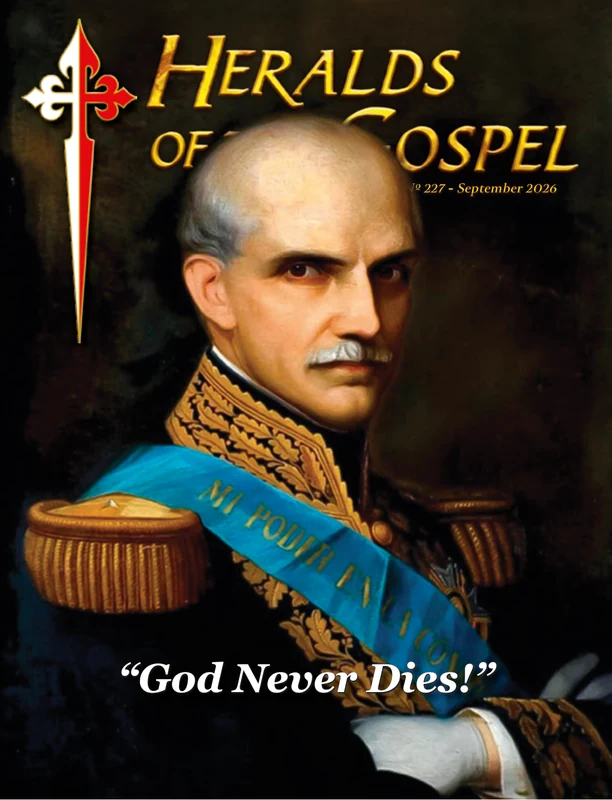
 Heralds of the Gospel Magazine, Vol. 20, nº 227, September 2026
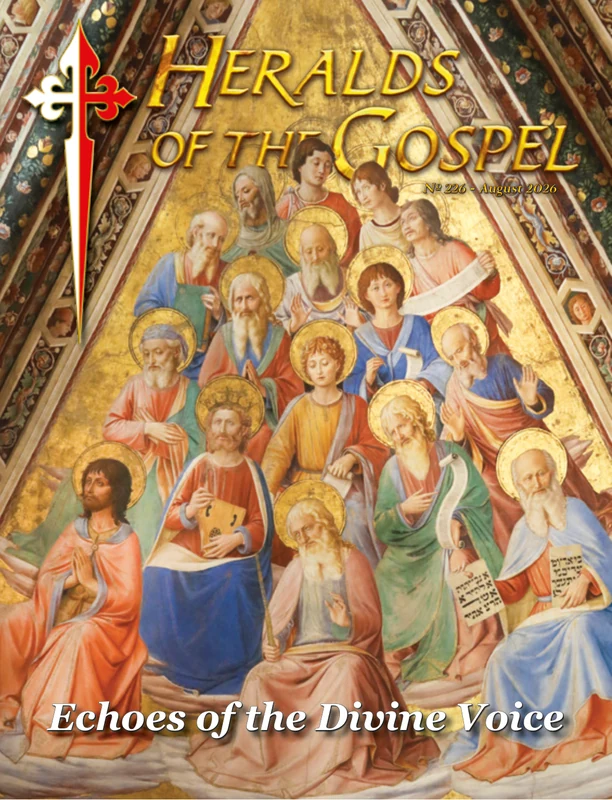 Heralds of the Gospel Magazine, Vol. 20, nº 226, August 2026
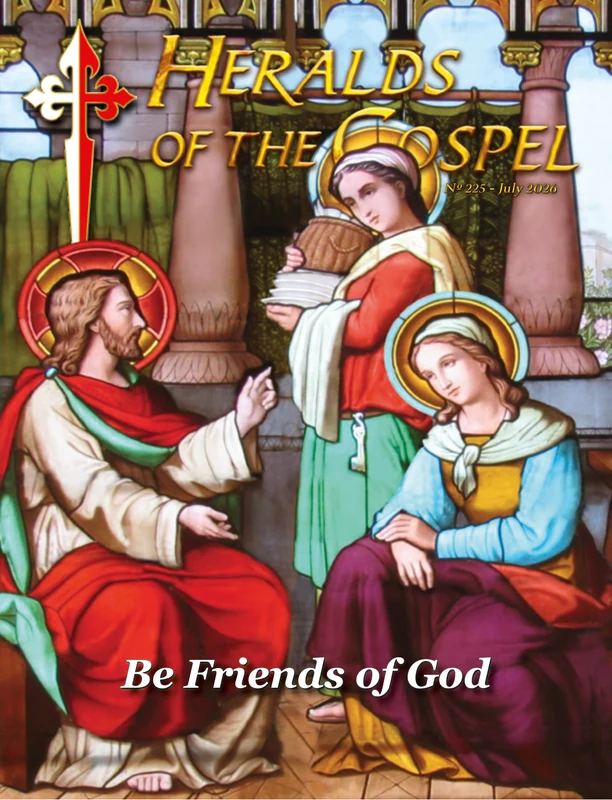 Heralds of the Gospel Magazine, Vol. 20, nº 225, July 2026
 Who are the Heralds of the Gospel?
 Help of Christians
 Christmas Carols








What little is known about the life of one of the greatest masters of Baroque painting in the Netherlands, Johannes Vermeer (1632-1675), seems to indicate that, despite being born into the predominantly Protestant culture of that region, he joined the Catholic Church, influenced by his wife and with the help of the Jesuits.
Scholars argue that this would explain why his fifteen children received Catholic Baptism, as well as why he had an “imaginary orthodox” style, employed in works such as The Allegory of Faith.
An enigmatic artist – dedicated almost exclusively to genre painting1 in the temporal sphere, with a costumbrista style – he managed to create a unique atmosphere in his works, with an air of religiosity that still intrigues laymen and experts alike.
We invite the reader to carefully analyse the painting presented here, known as Vrouw met Weegschaal, in the original Dutch, translated as Woman Holding a Balance, an unpretentious title that leaves the viewers free to draw their own conclusions.
In an exquisite demonstration that justifies Vermeer’s nickname of Master of Light, we contemplate a strong yet subtle chiaroscuro, reminiscent of Caravaggio but without excessive theatricality.
Giving space for light to diffuse through a golden veil, in an atmosphere of temporal serenity, the Dutch painter invites us to calmly delve into each aspect of the work.
This undoubtedly contradicts a modern sensibility accustomed to the successive consumption of frivolous and superficial images, often designed to foment imbalanced and unreflective desires that exacerbate the passions.
The use of complementary colours – which contemporary marketing so often abuses to create a visual impact – is appreciated in this work in the various shades of deep blue, in perfect harmony with the complement of ochres and Neapolitan yellows, discreet and harmonious, forming a cohesive and temperate whole, simply admirable.
The work has been classified by many as belonging to the pictorial genre known as vanitas, a theme almost forgotten today, which invites reflection on the futility of temporal goods, based on the famous verse from Ecclesiastes: “Vanitas vanitatum et omnia vanitas – Vanity of vanities! All is vanity” (1:2).
Transposing the principles of vanitas-type paintings – generally confined to the realm of bodegones, still life in English – to genre painting, the picture presents itself as an heir to earlier eras, in which the Last Things of man – death, judgement, hell and Paradise – were often depicted, bringing to light the immortality of the soul and its final destiny.
It was not uncommon to find, in these cases, kings and bishops among the condemned, highlighting that, regardless of social status, no one escapes divine justice.
The figure of the young lady holding a balance is an allusion to judgement. On the table, objects of pecuniary value are observed: pearls, precious metals and coins. In front of her is a mirror, which could represent the banal invitation to vain self-contemplation.
It is noteworthy that, on the small plates of the weighing device – placed in dynamic asymmetry – nothing is visible, which could point to the search for spiritual goods.
A theory confirmed by the pensive and serene expression on the face of this distinguished-looking “judge” whose slender, calm hands exude humility and integrity in their gesture.
With her modesty of dress, she enjoys peace of mind, preferring eternal values to the temporal ones laid out on the table; inner self-knowledge to the delight in her ephemeral beauty reflected in the mirror.
In the background, hanging on the wall, is a painting of the Last Judgement, which reaffirms the artist’s intention to make the viewer understand that ordinary life is projected into eternity, and that we are weighed and measured in every act of our daily lives.
Like this lady, we too are protagonists of a “masterpiece” called History, marked by the continual clash of good and evil, armies whose contenders will end, before the Divine Judge, as victors on the right or as vanquished on the left.
In an almost mystical way, critics like John Michael Montías believe they even see in this woman – who seems about to give birth – an allegory of the Blessed Virgin Mary herself, who symbolically, in a media dimension, weighs souls to present them to God, gestating them in herself for salvation.
Whatever the interpretation, the fact remains that the careful contemplation of a work of art of this stature and depth introduces us to a meditative state, compelling us to step back from the modern maelstrom that so often places greater value on the abstract and the chaotic, to the detriment of the allegorical and the luminous.
By helping us to enter more deeply into the perspective that links the everyday with the eternal, the mundane with the religious, the painting offers us a thoughtful, serene and magnificent view of life.