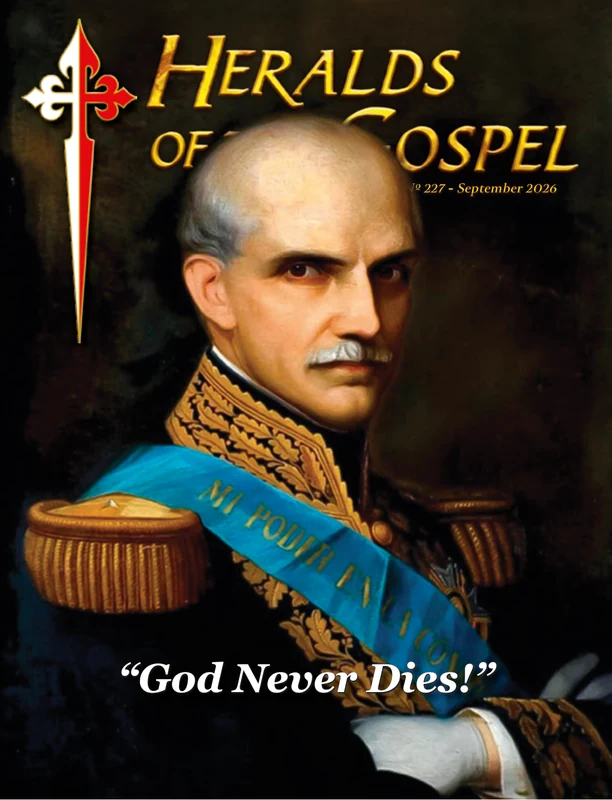
 Heralds of the Gospel Magazine, Vol. 20, nº 227, September 2026
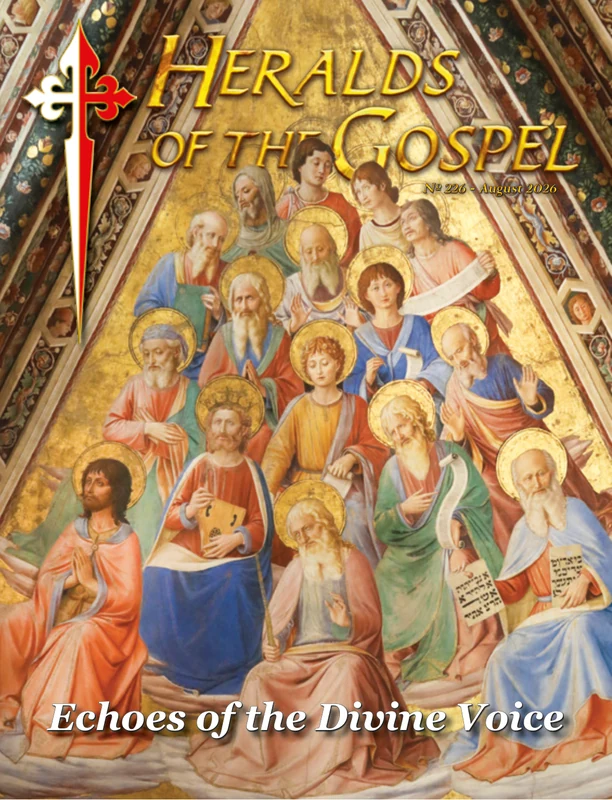 Heralds of the Gospel Magazine, Vol. 20, nº 226, August 2026
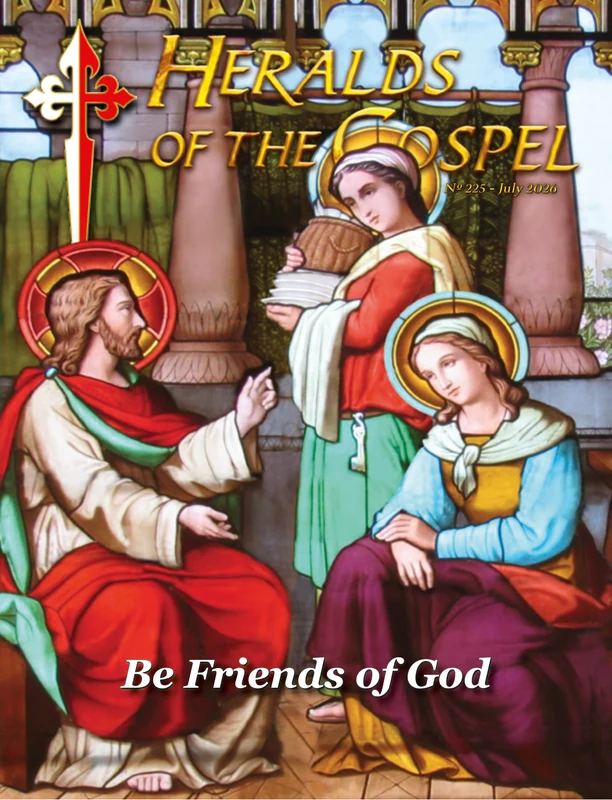 Heralds of the Gospel Magazine, Vol. 20, nº 225, July 2026
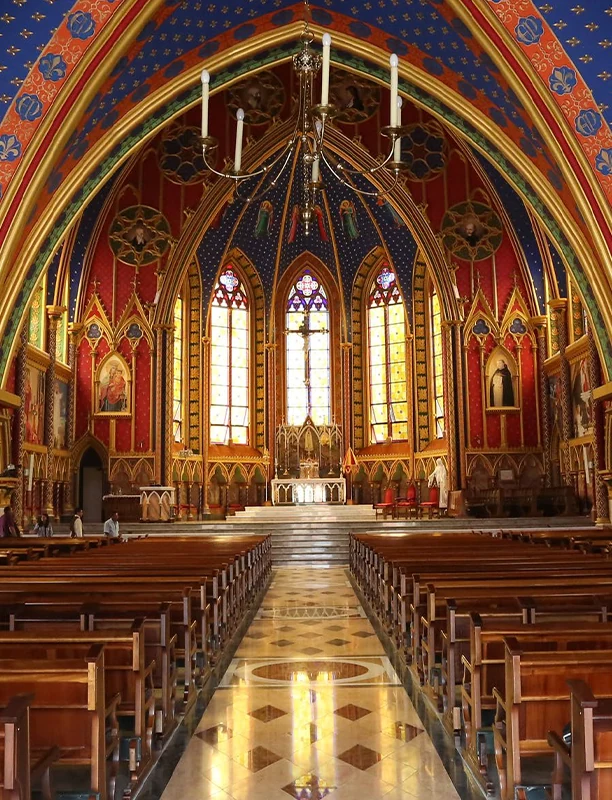 Who are the Heralds of the Gospel?
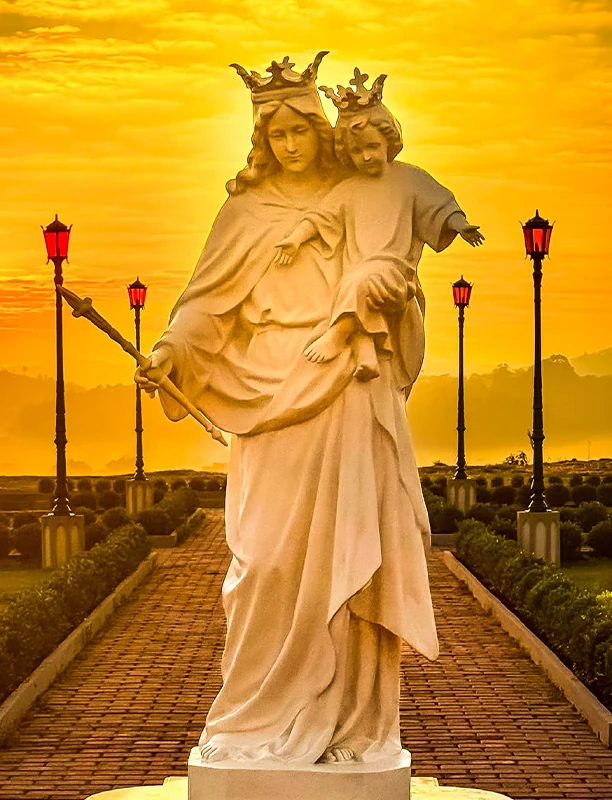 Help of Christians
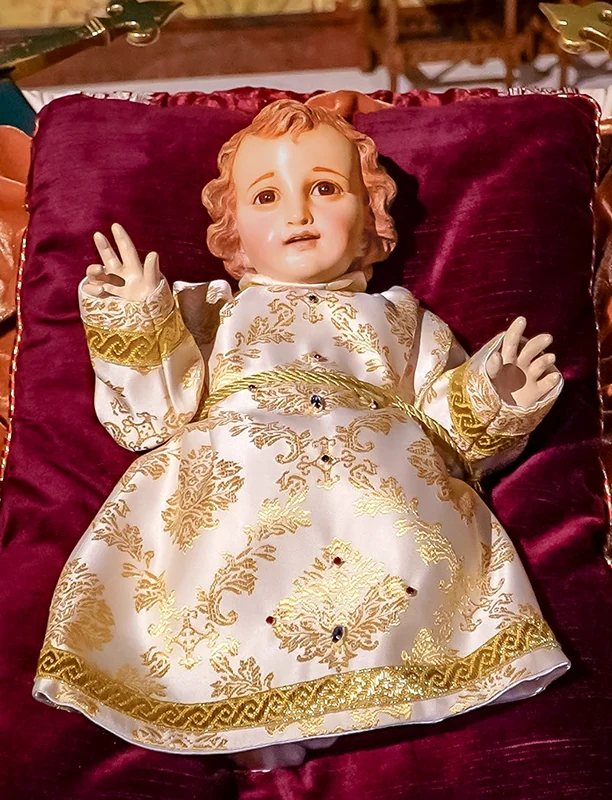 Christmas Carols







The greatest test of the elect: to wait patiently
If we peruse the pages of Holy Scripture, we will see how the most important events of humanity took place after an enormous wait. God makes His chosen ones wait. And the great trial is to learn that His time is neither slow nor swift, but perfect: “In Thy sight, a thousand years are but as yesterday, that has come and gone, or as one of the night-watches” (Ps 90:4). How we suffer with God’s delays! Yet they bring a promise of victory: “Wait for Him; at the end of it, thy life shall blossom anew.” Therefore, “Victory is given to one who suffers with patience. Patience here is not indolence, but that strong virtue by which one endures the pain of the wait. Woe to the man whom the wait does not hurt! Woe to the man who cannot bear the pain of the wait! This is patience,”1 states Dr. Plinio Corrêa de Oliveira, commenting on the passage in question. The remembrance of the longest waits, considered after many years, carries with it the contentment of unreserved surrender into God’s hands, made both in the midst of consolations and under the weight of sorrow borne patiently. And it brings forth the fragrance of confidence, which is the wake left by hope strengthened by faith. “Consider it all joy, my brothers, when you encounter various trials, for you know that the testing of your faith produces perseverance. And let perseverance be perfect, so that you may be perfect and complete, lacking in nothing” (Jas 1:2-4).God walks with His chosen ones
 The building of Noah’s Arc - Escorial Museum (Spain)
 Noah after the flood - Church of San Domingo de Silos, Cordoba (Spain)
Paradigm from the Old Testament
 God appears to Abraham at Sechem - Museum Catharijneconvent, Utrecht (Netherlands)
 The sacrifice of Isaac - San Telmo Museum, San Sebastian (Spain)
The promise of promises
We could continue considering other Old Testament characters such as Moses, for example, who was given the assurance of the Promised Land and who spent forty years in the desert because of the people’s lack of patience in waiting with faith for the fulfilment of God’s word. However, for the sake of brevity, let us reflect on the promise of promises, made by God to our first parents while still in Paradise, before sending them to this land of exile: the Redemption, foretold in the Protoevangelium (cf. Gn 3:15), whose fulfilment marked the beginning of the New Testament. “In many and various ways God spoke of old to our fathers by the prophets” (Heb 1:1), and not a few were the signs and oracles given about the coming of the Saviour. Among them, those of Isaiah, the most messianic of the divine heralds, stand out: “In that day the root of Jesse shall stand as an ensign to the peoples; him shall the nations seek” (Is 11:10). However, “all the predictions were put to the test by Heaven, in order to ascertain whether the people of the covenant would be worthy to see their fulfilment.”3 God would demand from His chosen ones a wait of many centuries… Behold, “a Virgin shall conceive, and bear a son, and His name shall be called Emmanuel” (Is 7:14). Knowing these promises, Mary Most Holy awaited the Redeemer full of faith, and formed in her heart His divine figure, desiring to be the handmaid of Her who would be His Mother. She did not imagine, however, that She herself would be the Virgin of Isaiah. “And the Word became flesh and dwelt among us” (Jn 1:14). Later, after Our Lord’s Passion, the crowning moment of the Redemption, her unflagging faith in the Resurrection gathered the Apostles and disciples once again in the Upper Room, encouraging them to believe despite the apparent contradiction and denial of the facts. Their hope was not disappointed: “The great battle of the Blessed Virgin lay in keeping the flame of the Resurrection alight in those poor souls. Without her intercession, none of them have continued to believe, despite the repeated promises of the Divine Master.”4 Together with Her in the Upper Room (cf. Acts 1:14), the Apostles received the promised Holy Spirit and began to spread the Good News, carrying out the Saviour’s command: “Go into all the world and preach the Gospel to the whole creation” (Mk 16:15). The epopee of the Holy Catholic Church had begun.Hope for the 21st century
Today, after twenty-one centuries of the Church’s life, do we still have promises in which to hope, living against a backdrop of pandemic, war and uncertainty? We have prayed for two thousand years: “Thy Kingdom come, Thy will be done on earth as it is in Heaven” (Mt 6:10). Can we hope for the fulfilment, in our troubled historical times, of this prayer taught by Our Lord? Now more than ever is the time to believe and hope! At the beginning of the last century, God sent His own Mother to Fatima, Portugal, to warn humanity about the contemporary evils. “Our Lady at one and the same time explains the reasons for the crisis and indicates its remedy, prophesying catastrophe if men do not hear Her. From every point of view, by the nature of their content and by the dignity of the One who made them, the revelations of Fatima therefore surpass everything that Providence has said to men on the threshold of the great upheavals of history.”5 Statue of the Immaculate Heart of Mary belonging to the Heralds of the Gospel
Notes
1 CORRÊA DE OLIVEIRA, Plinio. Ai do homem a quem a espera não dói; ai do homem que não aguenta a dor da espera! [Woe to the man whom the wait does not hurt! Woe to the man who cannot bear the pain of the wait!] In: Dr. Plinio. São Paulo. Year XV. N.172 (July, 2012); p.32.
2 ST. LEO THE GREAT. Sobre la Epifanía de Nuestro Señor Jesucristo. Homilía III, n.2; 5. In: Homilias sobre el Año Litúrgico. Madrid: BAC, 1969, p.130; 132-133.
3 CLÁ DIAS, EP, João Scognamiglio. Maria Santíssima! O Paraíso de Deus revelado aos homens [Mary Most Holy! God’s Paradise Revealed to Men]. São Paulo: Arautos do Evangelho, 2020, v.II, p.218.
4 Idem, p.510.
5 CORRÊA DE OLIVEIRA, Plinio. Fátima: explicação e remédio da crise contemporânea [Fatima: Explanation and Remedy for the Contemporary Crisis]. In: Catolicismo. Campos dos Goytacazes. Year III. N.29 (May, 1953); p.2.
6 ST. LOUIS-MARIE GRIGNION DE MONTFORT. Traité de la vraie dévotion à la Sainte Vierge, n.217. In: Œuvres Complètes. Paris: Du Seuil, 1966, p.634-635.
7 CORRÊA DE OLIVEIRA, Plinio. Conference. São Paulo, 7/10/1975.