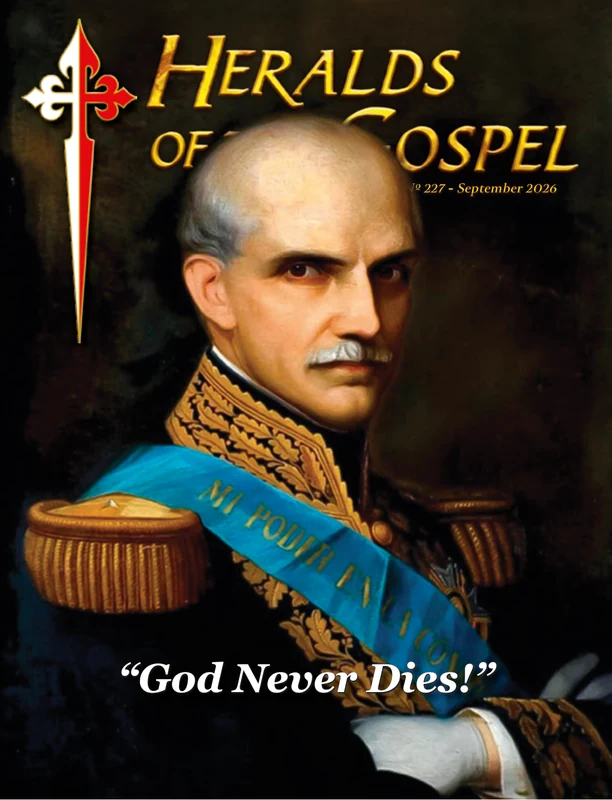
 Heralds of the Gospel Magazine, Vol. 20, nº 227, September 2026
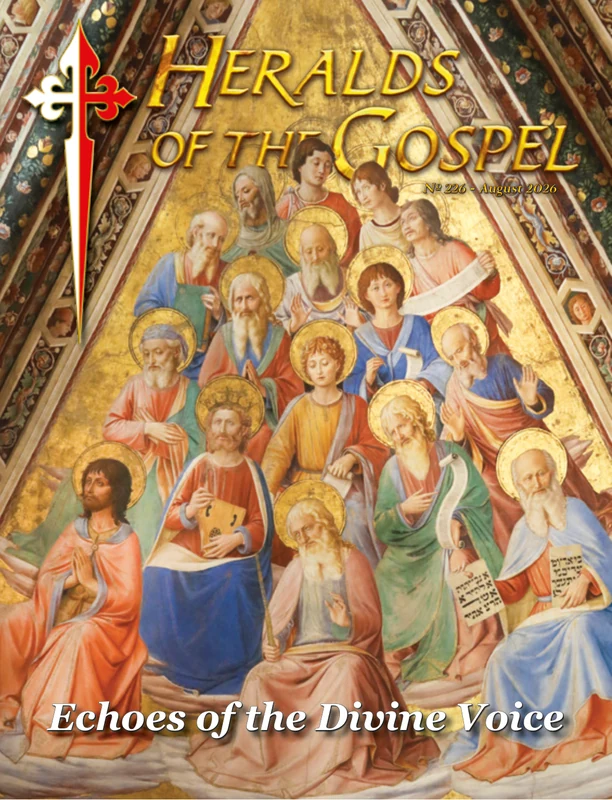 Heralds of the Gospel Magazine, Vol. 20, nº 226, August 2026
 Heralds of the Gospel Magazine, Vol. 20, nº 225, July 2026
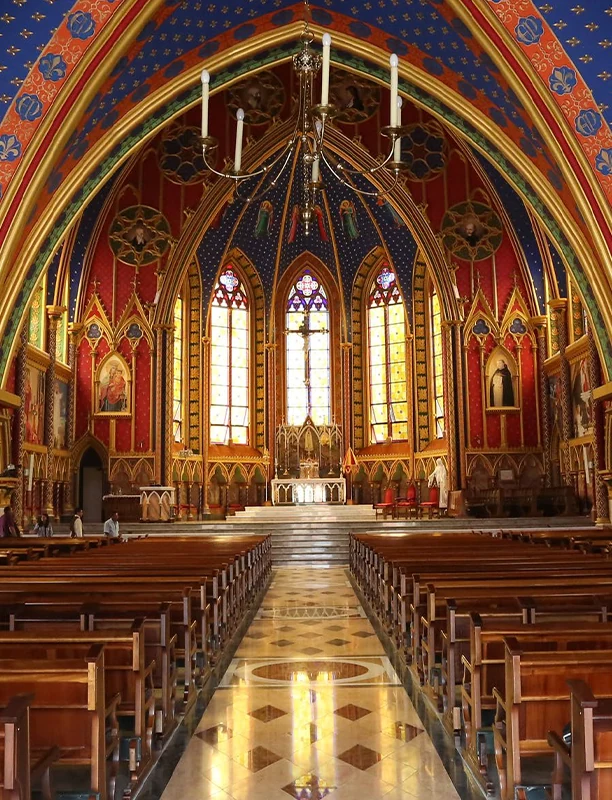 Who are the Heralds of the Gospel?
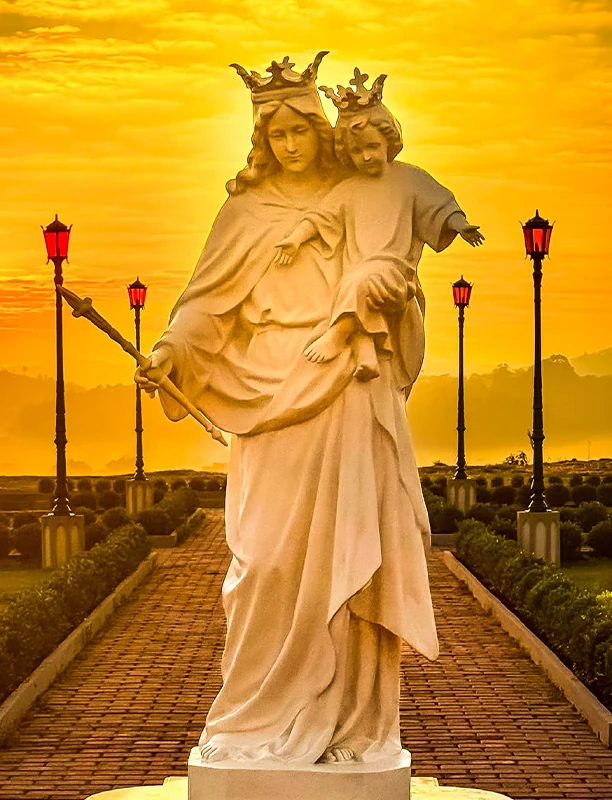 Help of Christians
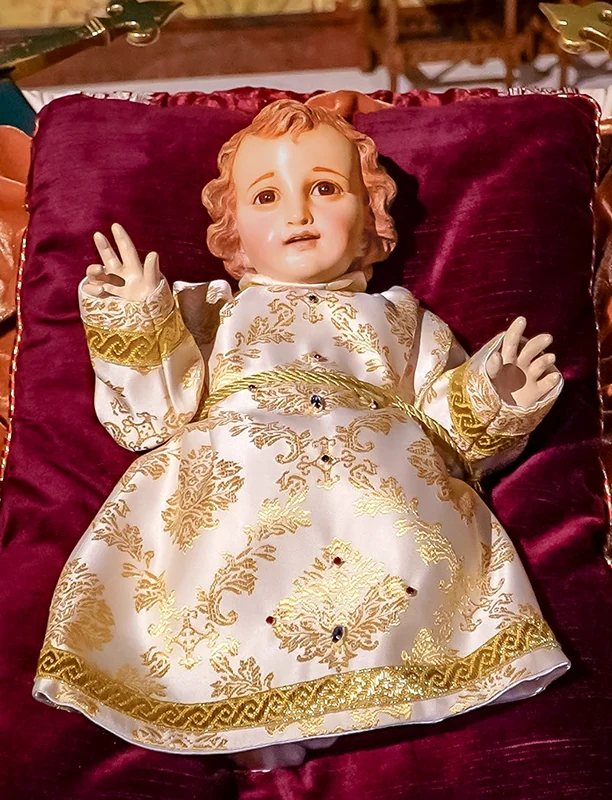 Christmas Carols








Modelled by the hands of a priest
Friar Agostinho de Jesus was one of these artists. Born in Rio de Janeiro around 1600, he joined the Order of St. Benedict and made his religious profession in the monastery of São Salvador in Bahia. There he lived with the man who would become his master, the Portuguese monk Agostinho da Piedade, an expert in the art of terracotta sculpture. After his ordination in Portugal in 1634, he returned to Brazil and spent some time in Salvador and other Benedictine monasteries, such as Santana de Parnaíba in São Paulo. He died in the capital of Rio de Janeiro in 1661. The obituary of the monastery of São Bento in Rio de Janeiro tells us the following about the religious from Rio: “In order to be ordained a priest, he went to the Kingdom, and when he returned to this monastery, he occupied himself with painting and making clay statues, for which he had special grace and skill.”1 According to authoritative experts, he may well have been the author of the image that would become famous under the invocation of Our Lady of Aparecida. The Virgin’s features, her stature, her adornments – including a characteristic diadem of three pearls on her forehead – the folds in her cloak, the absence of any signature on the image… All these peculiarities are characteristic features of Friar Agostinho’s works, some of which are today on display at the Museum of Sacred Art in São Paulo, in the Luz Convent. So how did one of the thousands of baroque statues of the Immaculate Conception become the Patroness of Brazil? It all started with a providential incident. Historians have come up with various hypotheses about how the image first came to be in the waters of the Paraíba River. What is certain, however, is that its finding was instigated by Mary Most Holy, in order to intensify her protection over the Land of the Holy Cross.“As the Count of Assumar passed through this town…”
On December 22, 1716, Dom Pedro de Almeida Portugal, known as the Count of Assumar, was appointed governor general of the Captaincies of São Paulo and Minas de Ouro,2 which had been united since 1709. He took office the following year in the city of São Paulo. From there, on September 27, he set off on a historic journey to the Minas region, his route taking him through the small town of Guaratinguetá. “As [the Count of Assumar] passed through this town […], the fishermen were notified by the town council to present any fish they might have to the said governor.”3 Thus began the story of the Lady’s apparition, as it was reported by Fr. João de Morais e Aguiar forty years after its occurrence. It was the second fortnight of October in 1717 when, following the general summons, three fishermen, Domingos Martins Garcia, João Alves and Filipe Pedroso, set out to fish in the Paraíba River.“Aparecida” in the Paraíba River
However, there were no fish to be found in the river… They had covered a considerable distance and their nets were still empty. They seemed bound to end their expedition with the complete failure of catching nothing for the governor and his entourage. When they reached the port of Itaguaçu, six kilometres from where they had set off, one of them, João Alves, made one last attempt in the murky waters of the river. This time he felt he had caught something…
View of the Basilica of Aparecida from the Port of Itaguaçu, the place where the miraculous image was found - Aparecida (SP)
Beginning of the miracles and the spread of the cult
One Saturday evening, as the whole neighbourhood was praying and singing in the oratory, the two candles flanking the image suddenly went out, without any wind blowing. And before anyone present could take action, the candles were relit! On yet another occasion, the flames were unusually tremulous for no plausible reason. Certainly today’s sceptics, faced with such phenomena, would be quick to look for natural explanations, ruling out a priori any miraculous cause. However, this was not the case for those simple people of strong faith. News of these and many other signs spread with impressive speed. The position of the modest little chapel, situated on the side of a road along which caravans frequently travelled, helped to expand the cult of the Virgin Aparecida, which, in just a few years, spread to the regions of the current states of São Paulo, Minas Gerais, Paraná and even to some locations in the centre-west and south of the country. A missive dated January 15, 1750, addressed to the General Curia of the Society of Jesus in Rome, gives an account of the mission preached by two Jesuits in various places in the province of São Paulo in 1748 and 1749. Written in Latin, the document tells us of the image’s already growing fame “owing to the many miracles performed,” adding that “many flock from distant places, imploring help for their own needs,”5 and this only thirty years after the miraculous catch! And at the end of the 19th century, the Redemptorist missionary Fr. Valentim von Riedl described devotion to the Virgin of Aparecida as follows: “Our Lady dominates the whole region as truly its Lady. […] In their love for the Mother of God, the Brazilian people have yet to find another to equal it. It is not without reason that Our Lady is so loved and invoked; this love and devotion has been their protection against infidelity, and has become the golden lode of their perseverance in the Catholic Faith. Without this devotion, the people would have fallen into complete religious indifference.”6Stories that could fill hundreds of books
Over time, an unbroken chain of miracles was established around the venerated little image that continues to this day. We only have to look at the impressive number of ex-votos offered to the National Shrine of Aparecida: gratitude for unexplained cures and restorations in cases of illness and accidents, solutions to financial or family problems…
Illustrious pilgrims and pontifical titles
From the small chapel in Itaguaçu, the miraculous statue moved on to its first church, in Morro dos Coqueiros, located today in the municipality of Aparecida, but which at the time was still part of Guaratinguetá. Built under the supervision of parish priest José Alves Vilella and inaugurated on July 26, 1745, the church became known as the “chapel”. There, on August 20, 1822, the future emperor of Brazil, Dom Pedro I, prayed before the image, asking for success in the enterprise he was to carry out a few days later, on a date that would become historic.7 In the same place, Our Lady of Aparecida was visited by Dom Pedro II and, a few years later, by Princess Isabel and the Count d’Eu. It was then that the princess commissioned the making of the precious gold crown set with forty diamonds, which adorns the head of the Patroness to this day.
VView of Guaratinguetá in 1835, by José Canela Filho - Paulista Museum, São Paulo; the former chapel dedicated to the Virgin of Aparecida can be seen at the right. Inset, the chains of the slave Zechariah, which are displayed in the museum of the Old Basilica
Victim of a brutal attack
On the afternoon of May 16, 1978, a strong gale blew over the Paraíba valley, covering it with a thick cloud of dust. However, the gloomy darkness that dominated the capital of the Faith was only the harbinger of a tragedy that was yet to come. The last Mass of the day at the Aparecida Shrine began at eight o’clock in the evening. At a certain point, the power went out throughout the valley, leaving the sacred precinct in darkness, interrupted only by the flickering of the altar candles. At that moment, a man, who until then had been huddled in front of the image’s altar, attacked the niche. With three blows, he broke through the protective glass, seized the image and fled with bloodied hands. Meanwhile, the crown donated by Princess Isabel fell onto the altar and was damaged. There was a general uproar. One of the basilica guards caught up with the offender, who dropped the statue. Falling to the ground, it shattered into hundreds of pieces. The event shook Catholic Brazil. The small terracotta image, a symbol of Mary’s protection for the whole country, had been the victim of a brutal attack! The management of the shrine, which had long been entrusted to the Redemptorist brothers, initially considered entrusting the restoration to the Vatican Museums. However, it soon came to light that the São Paulo Art Museum had specialized professionals who would be able to take on the immense challenge of restoring the image of their national Patroness. Years later, the museum’s director, Mr. Pietro Bardi, confided that he had only accepted this delicate mission under inspiration from Our Lady, as the state of the image was appalling. The restoration began on June 29 of the same year, in the hands of Maria Helena Chartuni, and was successfully completed on July 21. On August 19, amidst festivities, the Queen returned to her “fiefdom”, followed all the way from São Paulo to Aparecida by a long procession of faithful. Years later, Our Lady was definitively transferred to the National Shrine, the largest in the world dedicated to Mary, known today as the New Basilica. Pope John Paul II consecrated the shrine on July 4, 1980, when he granted it the title of minor basilica.
Pilgrimage of the Shrine Apostolate to the Shrine of Aparecida, in August of 2018
May She reign over all the earth!
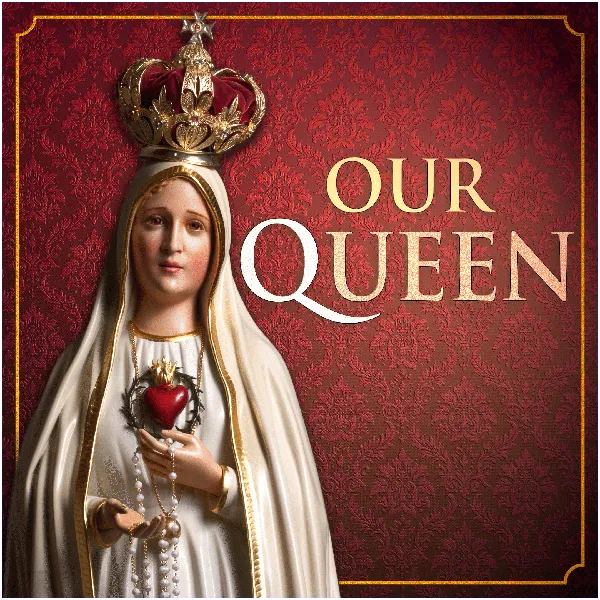
Commenting on the crowning of Our Lady of Aparecida as Queen of Brazil, Dr. Plinio Corrêa de Oliveira made this beautiful observation: “In this act we should see a foreshadowing of the Reign of Mary. From the moment Our Lady was acclaimed Queen of Brazil by determination of the Supreme Pontiff, the Reign of Mary was legally declared in the country. For heavenly and earthly purposes, Our Lady has even greater rights over Brazil than She would have if She were a temporal queen.”8 As subjects of such a sublime Sovereign, let us pray and fight enthusiastically for her reign to extend over the whole earth. May She soon receive the greatest glory, and may there be no heart that does not love her! ◊Notes
1 NIGRA, Clemente da Silva. Os dois escultores Frei Agostinho da Piedade e Frei Agostinho de Jesus, e o arquiteto Frei Macário de São João, apud BRUSTOLINI, CSsR, Júlio. História de Nossa Senhora da Conceição Aparecida. A imagem, o santuário e as romarias. 12.ed. Aparecida: Santuário, 2004, p.22.
2 Future State of Minas Gerais.
3 BRUSTOLINI, op. cit., p.44.
4 Idem, ibidem.
5 ARCHIVUM GENERALIS SOCIETATIS IESU. Bras. 10/II, 429-430, apud BRUSTOLINI, op. cit., p.47-48.
6 VON RIEDL, CSSR, Valentim. Carta 221, apud BRUSTOLINI, op. cit., p.78.
7 On September 7, he would shout “Independence or death!” on the banks of the Ipiranga River, proclaiming Brazil an independent nation.
8 CORRÊA DE OLIVEIRA, Plinio. Conference. São Paulo, 5/10/1964.