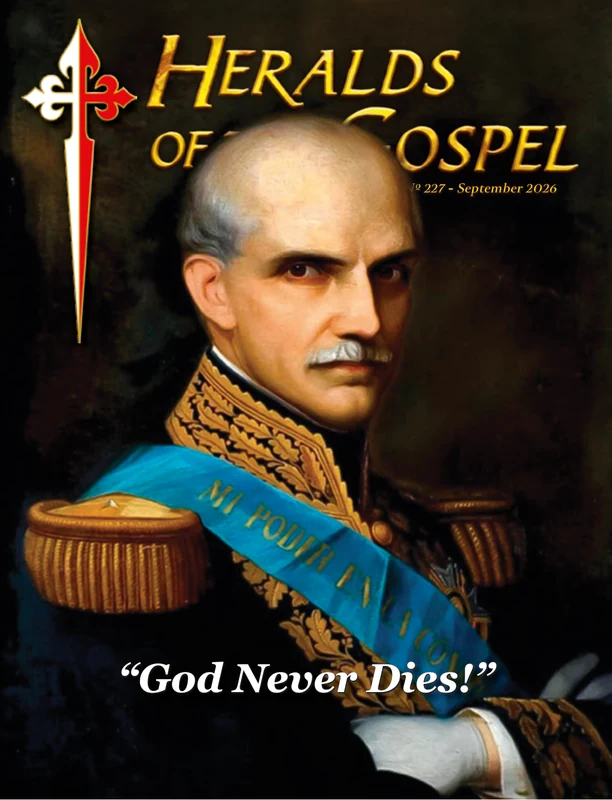
 Heralds of the Gospel Magazine, Vol. 20, nº 227, September 2026
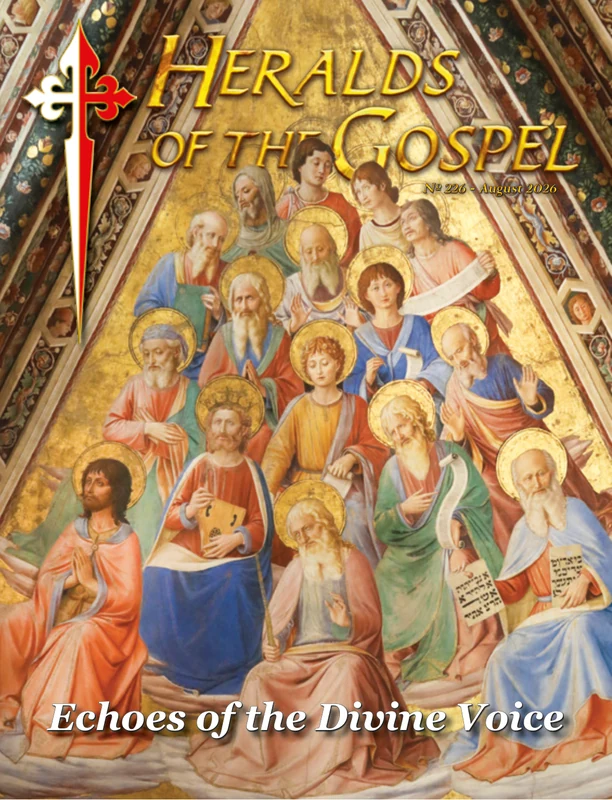 Heralds of the Gospel Magazine, Vol. 20, nº 226, August 2026
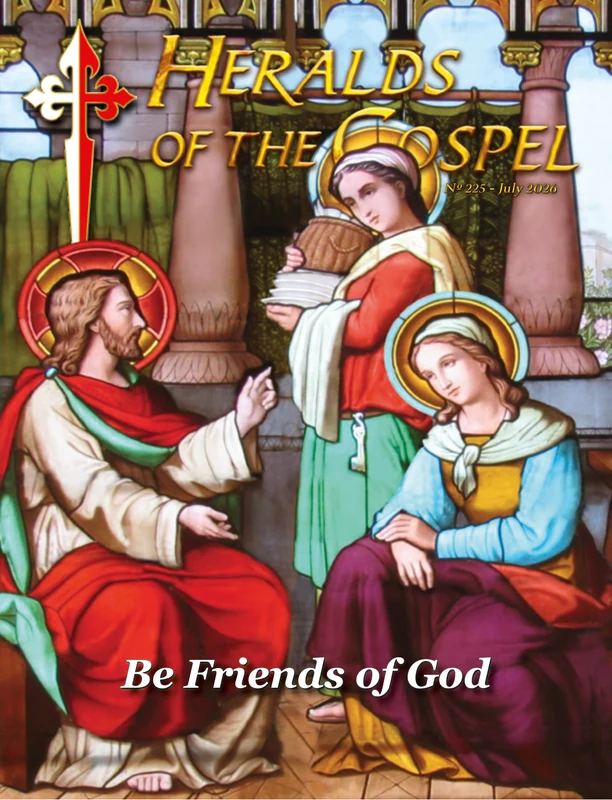 Heralds of the Gospel Magazine, Vol. 20, nº 225, July 2026
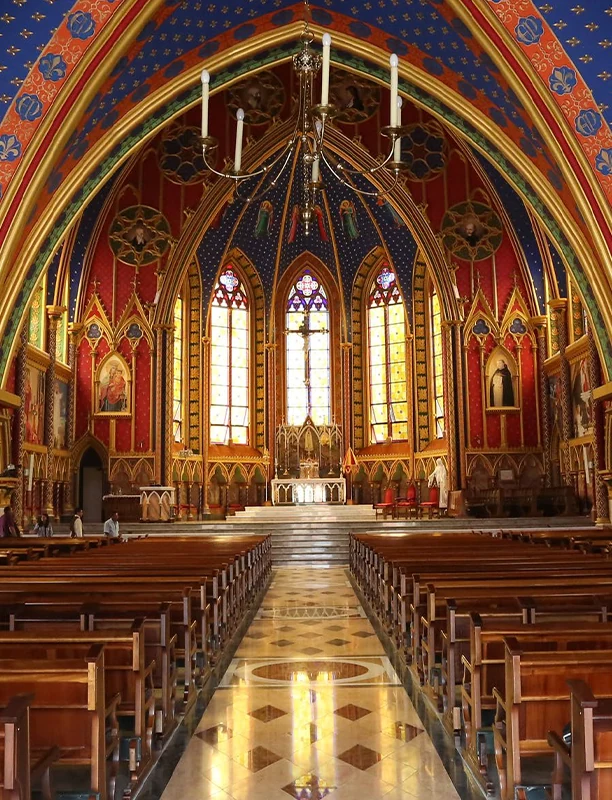 Who are the Heralds of the Gospel?
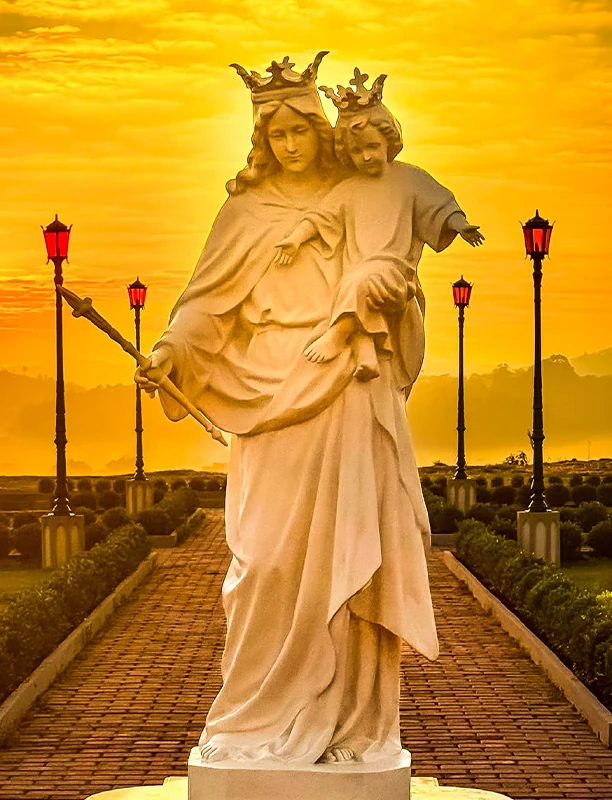 Help of Christians
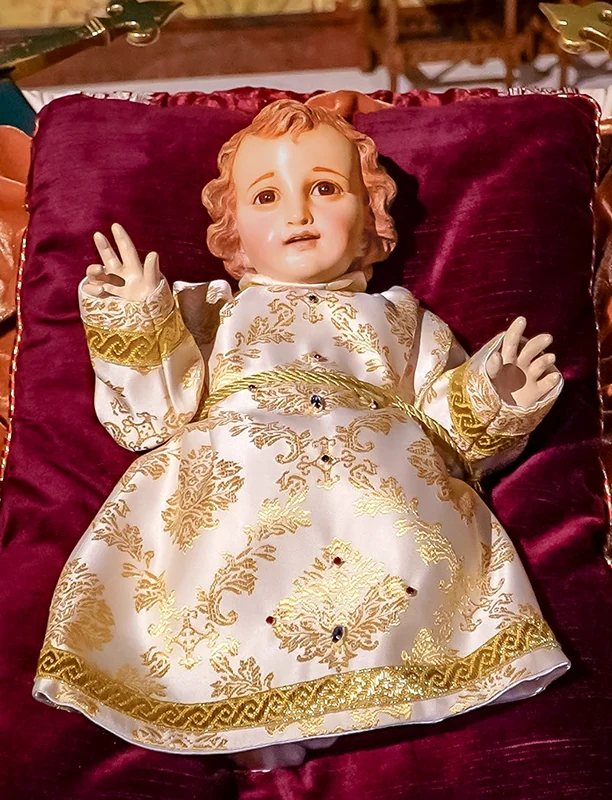 Christmas Carols







And yet, Providence demanded that both be shed by the members of a certain military corps called the Pontifical Zouaves…Providence demanded that the members of a certain military corps called the Pontifical Zouaves shed blood of both body and soul
Historical background
Giovanni Maria Mastai Ferretti was elected Pope on June 16, 1846, taking the name Pius IX. From the early years of his reign, he had to face serious revolutions originating from Italian patriotic movements, which attempted to undermine his rule over the Papal States. However, as the initial revolts were not fully successful, the conspirators decided to wait some time until tempers flared again, which took about ten years. Finally, Victor Emmanuel, King of Piedmont, began an operation of annexing the small states of the Italian Peninsula, which made him a real threat to the Papal States. At his service was Giuseppe Garibaldi, leader of the revolutionary soldiers – called “Redshirts” – who aimed to invade the Papal territories.The battalion is born
Perceiving the true gravity of the situation, and considering the lack of interest of the European powers in matters relating to the Church, Pius IX commissioned his Minister of Arms, Monsignor Mérode – a Belgian priest and former officer – to provide for the defence of the ecclesiastical domains. The latter then decided to summon General Louis de La Moricière, a famous hero of the colonial war in Africa, to be the general commander of the pontifical forces, among which stood out a new battalion of Franco-Belgian riflemen, known as the Papal Zouaves.1
Castelfidardo: the test of fidelity
As the first of the preparations, Becdelièvre urged everyone to confess and be ready to appear before God’s supreme tribunal. Once at peace with the Lord, and with the gates of either victory or Heaven open before them, the Zouaves leapt into battle. On September 18, 1860, General La Moricière headed for Ancona, near Castelfidardo, and engaged in open field battle against Garibaldi’s troops. Nevertheless, divine designs are often contrary to those of men: instead of granting these young soldiers a definitive triumph, Providence demanded something much more arduous: fidelity in the midst of opprobrium. Due to the numerical supremacy of the enemy army, they were defeated. Forced to take refuge in Loreto, the combatants gathered before an image of Our Lady in order to beseech the strength to face the sufferings in store. It is easy to imagine the generalized disappointment that this failure provoked in Catholic circles, increasing the disapproval of those who were against the formation of this military force. Despite all of this, in another sector of public opinion this sentiment was countered by a certain stirring, and even a surge of enthusiasm, as a result of which new recruits enlisted to increase the small papal army. Among them, it is worth noting the case of Queré, a young illiterate peasant from Brittany – of unprepossessing appearance and incomprehensible dialect – who presented himself in Paris to join the papal ranks. In addition to his inadequate “CV”, the young man had a foot deformation that made it unsuited for marching. Taking advantage of the fact that he had forgotten his papers, he was denied entry to the squadron. But the Breton was so determined that, despite having travelled on foot from his village to Paris, he returned home and came back once again to the capital, this time carrying the required documents. Faced with such a show of resolve, there was nothing to do but accept him. Another soldier, in a letter to his family, expressed the following thought: “To God and His Vicar I have neither fortune, nor nobility, nor talents or influence to offer; I have only my blood, and that I give.”2 But while the number of pontifical soldiers grew, reaching six hundred men in January 1861, Victor Emmanuel made his triumphal entry into Naples, the last stop on his way to papal lands.A fruitful period of inaction
Despite this, after the Battle of Castelfidardo there was a certain lull on both sides, which did not prevent many small clashes from taking place.For the Zouaves, this period was of great benefit in terms of both military and spiritual preparation, due to their proximity to Pius IX, to whom they swore an oath of allegiance in January 1861. During this time of inaction, two events deserve special attention. The first was the so-called September Convention: an accord signed in 1864 between Victor Emmanuel II and Napoleon III, which organized the withdrawal of French troops from Italian territory and ensured there would be no aggression against papal lands. The second, in the same month of the following year, was the death of La Moricière. With this loss, Pius IX had to give in to the urgent requests coming from all sides to relieve Monsignor Mérode of the role of Minister of Arms and transfer it to the German general Hermann Kanzler, who, as it happens, proved to be extremely effective.Under threat of invasion by Garibaldi’s troops, Pious IX charged his minister of arms to organize the defence of Church domains

“I am co-operating with the holiest of missions”
New strength could be felt in the beating of their hearts, which was well expressed in the words of Baron Onffroy: “We would like to see arise the magnificent movement that took place at the time of Godfrey of Bouillon and St. Louis the King, in favour of the worthy Successor of Peter, for the liberation of the Holy Places.”3 These were veritable crusade graces, which imparted to the soldiers a dynamism and courage that surpassed mere nature, as is clear from the letter of one of them to his family: “The idea that I am co-operating with the holiest of missions, that I am fulfilling God’s will, gives me a strength that is not natural.”4 Statements like these testify to the influence of grace in the souls of the combatants, in preparation for the new struggles to come.Mentana: the great victory
The year 1867 intensified the work of the papal squadron. As early as February, Garibaldi travelled through northern Italy gathering men to advance on the Eternal City. His anti-Catholic zeal was so evident that some of the faithful even considered him the antichrist.
On November 3, the two armies clashed in Mentana. Despite the disproportion in numbers, when the two flags met, the Zouaves advanced with such élan that, “in an instant, Garibaldi’s troops were overtaken, struck by bayonets, thrown to the ground and pursued, preventing them from regrouping.”5 Finally, the papal armies expelled them from the city to which they had fled, leaving a thousand dead and wounded, as well as taking 1,398 prisoners. The victory was complete. Arriving in Rome, the battalion entered to the cheers of the people: “Long live Pius IX! Long live France! Long live the Pope-King! Long live the Zouaves! Long live the pontifical troops! Long live the French!”6After some hard initial trials, in Mentana the Zouaves obtained a resounding victory over the enemy, despite their numerical inferiority
The fall of Rome and the dissolution of the Zouaves
The Battle of Mentana was followed by another three-year lull until, in July 1870, the Franco-Prussian war broke out, forcing a new withdrawal of French support. It was the right time for the Italian revolutionaries to take up arms against Rome again, but this time with the intention of crushing it… They totalled sixty thousand men, divided into three fronts of attack. For his part, General Kanzler determined that the papal army, made up of only seven or eight thousand soldiers, would be restricted to the defence of the city of Rome at four posts. Humanly speaking, it was a suicidal confrontation, and the troops knew it. On September 19, when he learned that the revolutionaries were just over sixteen kilometres from the capital, Pius IX summoned the minister and told him: “We want resistance to be what is strictly necessary to demonstrate the reality of an aggression, and nothing more.” Stunned by the order, Kanzler replied: “Your Holiness, the entire army wants to fight and die.” However, the Pope insisted: “We will ask them to surrender and not to die; that will be an even greater sacrifice.”7
And so it happened. On September 20, shortly after the battle began, the terrible message was transmitted by the commissioners and the fighting ended with the surrender of the Pope’s defenders. Perhaps the greatest difficulty for these heroes was witnessing the entrance of their opponents, who showered them with a deluge of insults and violence, while the white flag of capitulation was raised over the dome of St. Peter’s Church. After receiving the Pope’s blessing, everyone returned to their respective homelands. The surrender was followed by the dissolution of the pontifical armies. The war of the Zouaves was over, but gilded by the highest honour of having served the highest of missions. They went down in history as crusaders, unforgettable bulwarks of love and sacrifice for the Holy Roman Catholic and Apostolic Church. ◊The war ended with a hard sacrifice: the surrender of the pontifical troops, who had marked history like the crusades in defence of the Church
Notes
1 The Roman court would only officially choose the name Zouaves shortly after the Battle of Castelfidardo, which will be discussed below. However, the decision only authorized an existing custom, since the battalion had already been so called due to its uniform (cf. CERBELAUD-SALAGNAC, Georges. Les zouaves pontificaux. Paris: France-Empire, 1963, p.60).
2 GUÉNEL, Jean. La dernière guerre du Pape. Les zouaves pontificaux au secours du Saint-Siège: 1860-1870. Rennes: Presses Universitaires de Rennes, 1998, p.45.
3 Idem, p.86.
4 DU COËTLOSQUET, SJ, Charles. Théodore Wibaux. Zouave pontifical et jésuite. Lille: Desclée de Brouwer, 1890, p.46.
5 MÉVIUS, David Ghislain Emile Gustave de. Histoire de l’invasion des États Pontificaux en 1867. Paris: Victor Palmé, 1875, p.337.
6 CERBELAUD-SALAGNAC, op. cit., p.175.
7 GUENEL, op. cit., p.141.
8 Idem, p.142.