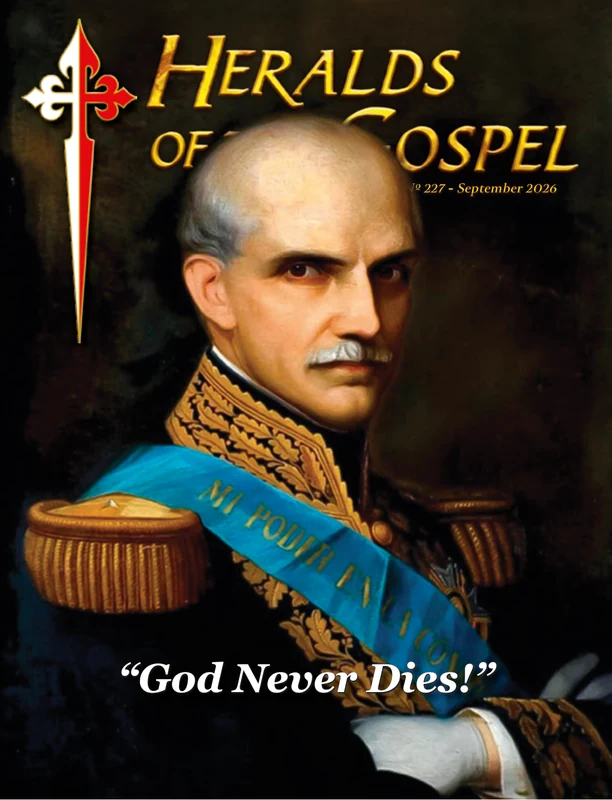
 Heralds of the Gospel Magazine, Vol. 20, nº 227, September 2026
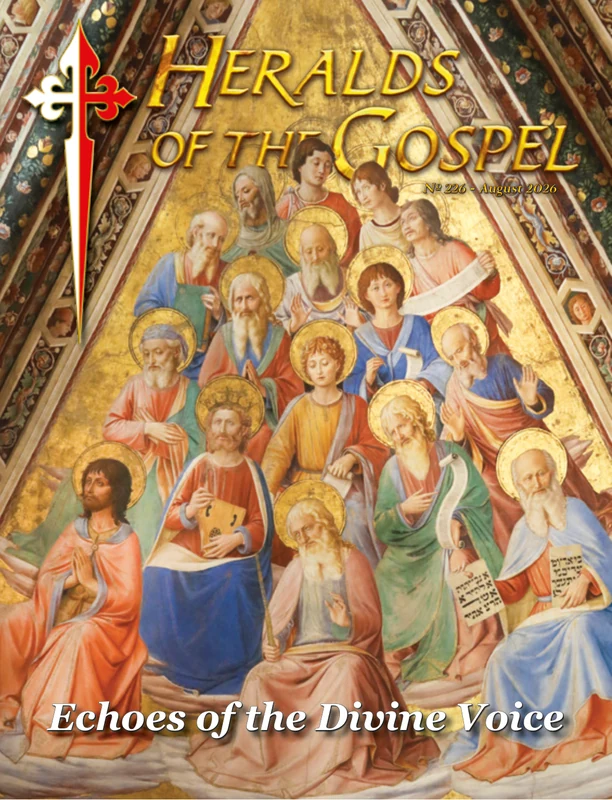 Heralds of the Gospel Magazine, Vol. 20, nº 226, August 2026
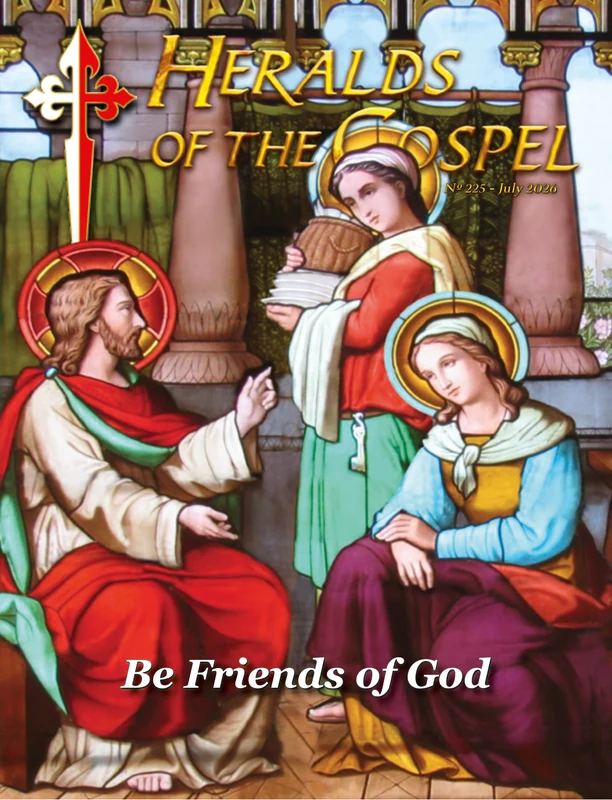 Heralds of the Gospel Magazine, Vol. 20, nº 225, July 2026
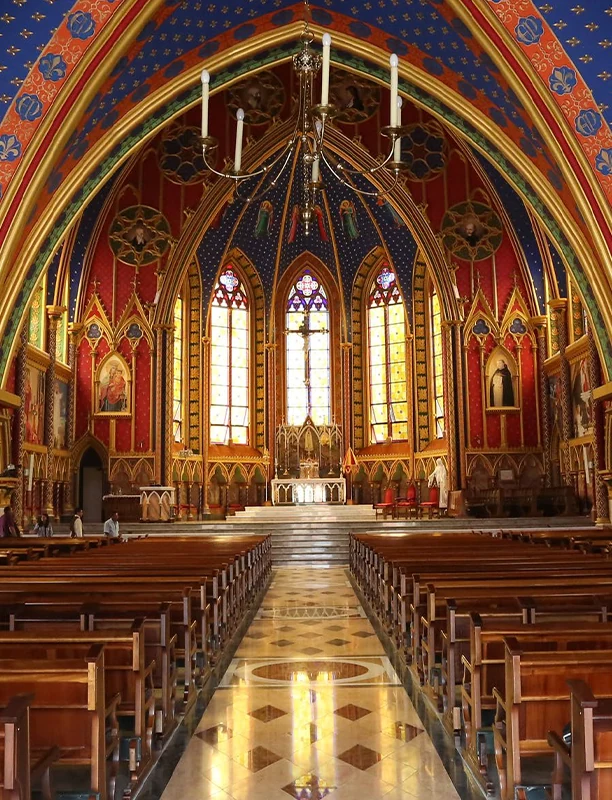 Who are the Heralds of the Gospel?
 Help of Christians
 Christmas Carols






Wisdom in upbringing and in motherly reprimands
Such was the school of Dona Lucilia: love for others and for God had taken the place of egoism in her, and, for that reason, she never mistreated anyone. In raising her children, she showed herself to be patient and kind, disposed to help and to pardon everything. To have a true measure of her wisdom, it suffices to say that she was the educator of Dr. Plinio. Let us, then, observe her fundamental role and how, by her influence, she modelled her son’s soul, preserved his innocence and was the fountain of all the virtue he later demonstrated. In Dr. Plinio’s words: “When I was in Mama’s presence, I sensed a sort of mildness and internal order which communicated to me a sensation of rational tranquillity. At times I was troubled or in some state of mind that was not good. [...] But, encountering her and hearing her voice, all of my inner turmoil seemed to quiet itself and be set to rights; I became less attached to the things which I desired, more accepting of the renunciations which I had to make and, consequently, more reasonable. “I had the impression that without my perceiving it, Mama entered into my soul and set it in order, showing me a spiritual state so appealing, so serene and so different from the one I had been in, that she dismantled the ‘evil castle’ that was in my soul, and I felt like a new person. [...] It was a kind of ‘velvety’ rebuke, in which the ‘velvet’ was worth more than the rebuke, and left me enchanted… It was done with such delicacy that, after our conversation, I left transformed, cheered and satisfied, perceiving that there had been a true outpouring of her spirit, by which she had obtained from me the changes that no one else could, and had overcome all those preconceptions or inclinations which I ought not to have”.1Balance and affection in correcting
Sometimes, however, when one of her children committed an offense, Dona Lucilia felt herself obliged to impose upon them a more severe correction. Typically, according to Dr. Plinio’s account, her way of taking him to task was as follows: since she was frequently ill, she normally remained reclining on a sofa, and would call him to her by means of the Fräulein. When he arrived, she would put her arm around his waist and say: “My son, is it true that you did such-and-such a thing?” “Yes, Mama, it’s true.” “But, my son, that is not right for a boy of your age, who ought to become a great man in the future. It offends God, and it is impolite. Do you clearly understand that you should not have done that?” “Yes, Mama, now I understand better.” “Do you realize that by acting like this you sadden your mother?” “Yes I do.” “Now you deserve to be punished for this. Go over there and bring me the silver brush which is on the dressing table, so that I may discipline you. But know that your mother will suffer more than you will.” Plinio brought the brush, and she said: “Give me your hand.” He extended his hand and Dona Lucilia struck it: smack, smack, smack! After this, she would send him to put the brush back in its place; when he returned, she would give him a kiss and say: “My son, do not think about this any more, it is behind us! You are such a good little boy; it was a weakness. Do you promise me that you won’t do that again?” “I promise, Mama.” “Very well then, off you go and play.” She used the brush with pain in her heart because she would have preferred not to strike him, but she did so without any show of sentimentality, understanding that the Law of God demands this because human nature is unruly and, if at certain moments it is not kept well within “the narrow path”, it will deviate wildly. It was, essentially, to ensure that, in the future, the Sacred Heart of Jesus would not be “expelled” from her son’s soul due to sin.
The most precious legacy
Dona Lucilia’s corrections would leave an indelible and luminous impression in the soul of Dr. Plinio:
Dr. Plinio in 1912
Taken, with small adaptations, from: CLÁ DIAS, EP, João Scognamiglio. O dom de sabedoria na mente, vida e obra de [The Gift of Wisdom in the Mind, Life and Work of] Plinio Corrêa de Oliveira. Città del Vaticano-São Paulo: LEV; Lumen Sapientiæ, 2016, v.I, p.136-139
Notes
1 CORRÊA DE OLIVEIRA, Plinio. Notas Autobiográficas [Autobiographical Notes]. São Paulo: Retornarei, 2010, v.I, p.361-362.
2 CORRÊA DE OLIVEIRA, Plinio. Conference. São Paulo, 18/6/1968.
3 CORRÊA DE OLIVEIRA, Plinio. Meeting. São Paulo, 6/4/1972.