 Heralds of the Gospel Magazine, Vol. 20, nº 227, September 2026
 Heralds of the Gospel Magazine, Vol. 20, nº 226, August 2026
 Heralds of the Gospel Magazine, Vol. 20, nº 225, July 2026
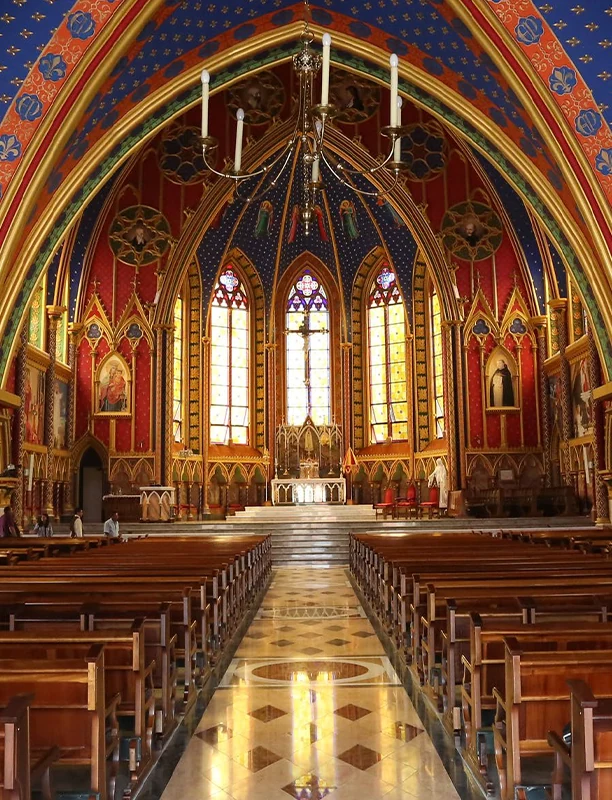 Who are the Heralds of the Gospel?
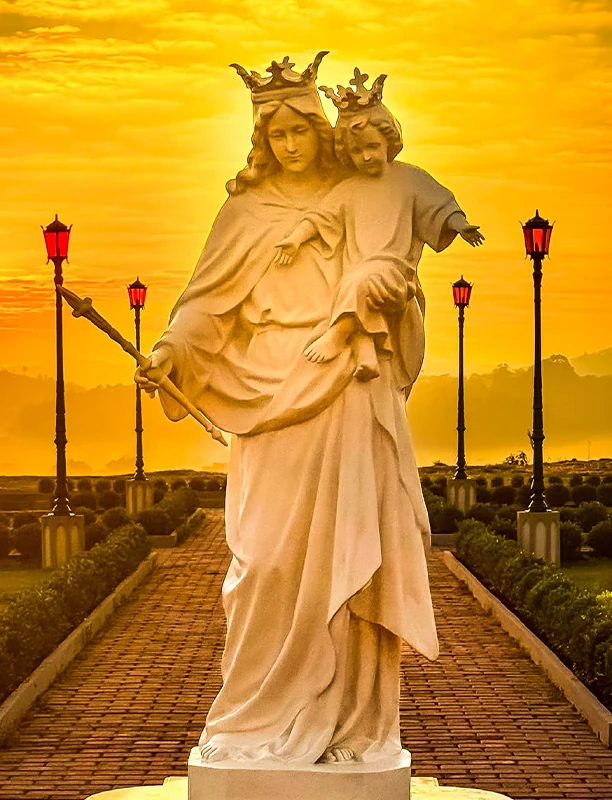 Help of Christians
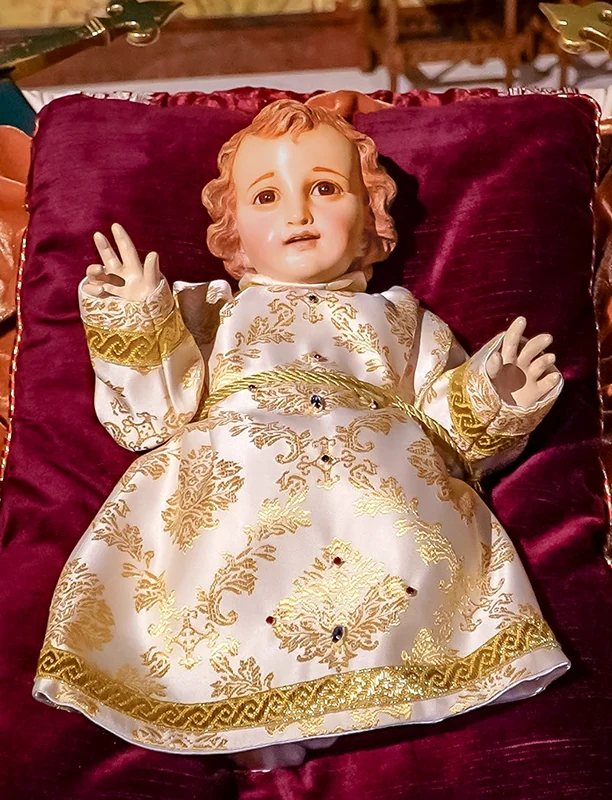 Christmas Carols






Gospel for the Memorial of Our Lady of Mount Carmel
46 While Jesus was speaking to the crowds, His Mother and His brothers appeared outside, wishing to speak with Him. 47 Someone told Him, “Your Mother and your brothers are standing outside, asking to speak with You.” 48 But He said in reply to the one who told Him, “Who is my mother? Who are my brothers?” 49 And stretching out His hand toward His disciples, He said, “Here are my mother and my brothers. 50 For whoever does the will of my heavenly Father is my brother, and sister, and mother” (Mt 12:46-50).
I – Mount of Wrath and of Hope
Mount Carmel, which lends its name to the Marian devotion celebrated on July 16, witnessed great events involving St. Elijah. The first of them occurred when the fiery prophet purified Israel from the sin of idolatry after challenging the four hundred and fifty priests of Baal and the four hundred prophets of Asherah, introduced among the chosen people by Jezebel, the pagan wife of King Ahab.Paradigm of exemplary punishment, symbol of Israel’s hope
Challenged by God’s envoy to offer a sacrifice to Baal that would be consumed by fire without human intervention, the false priests and prophets went unheeded by their idol despite their ludicrous supplications, songs and self-inflicted wounds, and the bull they had prepared remained intact. Elijah’s prayer, however, simple but full of faith and ardour, immediately brought down fire from Heaven that consumed the holocaust, the wood, the stones and even the water that had been poured over the victim, filling the trench dug around the improvised altar (cf. 1 Kgs 18:15-40). Before this spectacle, the people unanimously acclaimed Yahweh as the true and only God and, under the command of Elijah, put the impostors to death. Israel returned to the Lord; they no longer limped with two opinions (cf. 1 Kgs 18:21), persisting in an eclectic and polytheistic cult, an abomination in the sight of the Most High. It was also on the heights of Carmel that Elijah saw the little cloud the size of the palm of his hand, which presaged a generous rainfall after three and a half years of drought (cf. 1 Kgs 18:44). Tradition sees in this fact a prophetic sign of the Redemption: after centuries of drought due to the scarcity of grace among men, the Blessed Virgin Mary, like a cloud laden with blessings, would bring abundant life to the earth by giving birth to the Saviour of the world.Origin of the Order of Carmel
Nine hundred years before Christ, St. Elijah dwelt in one of the more than a thousand caves on the same mountain, surrounded by other prophets, his disciples. Centuries later, in keeping with this blessed tradition, some pious crusaders dedicated their lives there to recollection and mortification under the special protection of Our Lady, to whom they erected a much-visited shrine. The founder of the first Carmelite community was St. Berthold of Malifaye, a warrior of French origin who gathered around himself some hermits scattered in El Hader, a region situated to the north of the mountain, near Haifa. At the dawn of the 13th century, St. Brocard, his successor, asked the Patriarch of Jerusalem for approval of the Order and for rules that would shape the life of solitude, asceticism and prayer of its members. This is the origin of the Carmelite rule, still in force today. Following its pontifical approval, some members of the Order moved West, on account of the instability of Catholic dominion in the Holy Land. In Europe, the people of God received the venerable hermits as a gift from Heaven and adopted the custom of calling them Brothers of the Blessed Virgin of Mount Carmel. However, some princes and clerics were ill-disposed towards the Carmelites, initiating a terrible persecution against them.The scapular, sign of Marian predilection
Alarmed by the risk to the Order’s future, its ninth Superior General, St. Simon Stock, turned to the Patroness of the community to implore her special protection and a pledge of her benevolence. Here are the words of the hymn he composed to beseech the kind Lady to assist them with tokens of her love: “Flower of Carmel, tall vine blossom laden; splendour of Heaven, childbearing yet maiden. None equals Thee. Mother so tender, who no man didst know, on Carmel’s children thy favours bestow.” His ardent prayers were answered. The Blessed Virgin Mary appeared to him accompanied by angelic legions, bearing in her blessed hands the Scapular of the Order. And Our Lady promised eternal salvation to those who would wear it with authentic piety. With the passing of the centuries, this Marian devotion became as universal as the Church herself, and the scapular came to be worn by a great number of Catholics as a sign of submission, reverence and affection for our Mother, the Co-Redemptrix. Thus, from the heights of Mount Carmel, Marian blessings spread over the face of the earth.Vengeance and benevolence: can they be harmonized?
 St. Elijah exterminates a priest of Baal - Church of St. John of the Cross, Alba de Tormes (Spain)
II – The Highest Meaning of the Divine Motherhood
In Chapter 12 of St. Matthew’s Gospel, Our Lord manifests the divine grandeur of His Person to His disciples and to Public Opinion at large. Amidst a profusion of miracles and controversies with the Pharisees over His exorcisms, the Redeemer denounces the sin of that wicked and adulterous generation: “The men of Nineveh will arise at the judgment with this generation and condemn it; for they repented at the preaching of Jonah, and behold, something greater than Jonah is here. The queen of the South will arise at the judgment with this generation and condemn it; for she came from the ends of the earth to hear the wisdom of Solomon, and behold, something greater than Solomon is here” (12:41-42). In this passage, as part of the unsurpassable didactics Jesus uses to progressively reveal His real identity as God Incarnate to the people, He wisely and persistently affirms His superiority over the great figures of the past, while pointing out, with severity and rigour, the gravity of the sin of rejection committed by the Pharisees. It is in this context that the visit of the Blessed Virgin and some of her relatives, presented in today’s Liturgy, takes place. This is a bold step the Divine Master takes towards manifesting the Eternal Father and His own eternal filiation, as well as the participation in this filiation of all those who, with authentic faith, place their trust in the Messiah.A sublime, but unknown bond
46 While Jesus was speaking to the crowds, His Mother and His brothers appeared outside, wishing to speak with Him. 47 Someone told Him, “Your Mother and your brothers are standing outside, asking to speak with You.”
 Mount Carmel (Israel)
The family of God
48 But He said in reply to the one who told Him, “Who is my mother? Who are my brothers?” 49 And stretching out His hand toward His disciples, He said, “Here are my mother and my brothers. 50 For whoever does the will of my heavenly Father is my brother, and sister, and mother.”
The profound relationship between Our Lord and Mary Most Holy
How then should we understand the relationship between the Divine Redeemer and His Mother? Far from casting a shadow on the intimate and close bond between Jesus and Mary, this Gospel sheds light on the beauty and holiness of the union between them. Our Lady was the most obedient creature of all time. To do the will of God was the sole desire of her Immaculate Heart, and She accomplished it with unswerving determination, adapting herself generously to the designs of the Most High, however incomprehensible and painful they might be. Docile to the message of the Archangel Gabriel, the Blessed Virgin opened the gates of justice so that the Word could descend to earth, and She was proclaimed blessed by her cousin Elizabeth for having believed what had been announced to Her. She showed herself ready to make any sacrifice, even to see her Son die on the gallows of the Cross, giving her “fiat” at each step. Mary, like no other creature, merits the title of mother and sister of Jesus Christ in the spiritual sense that is attributed to Her in the above passage. And it is from this point of view that we must enthusiastically praise her Divine Motherhood, the indissoluble bond that unites Her to her beloved Son – a natural bond, no doubt, but one that would mean nothing if it were not assumed and perfected by a supernatural bond of incalculable splendour. In this way, the Virgin-Mother is, in the highest sense of the term, the divine vengeance against Eve’s fault and against the one who tempted her in the belief of obtaining a definitive triumph. The malice of this first virgin was far exceeded by the holiness and fidelity of Mary, thus giving God a most glorious victory in the order of Redemption, in the face of the relative failure caused by man’s sin in the order of creation.III – Our Lady of Mount Carmel Today
The memorial of Our Lady of Mount Carmel shines in the liturgical calendar with particular brilliance for its connection with the prophetic cohorts of Mount Carmel and the fiery spirituality of St. Elijah, as well as for the universal diffusion of the holy Marian scapular. Nevertheless, a halo of mystery surrounds this very special title. The Blessed Virgin herself encouraged this devotion in her most celebrated apparitions. At Lourdes, the last manifestation of the Blessed Virgin took place on July 16, and at Fatima, Mary showed herself to the three little shepherds clothed in the habit of Carmel on October 13. Both occurrences unveil a magnificent horizon that arouses lively interest.A light of hope amidst the general apostasy,
We are living in a time of prevarication that embraces all peoples, the most varied cultures and even religion itself; accordingly, it is imperative that the mission of Elijah be renewed with urgency and redoubled zeal. At the time of that providential man, all Israel was following false gods; today, however, an even worse situation is evident. Centuries after the Redemption wrought by Our Lord, the old Christian Civilization is being swept away by a torrent of apostasy that drags great multitudes with it. Moreover, the crisis that has taken hold in Catholic circles has reached such proportions that – oh, sorrow! – we see “the abomination of desolation […] standing in the holy place” (Mt 24:15). Faced with this sombre prospect, there is only one way out: the Virgin of the Apocalypse, clothed in splendour, with the moon under her feet and on her head a crown of twelve stars (cf. Rv 12:1). For our times, the Most High has entrusted the mission of Elijah to Her – a mission incalculably more heroic and grandiose than that of the fiery prophet. Our Lady of Fatima clothed in the mantle of Carmel
Notes
1 ST. THOMAS AQUINAS. Summa Theologiæ. II-II, q.108, a.1.
2 Idem, ibidem.
3 Idem, a.3.
4 Idem, a.1, ad 2.
5 Cf. Idem, a.2, ad 2.
6 Cf. Idem, ad 3.
7 ST. PIUS V. Consueverunt Romani Pontifices, n.1.