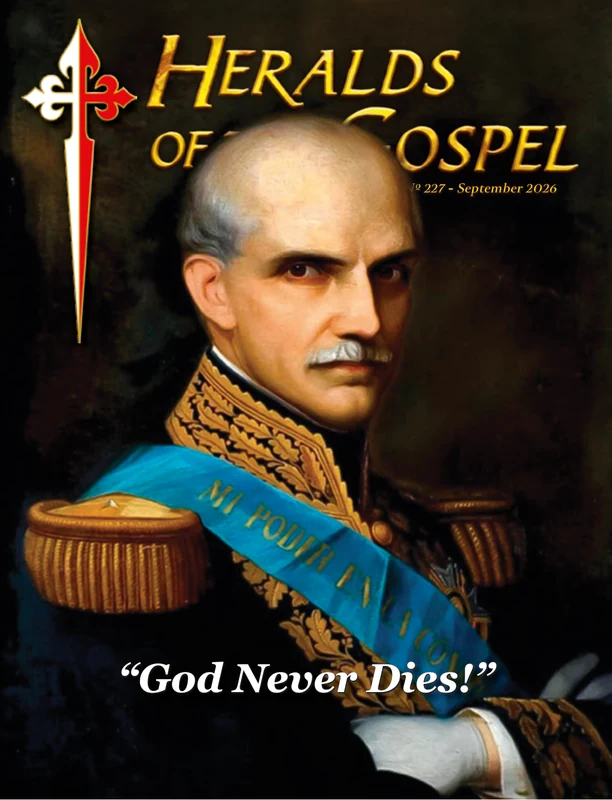
 Heralds of the Gospel Magazine, Vol. 20, nº 227, September 2026
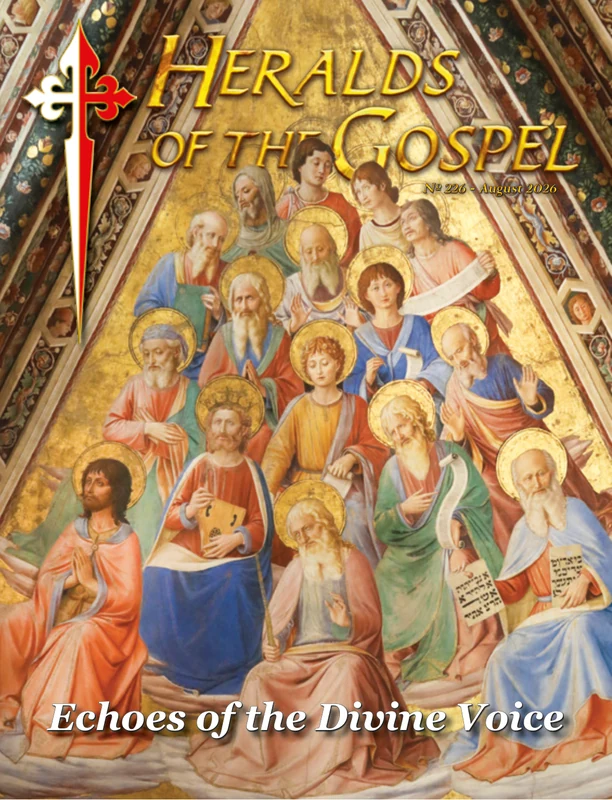 Heralds of the Gospel Magazine, Vol. 20, nº 226, August 2026
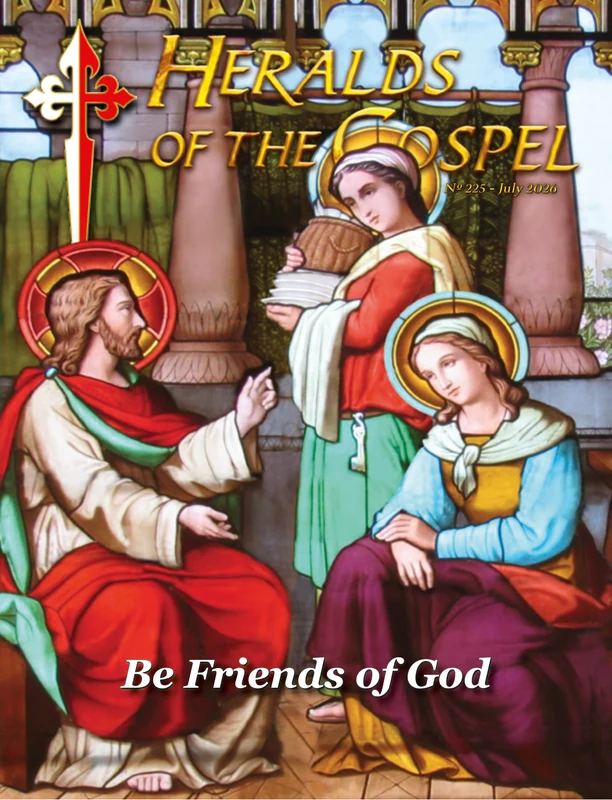 Heralds of the Gospel Magazine, Vol. 20, nº 225, July 2026
 Who are the Heralds of the Gospel?
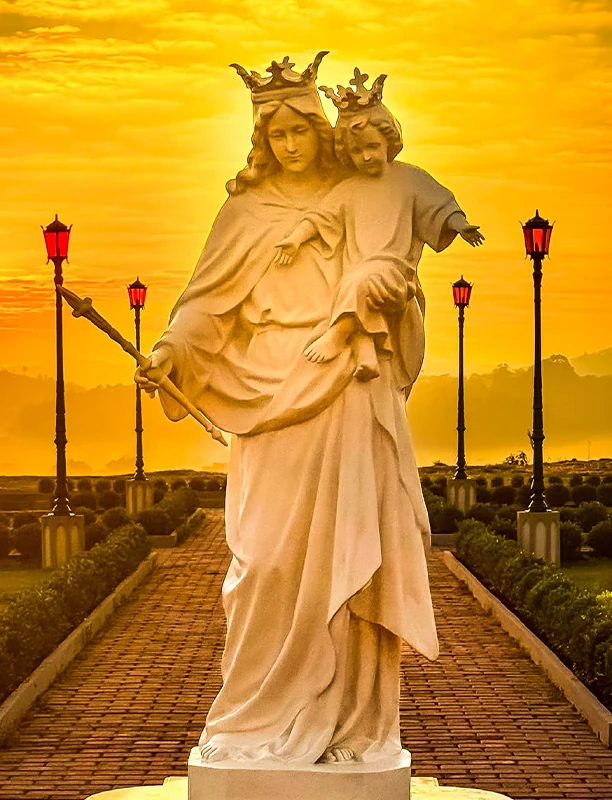 Help of Christians
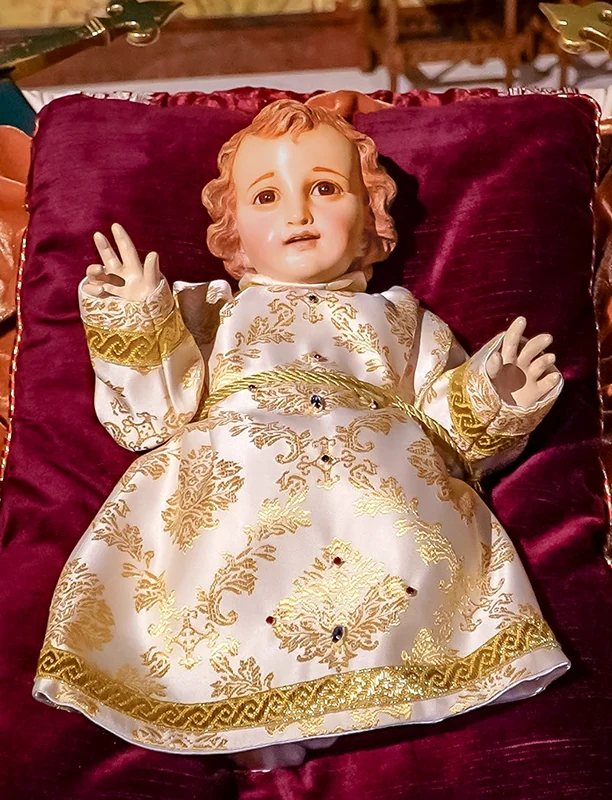 Christmas Carols





Two musical instruments playing in harmony
“She transmitted to me all that was Catholic in her soul. […] As a result, I felt such profound consonance between the grace coming through her and the grace originating from other sources, that they seemed to be two instruments playing the same music in perfectly and entire harmony. Sometimes grace awakened in me an appetency for that which she would give me; other times she, or rather, the grace that came by means of her, caused me to desire what grace itself would impart to me directly. It was all one and the same circuit.” Thus, Dr. Plinio perceived all the consonance between Dona Lucilia and what he received through the Church without intermediaries. The Holy Church and his mother were like two instruments, such as a harpsichord and a violin, playing the same melody together in his soul. His mother was for him the voice of grace, and the voice of grace was the voice of his mother!Living lesson in holiness
However, we could well ask ourselves here: how did Dona Lucilia pass on her Catholicity to Dr. Plinio? Did she give him instruction or classes? Did she explain to him what it means to belong to the Church? No! Like stained glass through which shine the rays of the sun, in her, grace was superimposed upon nature and penetrated her way of being, adding a new radiance to her natural qualities.
French harpsichord - Metropolitan Museum of Art, New York
Incomparable interpreter of the Holy Church
Innumerable were the occasions on which Dr. Plinio explained the major role of Dona Lucilia as a symbol of the Church in the formation of his Catholic sense. When he came into contact with the Church, it was not a surprise to him, for much of it – of the supernatural and of Our Lady herself – he had already met in the soul of his mother. We turn once again to Dr. Plinio’s own memories: “When I began to open my eyes to the Catholic Church, I saw, countless times, affinities between Mama’s soul and the spirit of the Church, so that I understood many things in the Church through knowing her. And later, naturally, I would see if the Church thought in that way, for it soon became clear to my soul that she was not the exemplar of truth, but the Church was. […] Many times, I understood certain points of Church doctrine more readily because I interpreted them in light of what I saw in her and had learned from her… […] She was for me an incomparable interpreter of the Church! […] She was, in my view, the ideal mother, and she gave me an excellent preparation to receive that faith!” “I remember the moment when, for the first time, I read the phrase ‘Holy Mother Church’. I was moved and thought: ‘It is true! I have a very fine mother, but the Church is more my Mother than she is.’ And so it will be to the end of my life, God willing. At a certain moment, I began to perceive what a magnificent example Mama was of how someone can be in complete conformity with the Holy Church. […] She was, for me, like a prefigure of the Church.”Threefold motherhood
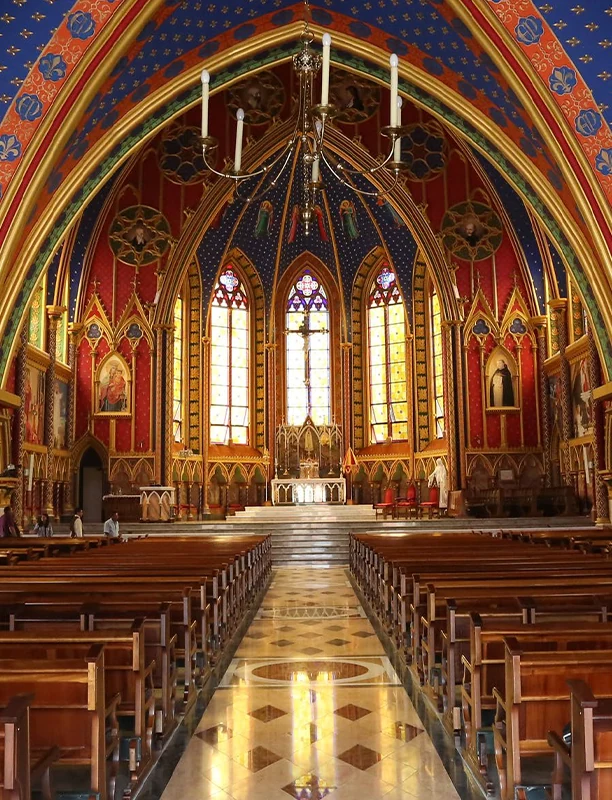
Plinio, through discernment of spirits, upon analysing Dona Lucilia, perceived a perfect harmony between her and the Church, constituting for him one single grace and prompting him to establish an immediate connection between them: on one side, he saw in her the spirit of the Holy Church; on the other, he saw her within the spirit of the Holy Church. All that was good in the soul of his mother had its origin in the Church, and the grace which he noticed in the Sacred Heart of Jesus Shrine, in São Paulo, seemed to be concentrated in the soul of Dona Lucilia. Thus, it was a single line: Church-Dona Lucilia, Dona Lucilia-Church, until the birth in his soul of devotion to Our Lady, which also crowned this circle of reversibilities. “I would never have known the Church entirely if I had not seen this maternal model. I give thanks to Our Lady for having given me this mother, whose great merit was to have set me on the path towards another Mother: the Holy, Catholic, Apostolic and Roman Church. The soul of this other Mother, which is the Holy Church, contains a throne for a third Mother: Our Lady. Through one, I progressed towards the others. This maternal triad, one physical-spiritual and the other two spiritual and supernatural, vivify my soul and my piety.” ◊Taken, with minor adaptations, from: O dom de sabedoria na mente, vida e obra de [The Gift of Wisdom in the Mind, Life and Work of] Plinio Corrêa de Oliveira. Città del Vaticano-São Paulo: LEV; Lumen Sapientiæ, 2016, v. I, p.154-157